





Dropshipping is a unique form of online business that takes advantage of a variety of services available to you as an entrepreneur, to run a storefront without needing to keep inventory. It's sort of like a cross between retail sales and affiliate marketing.
Key Takeaways
- Dropshipping lets you sell products without holding inventory by forwarding customer orders directly to wholesalers.
- The global dropshipping market hit $286.4 billion in 2023, but roughly 90% of dropshipping businesses fail within four months.
- Sourcing from China carries serious risks: poor product quality, slow shipping, customs delays, and complicated tariffs.
- Direct-from-China platforms like Temu now compete with dropshippers directly, making price-based competition nearly impossible.
- Success in 2026 requires strong branding, a specific niche, and active social media - stores with social accounts earn 32% more revenue.
How Dropshipping Works
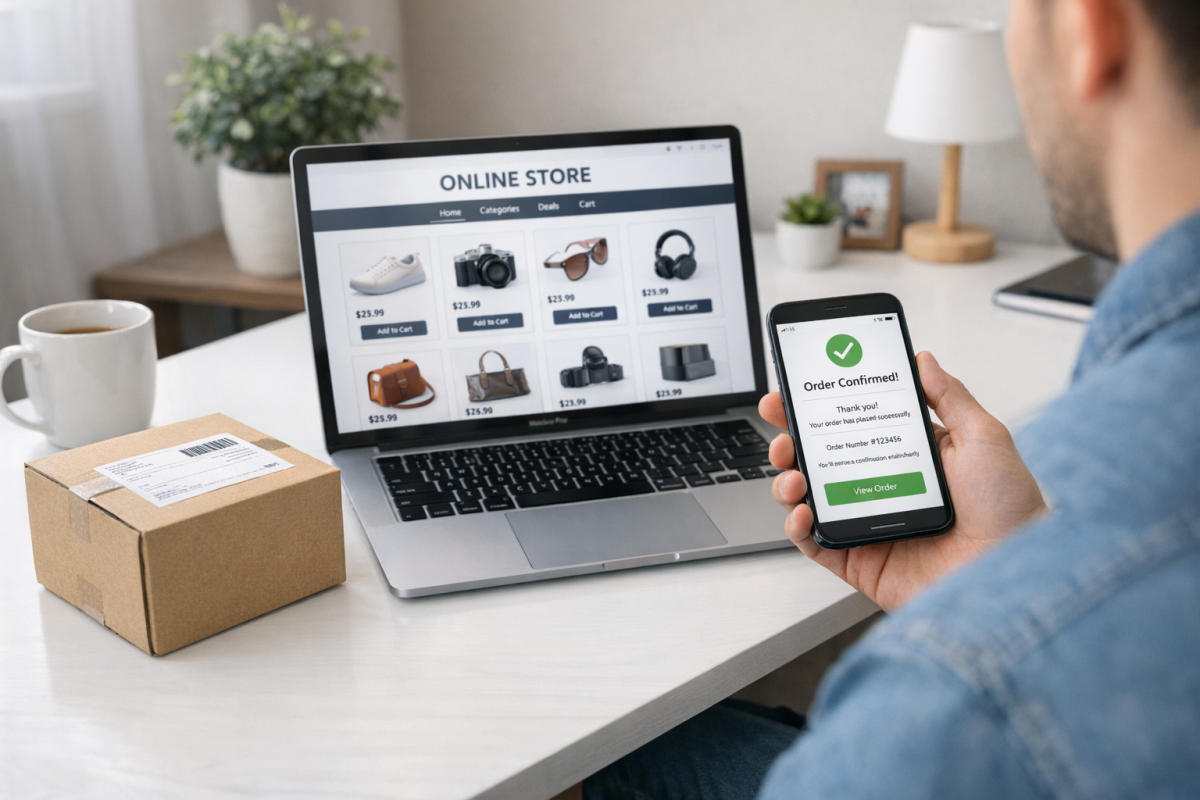
At the most basic level, dropshipping is simply buying an item and reselling it. However, it's not buying on speculation; you're not buying 500 of an item and then listing it on eBay and hoping all 500 sell.
The reasons you don't want to do that are pretty simple. First of all, it's a sizable up-front investment. If the product you buy costs you $5 per unit, that's $2,500 you have to pay up front. Then you have to pay to have them all shipped to your house, or whatever storage warehouse you set up for it. You have to have the space to store them, and you have to keep track of your inventory. Then you have to sell them for more than $5 plus the cost of shipping and storage. To make a per-unit profit you need to sell for something like $10. If they all sell, you get $5,000, for a $2,500 profit minus the cost of shipping and storage. That's just the thing, though; what if they don't all sell?
I've seen stories time and again of people who think this is a viable business model, and end up with hundreds or thousands of units of some gimmicky fad product sitting in their garage, taking up space and embodying the sunk cost fallacy.
With dropshipping, you cut out every single one of those flaws. What you do is set up a website with the products you want to sell, at the prices you would need to sell them to make a profit. When a customer comes and orders one of them, you turn around and place the order with the wholesaler who produces the item. You pass along the money and the shipping information, and wash your hands of it. It's up to the wholesaler to keep their own inventory. It's up to them to fulfill the order, shipping the item to the right place and on time. The only thing you might have to handle is a customer service issue. Before you get started, it's worth knowing the right questions to ask a wholesaler to make sure you're working with a reliable partner.
Why Dropshipping Works

You might ask yourself: if you can buy an item for $5 from a wholesaler or $10 from a dropshipper, why would you ever buy it from the dropshipper? Why does dropshipping even work in the first place? The truth is, there are a few reasons for this.
- Some wholesalers don't do single order business. They work with dropshippers because the dropshippers can be relied upon to send tens, hundreds, or thousands of orders per month. Individual sales require a lot more tracking and infrastructure, meaning more investment, meaning less profits for the wholesaler.
- Some wholesalers don't bother to make themselves available to the general public. One of the hardest parts of starting a dropshipping business is making connections with wholesalers. You have to identify a product you want to sell, you have to find a wholesaler that produces it, and you need to make a deal with them. Wholesalers are generally difficult to locate due to little or no web presence; it's hard for a dropshipper to locate and impossible for the average consumer.
- Some wholesalers don't care to do the marketing themselves. Your primary job as a dropshipper is to do the marketing to get sales of the product rolling. The wholesaler doesn't want to do the marketing themselves; if they did, they wouldn't need you.
However, don't take this all to mean that dropshipping is sunshine and rainbows. It's a massive industry - global dropshipping market revenue hit $286.4 billion in 2023 - but that scale cuts both ways. Due to the low cost of entry, it's an incredibly crowded space. Just about any product worth selling already has a dozen people selling it, and your profit margins are going to be slim. Your true profits come from extreme volume, not from individual pricing power.
Worth noting: according to Spocket, roughly 90% of dropshipping businesses fail within the first four months. That's not meant to scare you off, but it is meant to set realistic expectations going in.
Appropriate Sourcing of Wholesalers
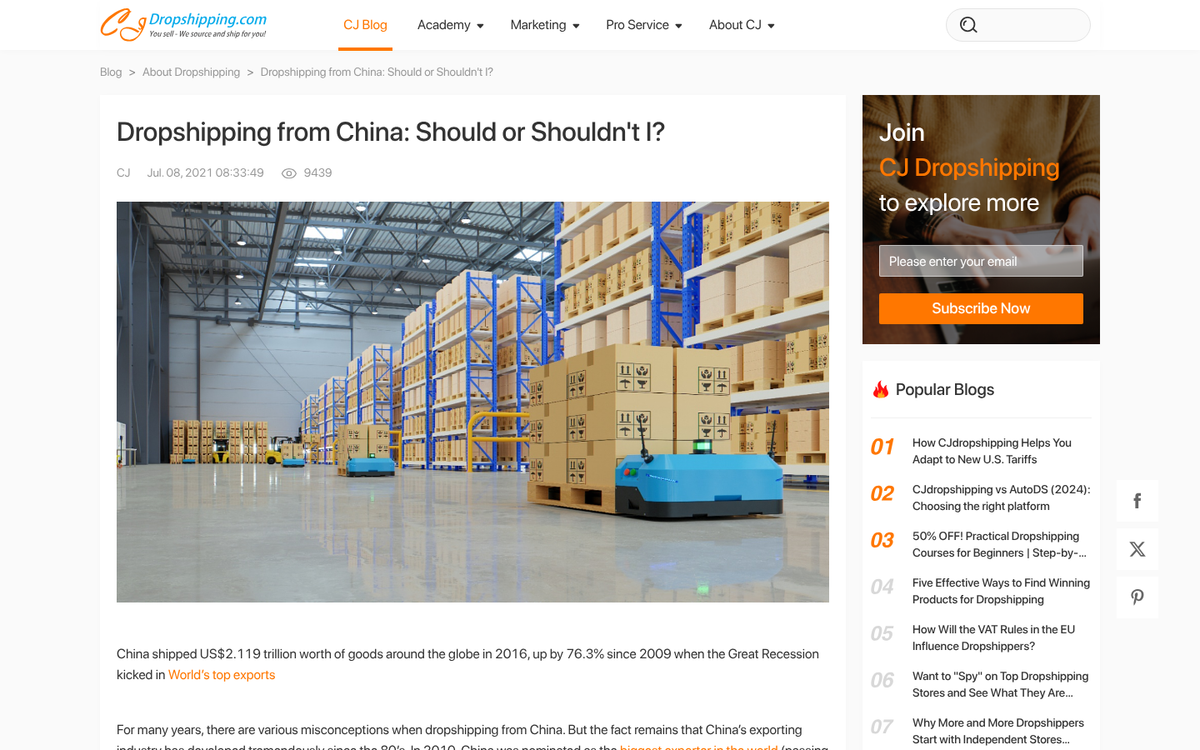
Since your profits come from selling at or below market price, you might be tempted to source cheaper versions of products. This is why there are $40 counterfeit purses made to look superficially like $400 purses. It's also why people buy items for $1 from Chinese manufacturers rather than for $5 from American manufacturers.
There's nothing inherently wrong with this approach, but it does have some unique pitfalls. China currently produces approximately 28% of global manufacturing output (World Bank, 2023), and over 70% of global dropshipping businesses source directly from Chinese suppliers. The scale is enormous - China's cross-border e-commerce imports and exports alone reached 2.2 trillion RMB in 2023. But size doesn't automatically mean quality or reliability. Here's what you need to watch out for.
The products might not be as high quality. The reputation for cheap quality products made in China is not a joke. There are some high quality manufacturers there, but often the ones willing to work with new dropshippers are working with the lowest quality sources, the least quality control, and the worst blueprints and designs. You have to do a lot of searching to find a wholesaler that isn't going to provide you with poor quality products.
I'm not just talking about "the stitching is off in this handbag" either. I'm talking about cheap electronics that don't adhere to modern safety standards and that can literally be deathtraps. Even if they don't injure anyone, they can still cause a flood of customer service issues when people receive different models or colors than what they ordered.
The shipping costs and timelines can be brutal. International shipping is not cheap or predictable. ePacket shipping - long a favorite of China-based dropshippers - has become increasingly unreliable and expensive since the pandemic reshuffled global logistics. Customers in 2026 have been conditioned by Amazon Prime to expect fast delivery. Waiting two to four weeks for a package from overseas is a dealbreaker for most shoppers, and it will show up in your reviews.
The ability to communicate with the wholesaler is often lost. Do you speak Mandarin? If you do, you're ahead of the pack. If you don't, chances are you're going to have a hard time of it. Communicating across an international barrier is difficult enough, and China's national firewall adds another layer of friction. The most successful China-based dropshippers tend to be people who made personal connections with manufacturers directly, not through broken translation emails.
Items might get stuck in customs. Depending on how the item is shipped, what it's packaged in, and what the customs official feels like that day, your items might get stuck in customs for days or weeks. Even if there's no damage to the item, there's damage to your customer relationship as they wait for what should arrive in five days only to show up a month later.
Tariffs and import taxes have gotten significantly more complicated. This is a big one in 2026. The US-China trade relationship has been turbulent for years, and tariffs on Chinese goods have escalated considerably. The de minimis exemption - which previously allowed packages valued under $800 to enter the US duty-free, and which was a lifeline for many dropshippers using platforms like AliExpress - has faced serious legislative pressure and significant restrictions. If you're building a dropshipping business model that depends on packages slipping through under a duty-free threshold, that foundation is shakier than it has ever been. Make sure you understand the current import rules for your target market before committing to a supplier.
Some shady wholesalers fold overnight, leaving your business stranded. It's not uncommon for suppliers to disappear without warning. Sometimes it's a factory accident, sometimes it's a CEO who bails with the money, and sometimes you'll never know the real story. The company you're relying on to fulfill your orders can vanish and you're left with unmet customer orders and a business that can go nowhere fast. Diversification matters here - don't let a single supplier be the one thread holding your operation together.
Chinese wholesalers often sell directly via AliExpress, Temu, TikTok Shop, and Amazon. This is perhaps one of the biggest competitive threats you'll face in 2026. Not only are you competing with other dropshippers; you're increasingly competing directly with the manufacturers themselves. Platforms like Temu have essentially industrialized the direct-from-China-to-consumer model, cutting out middlemen entirely and offering prices that are nearly impossible to undercut. If your entire value proposition is price, you will lose to Temu. Your competitive edge has to come from branding, curation, customer experience, or a niche that these mass platforms haven't targeted effectively.
On the flip side, dropshipping stores that build a social media presence do significantly better - stores with at least one active social media account generate 32% higher revenue on average. In 2026, that's not optional; it's table stakes. Generating free traffic through Facebook is one channel worth exploring as part of that strategy.
Essentially, you need to do an enormous amount of legwork to find a good wholesaler for products you want to sell. You need to:
- Make sure to get samples of what you're looking to sell before you begin to carry the product, to make sure it's something you're confident to represent.
- Make sure to find wholesalers willing to ship small orders; it's faster and costs less overall.
- Make sure you're paying via a method like Trade Assurance or PayPal, where you as the buyer have more protections against potential overseas fraud.
- Make sure the products you're offering are not poor counterfeits. There's a business there, but it's technically illegal and you can be shut down by a cease and desist from the real brand at any time.
Meanwhile, you have to consider some of the intricacies of international shipping and sourcing more broadly.
- Avoid products that are large, bulky, fragile, or otherwise potentially damageable in shipping. Small, sturdy products do the best.
- Avoid products that are extremely branded. When was the last time you personally purchased an off-brand personal care item? Would you trust a skin cream from an unknown overseas supplier?
- Avoid products that are extremely common on Temu or AliExpress. If the manufacturer is already selling it directly to consumers at a price you can't match, there's no room for you in that market.
- And avoid buying into paid lists of "exclusive" suppliers. They're not exclusive, and since they already know you paid for the connection, they know you'll pay higher prices.
I'm not saying you can't build a good business based on dropshipping. The market is genuinely massive and still growing. But in 2026, the landscape is more competitive, more legally complicated, and more demanding than it was even a few years ago. The barriers to entry are low, which means the barriers to standing out are extremely high. If you're just getting started, consider focusing on domestic suppliers, building a real brand around a specific niche, and treating social media as a core part of your business - not an afterthought. The days of throwing up a generic Shopify store with AliExpress products and watching the money roll in are largely over. The dropshippers who are winning now are the ones treating it like a real business.
1 response
Thoughtful replies only - we moderate for spam, AI slop, and off-topic rants.
So much insights in one guide buddy,thanks eventhough Chinese suppliers tend to take too much time to ship items this has caused some shops to be closed down due to paypal limitattion and disputes.