Facebook is excellent for driving traffic to your website, but a huge part of that excellence comes from the sheer utility and reach given to you through the Facebook PPC system. However, if you don't want to pay for your traffic, you're going to find yourself much more limited. Instead of worrying about pulling out a PPC budget from thin air, why not focus on methods to generate free traffic from Facebook?
Yes, organic reach is at an all-time low on Facebook. According to Hootsuite, organic reach sat at around 16% back in 2012. By 2025, that number had collapsed to between 1-2%. Social Status, which tracks monthly benchmark data, measured Facebook's average organic reach across 2024 at just 1.37%, with a median engagement rate of 0.2%. To put that in perspective, a 2-4% organic reach rate is now considered strong performance. If you're hitting below 1%, the algorithm is actively suppressing your content.
That doesn't mean organic Facebook traffic is dead, or that you shouldn't pursue it. Any traffic is better than no traffic, and building a Facebook presence now positions you to layer in paid traffic later when the budget allows.
The key is to understand how Facebook's algorithm works and post strategically around it. The algorithm weighs several factors when deciding what to show users: timeliness, post type, user engagement, and post quality.
Timeliness is a measure of how fresh and relevant a post is. A new post is more likely to show up in a person's feed than one from an hour ago, which in turn beats a post from yesterday. To game this metric, post consistently, typically 1-3 times per day, and time your posts for peak activity windows. Facebook engagement globally peaks on Wednesdays and Thursdays from 11 a.m. to 2 p.m., making these your highest-value slots for free reach.
Post Type carries significant weight in how Facebook distributes your content. Text-only posts are the weakest performers. Photos outperform text, and video outperforms both. Notably, Facebook's own Widely Viewed Content Report found that 96.7% of top-performing views in the U.S. during Q2 2024 did not include a link to an external site. This means link posts - the very posts most likely to drive website traffic - are among the least favored by the algorithm. Use link posts strategically rather than as your default, and supplement them with link-free content that builds audience loyalty.
User Engagement measures how users interact with your page over time. A user who regularly likes, comments on, and shares your posts will see your content far more often than a passive follower. Consistent engagement signals to the algorithm that your content is worth distributing. Make building that habitual engagement a core part of your strategy.
Post Quality is the final, somewhat subjective factor, but it underpins everything else. Better content earns more reactions, more comments, more shares, and more saves - all of which feed the other metrics. High-quality content is either evergreen in its value or taps into something trending and timely. Both matter.
Key Takeaways
- Facebook organic reach has collapsed to just 1.37% in 2024, but strategic posting can still generate meaningful free traffic.
- Video and image posts outperform link posts algorithmically; 96.7% of top-performing content in 2024 contained no external links.
- Facebook Stories are underutilized - 58% of people have visited a brand's website after seeing it in a Story.
- Messenger is a powerful free channel; users who engage with businesses there are 53% more likely to purchase.
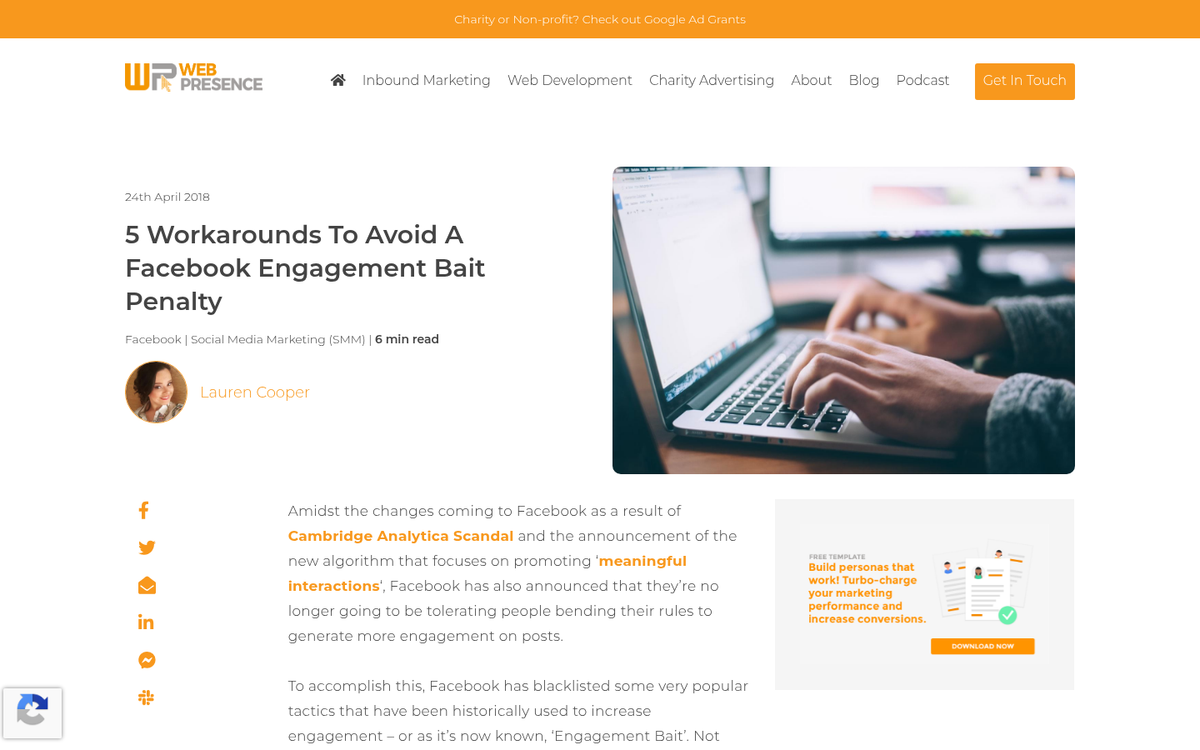
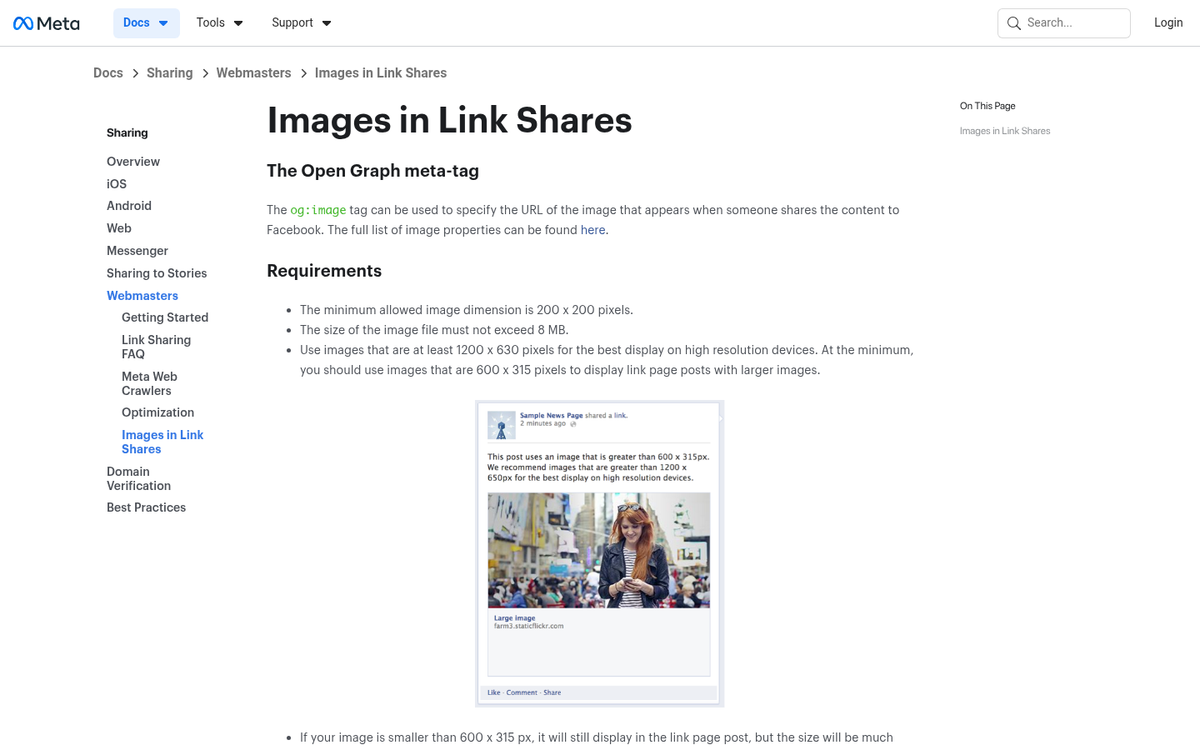
- Open Graph tags let you control link preview appearance at no cost, meaningfully improving performance of shared links.
Actionable Tips
How can you take concrete steps to increase your audience, drive more traffic, and get more exposure - all for free?
1. Diversify Your Post Mix With Multimedia
Build a weekly posting schedule that balances content types deliberately. Lead with native video where you can, since it consistently outperforms other formats for organic reach. Layer in image posts to keep things visual, and use Stories as a dedicated channel - 58% of people have visited a brand's website after seeing a product or service in a Facebook Story, making it one of the more underutilized free traffic sources available. Reserve link posts for your highest-value content, and accept that they'll reach a smaller portion of your audience organically.
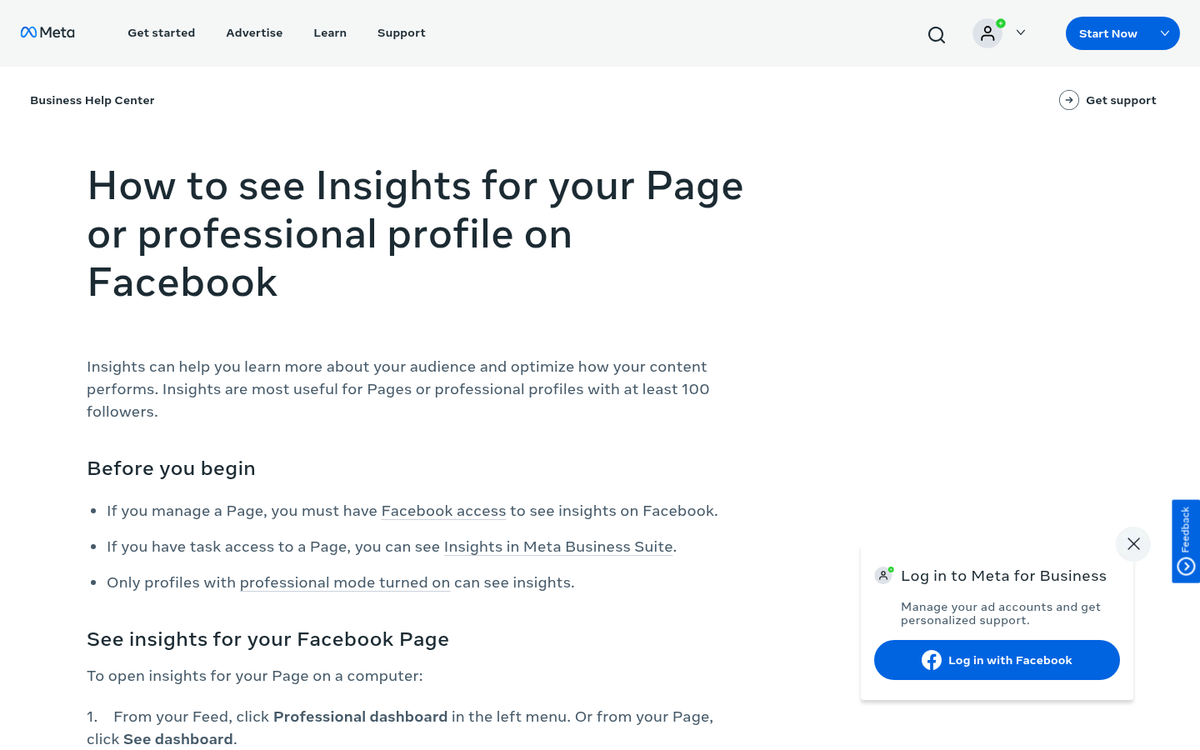
Track what works through Facebook Insights and adjust your mix accordingly. What performs on Wednesdays might not perform on Sundays. The goal is continuous refinement, not a set-and-forget schedule.
2. Encourage Sharing and Comments the Right Way
There are good ways and bad ways to encourage sharing. Quality content shared consistently, with occasional direct asks for shares, works. Guilt-trip posts, engagement bait, and transparent gimmicks will get you flagged as a spammer and suppressed by the algorithm. Facebook actively penalizes posts that explicitly beg for likes or shares.

For comments, the simplest tactic still works: ask genuine questions. Users respond to questions naturally, and comment activity signals to the algorithm that your content is worth amplifying. If you're looking for the right tool to manage this, it's worth considering whether CommentLuv is still worth using over other options.
3. Activate Facebook Messenger as a Traffic and Engagement Channel
This is one of the most overlooked free tools available. According to Facebook's own data, users who engage with a business through Messenger are 53% more likely to make a purchase. Beyond sales, Messenger allows you to build direct, one-on-one relationships with followers outside the constraints of the feed algorithm. Set up automated responses for common questions, use Messenger to follow up on engaged users, and treat it as a genuine relationship-building channel rather than an afterthought. If you want to go further, explore how Facebook retargeting can amplify your traffic generation efforts alongside Messenger.
4. Study Your Insights Obsessively

Facebook Insights gives you granular data on every post - reach, engagement, best posting times, audience demographics, and more. Use it to identify patterns: which content types perform best for your specific audience, which days and times generate the most organic reach, and which posts fall flat. Combine this with your on-site analytics to trace which Facebook activity actually converts to website visits and actions.
5. Use Social Sharing Widgets on Your Site
Add Facebook sharing buttons to every page and post on your website. Make it effortless for visitors to share your content to their own feeds directly. You can also use the Facebook Comments plugin in place of your existing comment system. When a user comments through it, that activity can appear in their friends' feeds by default - giving you an additional layer of organic distribution with every comment your content receives.
6. Customize Link Previews With Open Graph Tags
When you do share links to your website, make sure they look polished. Using Facebook Open Graph meta tags in your page headers, you can control exactly how your content appears when shared - the thumbnail image, the title, and the preview description. A well-formatted link preview performs meaningfully better than a default auto-generated one, and this is entirely within your control at no cost. If you want more visibility into how your content is spreading, learn how to see who has liked and shared your blog post.
7. Curate External Content to Build Authority
Your Facebook page shouldn't function as a mirror of your blog. Curate genuinely interesting third-party content your audience would value - content they haven't already seen shared by dozens of other pages. The goal is to become a trusted, distinctive source of information in your niche, so users follow your page for its own sake. An engaged, loyal audience built this way will reliably click through to your site when you do share your own content.