




In the context of AI-generated responses, a cited source is any piece of online content that an AI system references, draws from, or surfaces when constructing its answer to a user's query. This could be a blog post, a product page, a how-to guide, a news post, or an FAQ section on your website. When an AI cites a source, it's basically pointing to that content as relevant, credible, or helpful enough to support what it's telling the user.
For website owners and managers, this is worth paying close attention to. Being a cited source means your content is showing up inside AI-generated answers - which is quickly becoming one of the most visible real estate on the internet - it's a different visibility than a traditional search ranking. But in many ways, it's just as valuable.
To start making sense of this for your own website, it helps to know how AI systems choose what to cite - it's where we're headed next.
Quick Answer
A cited source is a reference to an original work, publication, or authority used to support a claim, statement, or argument in a document. It gives credit to the original author, allows readers to verify information, and strengthens credibility. Citations typically include details such as the author's name, title, publication date, and location of the source, formatted according to a style guide like APA, MLA, or Chicago.
How AI Systems Decide What Gets Cited
AI systems pull from sources they have evaluated as relevant and trustworthy, and then decide which of those sources to surface by name.
That process is less mysterious than it sounds. These systems are trained on giant amounts of web content and they develop patterns around what looks authoritative. A source that gets cited frequently by other sources, has steady and factual writing and covers a topic in depth will register differently than a blog post with thin content and no external references pointing to it.
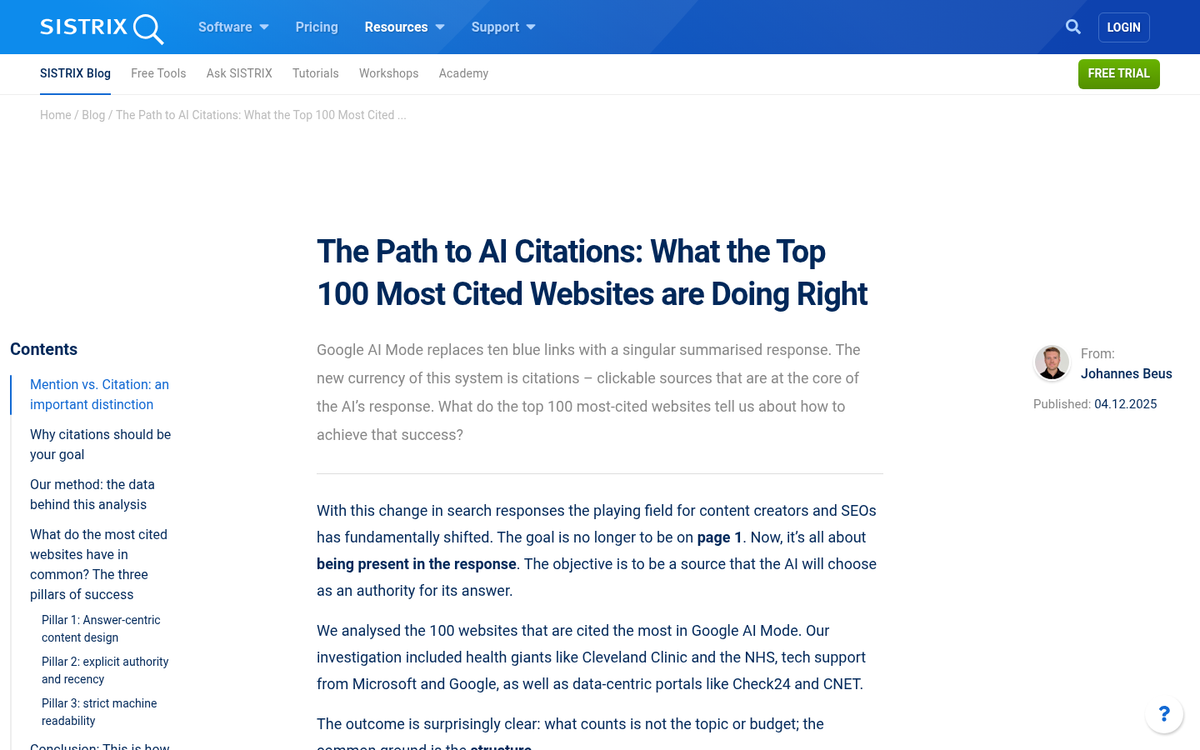
The good news is that citation behavior is actually measurable. Profound, an AI analytics platform, built a dataset tracking over 680 million citations across AI tools and the patterns in that data are legitimately informative - this isn't guessing. There's a trackable footprint that shows which sources AI tools reach for and how frequently.
One number from that dataset stands out. Wikipedia holds a 47.9% share of ChatGPT's top-10 citations. That means nearly half the time ChatGPT names a source in its top results, it names Wikipedia.
That's worth sitting with for a bit. Wikipedia isn't a brand, it doesn't have a marketing team and it doesn't run ads. What it does have is a steady structure, neutral language, dense factual content and millions of citations pointing to and from it across the web. AI systems have learned to read that pattern as a signal of reliability.
Other sources that appear frequently in AI citation data share some of the same characteristics. Government and educational websites, established news organizations and large reference databases tend to do well. These are sources with long track records, large coverage of topics and a level of external validation that AI systems can detect through the structure of the web itself.
It's also worth mentioning that different AI tools weight things a little differently. Perplexity, which is built around real-time web retrieval, puts a heavier emphasis on recent and indexable content. Google AI Overviews tends to favor sources that already perform well in traditional search - a dynamic closely tied to zero-click search behavior. ChatGPT pulls more from its training data but still shows biases toward well-established sources. The tools aren't identical. But the underlying logic of "what looks trustworthy" overlaps more than it diverges.
The most-cited sources share characteristics that have less to do with domain authority scores or backlink counts than you might expect. What earns citations from AI tools is about content structure, depth and credibility signals - and those are things any publisher can work toward. If you're thinking about where your content comes from and how it's written, that matters more than it ever has.
The Content Traits That Earn AI Citations
Not all content gets pulled into AI answers equally. The pages that earn citations tend to share a few characteristics: they are well-structured and focused on a topic instead of trying to cover everything at once. AI systems respond well to content that directly answers a question and doesn't make the reader dig for it.
Depth matters more than length. A page that closely explains one thing - with context, supporting detail and a logical flow - will outperform a long page that skims across loosely related ideas. Think about whether your content actually resolves the question the reader came in with, or if it just touches on it.
Credibility signals play a big part too. Pages that link to respected sources, cite data accurately and show expertise on a subject are more likely to be trusted by AI systems. This is where the overlap with traditional SEO still holds up - authoritative, well-referenced content has always performed better and that remains true here. Tools like an AEO content grader can help you assess how well your pages are positioned for this.
Reddit leads citations for Google AI Overviews at 2.2% and Perplexity at 6.6% - and Perplexity's number surged to around 24% in January 2026. Community-driven, conversational content is not a lesser format in the eyes of AI systems and that's worth mentioning.
Reddit performs well because it has answers to questions, written by people with direct experience. AI systems are built to find the most helpful response to a query and a thread full of genuine replies can be more helpful than a polished but vague marketing page.
| AI Platform | Top Cited Source | Citation Share |
|---|---|---|
| ChatGPT | Wikipedia | 47.9% (of top 10) |
| Google AI Overviews | 2.2% | |
| Perplexity | 6.6% (24% in Jan 2026) |
Wikipedia's dominance on ChatGPT at nearly half of top citations also makes sense when you consider what AI systems are attracted to. Wikipedia pages are structured, neutral in tone, densely linked and updated frequently. They cover topics from a broad informational angle instead of a sales angle.
Your content does not need to read like an encyclopedia entry to compete - it does need to be written for the person asking the question, not for the search engine. Pages that get cited tend to be ones where the information is easy to find, the topic is treated with care and the reader walks away with something concrete. The right SEO plugin can also help ensure your pages are technically sound enough to be crawled and understood clearly.
The helpful test is whether your content answers questions the way a knowledgeable person would answer them in a conversation. That framing gets you closer to what AI systems are looking for than almost any technical checklist will.
Why Being a Cited Source Matters for AIO and AEO
Traditional SEO was about ranking on a results page and hoping someone clicked your link. AIO and AEO work differently - your content gets pulled directly into an AI-generated answer, sometimes without the user ever visiting a search results page at all. That changes what visibility actually means for your website.
When an AI tool cites your content, your brand name appears inside the answer itself; it's not a small thing. Users read your site's name as part of a trusted response, which builds recognition even when they don't click through.
Referral traffic is still part of the picture too. Many AI tools do link to their sources, and users who want to go deeper will follow those links. Being cited puts you in front of people who are already engaged and looking for more detail - it produces better quality visits than a generic search click.
There's also the authority angle. When an AI pulls from your content to answer questions in your field, others take notice. Journalists, researchers, and potential customers all use these tools, and repeated citation builds a perception of credibility that's hard to manufacture any other way.
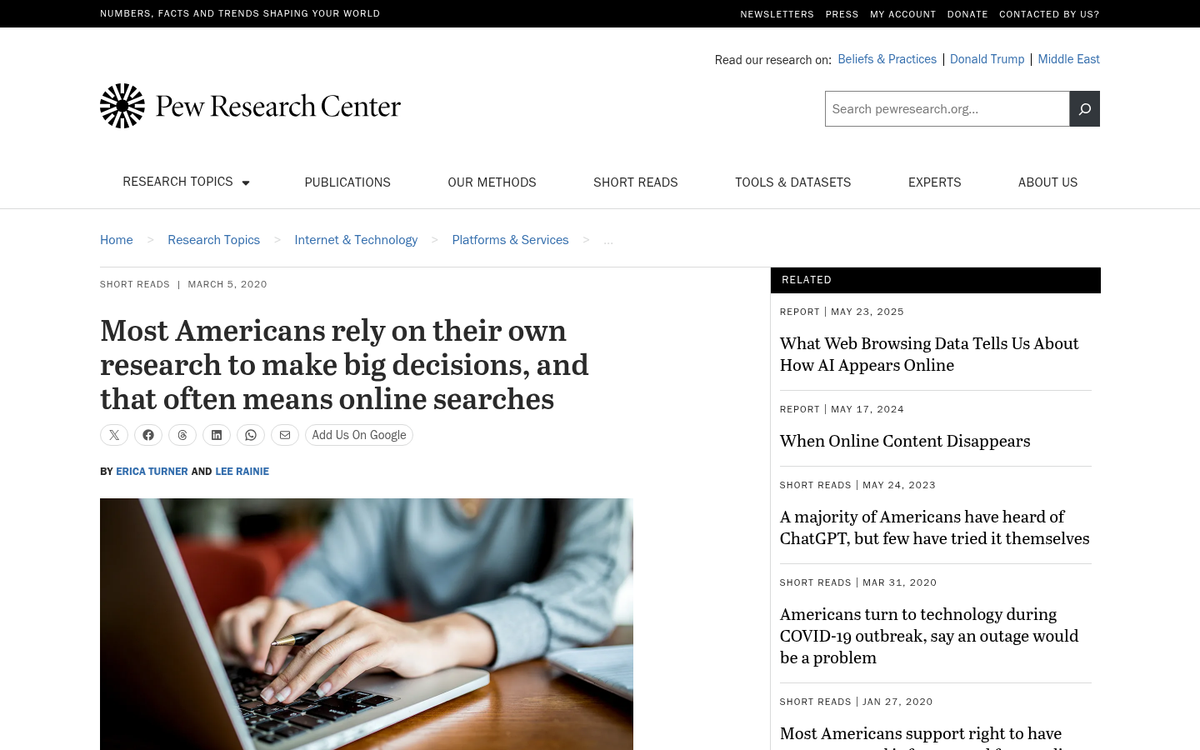
It's worth being honest about one thing, though. AI systems like Perplexity, ChatGPT, and Google's AI Overviews draw from a giant pool of sources - we're talking tens of millions of web pages. Thin content written just to game citations won't make the cut. These systems are built to find the most helpful, well-supported answer - not the most optimized-looking page.
Chasing citations as a tactic on its own is a dead end. The websites that get cited are the ones that actually help people. Substance is the entry ticket, and there's no workaround for that.
AIO and AEO represent a new layer of search presence - one that sits on top of traditional rankings. A page can rank on page two of Google and still get cited in AI answers if the content is legitimately helpful and well-structured; it's an opportunity for smaller sites that have deep expertise in a focused area.
For website owners, the goal is to become the source an AI reaches for when a question lands in your territory. That presence builds over time and across multiple tools at once, which makes it more durable than a single ranking position that can change with an algorithm update.
FAQs
What is a cited source in AI-generated responses?
A cited source is any online content an AI system references when constructing its answer to a user's query, such as blog posts, product pages, or FAQ sections.
Why does Wikipedia dominate AI citation results?
Wikipedia holds 47.9% of ChatGPT's top-10 citations because it features neutral language, dense factual content, consistent structure, and millions of web references signaling reliability to AI systems.
What content traits help earn AI citations?
Well-structured, in-depth content that directly answers questions, links to credible sources, and demonstrates topic expertise is most likely to be cited by AI systems.
How does being cited benefit my website?
AI citations increase brand visibility inside AI-generated answers, drive higher-quality referral traffic, and build perceived authority among journalists, researchers, and potential customers.
Do different AI tools cite sources differently?
Yes. Perplexity favors recent indexable content, Google AI Overviews prefers traditionally high-ranking pages, and ChatGPT leans toward well-established sources from its training data.