Oh, Traffic Bot Pro. Where to begin with this piece of software? First of all, it's pretty well impossible to track down. The trafficbotpro.com website is deindexed in Google and largely missing from the Internet Archive, though some snapshots have been taken that won't reliably display. Strike number one.
When you run a search looking for Traffic Bot Pro, what you'll find are three things.
- Results that just use the words "traffic bot," of which there are many.
- Results that lead to people selling traffic generated by Traffic Bot Pro.
- Results that lead to videos demonstrating the software (occasionally under other names) with links to pages where they sell the bot traffic themselves.
So, if you've ever wanted to buy cheap traffic from Fiverr or similar gig platforms, you can certainly do so. Some of these sellers run the program on your behalf; some of them hand you the software with video instructions and let you fend for yourself. Thin, low-quality affiliate posts propping up a shady product? That's strike number two.
The software itself has been tested across Windows XP, Vista, Windows 7, Windows 8, and Windows 10, as well as on MacBooks running Windows via a virtual machine - which tells you something about the longevity and the audience of this thing. It requires a screen resolution larger than 1024x768px, and supports adding up to 50 cloud-controlled computers, servers, or VPS instances, each running 10 threads, for a total of 500 concurrent threads hammering a target website. That's the headline feature, apparently.
Despite all of this, TrafficBotPro has managed to accumulate 23 reviews on Trustpilot with an average of 4 stars - which sounds impressive until you dig in. One reviewer reported average visit durations of only 5 seconds and gave it 1 out of 5. Another noted using it across versions 3 through 5 over three years. When your loyal user base is measuring loyalty in "how many versions I've grudgingly tested," that's not exactly a ringing endorsement.
Just looking at the application, a smart marketer will be seeing red from all the warning signs. Just look at the options:
- How many threads? That is, how many instances of the bot will be running concurrently, delivering hits to the target website.
- Proxy list? Obviously the bot has to pretend to be coming from all sorts of different IP addresses, otherwise the hits would be recorded as single visits rather than hundreds per hour.
- Time on site? The traffic is coming from a bot, so the bot needs to be told how long to stay on the site - because it certainly isn't going to stick around on its own.
All in all, it's very obvious what you're getting: a program that routes through proxies and delivers fake hits to a website. The question is, what good is it?
Key Takeaways
- Traffic Bot Pro's website is deindexed and nearly unfindable, with sellers mainly distributing it via Fiverr gigs.
- The software supports 500 concurrent threads across 50 machines, routing fake visits through proxies to inflate analytics.
- Real user reviews report average visit durations of only 5 seconds, making it useless even for vanity metrics.
- Modern platforms like Google Analytics 4 and ad networks have improved bot detection, risking data poisoning and account flags.
- Bot traffic generates fractions of cents versus real visitors who make actual purchasing decisions, offering virtually no legitimate value - unlike how large sites increase ad revenue by purchasing traffic through legitimate means.
What's the Point of Traffic Bot Pro?
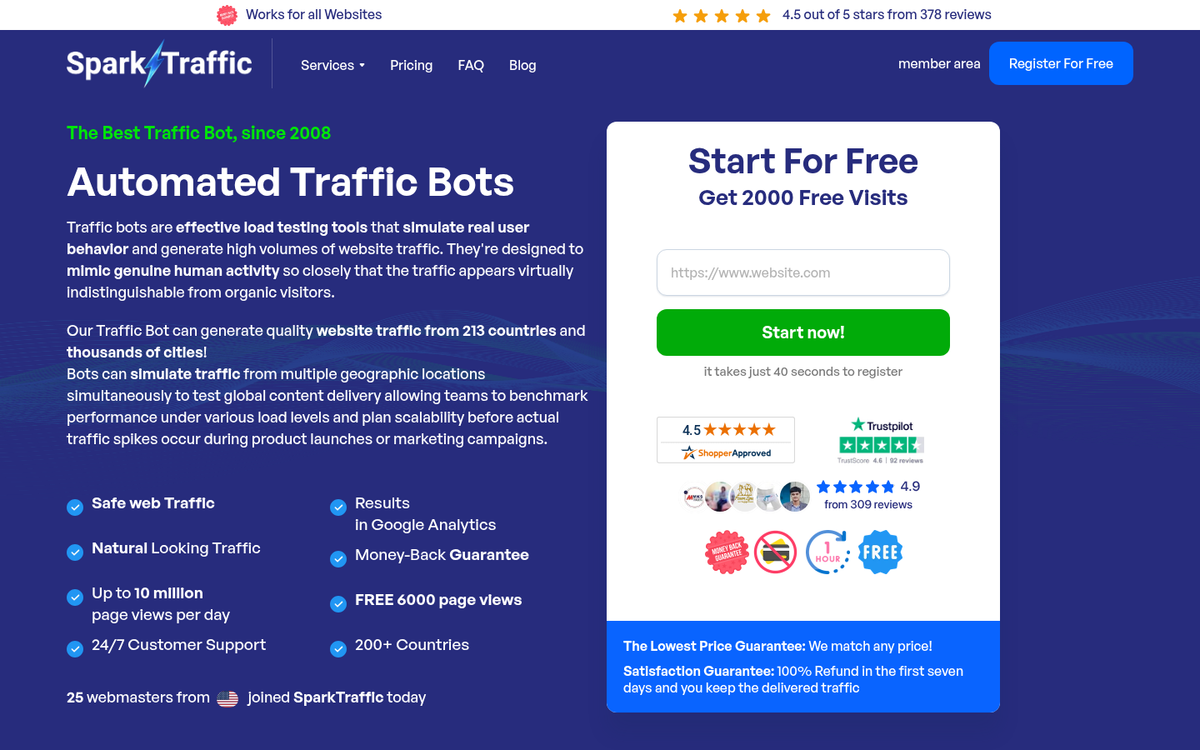
Traffic Bot Pro, or any of the countless interchangeable variations flooding the market in 2026, all operate in the same simple manner. They're software pretending to be people, loading websites. This does a few things. First, it drains server resources by sending requests and loading pages. Second, it drains the client's PC resources and bandwidth. Third, it inflates hit counts in whatever analytics platform you're using. Fourth, it could theoretically load display ads that pay per pageview, allowing the site owner to squeeze out a fraction of a cent per visit.
So what's the point? You know from the outset that every single visit is coming from a piece of software - and not a particularly sophisticated piece of software at that. The 5-second average session duration reported by real users makes it borderline useless even for inflating vanity metrics, let alone fooling any modern analytics platform worth its salt.
The problem with Traffic Bot Pro and its variants, for any serious marketer, is one of visit value. When you're performing SEO, running paid social, or doing anything else that moves the needle, your goal is to attract people to your site. Not traffic - people. Real people with real interests that you can cater to, real problems you can solve, and real wallets attached to real purchasing decisions.
One legitimate $5 sale would earn you more in a minute than Traffic Bot Pro refreshing a page with pay-per-view ads could generate in a month of continuous running. And that's before you factor in the very real risk that Google Analytics 4, modern ad networks, and programmatic platforms have become significantly better at detecting and filtering bot traffic. You're not just wasting money - you're potentially poisoning your own data and getting your ad accounts flagged in the process.
The moral of the story hasn't changed since this software first appeared, and it won't change no matter how many version numbers it cycles through: unless you enjoy making fractions of pennies through low-quality websites while your analytics fill up with garbage data, avoid anything with the word "bot" anywhere near it.