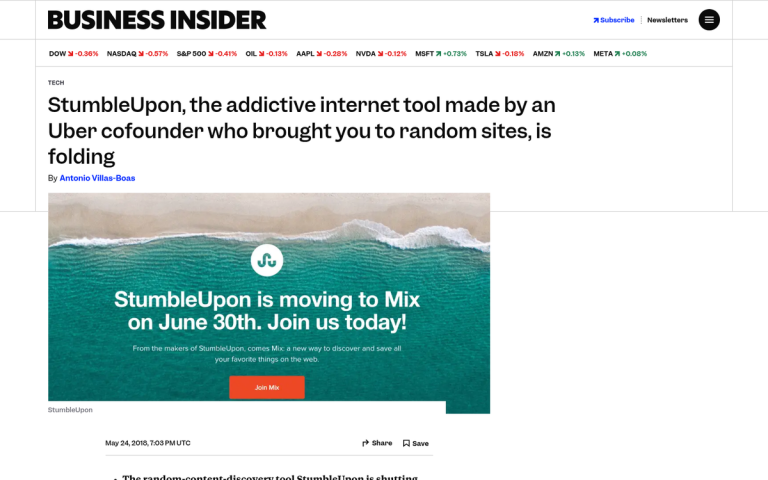
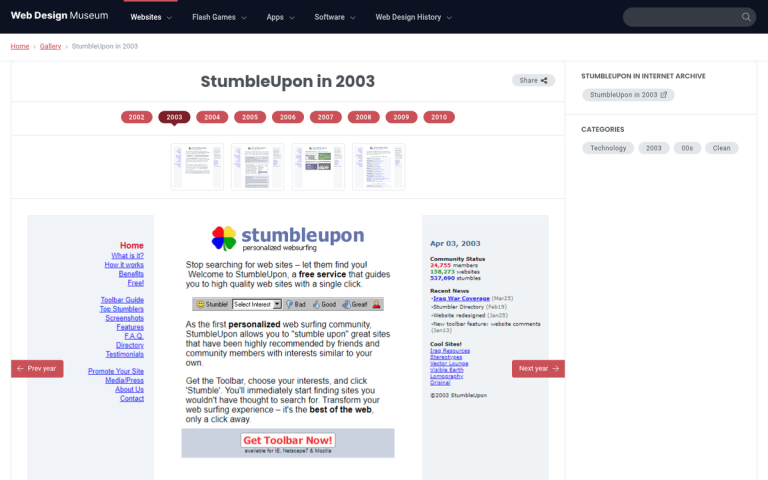
Mix StumbleUpon into your strategy and you're either nodding along or scratching your head - because StumbleUpon shut down in June 2018. It was replaced by a successor platform called Mix.com, which attempted to carry the torch of content discovery but never gained meaningful traction. Mix itself has since faded into obscurity, and as of 2026, it's largely irrelevant as a traffic source.
So why are we still talking about this?
Because the concept behind StumbleUpon - passive, interest-based content discovery - didn't die with the platform. It evolved. And understanding what made StumbleUpon work at its peak is genuinely useful for navigating today's content discovery landscape.
At its height, StumbleUpon was a powerhouse. According to StatCounter GlobalStats data derived from over 13 billion page views, StumbleUpon was the #2 social media traffic generator globally, accounting for nearly 25% of all social media-driven traffic. It drove over 50% of social media traffic in the United States at one point, and a popular link would continue collecting "stumbles" long after Twitter and Facebook engagement had dried up - 83% more stumbles after 24 hours, compared to just 5% more likes on Facebook. It drove 3x more traffic than Reddit. Sites like ToobBox reported 7,000 views in a single day from the platform alone.
Those numbers are worth pausing on, because they illustrate something important: passive discovery platforms can outperform active social sharing by a wide margin.
Key Takeaways
- StumbleUpon shut down in 2018; its successor Mix.com also failed, making both irrelevant as traffic sources today.
- At its peak, StumbleUpon generated 25% of all global social media traffic, outperforming Facebook, Twitter, and Reddit significantly.
- Pinterest, Reddit, TikTok, and Flipboard now fulfill StumbleUpon's original role as interest-based content discovery platforms.
- Proper interest-based categorization remains critical across all modern discovery platforms, as miscategorization wastes reach entirely.
- Organic discovery compounds over time; consistent, well-categorized content creation remains the most durable long-term traffic strategy.
What Replaced StumbleUpon in 2026
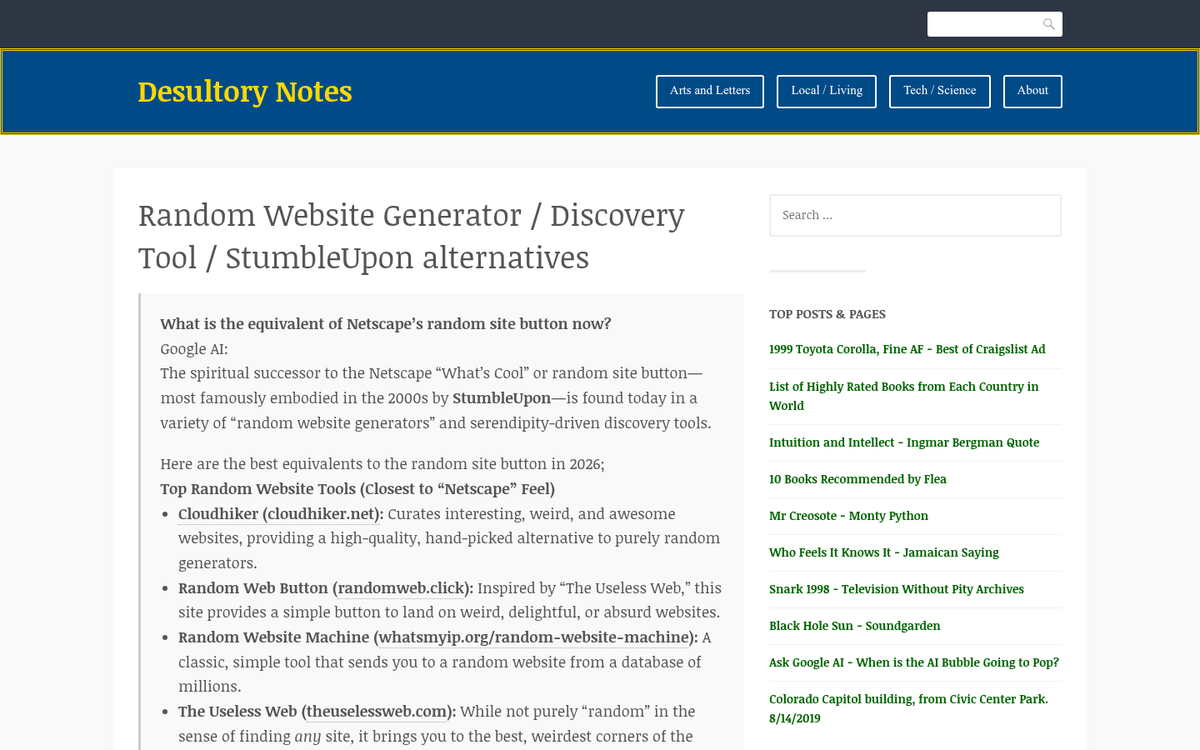
The spirit of what StumbleUpon did - surfacing content to users based on interests, without requiring active searching - is alive and well. It just looks different now. Here's where that energy has gone:
Pinterest has become one of the closest functional successors. Interest-based, visually driven, and built around discovery rather than social connection, Pinterest drives enormous referral traffic for the right niches. If your content is visual - recipes, design, fashion, home improvement, travel, DIY - Pinterest should already be a core part of your strategy, not an afterthought.
Reddit remains a powerful discovery engine for the right communities. The key difference from StumbleUpon is that Reddit requires active community participation rather than passive browsing. Drop a link without context or community standing and it will be ignored or downvoted. Build a presence in the right subreddits and the traffic can be extraordinary.
TikTok and Instagram Reels now function as the de facto passive discovery engines for video content. The algorithm-driven feeds serve content based on interest signals rather than follower graphs, which is structurally very similar to how StumbleUpon worked - users don't choose what they see, the platform curates it for them.
Flipboard is the most direct living heir to StumbleUpon's format. It's interest-based, article-focused, and designed for content discovery rather than social interaction. It has a smaller but engaged audience, and it's worth submitting your content there if you publish long-form articles or news-adjacent content.
Feedly and Pocket serve the more intentional end of the content discovery spectrum - users who actively curate what they want to read. Getting your content distributed through these platforms is less about viral spikes and more about building a loyal readership.
What StumbleUpon Taught Us That Still Applies

Even though the platform is gone, the lessons it taught content marketers hold up remarkably well in 2026.
Interest-based categorization matters enormously. Whether you're tagging a Pinterest pin, choosing a subreddit, or optimizing for a TikTok niche, getting the category right is the difference between reaching your audience and shouting into the void. StumbleUpon made this painfully obvious - miscategorize your content and you'd be served to completely disinterested users who would immediately bounce or downvote.
The first three seconds are everything. StumbleUpon users were notorious for spending a fraction of a second on a page before clicking away. That dynamic hasn't gone anywhere - it's arguably worse now. Whether someone is scrolling TikTok, Pinterest, or an Instagram feed, your content has an instant to hook them or lose them. Headlines, thumbnails, and opening lines matter more than ever.
Volume creates opportunity. StumbleUpon rewarded publishers who had many pages in the database, because each one was another chance to surface in a random browse. The same logic applies across every modern discovery platform. More content, properly categorized and consistently published, means more surface area for discovery.
Organic discovery compounds over time in ways that paid promotion doesn't. StumbleUpon's paid discovery data showed an average effective cost per visitor of just $0.016 - dirt cheap compared to Google or Facebook ads. But the organic momentum that came from genuine upvotes and shares was even more valuable, because it kept delivering traffic long after a paid campaign would have stopped. Today's equivalent is content that ranks organically, gets shared consistently, and earns algorithm favor - it keeps working without continued spend.
Community participation builds credibility. StumbleUpon punished accounts that only submitted their own content. Every modern platform does the same. Accounts that only post their own links, never engage with others, and never contribute to the community are flagged as spam - algorithmically if not explicitly. This hasn't changed.
The Practical Takeaway for 2026

If you came to this page looking for a StumbleUpon strategy, the honest answer is: redirect that energy. The platform is gone and its successor went nowhere.
But if you're looking for the traffic outcomes that StumbleUpon once delivered - cheap, scalable, interest-based discovery traffic that compounds over time - those outcomes are absolutely still available. They just require a slightly different playbook depending on your niche:
- Visual or lifestyle content: Pinterest and Instagram are your primary discovery channels.
- Video content: TikTok and YouTube Shorts are the passive discovery engines that StumbleUpon once was.
- Long-form articles and editorial content: Flipboard, Reddit (carefully), and organic search are your best bets.
- Niche or technical content: Reddit communities and niche newsletters are more effective than any broad platform.
- All of the above: Consistent SEO-driven content creation remains the single most durable traffic strategy, because it mimics what made StumbleUpon valuable - surfacing your content to people who are already interested in it, without requiring you to pay every time.
StumbleUpon was ahead of its time in a lot of ways. The platforms that replaced it learned from what it did right. Understanding those principles is still worth your time - even if the platform itself is long gone.