Key Takeaways
- StumbleUpon shut down in June 2018, replaced by Mix, which never gained traction and faded into irrelevance.
- StumbleUpon ads cost 10-15 cents per visit but consistently produced 90%+ bounce rates, proving cheap traffic isn't good traffic.
- Reddit, Pinterest, Outbrain, Taboola, and short-form video platforms now fill the content discovery space in 2026.
- Pinterest functions as a search engine, giving its traffic genuine intent that StumbleUpon traffic fundamentally lacked.
- StumbleUpon's core lesson remains: high-volume, low-intent traffic will always underperform expensive, targeted, intent-driven traffic.
A Note on StumbleUpon - And What Replaced It
If you were around in the early days of content marketing, you probably remember StumbleUpon fondly - or at least with the complicated feelings of someone who spent real money on its paid discovery platform and got a 90% bounce rate in return.
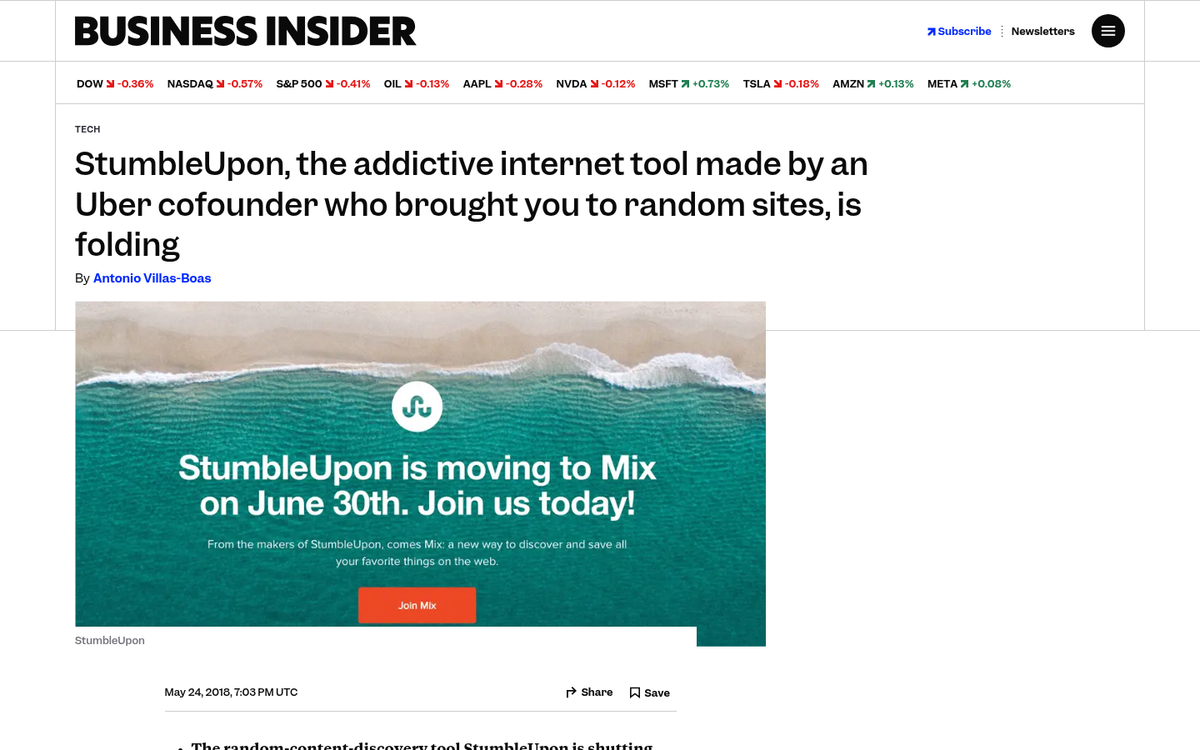
StumbleUpon shut down in June 2018. It was replaced by Mix, a spiritual successor built by the same founder, Garrett Camp. Mix never gained serious traction as a traffic source for marketers, and by the early 2020s it had quietly faded into irrelevance. So if you came here looking for tips on running StumbleUpon ads, that ship has sailed - permanently.
But the underlying question this post was trying to answer is still very much alive: where can you send paid or organic traffic to get quick volume, without torching your budget on unengaged visitors?
That's worth talking about in 2026.
What StumbleUpon Actually Was (And Why It Failed)

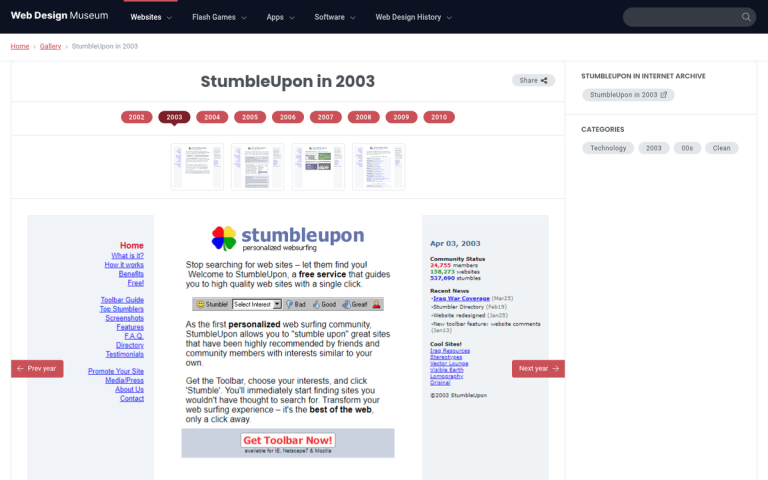
StumbleUpon was a content discovery engine. Users selected interests, hit a button, and got served a random webpage matching those interests. They could upvote, downvote, or just keep stumbling. The experience was designed to be frictionless - almost too frictionless, as it turned out.
For marketers, StumbleUpon offered paid discovery, which slotted your content into the rotation at roughly 10-15 cents per visit. A $100 budget got you somewhere between 650 and 750 visits. At the time, that undercut competitors like Outbrain significantly - Outbrain's CPC ran around $0.53, and interestingly, Outbrain visitors spent more time on-site on average despite costing more than three times as much per click.
That stat alone tells you a lot about the StumbleUpon experience. Cheap traffic is not the same as good traffic.
Bounce rates across documented experiments were a minimum of 90%, consistently. In one memorable case study, 558 StumbleUpon visitors produced just 13 meaningful clicks anywhere on the site. That's not a rounding error - that's a structural problem with the format. Users had their cursor hovering over the next button before the page even finished loading. If your content didn't hook them in the first half second, you lost them.
The platform did have real scale at its peak - 30 million active users, 100,000 advertisers including Comedy Central, Elle, and Levi's, and nearly 40% of stumbles happening on mobile by its later years. Revenue was reportedly on track to hit $35-40 million, growing around 33% year-over-year. None of that saved it. The model was fundamentally at odds with what advertisers actually needed: engaged visitors, not passive ones being served content they didn't choose.
What Fills That Space in 2026
The honest answer is that nothing has perfectly replaced StumbleUpon, because StumbleUpon's core mechanic - serendipitous content discovery - has mostly been absorbed into algorithmic feeds. TikTok's For You page is essentially StumbleUpon for video. Reddit's front page and its subreddit structure do something similar for text and links. Pinterest still dominates visual content discovery, and has matured significantly as an ad platform.
For pure content discovery and traffic volume, here's where things actually stand in 2026:
Reddit remains one of the most powerful organic traffic sources available, provided your content genuinely fits the community you're posting to. Subreddits are highly niche, deeply engaged, and notoriously hostile to anything that smells like promotion. If you can earn upvotes legitimately, the traffic quality is dramatically better than anything StumbleUpon ever produced. Reddit's paid advertising has also matured considerably and is worth testing, particularly for content targeting specific interest communities.
Pinterest continues to perform exceptionally well for visual niches - home, food, fashion, crafts, wellness, and anything else that photographs well. The platform functions as a search engine as much as a social network, which means traffic from Pinterest has intent behind it in a way that StumbleUpon traffic never did.
Content recommendation networks like Outbrain and Taboola are the closest structural descendants of StumbleUpon's paid discovery model - your content appears in recommended reading sections across publisher sites. They've cleaned up their inventory considerably compared to five years ago. The traffic quality varies heavily by placement, but if you have content designed to pull readers in and convert them, these platforms are worth revisiting.
Short-form video is now unavoidable for content discovery. TikTok and YouTube Shorts have an algorithmic discovery engine that genuinely rewards content quality over follower count, at least early in a video's lifecycle. If your content can be adapted to short-form video, the reach potential far exceeds anything available to text-based content marketers in the StumbleUpon era.
The Lesson StumbleUpon Left Behind
The most useful thing StumbleUpon taught content marketers is still true today: traffic volume is not the same as traffic value.
Cheap, high-volume traffic with no intent will always underperform expensive, targeted traffic with clear intent. This seems obvious when you say it plainly, but it's a lesson that gets relearned every time a new cheap traffic source emerges and marketers pile in hoping for shortcuts.
If you are still optimizing for content discovery in 2026, the fundamentals haven't changed much. Your content needs to be genuinely interesting to the specific audience you're reaching. It needs to load fast and make its value proposition clear immediately. And whatever platform you're using to drive discovery, you need to understand whether the users arriving actually chose to see your type of content - or whether they just happened to land on it while clicking through something else.
StumbleUpon failed the second test badly. The platforms that have replaced it, when they work, tend to pass the first one.