





Blogging is hard. It's so hard that thousands of bloggers try to take a shortcut in some way. You know what? It never, never works. Google is a trillion-dollar company with some of the brightest engineers working around the clock to prevent low quality content from surfacing and aggravating its users. Your cheap content spinning software certainly won't fool them.
- When was the last time you saw a highly-ranked blog with a lot of traffic and monetization, hosted on a free web host?
- When was the last time you saw someone making loads of money from one of those thin affiliate sites?
- When was the last time you did a Google search and came up with five iterations of the same content, clearly spun from one to the next?
None of those techniques ever work, and yet there are hordes of black hat webmasters trying and trying to game the process, to put these loopholes into action. They convince themselves in their self-delusion that their means may be sketchy, but their results are worth it.
Meanwhile, the legitimate bloggers are laughing and enjoying their positions at the top. They didn't need to spin articles, they didn't need to dive into weird link schemes; they just worked hard and succeeded where others failed.
The ultimate irony is that so many of these black hat marketers put more work into their repeat failures than the actual legitimate techniques would take. It's not that much effort to forge a relationship with a few writers or to produce quality content yourself, particularly not compared to the constant hunt for a spinner that doesn't suck and isn't immediately circumvented by Google.
I'm not here to convince you not to use article spinners. If you need convincing, you aren't going to listen to reason. I'm just writing this because it lets me laugh at the black hats that willfully ignore the thousands of step-by-step articles that could lead them to success, and instead believe that This One Weird Trick will get them to the top. Google hates it!
And in case you thought AI-powered spinners changed the game - they didn't. More on that shortly.
Key Takeaways
- Passing Copyscape doesn't impress Google - one study found over 92% of Copyscape-passed spun articles were never indexed.
- Google explicitly confirmed spun and auto-generated content violates its webmaster guidelines, and detection has only improved since.
- Mechanical spinners misuse synonyms, producing unreadable content - even a 14-word sentence contained five errors when spun.
- AI-powered spinners don't change the game; spun content still lacks genuine expertise, first-hand knowledge, and real value.
- Manual spinning requires a writer anyway - paying for original content costs the same and eliminates every spinning-related problem.
What is Copyscape
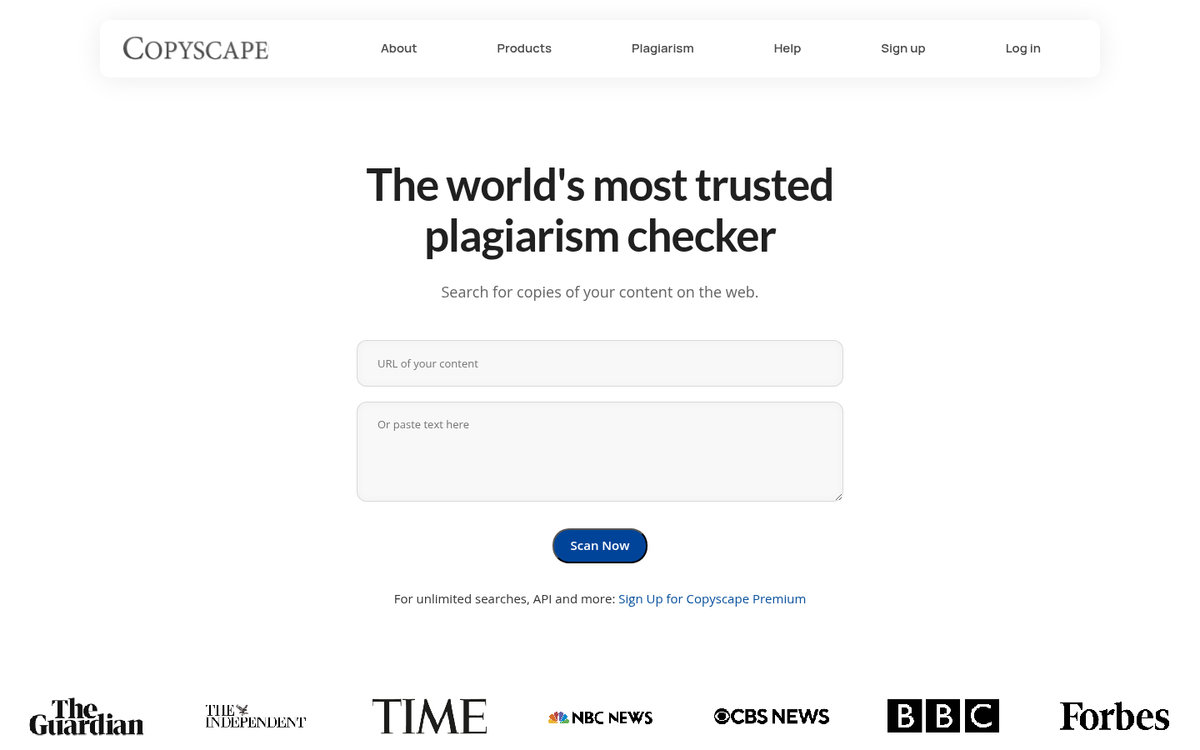
The title of this article throws two terms at you that you may not know. One of them is Copyscape, and one of them is spun content. I'll explain each in turn.
Copyscape is this website. Essentially, it scans the Internet and indexes the content it finds, in much the same way that Google does. It's made to be a plagiarism checker, initially for use in academic circles, to check whether a student's paper has been copied from some third-party source. Academic plagiarism is a big deal, particularly in graduate school, where a term paper can make or break your entire career.
When Google debuted the Panda algorithm change in 2011, it shook up the internet world. Previously, one of the best ways to get a highly ranked site was to create a ton of content, laced with keywords, to rank for every topic you could find. It's why giant content farms like eHow and all the Demand Media properties existed. It's why EZineArticles and similar platforms were built entirely on volumes of content. They didn't care what you published; as long as you published a lot, you earned them revenue, and they'd graciously split some of it with you.
Panda changed all that. Overnight, content farm sites lost enormous percentages of their visibility and traffic. It was downright apocalyptic for some, which died off and never recovered. Panda made thin, duplicate, and low-quality content a punishable offense and put a much, much greater emphasis on the uniqueness and genuine value of a piece of content. It also set the stage for every major algorithm update that followed - including the Helpful Content Update of 2022 and beyond, which doubled down on the same principle: content made for people outranks content made for search engines. This is also why evergreen content matters more than ever for long-term visibility.
That's where Copyscape came in. People realized that a broadly-indexed plagiarism checker was ideal for checking whether a piece of content was unique. Webmasters used it when they bought content, to protect themselves. And, most importantly, webmasters decided that if a piece of content could pass Copyscape, it could pass Google's inspection as well. Is that true? We'll get to that later.
What are Article Spinners
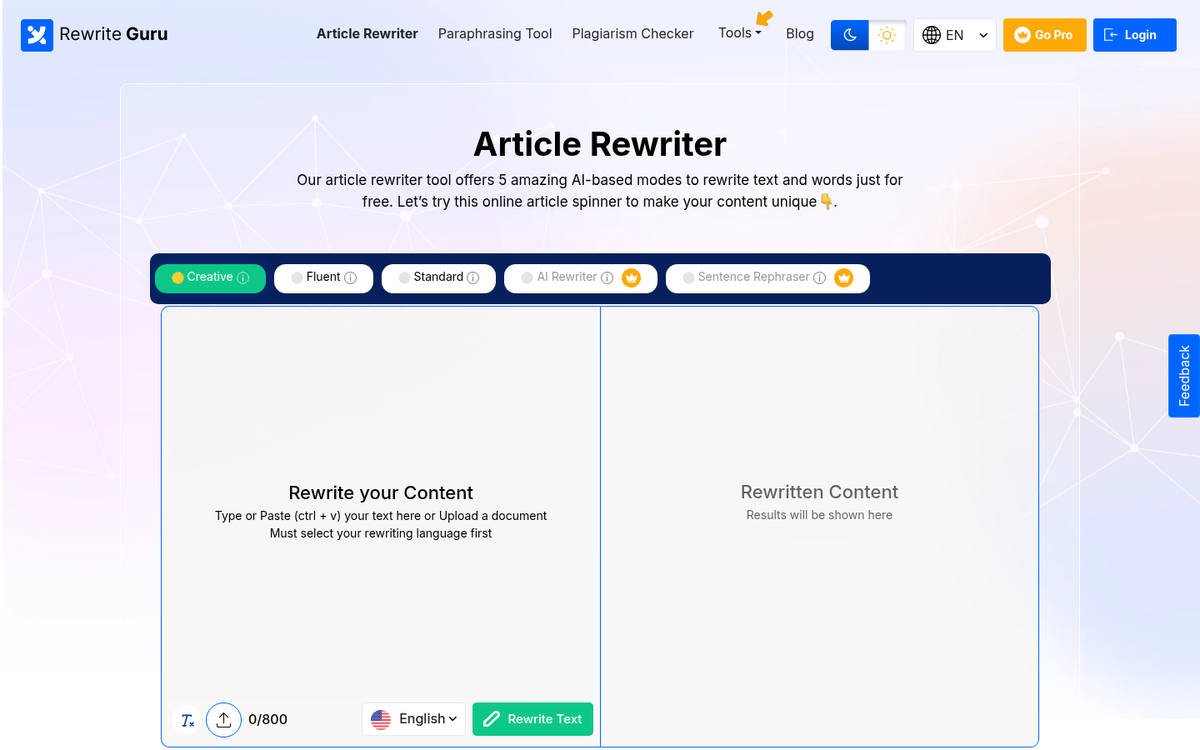
The other term I threw at you in the beginning is the concept of spun content. The essential core of spun content is taking one piece of content and swapping out words to create another piece of content, with the same meaning, but enough surface-level uniqueness that it appears to be original. For example:
- These red tennis shoes are great for traction in the rain.
- These crimson sneakers are excellent for grip in wet conditions.
Those two sentences are identical in meaning, but they use different words.
Article spinning revolves around the division between three types of words. You have your content words, which can be swapped out with synonyms to create a new sentence. Tennis shoes and sneakers is one example. You also have your stop words, which are words like these, are, for, and in. These words don't matter much; they're so grammatically common that you can't really flag a piece of content as copied based on their repeated use.
The third type of word is the keyword, which typically isn't changed when spun, to maintain the supposed SEO focus of a piece of content. Of course, the actual SEO value of a piece of content has far more to do with context, trust, authority, and helpfulness than keyword repetition - but that's a detail spun content advocates seem to miss.
There are a few different levels of article spinning.
- Mechanically spun. This is content run through a bot that swaps out synonyms and spits out a new version. It's not very good, it's easy to detect, and it frequently replaces words in nonsensical ways.
- Multi-spun. This is mechanical spinning that takes the output and feeds it through the algorithm again, sometimes multiple times, to create something several degrees removed from the original. The result is usually barely readable.
- AI-assisted spun. This is the "new generation" of spinning, where tools use large language models to rewrite content. Proponents love to brag that the output is 80%+ unique and passes Copyscape. Spoiler: it still doesn't pass Google, and it still doesn't provide real value to readers.
- Manual spun. This is when no software is involved at all - a writer rewrites an existing piece in their own words. At this point, you're paying a writer to do the work, so why not just pay for genuinely original content instead?
All levels of spinning have flaws. They're either easy to detect, read poorly, or are more expensive than just producing legitimate content in the first place.
The Major Flaws in the Spin Plan
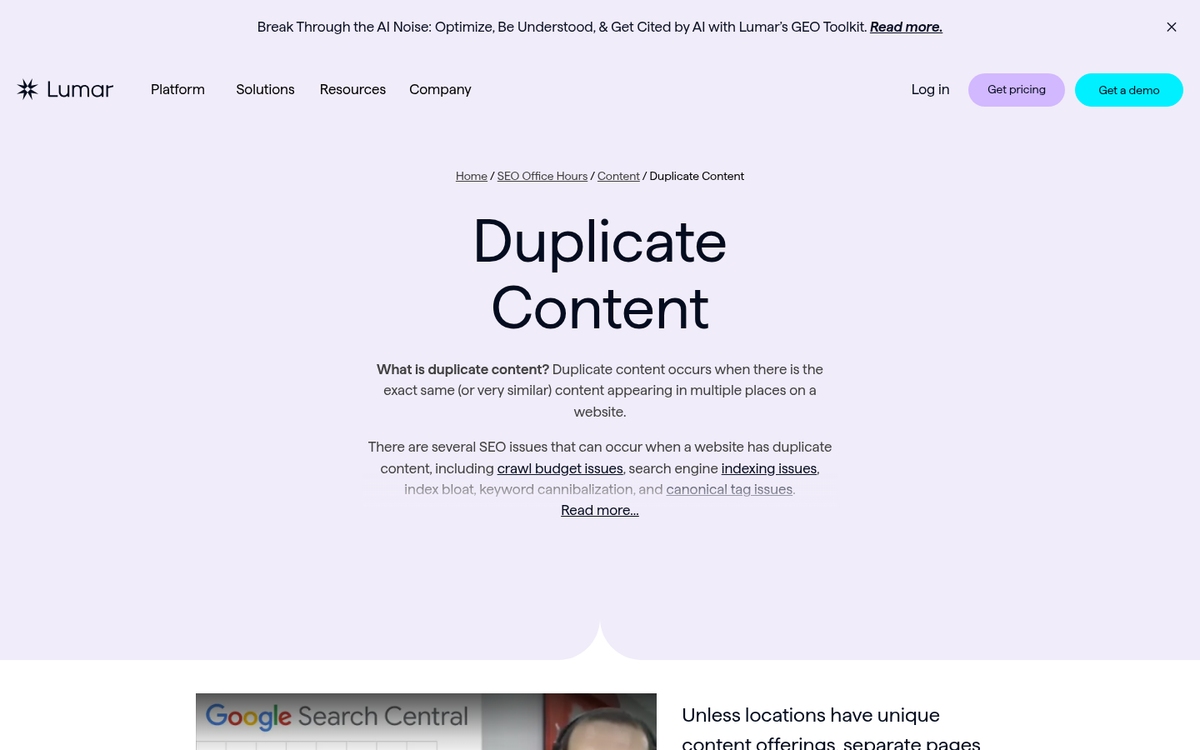
The big selling point most article spinners advertise is "Copyscape passed." In other words, the algorithm in Copyscape doesn't see enough similarity between the spinner's output and anything in its index to flag it as copied. Webmasters assume this means it passes Google, when Google is infinitely more sophisticated. Let's take a look at all the flaws, shall we?
Passing Copyscape doesn't mean what spinners think it means. Here's a fact that should put this to rest immediately: a piece of content can be 98% unique and still be considered plagiarized - legally and ethically - if even a single sentence was used without permission. Uniqueness scores are not a plagiarism clearance certificate. They never were.
And practically speaking? One case study of 100 Copyscape-passed spun articles posted to legitimate PR2+ blogs found that after two weeks of indexing, only 7.41% of the URLs were actually indexed by Google. That's not a rounding error - that's a failure rate of over 92%. Copyscape passing means nothing if Google simply refuses to index your content in the first place.
Google has explicitly said spun content violates its guidelines. This isn't speculation. In September 2019, Google's John Mueller confirmed on record that spun and auto-generated textual content "would be considered against our webmaster guidelines." That was years ago, and Google's ability to detect it has only improved since.
Google knows how spinners work. They're not sophisticated pieces of software. If a casual reader can tell when something is spun, so can an algorithm specifically designed to catch it. There's absolutely nothing stopping Google from purchasing any spinner on the market and reverse-engineering exactly how it works - and you can bet they have.
The fight is always on. There's a constant battle between black hats and Google. It's no different from the fight between antivirus programs and virus creators. In some arenas it may seem like the black hats are winning, but not in this one. Google's resources dwarf any spinner developer's by orders of magnitude.
People can recognize when a post is written poorly. This is, really, the biggest single killer of article spinners. People have an innate sense of what is and isn't natural writing, and spinners trip that sense constantly. No mechanical spinner in the universe reliably produces genuinely readable, useful content. Even the AI-powered tools that have flooded the market since 2022 produce content that - when used to spin rather than to create - still ends up generic, hollow, and obviously stitched together.
Uniqueness doesn't mean value. This is a big piece of the Google algorithm that spammers tend to miss. The Helpful Content system, which has been baked into Google's core ranking since 2023, is specifically designed to reward content that demonstrates genuine expertise, first-hand knowledge, and usefulness to real people. Spun content - no matter how "unique" the word choices - cannot fake lived experience or original insight. It is, by its very nature, a derivative of something else.
And here's the kicker: approximately 25-30% of all content on the web is already duplicate content. The internet is already drowning in rehashed material. Google is not rewarding more of it. They're actively filtering it out.
Synonyms have different meanings. This is another damning flaw with spun content. It relies on a thesaurus to swap out words, but it does so mechanically and randomly. Take these two sentences, for example.
- Sylvester is a popular author with a large body of work available for purchase.
- Sylvester is a prominent writer with a big corpse of effort accessible for buying.
Which one of those is spun? The second one, right? How could you tell? Oh, let me count the ways.
- Prominent doesn't necessarily mean popular - just notable in a field.
- The word big is used in an amateurish way.
- Body and corpse may be synonyms in one sense, but very much not in this sense.
- Work in the physics sense does mean effort, but it's not the right word choice here.
- Buying is a misplaced form of the word as a replacement for purchase, and changes the grammatical structure of the sentence in a clumsy way.
Now imagine that your entire blog is filled with posts that are spun. That one sentence had five flaws, and it was only 14 words long. Extend that to a 1,000-word blog post, multiply it across five posts a week, and you have a site that is functionally unreadable - and completely worthless from an SEO standpoint.
Trick question though: it doesn't really matter, because no one reads past the opening paragraph of the first post they land on. If they're smart, they'll blacklist the site so it doesn't show up in their results again.
At best, spun content looks like it was written by someone with a shaky command of English. At worst, it's near-gibberish that no one would touch with a ten-foot pole.
Just Hire a Writer

At the end of the day, this is what it all comes down to. Article spinners are a pipe dream for black hats who want an easy way around all of the work that goes into running a successful blog. The best version of spinning - manual rewriting - requires a writer anyway. At that point, it's incredibly simple to just say "use this article as a source and write something better."
There. It's that easy. Done. The writer will produce for you a piece of content that is unique, genuinely valuable, and more useful than the original. This, for the same money you would pay to spin content, or to clean up poorly spun content before publication. It eliminates every single problem that comes from spinning, and for the same cost.
And before you argue that AI writing tools changed the math here - they did, but not in the way spinners hoped. Yes, tools like ChatGPT and Claude can produce content faster and cheaper than ever before. But that only raises the bar. If everyone can generate passable content instantly, the only thing that stands out is content that is genuinely insightful, specific, and helpful. Spinning cannot give you that. Original thought and real expertise can.
Don't spin articles. It's dumb, it's valueless, and it's wasted effort - and in 2026, Google has never been better at knowing the difference.


1 response
Thoughtful replies only - we moderate for spam, AI slop, and off-topic rants.
The problem happens when a big company pay good money to good writers to spin your original content . And with a fast website and a team of engineers , original publishers get crushed in search..