Key Takeaways
- Crypto affiliate programs span exchanges, hardware wallets, VPNs, and casinos, each offering different commission structures and audience fits.
- Top exchange programs like MEXC offer up to 70% commission on trading fees, making them among the highest-paying affiliate opportunities available.
- Scams are common in crypto affiliate marketing; watch for commission denials using vague disqualifiers like blacklisted IPs or unmet balance requirements.
- Commissions paid in cryptocurrency carry volatility risk, potentially losing significant value between earning and withdrawal.
- Always start small with new programs to verify they actually pay out before investing serious promotional effort.
Making Money with Cryptocurrency Affiliate Programs in 2026
At this point, we all know what an affiliate program is. We know how to find the worthwhile, high paying affiliate programs. We know how to promote our affiliate codes organically and profitably. So what's the new twist I'm bringing to the table today? Cryptocurrency.
Cryptocurrencies like Bitcoin have matured significantly since the early days, but they're still best understood as traded assets rather than everyday currencies for most people. Yes, adoption has grown - you can pay for more things with crypto in 2026 than ever before - but the volatility is still real, and most people are buying, holding, and trading rather than paying for their groceries in BTC. That's actually fine for our purposes, because it means there's a massive, active ecosystem of exchanges, wallets, and crypto-adjacent services all competing for users - and willing to pay you handsomely to bring those users to them.
The global affiliate marketing industry is projected to reach $27.78 billion by 2027, and crypto is one of the fastest-growing segments within it. Major platforms like Binance, Coinbase, and Bybit are already seeing up to 25% of their online sales come through affiliate marketing. That's not a niche opportunity anymore - that's a core part of how this industry grows.
There are two main ways to approach a cryptocurrency affiliate program. Some programs deal with cryptocurrencies but pay you in dollars. Others - usually the exchanges and wallets themselves - pay out your affiliate commissions in Bitcoin or another cryptocurrency. Both work the same way as any other affiliate program: you sign up, get a referral link, promote it to your audience, and earn a commission when someone signs up and completes the required action. The difference is just what lands in your account at the end.
Potential Issues

There are a few potential issues with going all-in with a cryptocurrency-based affiliate program. Before I go recommending any specific programs, I want to caution you on a few things worth knowing when you're doing your own research.
First up, like with all styles of affiliate program, there are scammers everywhere. This is not unique to the cryptocurrency markets, but it's perhaps a little worse in a world where new businesses spring up - and disappear - every few months. Beware any affiliate program that has no reviews, no verifiable history, and seemingly too-good-to-be-true promises.
The typical scam is pretty simple: the affiliate program just refuses to verify some percentage of your commissions. They might claim the commission came from a blacklisted IP, or from an unsupported country, or cite some other conveniently vague disqualifier. The site gains a customer, but you get nothing. That's your effort and your referral, exploited for free.
There are additional scam vectors specific to crypto's volatility. Say, for example, a program promises you a commission every time someone signs up and deposits $100 worth of Bitcoin. Sounds fine - until the price of Bitcoin drops and that deposit is now only worth $85. Suddenly your commission is denied because the user "didn't maintain the required balance." It's a moving goalpost, and it's been used before.
There are also a ton of businesses that spring up and go under every year in this space. It's easy for a scammer who's been called out to rebrand under a new name and run the same play again. Always do your due diligence before promoting anything, and start with platforms that have a track record. There are creative ways to grow your affiliate income while still being selective about which programs you trust.
And of course, there's the inherent volatility of cryptocurrency itself. If you're getting paid commissions in crypto, the value of those commissions can swing wildly in the span of days. If you're trying to reinvest affiliate earnings back into your business, you want stable, liquid income - not something that's worth $50 on Monday and $30 on Friday. In that case, look for programs that pay out reliable recurring commissions, even if you're promoting a crypto-native product.
Types of Affiliate Opportunities

In the cryptocurrency world, there are several different categories of businesses with affiliate programs. Let's do a quick overview, then dig into some specific examples.
And before we do - just remember the core pillar of affiliate marketing: start small. Don't go all-in promoting a service until you're confident that program is actually going to pay out. The last thing you need is to rack up thousands of dollars in commissions that never materialize. That's your audience's trust spent, and your effort wasted.
The main categories are: exchanges, hardware wallets, VPNs and privacy tools, and crypto casinos. Let's go through each one.
Exchanges
This is where the biggest commissions in crypto affiliate marketing live in 2026. Exchanges compete aggressively for users, and they're willing to share real revenue to get them.
Binance - Binance remains one of the largest crypto exchanges in the world by trading volume, and their affiliate program reflects that scale. Commissions go up to 50% on spot trading fees and 30-40% on futures trading fees. Because Binance users tend to trade frequently and in large volumes, even a modest number of active referrals can generate meaningful recurring income. The program is tiered, with better rates unlocked as your referral volume grows.
MEXC - MEXC currently offers one of the highest commission rates among major exchanges at a flat 70% of trading fees generated by your referrals. That's the highest headline rate you'll find anywhere right now. As always with very high rates, it's worth understanding the full terms before going deep - but MEXC is a legitimate, established exchange with real volume behind it.
Bybit - Bybit has grown enormously over the past few years and is now a top-tier exchange with a competitive affiliate program. Commission structures vary based on tier, but Bybit is known for paying reliably and on time, which matters more than the headline rate if you're trying to build a sustainable income stream. If you're comparing options across the broader landscape, it's worth looking at some of the highest paying affiliate programs outside crypto as well.
Margex - A smaller but notable option: Margex gives every affiliate a flat 40% cut of all trading fees from their referrals. To put that in real terms, Margex reportedly paid out $346,000 in affiliate commissions in a single month. If you have an audience interested in leveraged trading, this one is worth a look.
Coinbase - Coinbase is still the most recognizable name in crypto for mainstream audiences, which makes it useful for promotion even if the commission structure isn't as aggressive as the exchanges above. Their referral program currently pays $10 per successful referral, with the referred user needing to buy or sell at least $100 in cryptocurrency. The referred user also gets $10 back, which gives you an easy hook for promotion. The commissions won't make you rich, but the name recognition makes conversion easier, especially with a crypto-curious audience that isn't already deep in the space.
Wallets
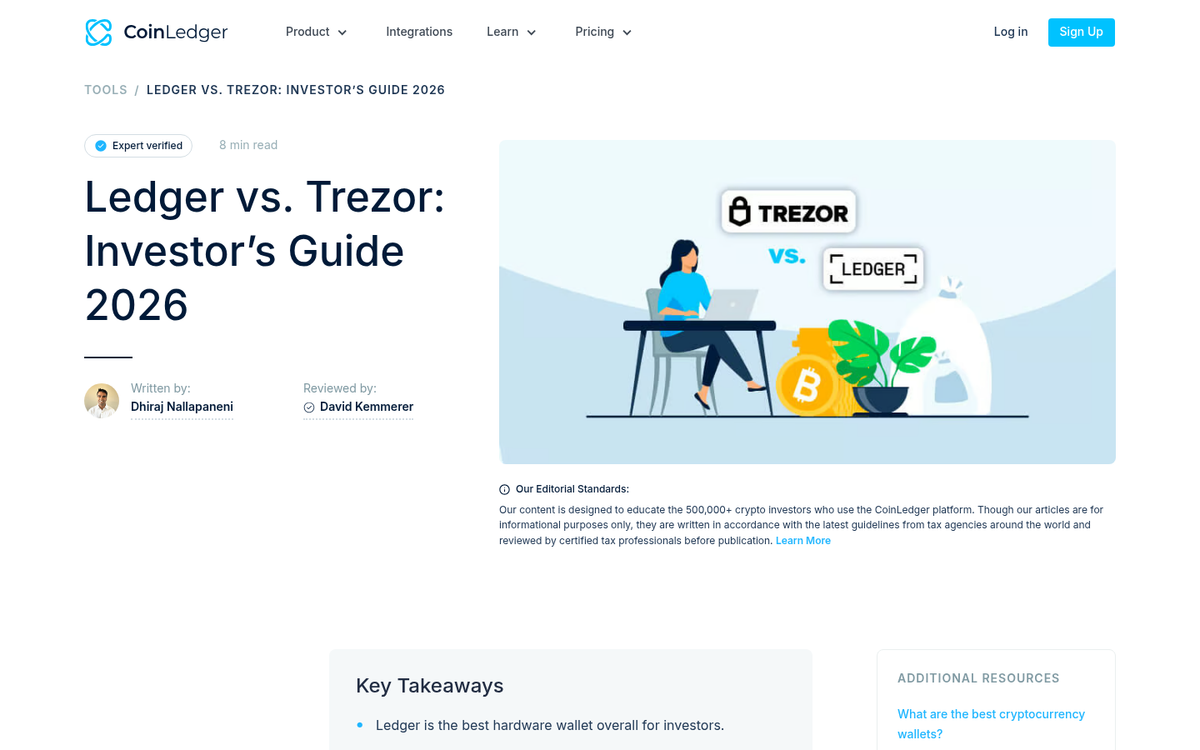
Hardware wallets are a natural fit for crypto affiliate marketing - they're a genuine security need, they're physical products with a clear price tag, and the horror stories of people losing fortunes to hacks or lost seed phrases make them an easy sell. If you're looking for examples of high earning affiliate marketing products, hardware wallets consistently rank among the top performers.
Trezor - Trezor is one of the two dominant hardware wallet brands, and their affiliate program has improved in recent years. Commissions now range from 12-15% of the sale price, depending on your sales volume. Given that Trezor devices range from roughly $60 to $200+, that works out to a meaningful per-sale commission, especially if your audience skews toward serious crypto holders rather than casual users.
Ledger - Ledger is the other major hardware wallet brand, and their affiliate program pays a flat 10% commission per sale, excluding VAT and shipping, paid out monthly. Ledger has the larger mainstream brand presence of the two, which can make it slightly easier to convert a general audience. If you can make a compelling case for why someone needs a hardware wallet - and honestly, between exchange collapses and phishing attacks, that case writes itself - this is a solid, reliable affiliate program. Understanding why some affiliates struggle to earn can help you avoid common pitfalls when promoting products like these.
VPNs and Privacy Tools

IPVanish - IPVanish is a VPN provider that accepts crypto payments and appeals naturally to a privacy-conscious audience that overlaps heavily with crypto users. Commissions start at 100% of the first sale, with a recurring 35% commission on renewals. That recurring structure is genuinely valuable - a customer you referred two years ago is still earning you money every month they stay subscribed, much like the model behind affiliate programs with monthly recursive commissions.
Casinos

Crypto casinos are still very much a thing in 2026, and they still pay some of the more aggressive affiliate commissions you'll find. That said, this is an area where you should be especially careful - both about the legitimacy of the platforms you promote and about whether this kind of content fits your audience and your own values. If you're unsure whether ad networks will even accept gambling and casino websites, that's worth researching before you invest time in this niche.
BitCasino - One of the longer-running crypto casinos, BitCasino has expanded its game library significantly and maintained a fairly transparent affiliate program. Revenue share starts at 35% for your first three months, then shifts to a tiered structure of 25-50% depending on the net revenue generated by your referrals. The upside is real; the caveat, as always with gambling affiliates, is that your commissions are tied to how much your referrals lose.
A Few Final Notes

The programs listed here are a starting point, not an exhaustive list. The crypto affiliate space in 2026 is bigger and more competitive than it's ever been, which means more legitimate opportunities - and more noise to cut through. The fundamentals haven't changed: vet the programs before you promote them, start small, and don't stake your reputation on a platform you haven't verified. If you're new to the space, our giant list of affiliate marketing resources is a good place to sharpen your approach, and it's worth understanding why nobody is clicking your affiliate links before you scale up.
If you've got a favorite program that's paying out reliably, drop it in the comments. Just keep it clean - no affiliate links in the comments, and no shilling your own product.