There is much debate about which is better, SEO or PPC. As with most things in the world of digital marketing, the answer isn't black and white. Neither one is objectively better than the other - they're different tools for different purposes that happen to work toward the same final outcome. Rather than obsessing over which is superior, the smarter question is: how much of each should you be using, and when?
The data in 2026 paints a clearer picture than ever before. SEO delivers an average ROI of 748% for mature campaigns, compared to just 36% for PPC over the long term, according to First Page Sage. The average cost-per-lead from organic search is $14, versus $44 for PPC - a 68% cost advantage that's hard to ignore. And yet, small to medium-sized businesses still invest seven times more in PPC than in SEO, often leaving enormous long-term value on the table.
Key Takeaways
- SEO delivers 748% average ROI for mature campaigns versus 36% for PPC long-term, yet businesses invest seven times more in PPC.
- Organic search costs $14 per lead compared to $44 for PPC, offering a 68% cost advantage that compounds over time.
- After 36 months on the same budget, SEO generates 3.75 times more total revenue than PPC, making it a superior long-term asset.
- Most First Page Sage clients use a 75% SEO / 25% PPC split as a long-term baseline, adjusted based on site maturity.
- PPC traffic stops the moment spending stops; SEO builds durable organic rankings that retain value even if a site is sold.
The Balance of Both Methods
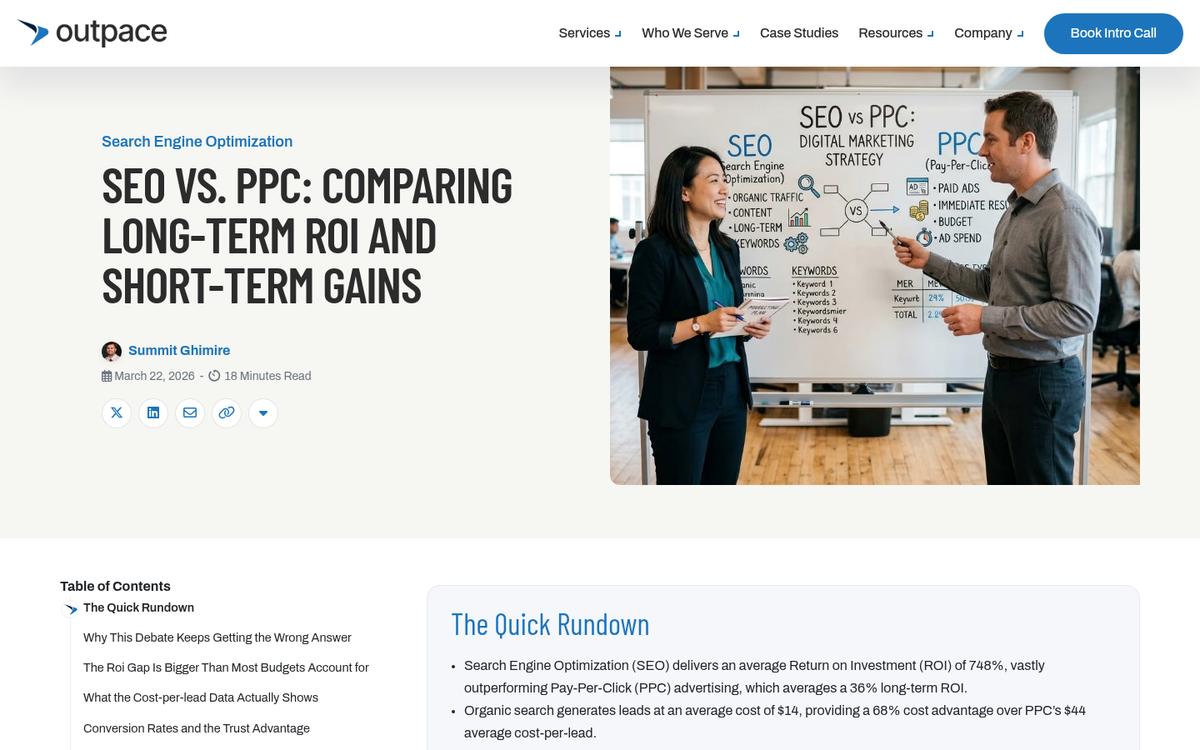
SEO and PPC are different tools with different audiences, different mechanisms, and different timelines - but they both point toward the same destination: more qualified traffic and more revenue for your site.
PPC is your short-term accelerator. Spend money, get traffic. Increase the budget, increase the volume - within the limits of your audience size and competition. Platforms like Google Ads and Meta Ads offer sophisticated targeting that can put your offer in front of exactly the right people almost immediately. That's genuinely powerful, especially when you need results fast.
But PPC comes with real caveats. First, it's fiercely competitive. As more advertisers discover your niche, CPCs climb and margins compress. You're constantly fighting for position, exploring new angles, and testing new audiences just to maintain your ground.
Second, and most critically, PPC is temporary. The moment you stop paying, the traffic stops. It's a faucet - useful, but only while it's running.
SEO, by contrast, is a long-term compounding asset. It requires upfront investment - a site audit, technical fixes, content strategy, link building - with no immediate one-to-one return. But the payoff curve is dramatically different. According to First Page Sage, after 36 months on the same budget, SEO generates 3.75 times more total revenue than PPC. Organic search also converts at 2.4%, nearly double PPC's 1.3% conversion rate. And 53% of all web traffic comes from organic search, compared to 27% from paid.
That's why 49% of marketers now rate organic search as their single highest ROI channel, per Search Engine Journal. The numbers back it up.
A solid SEO foundation still requires the same core work it always has:
- Performing a thorough site audit to identify what's holding you back.
- Resolving technical issues - Core Web Vitals, crawlability, indexing, site speed.
- Cleaning up or consolidating thin, outdated, or redundant content.
- Building a consistent publishing cadence around topics your audience is actually searching for.
- Earning authoritative backlinks through genuine off-site marketing and outreach.
- Optimizing for AI-driven search features like Google's AI Overviews, which are now reshaping how organic results are displayed and clicked.
Determining the Balanced Plan
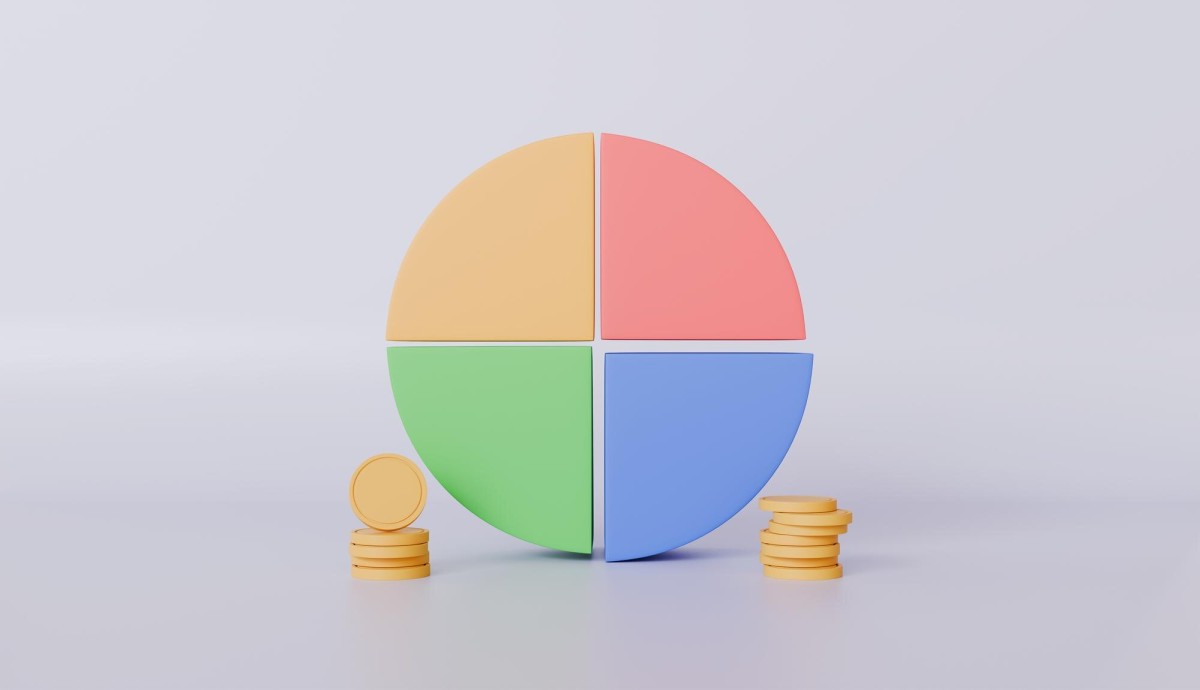
So how do you allocate your budget? Most First Page Sage clients have landed on roughly a 75% SEO / 25% PPC split as a long-term baseline - and the underlying data supports that ratio. But your ideal mix depends on where you are right now.
Invest more heavily in PPC if your site is new and needs an immediate influx of traffic while your SEO foundation is being built. PPC gives you data fast - keyword insights, audience signals, conversion benchmarks - that you can feed directly into your long-term content and SEO strategy. Think of early PPC spend as research you're being paid to collect.
Shift heavily toward SEO if you have an established site with real authority that's being held back by technical debt, thin content, or an inconsistent publishing history. The infrastructure is there - you just need to unlock it. This is where SEO investment pays off fastest.
Scale back PPC if you've been using it as a crutch. Relying on paid traffic for the majority of your visits is a fragile strategy. Platform policy changes, rising CPCs, or a single algorithm shift in ad targeting can crater your traffic overnight. Diversifying into organic search before that happens is simply good risk management.
Invest consistently in SEO if long-term growth is the goal. The ideal SEO trajectory over 12 to 24 months is a steadily rising curve - with normal peaks and valleys along the way. That compounding growth doesn't happen with PPC. It only happens when you've built something that earns traffic on its own.
Likewise, if you plan to sell your site down the road, SEO is how you build durable, transferable value. Your organic rankings, domain authority, and content library all stay with the site. Your PPC campaign data and audience lists largely go with you. Buyers pay premiums for stable organic traffic - not for ad spend dependencies.
Use PPC when precision and speed matter most. If you're targeting a narrow, specific demographic and need them now - for a product launch, a time-sensitive promotion, or a seasonal offer - paid platforms give you the targeting granularity and immediacy that SEO simply can't match. For seasonal businesses especially, a well-timed PPC campaign during peak weeks can dramatically outperform waiting on organic rankings that may never arrive in time.
If you're building from scratch with authority as the goal, consider something close to a 60/40 or 65/35 split in favor of SEO from the outset, with PPC providing a traffic floor while organic momentum builds. Gradually shift the ratio toward SEO as your rankings improve and your content earns consistent clicks.
As for the exact dollar figures - there's no universal answer. PPC costs vary wildly by niche and competition level. SEO agency pricing spans an enormous range depending on scope, market, and deliverables. What the data does tell you clearly is this: over time, every dollar shifted toward SEO tends to compound, while every dollar spent on PPC resets to zero the moment you pause the campaign. Do your research, model out both scenarios for your specific market, and let the numbers guide your allocation.