Key Takeaways
- Idea generation is the hardest blogging challenge; weak headlines alone can eliminate 80% of potential traffic before readers click.
- Effective topic strategies include monitoring customer pain points, competitor content, blog comments, and refreshing older high-performing articles.
- AI tools like ChatGPT, Claude, and Gemini now serve as powerful brainstorming partners, generating dozens of topic angles within seconds.
- Platforms like BuzzSumo, Ahrefs, and Semrush help identify high-performing content and gaps competitors haven't thoroughly covered yet.
- Quora and Google Alerts offer underrated, low-cost ways to discover real audience questions and monitor emerging niche trends.
One of the hardest parts of running a blog isn't the writing. It's not the promotion- it's not link building, SEO, or any of the rest of that- it's actually something quite a bit simpler, and quite a bit more important to the success of your blog: idea generation.
Just think about it. If you're running a blog that posts two new articles every week, that's 104 posts per year. That means, over the course of a year, you have to come up with over 100 workable ideas. These ideas need to be novel or original enough that there isn't competition for them out there. They need to be substantial enough to write a decent amount about. They need to be interesting and catchy, which partially relies on the exact phrasing of the title, but partially just on the power of the topic. Studies are showing that only around 20% of headline readers ever click through to read the full post - meaning a weak topic or title kills 80% of your possible traffic before it even begins. A great headline, on the other hand, can increase traffic by as much as 500%.
Now what about a blog that posts a new post seven days a week? Can you sustain coming up with 365 new, high quality ideas every year, indefinitely? It's no wonder marketers and bloggers try every resource available for help; it's why content farms, low-effort AI-generated filler, and topic recycling have all become so rampant.
One thing that separates the good bloggers from the bad are the topics. Bad bloggers copy, recycle, and churn out hollow content. Good bloggers create, originate, and generate ideas that actually serve their readers.
Here's the secret, though: no one does it entirely alone. The best bloggers use a combination of personal creative habits and external tools to stay ahead. And in 2026, the toolkit available to bloggers is growing- especially with AI now playing a big part.
Methods for Creating Article Topics
Thinking about customer pain points. Your customers have wants and needs. They have irritations that lead them to search out information and products. Pain points are your gateway to user-focused content and, sometimes, new products.
Listening to customer feedback. Your users have things to say, and they will have questions to ask. Any time a user asks a question, that's a chance for you to turn that question into a blog post. If the question is asked frequently enough, it can become fodder for the FAQ.
Reading blog comments, on your site and on others. This is very like customer feedback, but is positioned more publicly on your blog. You can also use it to answer questions that users ask your competitors, stepping in where they fall short and capturing that audience.
Checking out what the competition is doing. What popular blogs in your industry have prominent content? Who is going viral, and with what? Don't imitate - use it as a springboard. Do them one better, one-up them, and go above and beyond what they've already published.
Finding older, out of date articles and refreshing them. A lot of times, older content can be helpful once updated and improved. You don't need to start from scratch; find your best performing older content, bring the information current, and republish it. It's one of the most efficient content strategies available.
Pulling ideas from industry publications and newsletters. Most people skim headlines and never go deep. If you actually read industry reports, trade publications, and niche newsletters thoroughly, then you'll find angles and topics that others in your space haven't covered yet.
Presenting internal data in a novel way. A lot of blogs publish monthly or periodic reviews of their performance, their growth, what they've done and how it has worked for them. This is especially common in the SEO and marketing niches- it only works if you have something legitimately interesting to say. But when you do, these posts tend to draw strong backlinks.
Covering local news events your competitors can't touch. A local business can speak to local sensibilities where a more widespread business can't. This is one of the ways smaller blogs and businesses can compete - by going hyper-local and winning audiences that bigger, generalist publishers basically can't serve.
Personal predictions for the future. This is especially helpful if you're a thought leader, or if you're trying to become one. Prediction posts - especially at the start of a new year - tend to draw links and citations over time, and that's also the case when your predictions turn out to be accurate.
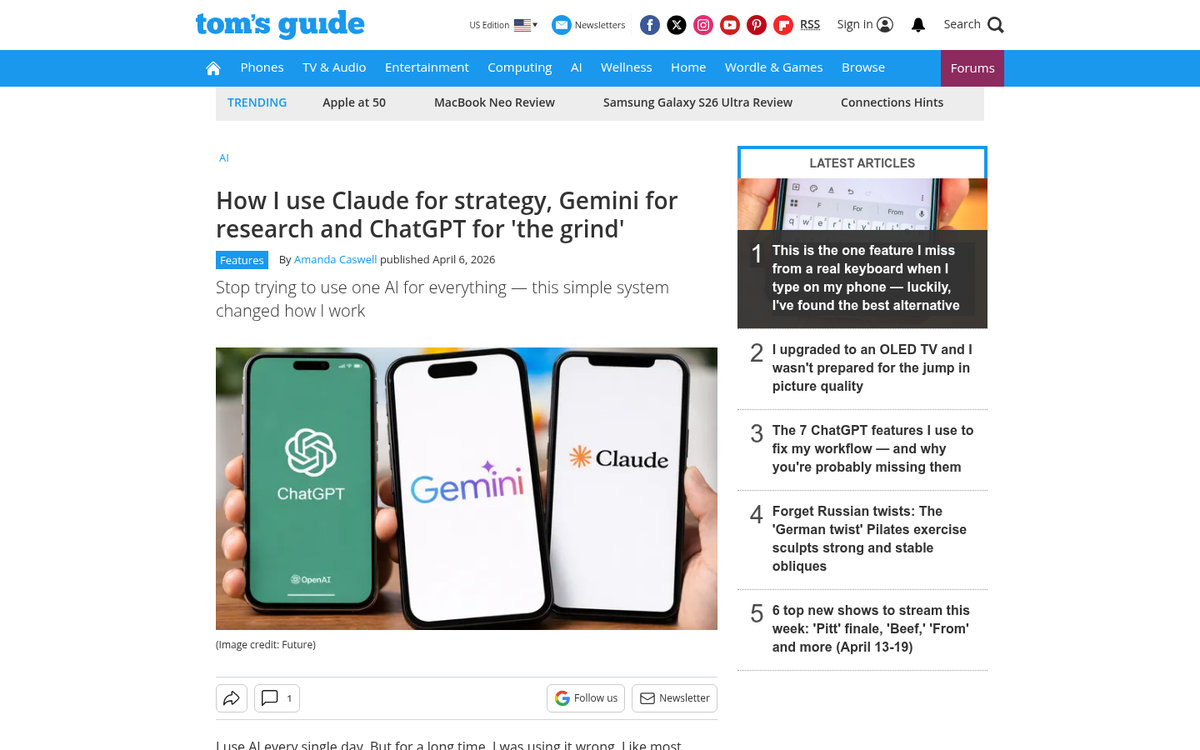
Using AI as a brainstorming partner. This is arguably the biggest change in content ideation since RSS feeds. Tools like ChatGPT, Claude, and Gemini can now serve as on-demand brainstorming partners. Feed them your niche, your audience, your existing content, and your goals, and they'll generate dozens of angles in seconds. The key is to use AI to spark and expand ideas - not to outsource your thinking entirely. The bloggers winning in 2026 are the ones using AI to move faster- not the ones letting AI think for them.
Employee team brainstorming. You're not in it alone. You can always get your employees or partners together for a brainstorming session. Who knows, maybe some of them have had ideas they've wanted to cover for a long time and were just never given the chance.
You get the idea. There are a lot of different resources you can tap into that go beyond a third party system or algorithm- it's through a combination of personal creative habits and external tools that the best blogs produce quality content at scale. We take any resource we can and use it to our benefit.
Links to Tools
ChatGPT / Claude / Gemini (AI Brainstorming Tools)
If you're not using AI for content ideation in 2026, you're leaving competitive advantage on the table. Large language models like ChatGPT (OpenAI), Claude (Anthropic), and Gemini (Google) have become indispensable brainstorming tools for bloggers. You can describe your niche, your audience, your content goals, and your existing posts - and within a few seconds, generate dozens of fresh topic angles, headline variations, content series ideas, and more.
The most important thing to know is how to use these tools well. Vague prompts produce vague output. The more context you give - your target reader, the intent behind the post, the tone of your blog - the more helpful the suggestions become. Use AI to generate raw material, then apply your own editorial judgment to refine and prioritize. These tools are best thought of as active brainstorming partners- not ghostwriters.
All three have free tiers worth trying, with paid plans unlocking higher usage limits and more capable model versions. For content ideation alone- even the free tiers are remarkably helpful.
Tweak Your Biz Title Generator
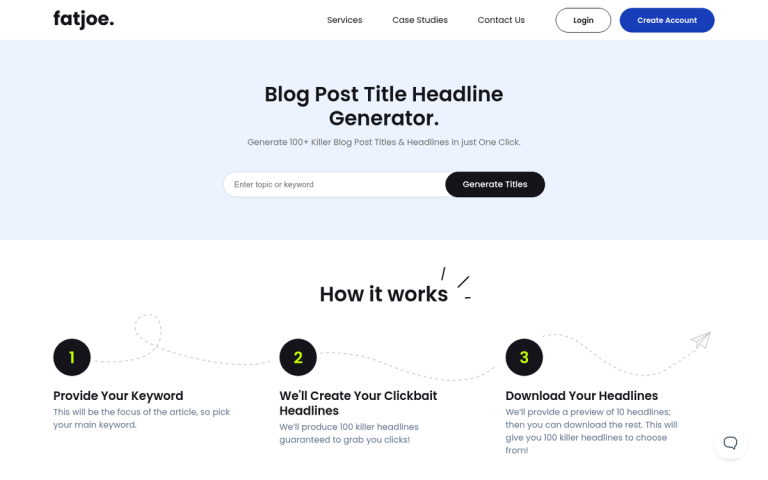
This title generator takes a keyword you enter and produces a large categorized list of title ideas across multiple formats - list posts, how-to titles, question-based titles, motivational titles, and more. Enter "blogging" and you'll get 200+ suggestions in seconds.
It's a tool for breaking creative blocks and generating title frameworks faster. Its limitations are that the templates repeat predictably once you've used it a few times, and not all generated titles make grammatical or logical sense. The best strategy is to use it to build a library of title templates - run your keyword as a noun and a verb, export the results, prune the unusable ones, and keep the rest as a swipe file you can adapt to any topic.
HubSpot's Blog Topic Generator
HubSpot's topic generator asks you to enter up to five nouns and generates a week's worth of blog post ideas - defined as five topics. The suggestions tend to be more coherent and helpful than purely template-driven generators, reflecting HubSpot's deep experience in content marketing.
For expanded results, HubSpot has additional topic generation through its wider content tools, though deeper features are gated behind their paid platform. For quick ideation, the free version remains a helpful starting point, and that's especially true if you already know the broad subject areas you want to cover and just need a push in the right direction.
Content Strategy Helper
This tool is powered by Google News and a Google Spreadsheet, and pulls in trending topics across sources like Reddit, YouTube, and news feeds. Rather than handing you ready-made titles to publish, it surfaces what's already gaining traction - giving you raw material to riff on, respond to, or improve upon.
A particularly helpful secondary feature is its identification of outreach targets: possible contacts you might reach out to for quotes, collaborations, or link opportunities related to the topics surfacing in your niche- it's a more journalistic tool than a pure title generator, and works best for bloggers who want to tie their content to current conversations instead of evergreen topics.
BuzzSumo
BuzzSumo remains one of the most well-known content research platforms available.
Over the years BuzzSumo has expanded - it now includes features like influencer identification, content alerts, journalist databases, and trending topic feeds- it's a legitimately full-featured research platform. Pricing has evolved accordingly - plans now start at a higher price point than they once did, so it's best suited to content operations or agencies managing multiple clients. A limited free trial is available if you want to evaluate it before committing.
Semrush Topic Research & Keyword Magic Tool
Semrush has grown into one of the most comprehensive content and SEO research platforms available. Its Topic Research tool lets you enter a subject and receive an overview of related subtopics, popular headlines, and commonly asked questions - all drawn from search data. The Keyword Magic Tool complements this by revealing the exact language your target audience uses when searching, which is helpful for framing titles and angles.
Semrush is a paid platform, but it has a free tier with limited queries that's worth exploring. For bloggers who are serious about aligning content strategy with search demand, it's one of the strongest all-in-one options available in 2026.
Ahrefs Content Explorer
Content Explorer functions similarly to BuzzSumo - you search a topic and receive a list of high-performing articles ranked by organic traffic, backlinks, and social shares- it's especially strong for identifying content gaps: topics that are driving search traffic but haven't been covered thoroughly by your competitors yet.
Ahrefs has continued to expand its toolset and remains a favorite platform for content and SEO work. Like BuzzSumo, it's a paid product focused on professional users.
Quora
Quora continues to be one of the most underrated sources of blog topic ideas- it's a question-and-answer platform where real people ask questions - and unlike the long-defunct Yahoo Answers, Quora has maintained a pretty high standard of response quality, with genuine subject matter experts contributing alongside everyday answers.
The simplest way to use it is to search your niche and browse the questions people are actively asking, and each question is a possible blog post waiting to be written. For a more strategic approach, write the blog post, then return to Quora and post a summarized answer that links back to your full piece. Done well, this positions you as an authority, drives referral traffic, and gives your post extra visibility beyond search alone. With AI-generated content flooding corners of the web, places like Quora - where human curiosity drives the questions - have become even more valuable as a topic research tool.
Google News & Google Alerts
Google News remains one of the most reliable ways to keep a finger on the pulse of your industry. You can filter by topic, region, and publication type, which makes it easy to find emerging stories worth commenting on or building content around before they become oversaturated.
Paired with Google Alerts - which notifies you by email whenever new content matching your chosen keywords is indexed - it gives you a low-effort, automated monitoring system for your niche. Set alerts for your core topics, your brand name, your competitors, and any trending terms in your space. When something relevant surfaces, you'll know about it early enough to respond with timely content.
Help A Reporter Out (HARO) / Connectively
HARO - now operating under the name Connectively following its acquisition and rebranding - connects journalists and bloggers with sources and subject matter experts. As a blogger, you can play both sides of this equation.
As a source, you respond to reporter queries with your expertise, potentially earning mentions and links in publications ranging from niche blogs to major outlets. As a reporter, you post your own queries looking for expert input on a topic you're covering, then build an article around the replies you receive- it's one of the few content tools that simultaneously helps with ideation, content creation, and link building - making it worth including in your standard workflow regardless of your niche.