





Key Takeaways
- AI tools like ChatGPT, Claude, and Gemini have become the most powerful title brainstorming resources, replacing older template-based generators.
- Template generators are formulaic and competitors using the same tool may generate identical titles, so always search before using one.
- Keep titles under 60 characters to ensure they display fully in search results and avoid hurting click-through rates.
- Collect generated titles into a spreadsheet, rank them, and track performance metrics like traffic and social shares over time.
- Several once-popular generators have shut down, reinforcing that AI assistants and established platforms are more reliable long-term options.
Blogging is hard work, and one of the hardest parts is consistently coming up with fresh, compelling things to write about. This becomes especially true once you've covered the basics and intermediate topics in your niche. Title generators have long been a favorite resource for inspiration - but in 2026, the landscape has changed dramatically. AI writing assistants like ChatGPT, Claude and Gemini have largely replaced the old-school template-based generators and give you far more flexible and contextually relevant title ideas. That said, dedicated title generators still have their place, and a few have kept up with the times.
How to Use a Title Generator in 2026
There's one caveat that still applies to title generators online: they can be very formulaic. Many use a fixed list of template titles, like "25 Things You Didn't Know About _____." You plug in a keyword and it fills in the blank - end of story. AI-powered tools have mostly solved this problem. But even AI can fall into repetitive patterns if you don't push it with creative prompts.
This means two things. First, it means there isn't always benefit to template-based generators more than once. Plug in a keyword, harvest the list, save it for later. You can even strip out your keyword to get the generic templates and adapt them across different topics on your blog.
The other consideration is that anyone else using the same generator will get basically the same titles. If a competitor runs the same keyword through the same tool, you might end up with overlapping content. Always search for any title before you use it. If it's been used already, you have two options: one-up the existing post with a deeper, better piece, or change the title to stand apart. Both are valid strategies. Duplicate titles alone are not a content duplication issue - don't stress about that.
One important technical note: keep your titles under 60 characters wherever possible - this guarantees that they display in search engine results pages without being cut off, which can hurt click-through rates.
When using any title generator, I recommend having 1-5 core keywords ready to feed in, to keep your output focused. For the purposes of this post, I'll be using a skiing and mountain climbing blog to give you an example, with keywords like "skis," "mountain," "skiing," and so on.
When a generator produces a list, harvest it. Copy everything into a spreadsheet and treat it as a living document. Rank the titles from weakest to strongest. At the bottom: titles that are nonsensical or irrelevant. In the middle: overly generic titles that have been done to death. At the top: titles that are legitimately interesting, specific and inspire you to write. Any title can also be the seed for a variation or a sequel post - don't delete used titles, just flag them.
If you want to go deeper, track performance metrics alongside your titles: word count, target keyword, backlinks earned, traffic at 30/60/90 days post-publish and social shares. Over time, this data will tell you which title formats perform best for your audience.
Of course, once you have your list, it's still up to you to turn those titles into articles, publish them and promote them.
AI Tools: The New First Stop for Title Ideas
Before talking about dedicated generators, it's worth saying that AI assistants have become the most powerful title brainstorming tools available. Tools like ChatGPT, Claude and Gemini can generate dozens of contextually relevant, grammatically correct and creative title ideas in seconds - customized to your tone, audience and niche. Unlike template generators, they understand nuance. You can ask for listicle titles, how-to titles, controversial opinion titles, beginner-focused titles and more, all in one prompt.
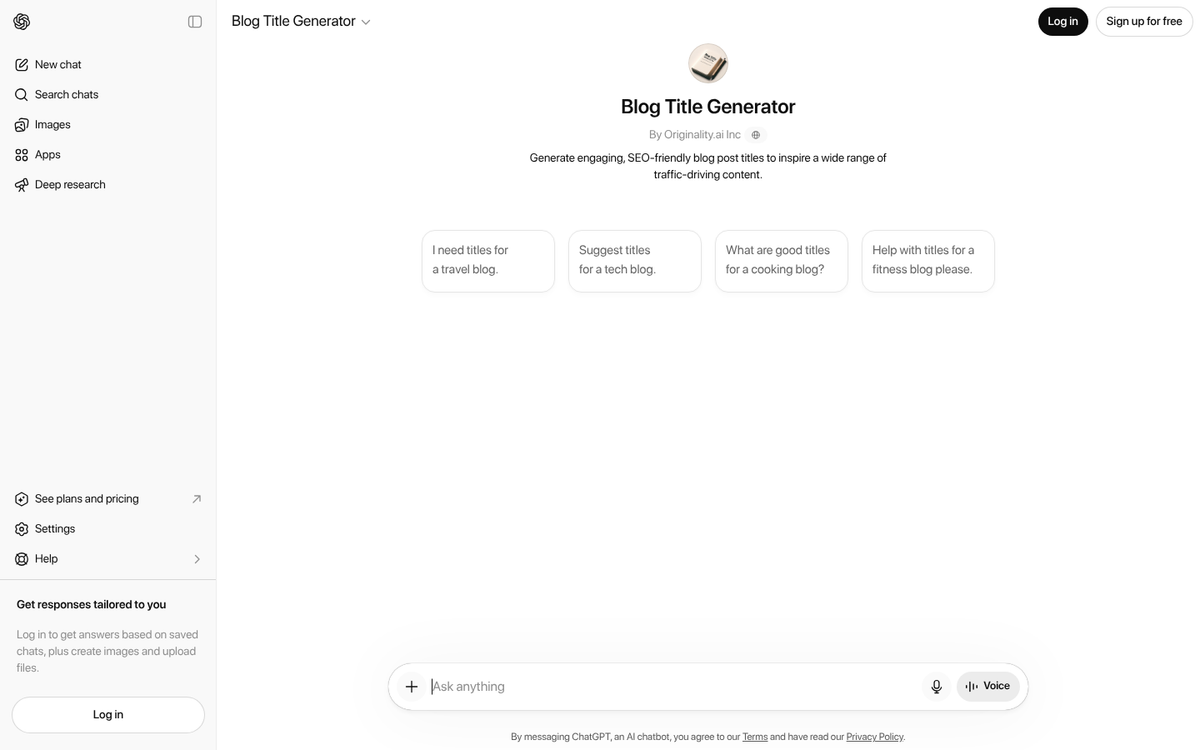
For example, prompting an AI with: "Give me 20 blog post title ideas for a skiing blog targeting intermediate skiers who want to improve technique" will return far more helpful results than most legacy generators ever could. If you're not already using AI for title brainstorming and content planning, that's the single biggest upgrade you can make to your content planning workflow in 2026.
That said, dedicated generators still give you value - especially for quick inspiration, structured templates and bulk output without requiring prompt crafting. Here's a rundown of the known options for generating article topics and titles.
HubSpot Blog Ideas Generator
HubSpot's generator remains one of the better-known options and has been updated over the years. You can now enter up to five nouns at once and it will generate multiple title ideas based on your inputs. Results include titles like:
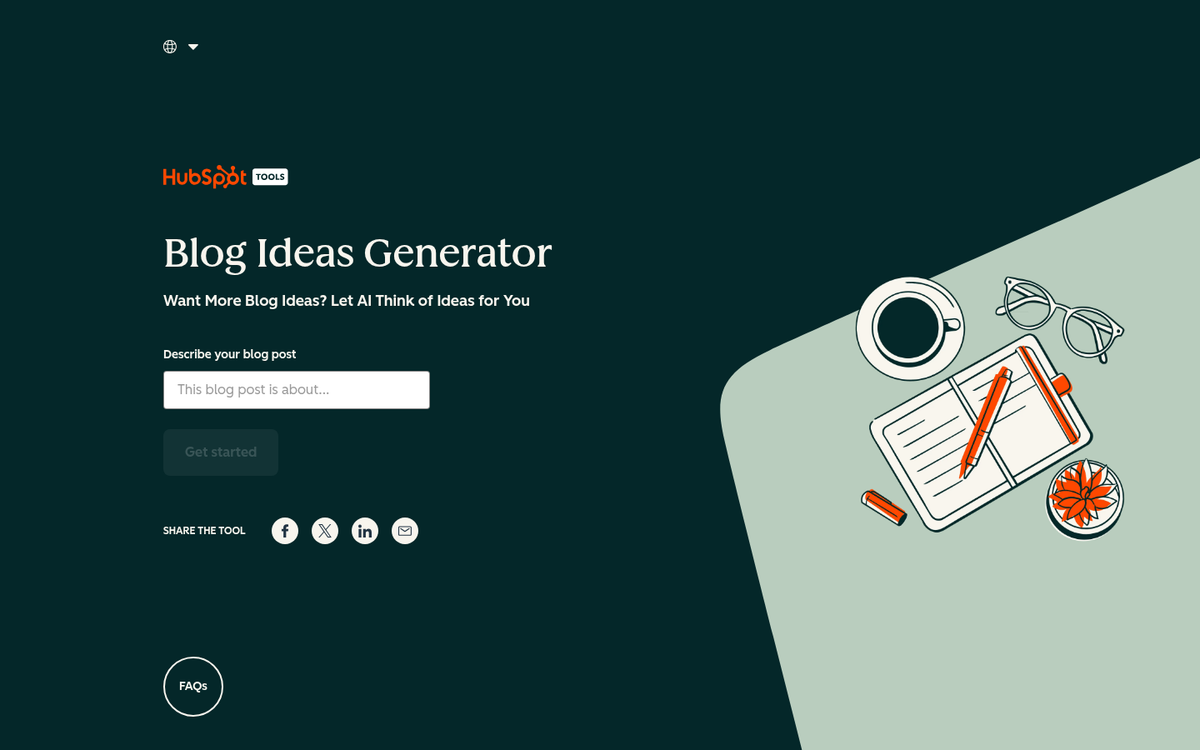
- 10 Things Your Competitors Can Teach You About Skis
- The Ultimate Cheat Sheet on Skiing
- 15 Best Blogs to Follow About Mountains
The templates still lean heavily toward business and marketing contexts, which can seem a bit awkward for lifestyle or hobby blogs like our skiing example. Still, they work well as a starting point and can be adapted - it's free to use and requires no account for basic output.
Portent's Content Idea Generator
Portent's generator is still active and still styled like a chalkboard - it generates one title at a time using a Mad Libs-style approach and it's still hit or miss. You'll get titles like:
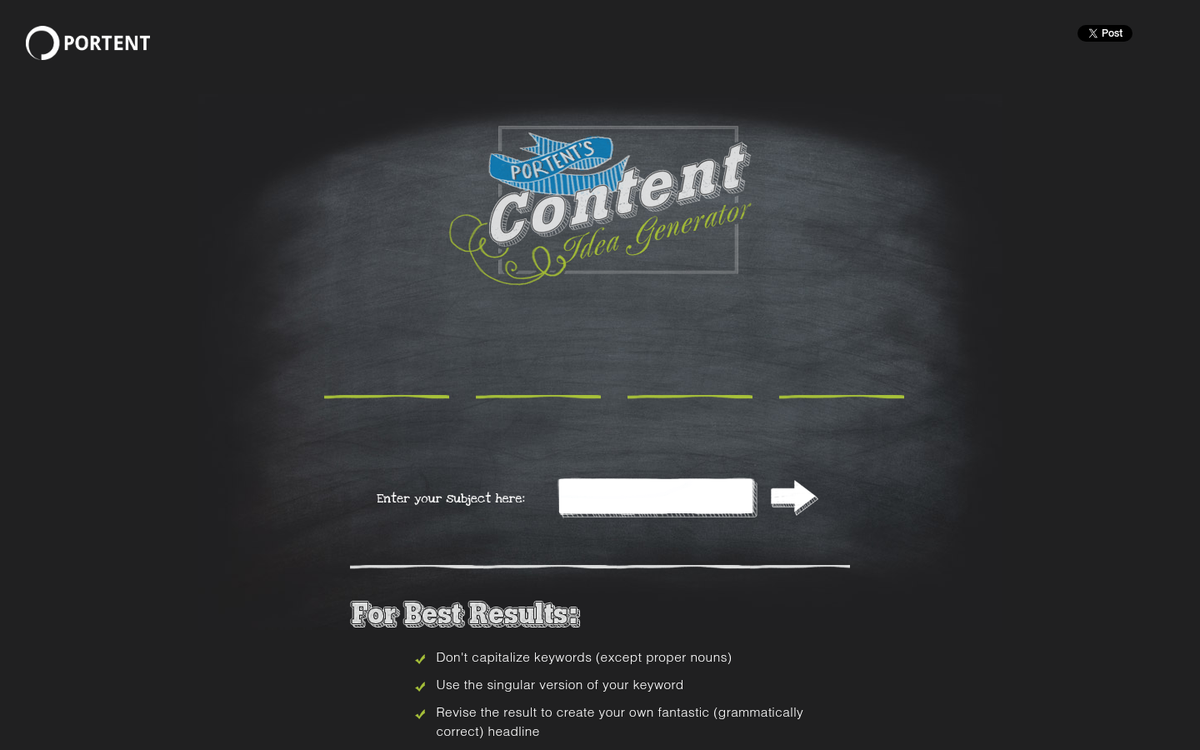
- Why The World Would End Without Skiing
- Homer Simpson's Guide to Skiing
- If You Read One Article About Skiing, Read This One
The explanatory notes for each title component are legitimately educational - they explain the psychological reasoning behind why certain phrasings draw clicks.
Tweak Your Biz Title Generator
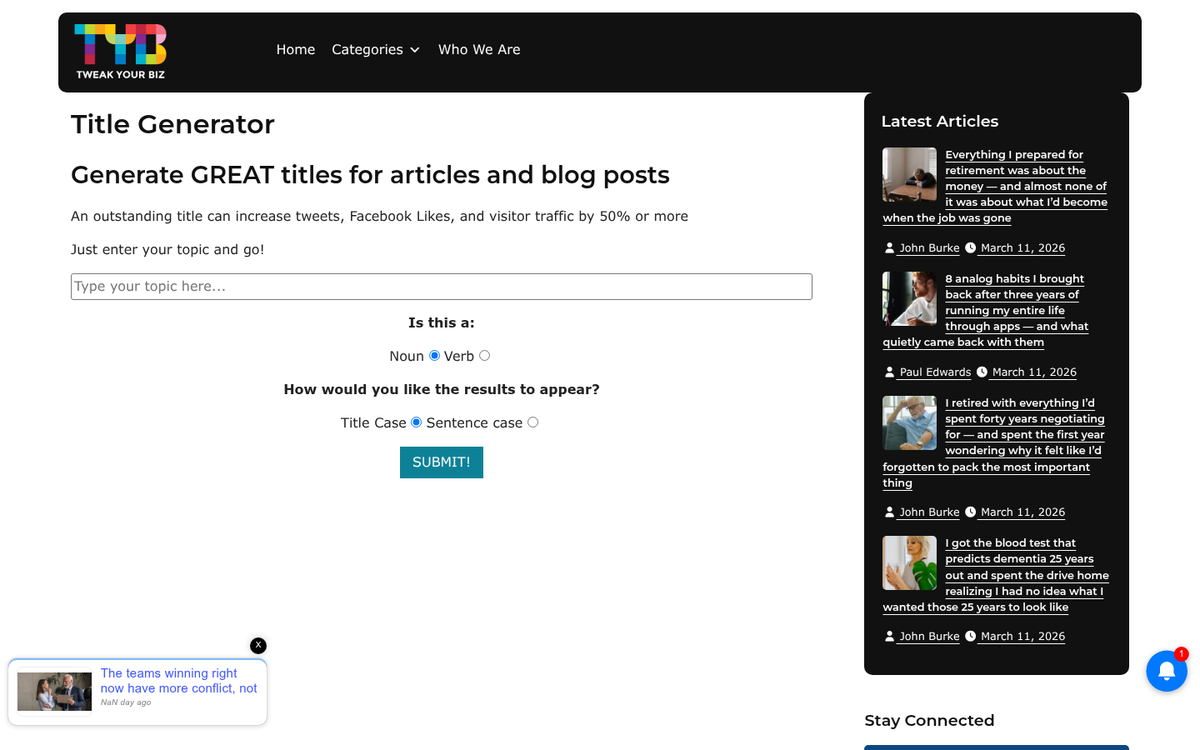
This generator is for bulk harvesting. Input a keyword once as a noun and once as a verb - they produce different sets of titles. You'll get a large output instantly, categorized by type and you can download the results as a text file for easy spreadsheet import. Some titles will be grammatically weird or accidentally funny ("Joseph Stalin's Secret Guide to Skis" is a classic). But the volume makes it worthwhile for building a large title bank faster.
SEOPressor Blog Title Generator
SEOPressor's generator works because it asks you to categorize your keyword - is it a generic term, brand, product, event, location, skill, or person? This extra context produces noticeably more relevant and usable titles. Using "skiing" as a skill generates titles like:
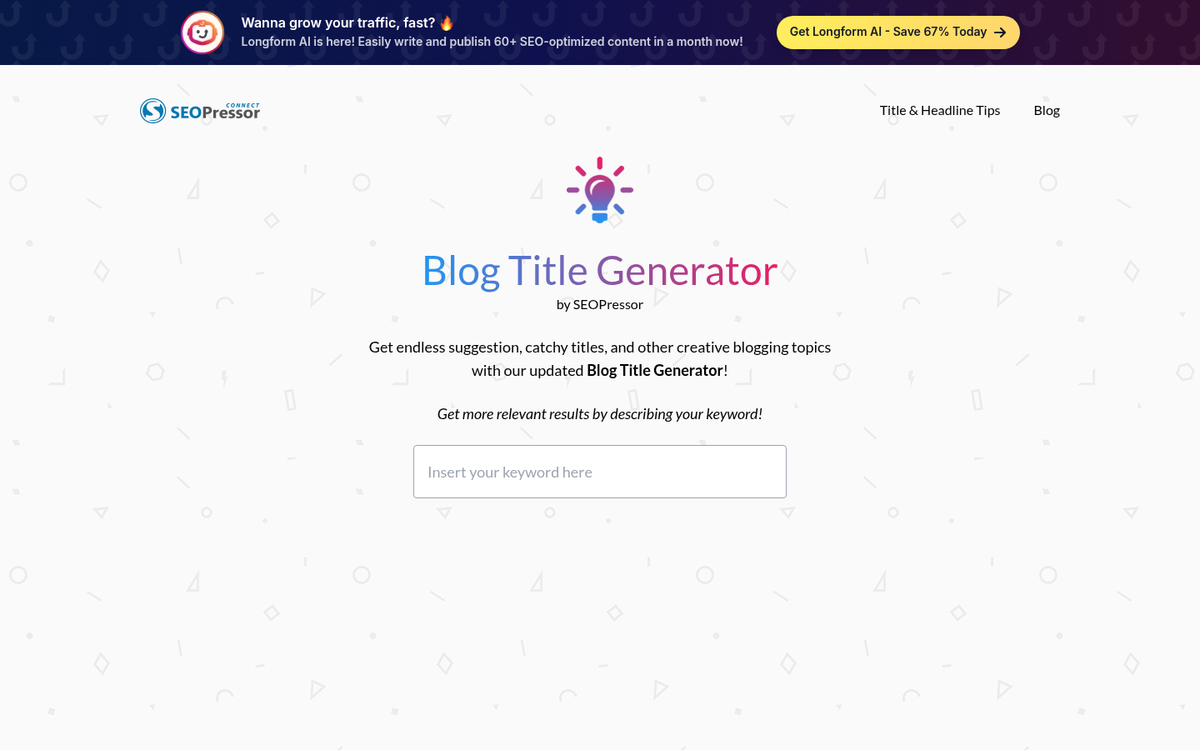
- Five Ways to Have Fun Learning Skiing
- The Modern Rules of Skiing
- 5 Useful Tips from Experienced Skiing Practitioners
The granularity makes a difference in output quality. The downside is that it shows only five titles at a time, so bulk harvesting requires patience. If you want to go deeper on crafting effective titles, see our tips copywriters use to create perfect blog headlines, or check out how Yoast compares to SEOPressor as a broader SEO plugin.
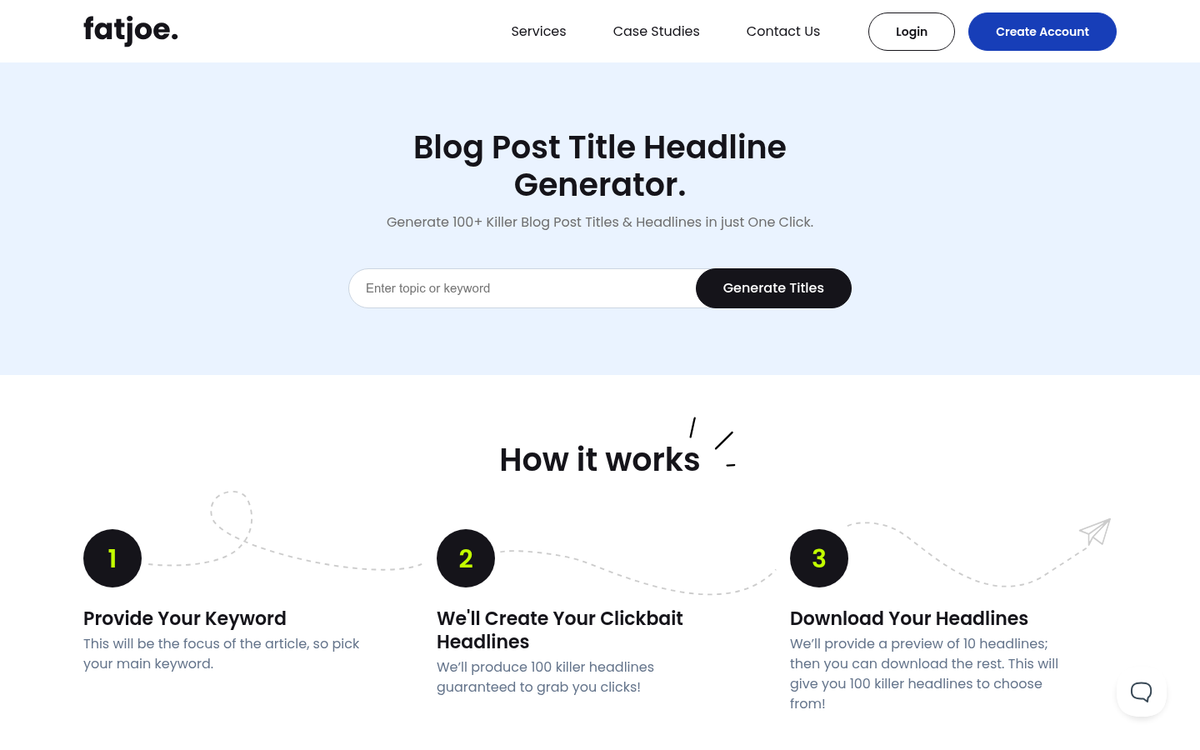
FatJoe Blog Post Title Generator

FatJoe's generator is a modern option worth adding to your rotation - by default it gives you 10 title ideas per keyword. If you provide an email address, it will generate up to 100 titles in one shot - making it one of the more generous free tools for bulk brainstorming. The output quality is usually solid, with a combination of listicles, how-tos and opinion-style titles that feel more natural than some of the older template-based tools. If you want to take your content further, tools for advanced content marketers can help you go well beyond title generation.
A Note on Tools That Have Disappeared
Several tools that were popular in 2015-2018 are no longer available or have been degraded. The Build Your Own Blog generator went offline years ago. Content Forest's Content Ideator is no longer functioning as it once did. Inbound Now's generator, which relied heavily on redirecting users to an EzineArticles search, is basically obsolete given that EzineArticles itself has faded into irrelevance. The Upworthy Generator, always more of a joke than a tool, is also long gone.
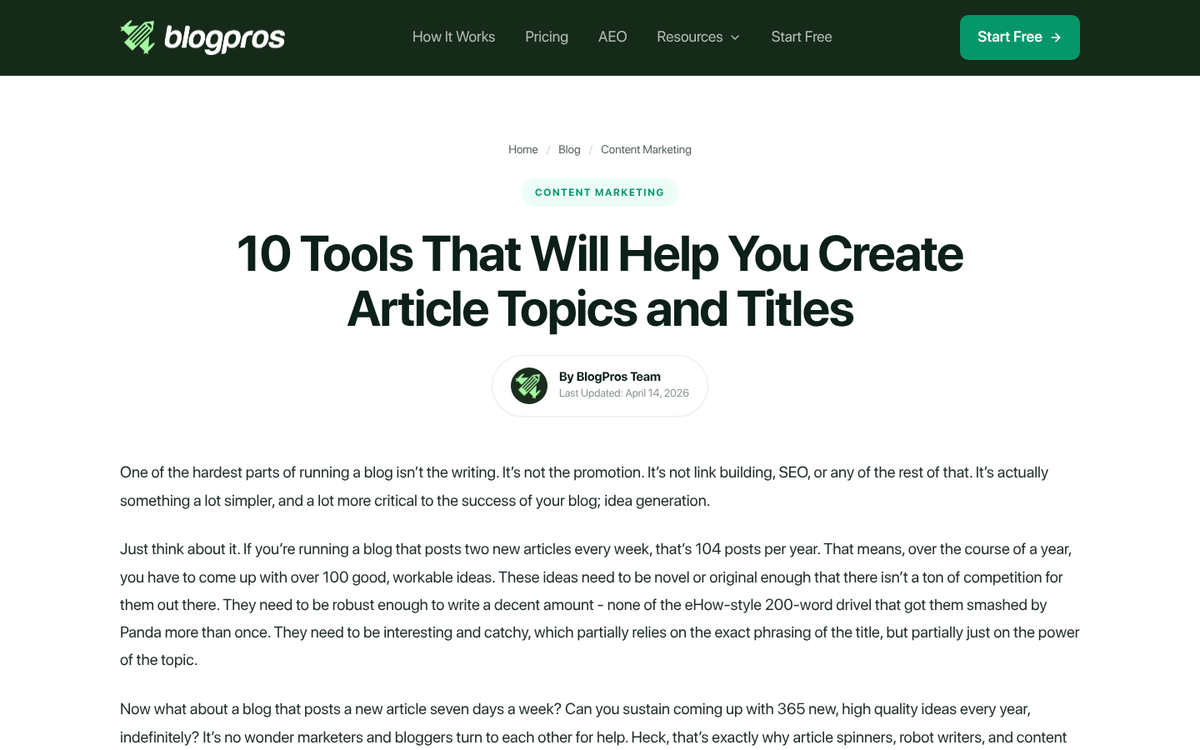
The wider lesson here: free tools built on shaky foundations don't last; it's another reason to use AI assistants and established platforms for title generation - they're far more likely to still be around next year.
Building Your Title Bank
Regardless of which tools you use, the workflow remains the same. Collect titles into a spreadsheet. Rank them. Flag used ones instead of deleting them. Track performance over time. And don't be afraid to combine outputs - run your keyword through two or three generators and an AI tool and you'll have more raw material than you can use in a year.
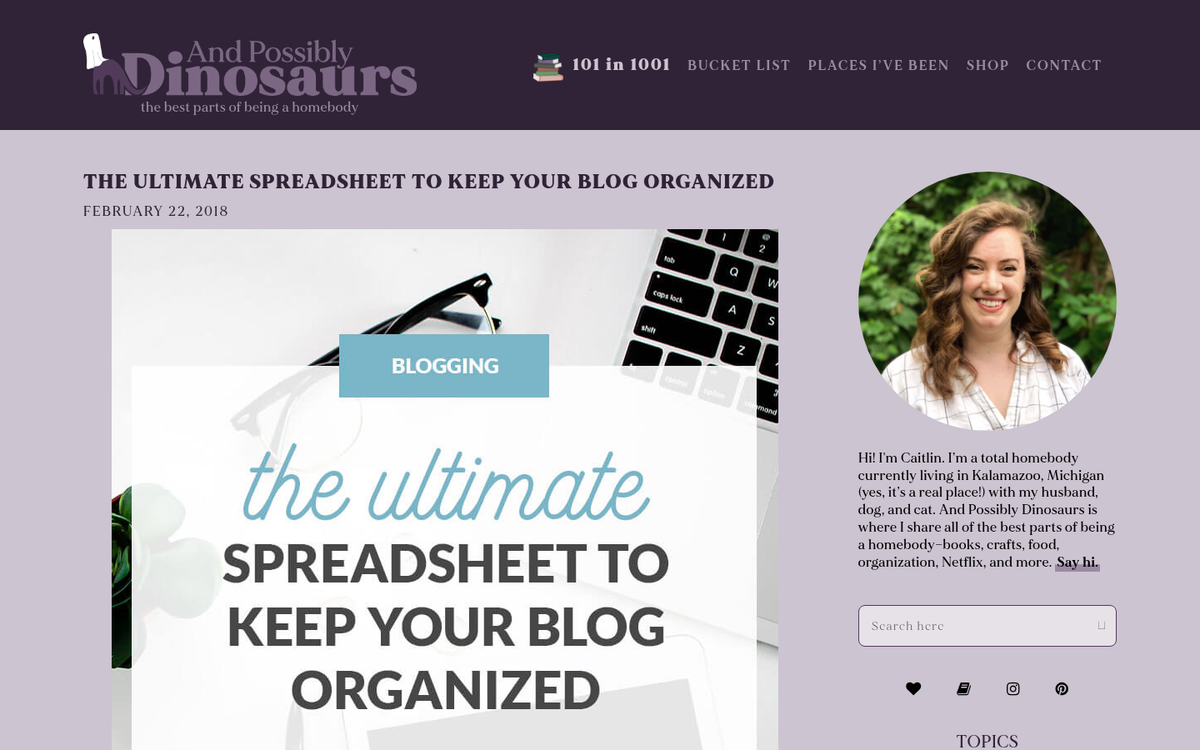
The bloggers who produce great content aren't the ones waiting for inspiration to strike. They're the ones who have a system - and a well-stocked title bank is one of the most helpful systems you can build.
1 response
Thoughtful replies only - we moderate for spam, AI slop, and off-topic rants.
Awesome list! I'm affiliated with SEOPressor and I do agree that having a bulk export function will add much more functionality to our generator. Thanks for the suggestion and expect a bulk export function soon =)