A lot goes into ranking for your chosen keywords, and it's quite the time-consuming process. It's also easy to get lost in the tunnel vision of making improvements you know will have an effect, without precisely measuring that effect. What you need to do is monitor your ranking on an ongoing basis. So how can you do that effectively?
Key Takeaways
- Monitoring keyword rankings helps measure SEO ROI, track competitors, and uncover untargeted related keywords worth pursuing.
- Google personalization, localized results, and AI Overviews mean keyword rankings are approximations, not absolute positions.
- Websites can rank for thousands of keywords, so obsessing over a narrow list risks missing high-performing terms.
- Top tools include Ahrefs, SE Ranking, and Google Search Console, each offering different depths and price points.
- Google Search Console is free, pulls data directly from Google, and serves as a reliable baseline for rankings.
Why Monitor Keywords?
There are several good reasons to monitor your keyword ranking, if you're not quite convinced.
- It allows you to measure, in concrete terms, how much of a return on investment you're getting out of any SEO you're buying. You don't want to pay for a website overhaul only to find your ranking doesn't change, right?
- You'll be acutely aware of not just your own presence, but that of your competition as well.
- You can find potentially potent related keywords that no one else has targeted and roll them into your main efforts for additional benefit.
What does it take to monitor keywords effectively?
Roadblocks to Rank Checks
There are a few roadblocks in the way of accurately checking your search ranking for any given keyword.
First, there's the long-standing issue of "not provided" keyword data in Google Analytics. Google made the decision years ago to remove most keyword-level data from their reports, and that hasn't changed. In fact, if anything, it's gotten more pronounced - the vast majority of organic keyword data remains hidden, pushing SEOs further toward third-party tools just to get a basic picture of what's driving traffic.
Second, you have the issue of Google's personalized and localized results. Go ahead and do an experiment; go to Google and type in "electrician." Your results are going to be full of ads for local electricians, the local pack, and a cluster of results tailored to your location. If you're lucky, more generic results will appear further down the page.
The problem is that one electrician may rank highly for your query but won't appear anywhere in mine. It's entirely because of differences in location, device, and search history. And in 2026, this personalization layer has only deepened. Google's AI Overviews - the AI-generated answer summaries that now appear at the top of many search results pages - add yet another layer of complexity. Even if you rank in position #3, an AI Overview may be answering the user's question before they ever scroll to your result. Tools like SE Ranking now monitor 35+ SERP features, including AI Overviews, precisely because the traditional "rank #1 and win" model has become far more nuanced.
What this all means is that when you check your rank for a given keyword, the results are necessarily an approximation. Geographic and device-based personalization, AI-generated results, and search history all influence what any individual user actually sees.
Keyword Tunnel Vision
There's one final issue you have to overcome, and it's baked into the fundamental idea of tracking keyword rankings in the first place. Take a look at this article. What keywords would you think it might rank for? "Keyword rankings" perhaps? How about "roadblocks to rank checks"? All of these are phrases that appear in this article, which means this piece has a place in the SERPs for all of them.
The point is that any noun, verb, phrase, or sentence can be a valid search term that ranks a given piece of content. A website with an active blog can rank for thousands of keywords. If you're focusing on a few dozen and actively checking the ranks for each, you're limiting your potential. No rank checker can surface every query you're ranking for, because it can be anything you've ever published. You're focused on your selection of 20 keywords, and a 21st that you're ignoring could be the one where you're sitting at position #1.
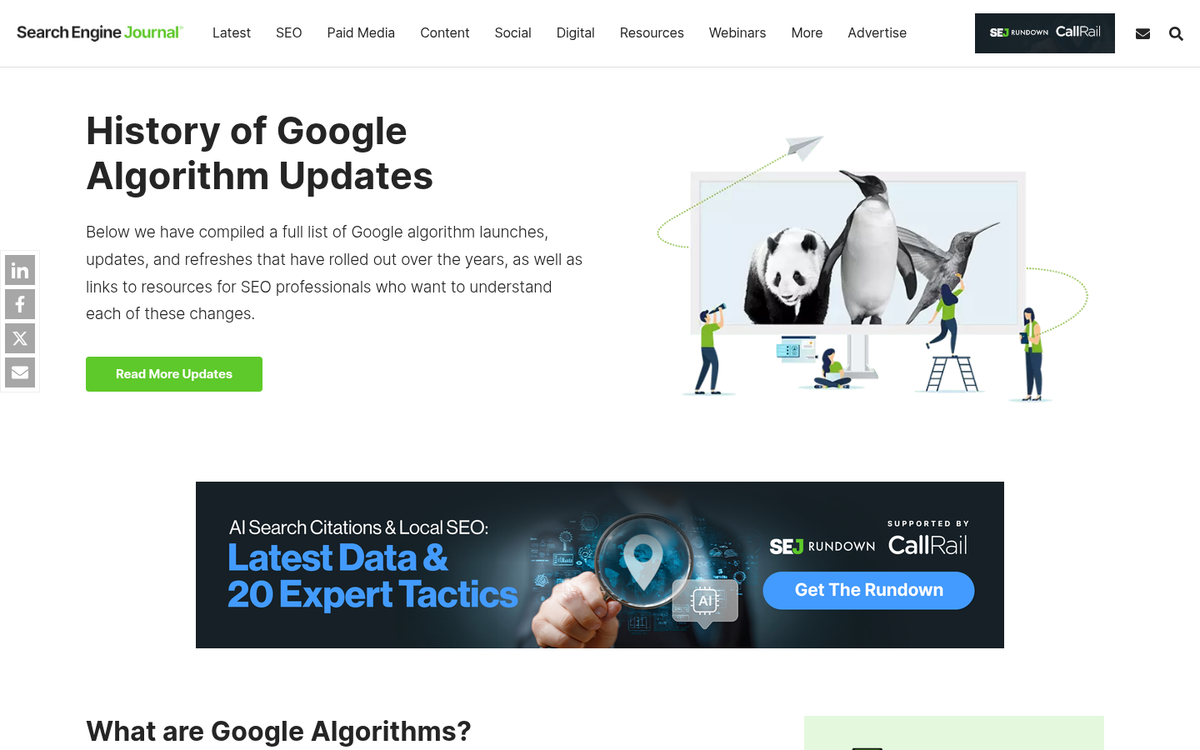
This is worth keeping in mind given how frequently Google updates its algorithm - we're talking thousands of updates per year, some minor and some genuinely disruptive. Rankings can shift dramatically overnight, which makes broad monitoring far more valuable than obsessing over a narrow list of terms.
Methods for Checking Rank
If you're intent on checking rank - and I'm not saying you shouldn't, even if it's easy to lose sight of the larger picture - here are a few of the best options available in 2026.
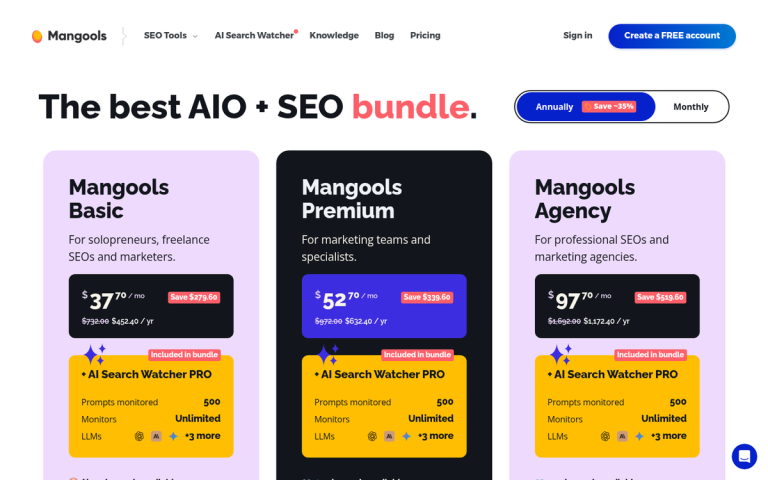
- Ahrefs Rank Tracker. Ahrefs remains one of the most powerful options for serious keyword tracking. Their rank tracker monitors progress for up to 10,000 keywords over time, pulling from a database of around 500 million keywords updated monthly. You can track rankings across 155 countries, giving you a genuinely global picture of your visibility. It's not cheap, but for competitive niches, it's hard to beat the depth of data.
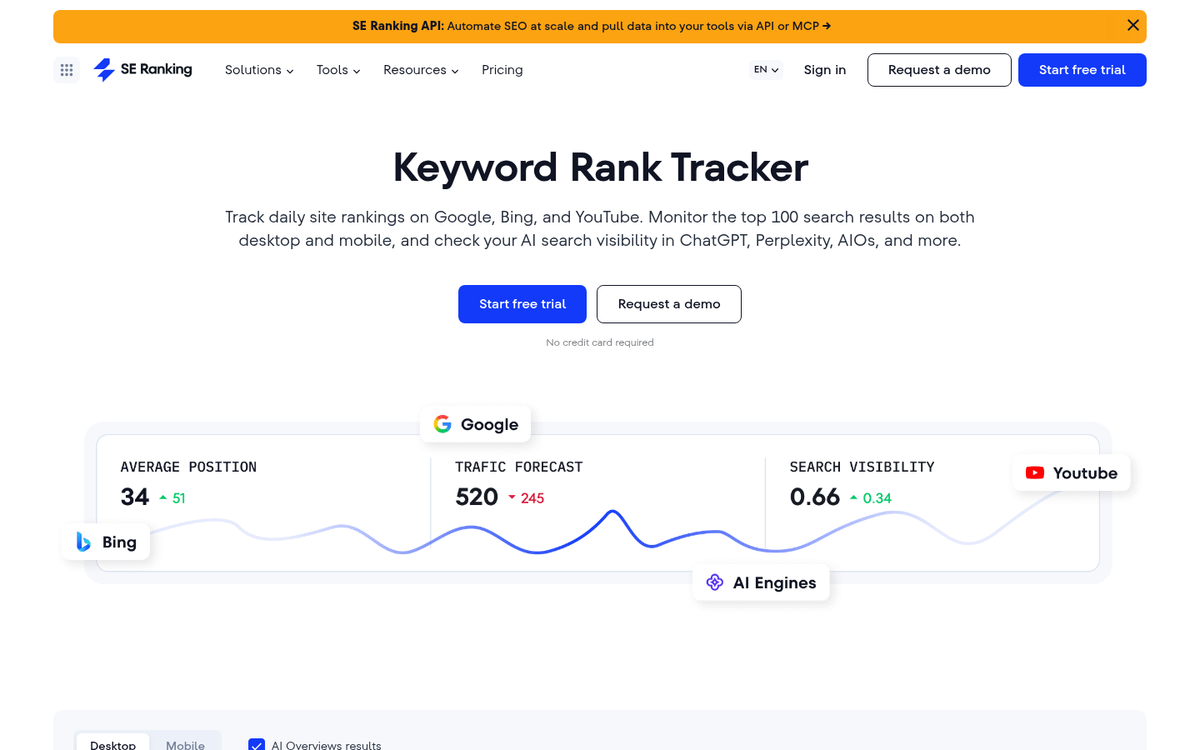
- SE Ranking. SE Ranking has become a popular mid-tier option for businesses that want serious tracking without enterprise-level pricing. Their rank tracking tool monitors 35+ SERP features - including AI Overviews - so you're not just seeing your traditional blue-link position, but also whether your content is appearing in featured snippets, local packs, and other high-visibility placements. They offer a free tool that lets you check up to 5 keywords per day at no cost, along with a 14-day free trial for their full platform, with paid plans starting at $119/month.
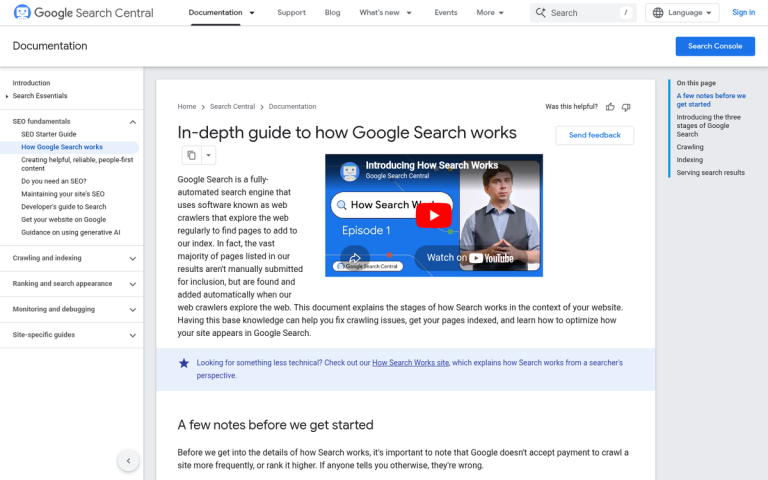
- Google Search Console. Free, direct from the source, and more useful than it often gets credit for. Google Search Console shows you which queries are driving impressions and clicks to your site, along with your average position for each. It won't give you the depth of a dedicated rank tracker, but it's an essential baseline and a good sanity check against your other tools.
- Sitechecker and Other Web-Based Options. There are still plenty of web-based rank checkers available for quick, manual lookups. Sitechecker's Google Rank Checker, for example, shows keyword rankings within the top 100 results across 155 countries. These tools are fine for spot-checking, but they're not a replacement for an automated, ongoing tracking solution if you're serious about SEO.
You can also use Google Search Console directly for a free and reliable look at how your pages are performing in search. It won't tell you everything, but it will tell you quite a bit - and unlike many third-party tools, the data comes straight from Google itself.
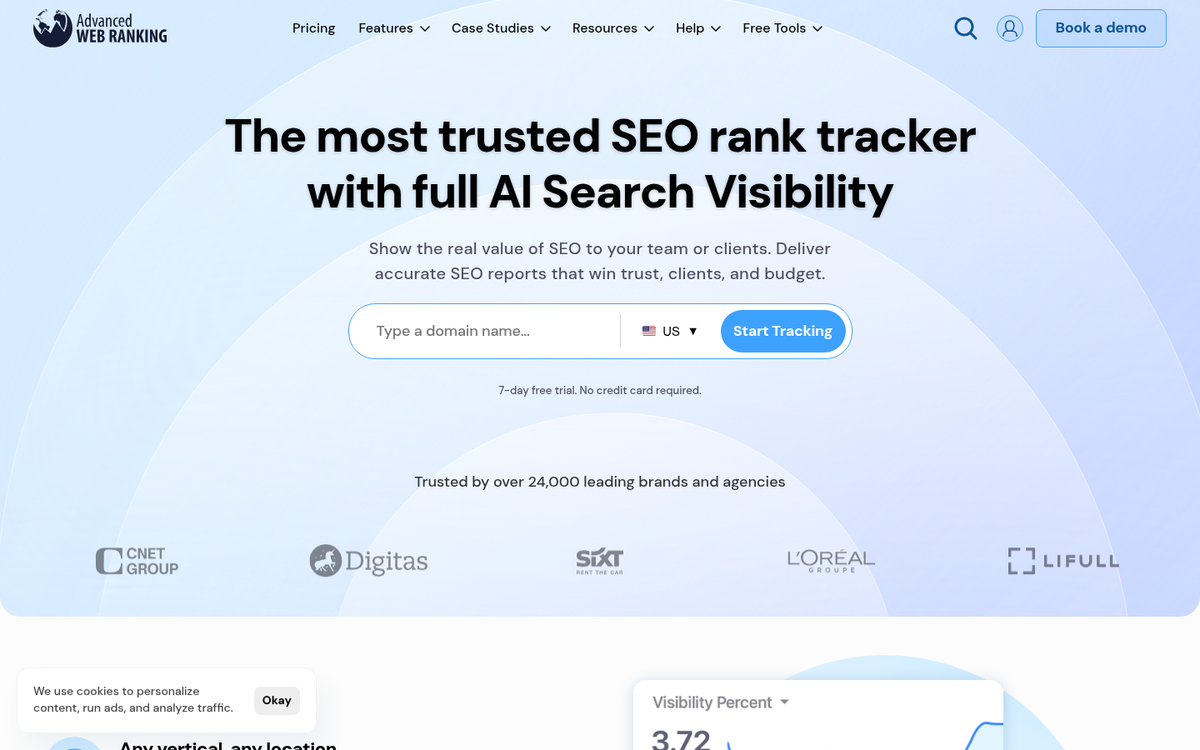
Speaking of your competitors, want to keep track of their keyword rankings as well? Most of the tools mentioned above - Ahrefs in particular - offer robust competitor tracking features, so you can keep an eye on where they're gaining ground and where you might be able to take share.