Your domain name is important. It can hurt or help your business, just by being the passive name everyone comes to use to reference you. How often do you hear about sites like eBay, Amazon, Reddit or Craigslist? Those are all memorable, branded domain names. On the other hand, how often do you hear about sites like bestsurvivalbackpacks.com or invisiblepinkelephants.com?
The difference here is one of mechanics, between branded domains and exact match domains. In the past, exact match domains were incredibly powerful, for the same reasons that keywords are powerful. Where's the best place to put a keyword? In the domain!
Of course, keywords have declined in power with the rise of semantic search and, more recently, AI-driven results. Google has long since cracked down on exact match domains, particularly those of low quality, and that trend has only continued.
Key Takeaways
- Exact match domains lost power due to Google cracking down on thin, low-quality affiliate sites exploiting keyword domains.
- Branded domains are more resilient to algorithm changes and allow business expansion, unlike restrictive exact match domains.
- Good domains should be under 12 characters, catchy, brand-friendly, and use a .com extension whenever possible.
- Tools like Similarweb, Semrush, and Ahrefs help estimate expired domain traffic, authority, and backlink profiles before purchasing.
- Google AI Overviews rollout in 2024 has reduced organic traffic to many sites, affecting expired domain valuations.
The Argument for Exact Match Domains
There is a valid argument for the existence of an unpenalized exact match domain. The idea is this: an exact match domain is essentially a billboard advertising that the website in question is dedicated to one subject and one subject only. You don't go to bestsurvivalbackpacks.com looking for coffee mugs, t-shirts or video games. You go there looking for survival backpacks.
The reasoning is that, when a user is looking for a specific item, a site dedicated to that item would be valuable to have. A user who wants to find survival backpacks would love a page dedicated to those backpacks and nothing else.
The problem, as Google saw it and as webmasters created it, was that the ideal was never the reality. Rather than becoming valuable resources, exact match domains became thin affiliate hogs. Google doesn't like thin sites with nothing but affiliate links and a few blog posts, and it recognized that the issue was webmasters capitalizing on the keyword domain trend.
This problem has only gotten worse in the age of AI content. It's now easier than ever to spin up a thin affiliate site stuffed with AI-generated posts, and Google has responded aggressively. The helpful content updates and subsequent core updates have hammered low-quality EMD sites particularly hard. On top of that, the wider rollout of Google AI Overviews in May 2024 has further reduced organic traffic to many of these sites, as Google now answers queries directly on the search results page rather than sending users to a dedicated resource.
Expansion
The problem with EMDs is that they limit your potential for expansion in the future. If the owner of bestsurvivalbackpacks wanted to expand into survival knives or everyday carry gear, their domain is no longer suitable for the entirety of their business. There are three solutions to this problem.
- Expand anyway and ignore the unsuitable keyword domain.
- Expand and buy up other related URLs, redirecting them to your main site.
- Create more thin sites with EMDs and limited content.
Most affiliate marketers go for number three. The best solution, however, is effectively a fourth option: make a brand rather than a keyword the central focus of your business. If you're selling the best survival backpacks and you want to expand into other survival equipment, why not choose a domain you can brand, like survivalguru.com? A brand gives you room to grow, and it's far more resilient to algorithm changes than a keyword-stuffed domain ever will be.
Finding the Money Domains
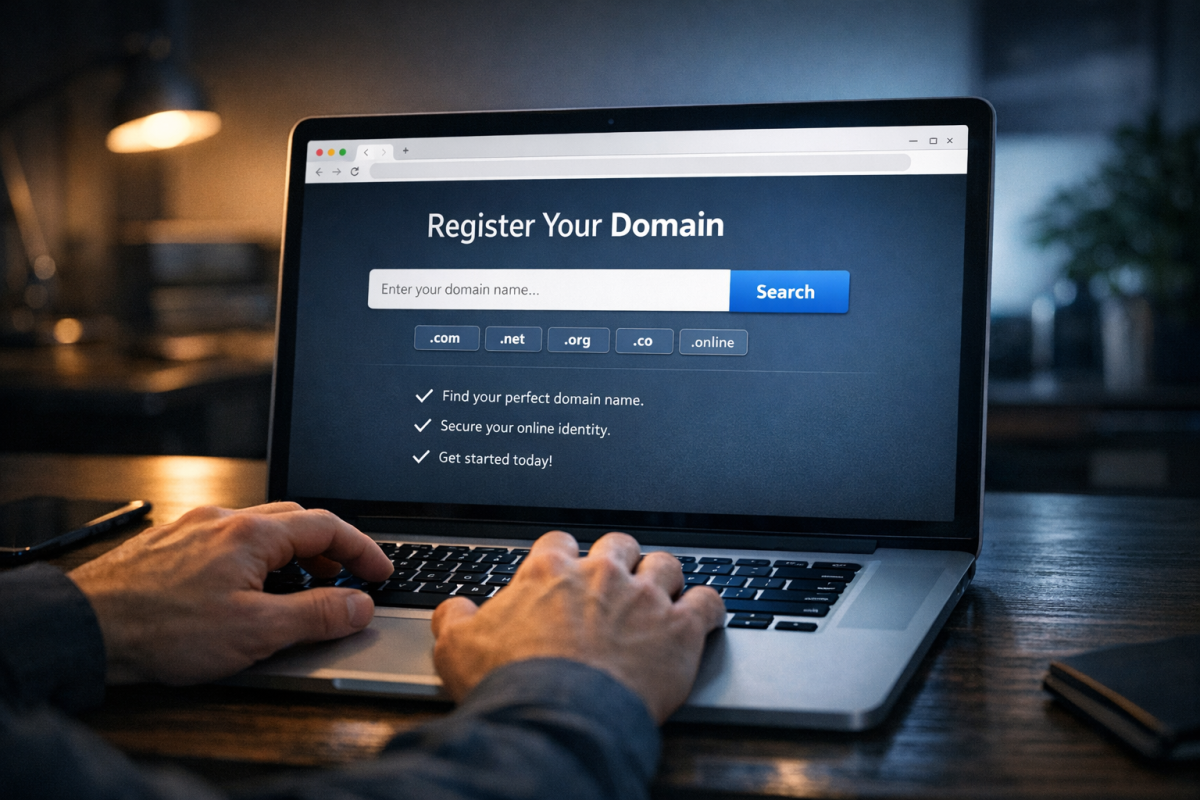
So what does a domain name need in order to make you money? It's surprisingly hard to find a domain that can accelerate your growth rather than hurt it over time.
- Avoid keyword-focused domains. They just don't have the ability to brand later, and they carry a stigma with Google's algorithms at this point.
- Avoid domain names with too many characters. Pretty much everything catchy is going to be under 12 characters in length. The longer a domain name, the easier it is to mistype, and the less memorable it is.
- Look for something catchy. It has to tie in to your business and your brand name. Ideally, it should be as unique as possible; you're not going to get away with a slight misspelling of an established brand as your own.
- Use a .com extension. If the brand name you want is taken in .com, you're either negotiating to buy it or you're back to the drawing board. You could have a thriving business on a .co or .io, and people will still instinctively type the .com version to find you.
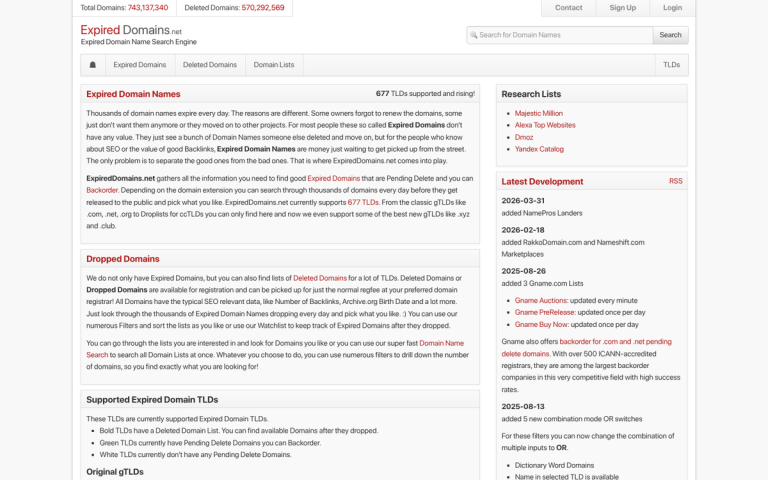
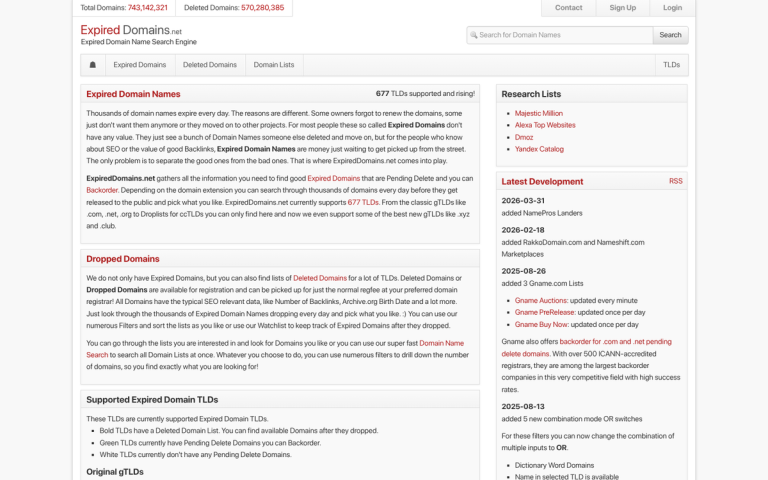
Is the domain name you want currently taken? Don't give up just yet. Sometimes, domains are registered or parked by people who aren't really using them. These people may be willing to sell the domain to you. They also might be about to let the domain lapse, which gives you an opportunity to pick it up once it expires.
Buying Expired Money Domains
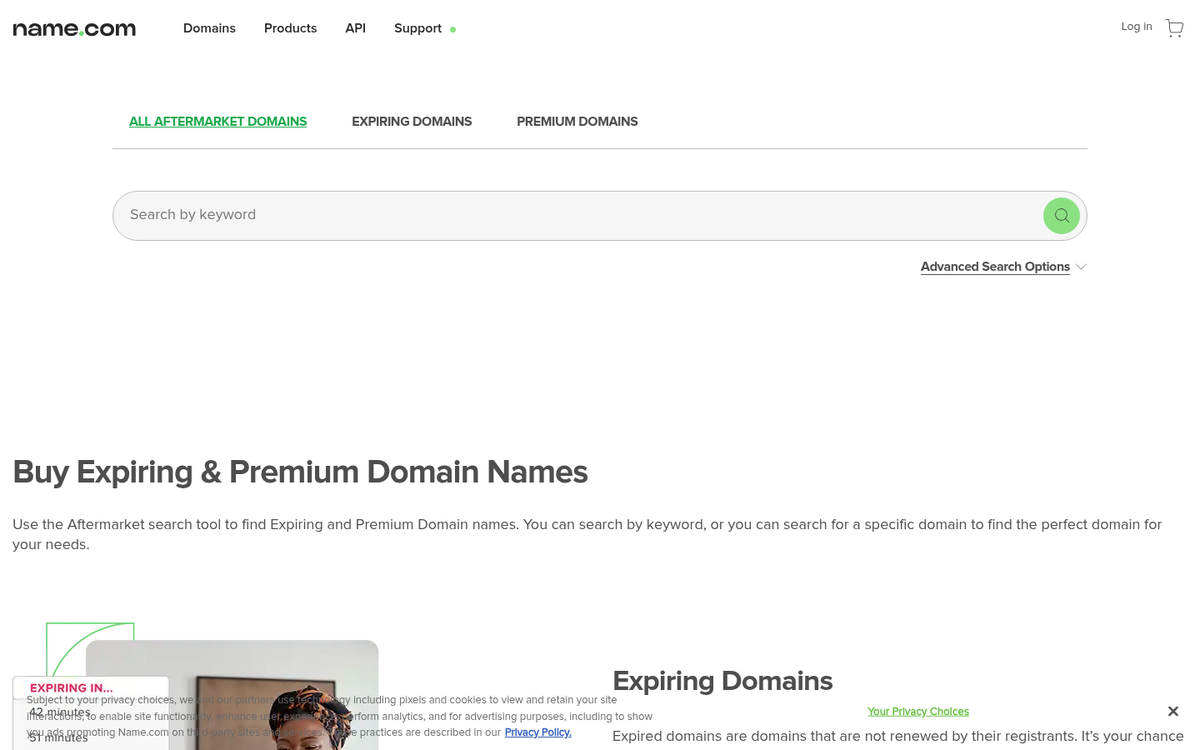
The internet is getting older. It has a long history of websites that have died and no longer exist. Some of these websites had built up real followings and were making money before they went dark. One legitimate technique is to buy expired domains and rebuild or redirect them to benefit your own site.
To do this effectively, you need to make sure the domain you're buying isn't long dead. The longer a domain has been inactive, the less of its audience and link equity is retained. You want to strike while the iron is hot and pick up domains before the majority of the audience even realizes it died.
Since you need to act quickly, you need to have a suite of tools available to estimate or measure the traffic and authority of a domain as it expires or even before. Here are the main approaches.
The first method is using direct trackers. Sometimes you can ask the people who own the site about their traffic numbers. This isn't always reliable, as the owner may exaggerate or outright lie to get a better price. Parked domains are an exception, where the domain parker sometimes posts statistics to make the listing more enticing.
The second method is indirect, through traffic analyzers. Tools like Semrush, Ahrefs, and Similarweb are your best friends here. According to a SparkToro study, Similarweb produces the most accurate traffic estimations compared to other providers, with its greatest accuracy for sites receiving between 5,000 and 100,000 Google Analytics users per month. Semrush's free Website Traffic Checker lets you check up to three sites per day without even creating an account, while its Traffic Analytics tool allows you to check up to 100 sites at once when you do have an account. Ahrefs is particularly powerful for backlink analysis, crawling more than 8 billion web pages every day with over 200 million websites in its index, and its Batch Analysis tool lets you check estimated monthly search traffic for up to 200 websites simultaneously across 171 countries. Neil Patel's Ubersuggest is another popular option, with over 398 million people having used its traffic checker tool.
The third method is by reverse-engineering their SEO. What rankings does the domain hold? What search volume do those keywords carry? What does its backlink profile look like? Together, these signals give you a solid picture of what you're actually buying.
One important caveat for 2026: keep in mind that many sites have seen noticeable traffic drops since the rollout of Google AI Overviews in mid-2024. If a domain's traffic decline lines up with that period, factor that into your valuation. A site that was getting strong organic traffic two years ago may now be delivering far less simply because Google is answering those queries directly in the search results.
Of course, whether or not you make money once you have the domain is an entirely different matter!