





There's a lot of skepticism in the affiliate marketing community about how many people are actually successful out there. I can certainly appreciate why that is, too. Anyone would be skeptical if they looked around and noticed the only people making money in affiliate marketing were the people selling tools to help newbie affiliate marketers get into the game.
Combine this with the fact that so many people are stingy with their information and techniques for fear of having their niche stolen and their profits undercut, and you can see why it happens.
Sometimes, you need a good refresher about how successful actual people can be. People who post about their success, people who try to help others become successful, people who don't care about their niche being undercut because they know they're the best at what they do. I've tracked down case studies from five of these successful marketers, and that's what I'm bringing to you today.
Don't feel like you're being played just because you haven't gotten a foothold yet. Affiliate marketing takes time to establish yourself, to build an audience, to create content, and all the rest. According to PayScale data from December 2025, affiliate marketers in the U.S. earn an average base salary of $56,141 per year - and that's just the average. The outliers are doing far better.
Key Takeaways
- Darren Rowse earned over $500,000 through Amazon affiliates, highlighting trust, easy setup, and session-wide referral commissions as key advantages.
- Pat Flynn surpassed $3 million in affiliate revenue by being radically transparent, only promoting products he personally uses.
- This Is Why I'm Broke generated $20,000 monthly through Amazon by combining product aggregation, infinite scrolling, and careful product curation.
- Adam Enfroy scaled to $200,000 monthly by targeting commercial-intent keywords, aggressive link building, and promoting recurring-commission software products.
- Hieu Nguyen demonstrated that building and flipping affiliate sites-rather than maintaining them long-term-is a viable, profitable business model.
Darren Rowse of ProBlogger.net

Darren is one of the most prominent affiliate marketers around, precisely because he's always open with his history, his techniques, and his success. He spent over a decade working affiliate marketing with Amazon, ultimately crossing the $500,000 earnings threshold and documenting it publicly. His earnings started out as a pittance and only really began to shoot up around 2008, eventually hovering around $80,000 per year from a handful of websites - one of which is geared specifically towards helping bloggers reach their own success with affiliate marketing.
What's impressive is that Darren isn't even one of the top tier Amazon Affiliates. His experience is actually rather typical of the people who put a lot of time and effort into getting serious with affiliate marketing. There are, no doubt, much more successful affiliates.
The meat of Darren's post is about why he chose to use Amazon for his affiliate marketing, despite all of the perfectly valid criticisms out there. Amazon commissions are small, sure, and a lot of Amazon products are cheap, so success often relies on big ticket niches - which are packed - or volume, which takes a long time to build. However, he points out:
- Amazon is a highly trusted brand, much more than many other affiliate sellers.
- One referral link works for everything a user buys in that session, whether or not you referred them to that product. If you send someone a referral for a $2 book, and they decide to buy a $900 TV, you get the commission on the TV.
- Amazon is perhaps the easiest affiliate network of all to get started using. They provide a ton of tools, easy embeds in half a dozen different ways, and even referral tagged shortlinks.
- Amazon sells, well, everything. There's very little that Amazon doesn't sell, and often those categories are just MLM schemes anyways.
You can read his full post above for a bunch of tips on becoming an Amazon affiliate success. You can also listen to his podcast post where he covers crossing the $500K threshold in detail.
Pat Flynn of Smart Passive Income
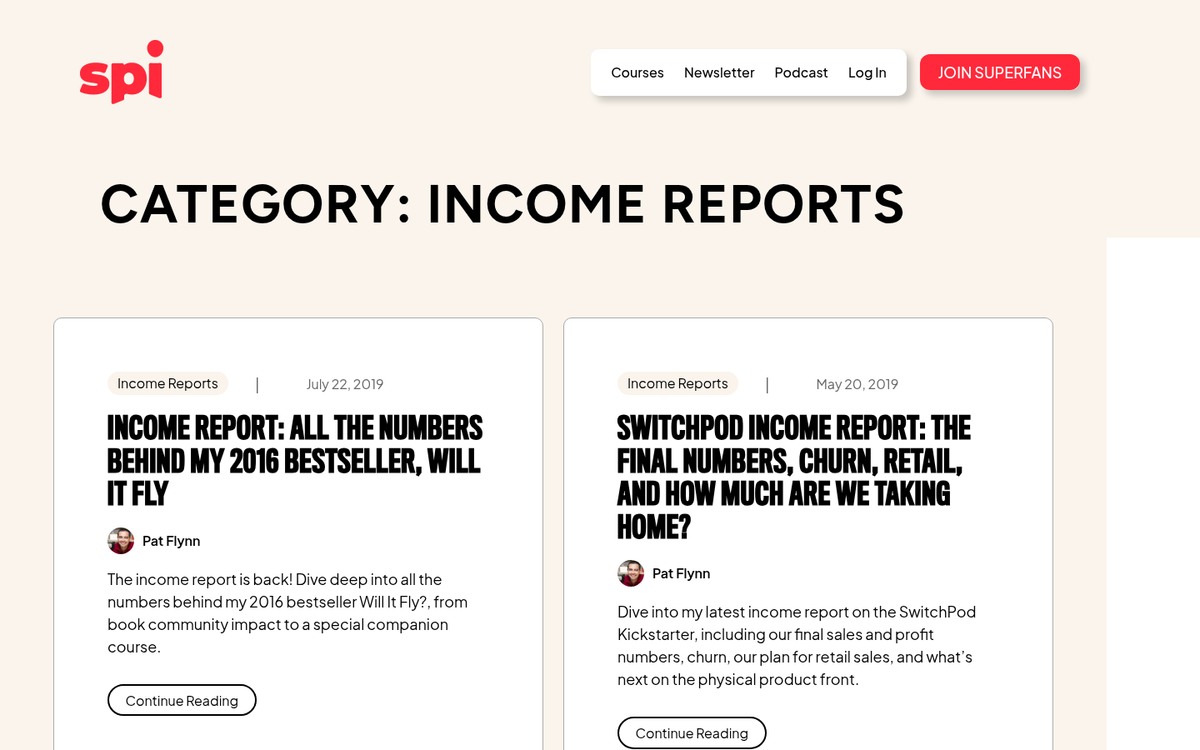
If there's one name that has become synonymous with transparent affiliate marketing success, it's Pat Flynn. He has publicly documented his income for years, and the numbers are staggering. Pat has earned over $3 million in affiliate revenue alone, growing his monthly income from around $8,000 to over $100,000 per month at his peak.
What makes Pat's story so valuable isn't just the numbers - it's the openness. He publishes detailed monthly income reports breaking down exactly where his money comes from, which affiliate programs performed best, and what content drove the most conversions. He's built his audience on trust, and that trust is exactly what fuels his affiliate income.
His primary affiliate earners have included web hosting providers like Bluehost and tools like ConvertKit and AWeber. He doesn't just slap links on a page - he genuinely uses and recommends the products he promotes, and his audience knows it. That authenticity is a huge driver of his conversion rates.
The key lessons from Pat's success:
- Be radically transparent. Sharing income reports builds trust and attracts an audience that respects your honesty, which in turn makes them more likely to buy through your links.
- Only promote what you actually use. His refusal to promote products he doesn't believe in has cost him short-term income but earned him long-term loyalty.
- Diversify your affiliate income streams. Pat doesn't rely on a single program. He spreads his affiliate income across software tools, hosting providers, online courses, and more.
- Build an email list from day one. A large portion of his affiliate conversions happen through his email list, not just his blog posts.
Pat's story proves that affiliate marketing at the highest level isn't about gaming algorithms - it's about building a genuine audience that trusts your recommendations.
This Is Why I'm Broke
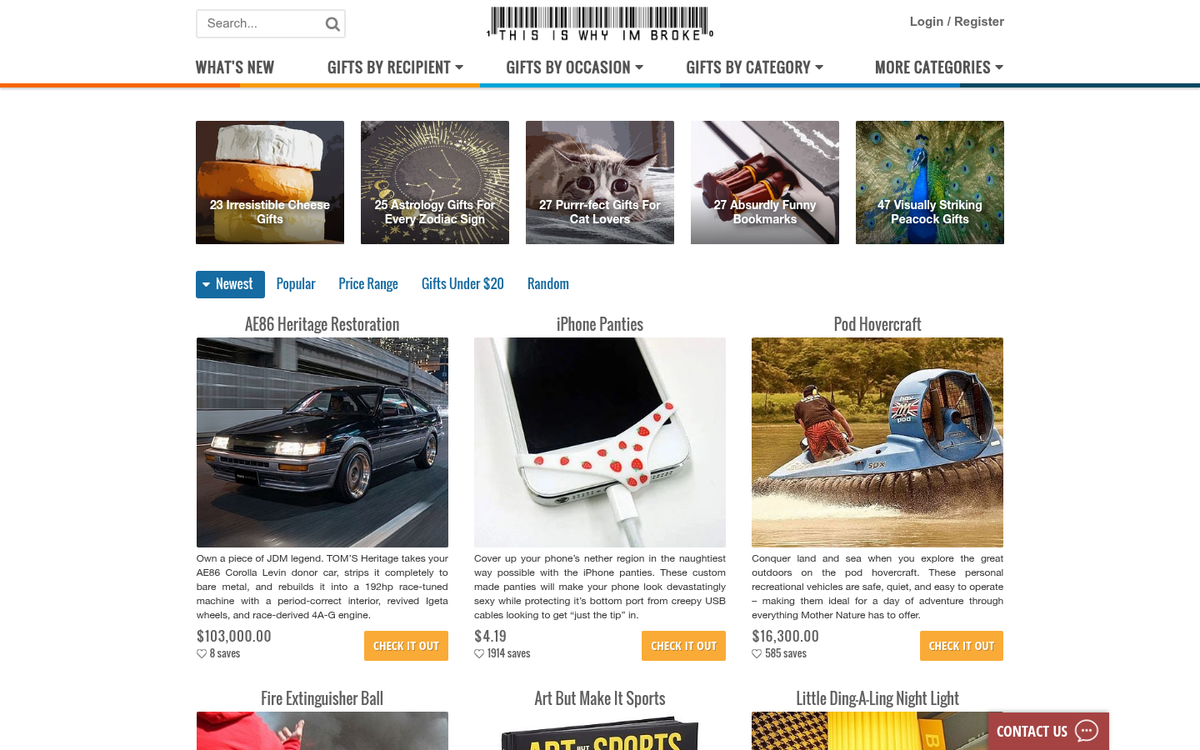
The website named in the subheading there is little more than an odd product aggregator, with a focus towards interesting, often expensive, amusing stuff. Looking at their front page, you'll find everything from color-changing showerheads to dolphin-shaped speedboats. Needless to say, the selection of products on the site runs the entire spectrum of price ranges.
The site grew immensely popular as one of the first of its kind, though its design has been mimicked endlessly in the years since it reached success. At the time of the case study linked above, it was making an estimated $20,000 per month from Amazon affiliate sales alone, along with additional revenue from eBay partner sales and referrals to a host of other sites.
The post linked isn't a direct post from the owner of the site. It's a case study performed from the outside, so you have a better idea of how objective it is. The founder of TIWIB struggled with failed ventures before he hit upon the formula he used for the site, taking existing product affiliate pages and adding infinite scrolling, better images, and careful product selection.
The case study goes on to tell you what you can learn from the site, and how you might be able to mimic its success with a drilled-down niche version of the same concept. Niche affiliate sites are typically less lucrative but easier to start than broad category sites like TIWIB, and that's okay.
TIWIB continues to receive millions of visitors and remains a well-known example of how a simple concept, executed well, can generate serious affiliate revenue.
Adam Enfroy

Adam Enfroy is one of the more remarkable modern affiliate marketing success stories. He scaled his blog to over $200,000 per month, and did it faster than almost anyone in the space. What's notable about Adam is that he approached his blog like a startup from the very beginning - treating it as a business rather than a hobby.
His strategy centered on publishing high-quality, long-form software review and comparison content - think "Best CRM Software" or "Top Email Marketing Tools" - targeting keywords with strong commercial intent. These types of posts attract readers who are already ready to buy, which means conversion rates are significantly higher than informational content.
Key takeaways from Adam's approach:
- Target commercial intent keywords. Posts like "best [product category]" and "[tool A] vs [tool B]" are among the highest converting affiliate content formats.
- Build backlinks aggressively and strategically. Adam focused heavily on link building from day one, which helped his content rank quickly despite being a newer site.
- Promote high-ticket and recurring commission products. Software tools with monthly subscriptions pay out month after month on a single referral, which compounds over time.
- Publish at scale. He invested in content production early to build topical authority across his niche quickly.
Adam is also transparent about his income and methods, making his blog a valuable resource for anyone looking to replicate a modern, high-growth affiliate strategy.
Hieu Nguyen's Affiliate Site Flip
Hieu is a marketer from Vietnam, and while his case isn't as large in scale as some others on this list, it illustrates a different but equally valid affiliate marketing business model. Specifically, what he did was build an affiliate site and then sell it for a sizable profit.
We've already seen how much work it is to set up and establish an affiliate site. It's also a lot of work to maintain, but many newbie affiliate marketers believe that it's the startup that's the hardest part. As a consequence, they look out for affiliate marketers selling their sites, and they buy.
Hieu's business model isn't designed to set up one or two sites and push them until they're powerhouses he can live off of indefinitely. Rather, he builds sites and makes them moderate successes - a proof of concept. The site he sold in this case study took nine months to reach a monthly income level of $1,600, at which point he sold it for roughly 10x that monthly figure.
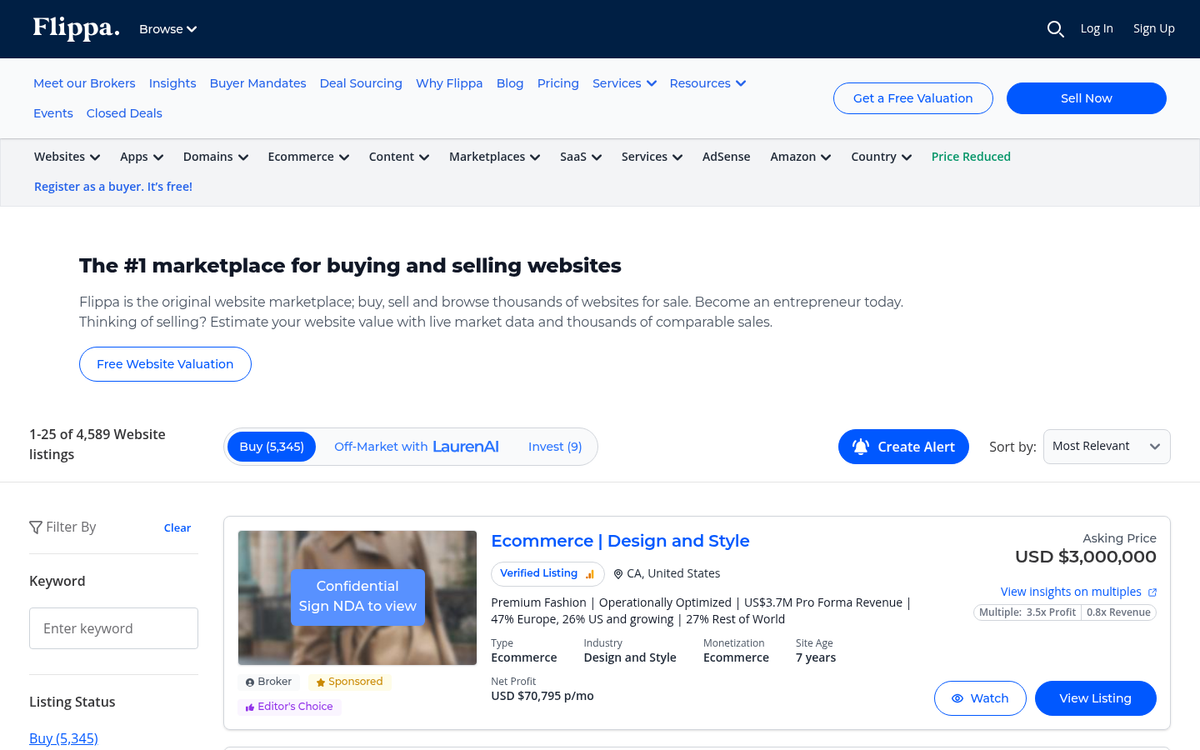
There are two things to take away from this success story. The first is that, if you enjoy building sites, doing the research, and establishing the start of a business, you can still make a profit without having to maintain the site long-term. You can simply sell it for a good chunk of change, then start over and do it all again. The second takeaway is that if you're on the other side of the coin - perfectly capable and willing to maintain and improve a site, but unwilling to build one from scratch - you can buy an established site and take it from there. Platforms like Flippa and Empire Flippers have made this kind of transaction increasingly common and accessible.
The post is an interview with Hieu, and it covers the strategies he used to build and rank his sites. Be aware that he does use some gray and black hat strategies, so your results may vary if you're trying to follow in his footsteps.
So there you have it - five successful affiliate marketers and the techniques they used to achieve that success. Whether you want to build a long-term authority site, flip niche sites for profit, or scale a blog into a six-figure-per-month business, the proof is out there that it can be done. By studying their approaches and putting in the work, you too can be one of the people on a list like this someday.



2 responses
Thoughtful replies only - we moderate for spam, AI slop, and off-topic rants.
Thanks for mentioning me in the blog. I'm actually doing a bit better than that now from my websites but I also run some other companies as well. Currently have about 6 decent sized income streams that all add up pretty well. It's been a lot of fun over the last several years trying new things 🙂
Excellent post, I really enjoyed it. Keep it up!