





Two methods of setting up reasonably passive income online are dropshipping and affiliate marketing. At first glance, they seem somewhat similar, with a few pros and cons for each that can make a decision easy. But wait! There are actually some subtle differences that might sway you in one direction or another. Which one is better, and which should you pick?
Before I get into details, I'll say one thing up front; both are perfectly viable business strategies in 2026. They both have checkered pasts with spammy abuse and high quality use. The difference between them comes in infrastructure and setup, as well as how you go about managing the business you create. Neither is inherently better than the other; it comes down to what you want out of the business, what you're willing to put in, and which system seems more appealing to you.
Key Takeaways
- Both dropshipping and affiliate marketing are viable income strategies in 2026, with neither being inherently superior to the other.
- Dropshipping offers 20-30% profit margins but requires more infrastructure setup, supplier relationships, and faces significant market competition.
- Affiliate marketing eliminates fulfillment responsibilities entirely but typically earns lower commissions on physical products, ranging from 1-10%.
- Digital products and SaaS affiliate programs can pay 10-50% commissions, often outperforming dropshipping margins with far less operational overhead.
- Many entrepreneurs combine both models simultaneously, layering multiple income streams rather than relying exclusively on one approach.
What is Dropshipping?
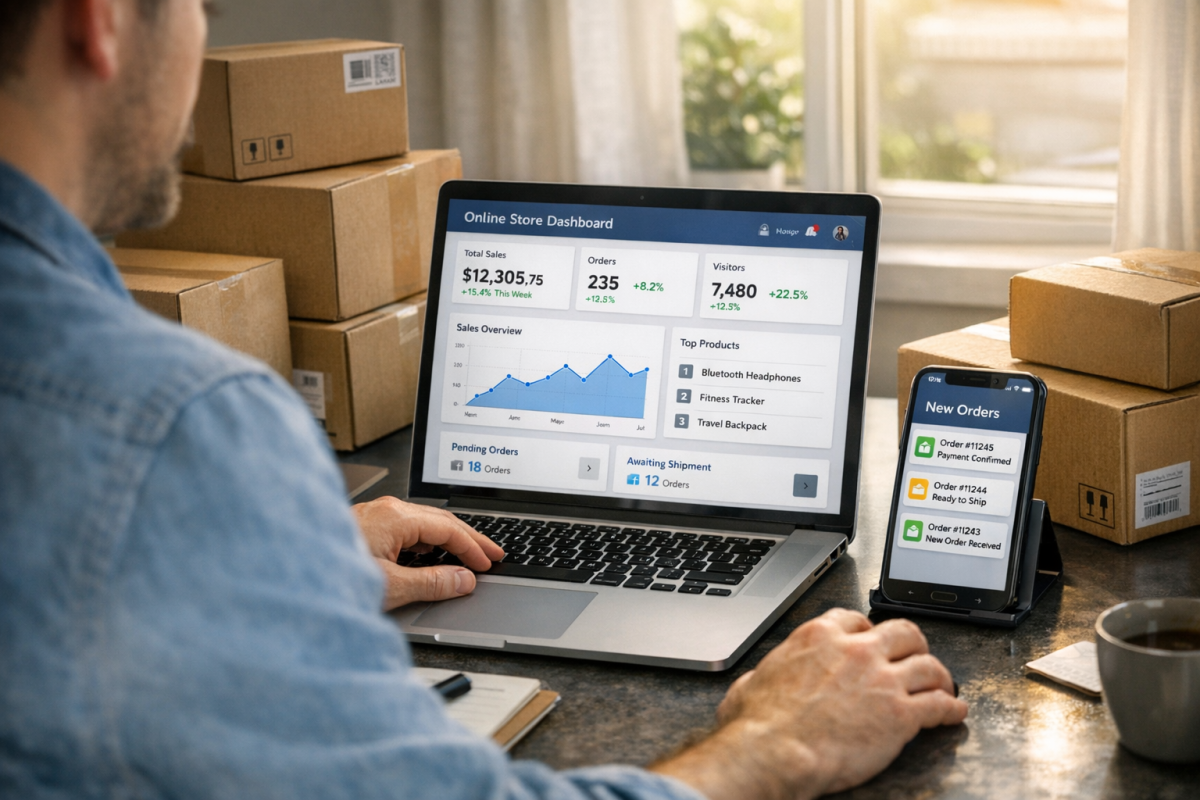
Imagine if you were running an online store. There's a lot to keep track of, right? You have to manage an inventory, monitor stocks, keep prices up to date, ship regularly, fulfill orders, and all the rest. It's a lot of work.
Now imagine you could run a storefront without doing all of that. All you have to do is set up a store and take orders. When you get an order, you pass it on to someone else, who handles all the fulfillment, inventory, and production processes.
Essentially, you become a middleman. You hook up with suppliers for a product, and you sell that product on your website. You make your profit by marking up the price along the way - and dropshippers typically earn 20-30% profit margins per sale, which is one of the model's biggest advantages.
For example, say you want to sell a popular phone accessory. You find a supplier willing to sell it to you for $10 each. You list it on your storefront at $15. You handle the marketing, the outreach, and the customer engagement necessary to drive traffic to your store.
A customer comes along and orders one. They pay you $15, you immediately contact your supplier, order one for $10, and give them the customer's address. The supplier ships it directly to the customer. You pocket the $5 difference. If the customer has an issue, the supplier's customer service department handles it.
You can dropship through your own web storefront, or through platforms like Amazon, eBay, Etsy, or Shopify - which has become one of the dominant platforms for dropshippers in recent years.
The global dropshipping market reached $201 billion in 2024 and is projected to grow to an extraordinary $1.25 trillion by 2030. That kind of growth tells you this model isn't going anywhere. That said, the dropshipping success rate in the first year hovers around just 10-20%, so it's not a guaranteed win by any means.
The hard part about dropshipping is setting up the infrastructure. You need product listings, either on a website of your own or on one of those established marketplaces. You need to make them attractive enough that people will buy from you over your competition. That sometimes means taking less of a profit per unit in order to beat competitors on volume.
You also need to contact suppliers and negotiate deals. For some products, this is easy - suppliers set up dropshipping programs and allow almost anyone to enroll. Others are harder to reach and require more legwork. These can be more lucrative since the barrier to entry filters out low-effort dropshippers, but it takes time to establish those relationships.
On the plus side, dropshipping has a low startup cost. All you need is web hosting, time to set up listings, and the effort to make supplier contacts. It scales up indefinitely. Just keep enough seed money on hand to cover returns or disputes, and you're in reasonable shape.
The primary drawback remains that there is a lot of competition. Around 27% of online retailers now use dropshipping as their primary fulfillment method, which means the space is crowded. If you're selling a $10 item for $15, someone else is probably selling it for $12. You have to ask yourself: why would a customer buy from me instead of them? What value do I add? Often, that value has to come in the form of trust, better content, and a stronger brand presence.
What is Affiliate Marketing?
Affiliate marketing takes the storefront out of the equation entirely. Instead of selling products yourself, you refer people to retailers and earn a commission when they buy.
The process is simple: you send people to a retailer using a special tracking link, which tags their purchases with your affiliate code. When they buy something, you get a percentage of the sale. You don't ship anything, you don't handle customer service, you don't manage transactions. All you need to do is get people to click through and buy.
Amazon's affiliate program (Amazon Associates) remains one of the most popular starting points, though the commission rates have been restructured over the years and now vary significantly by category - typically ranging from 1% to 10% depending on what's being sold. It's worth checking their current rate card before building a site around a specific niche, since some categories pay considerably less than others.
Beyond Amazon, the affiliate marketing landscape in 2026 is massive and diverse. The global affiliate marketing industry is valued at approximately $27.8 billion in 2024 and is projected to reach $48 billion by 2027, growing at a CAGR of 18.6%. Around 80% of brands now offer affiliate programs, which means you have enormous flexibility in what you promote. Software (SaaS), online courses, financial products, and other digital goods often pay commissions of 10% to 50%, making them far more attractive than physical product commissions in many cases.
There are a ton of affiliate networks out there - ShareASale, CJ Affiliate, Impact, PartnerStack for SaaS products, and many more. You're not limited to one program any more than you're limited to one supplier with dropshipping.
The primary advantage of affiliate marketing over dropshipping is that you have virtually nothing to do with the product fulfillment process. You're not connecting with suppliers, collecting payments, handling refunds, or managing anything transactional. All you do is, essentially, hand people your card, point them at the door, and say "tell 'em I sent you."
One major disadvantage of affiliate marketing is that there's very little inherent customer loyalty. You can build loyalty to your content, but many affiliate sites target narrow niches and aren't designed for long-term repeat readership. Someone might land on your faucet review blog, click through to buy a faucet, and never return - going straight to Amazon next time without using your link. By contrast, dropshippers build their brands and encourage customers to return directly to the storefront for future purchases.
Affiliates or Dropshipping? Which is Best for Me?

As I mentioned before, both methods are equally viable, so the choice comes down to your personal goals and preferences.
- Both methods have the potential to earn you absolutely nothing if you don't set the groundwork, build an audience, and offer the right product.
- Both methods have high ceilings; affiliate marketers can earn significant monthly income promoting high-commission digital products, while dropshippers are limited mainly by demand and competition.
- Both methods have a variable reputation since they've been abused by spammers in the past, but are not inherently damaging to a brand when used legitimately and transparently.
- Both methods are relatively accessible to start, though dropshipping requires more upfront infrastructure work.
So, how can you decide? Here are some questions to ask yourself.
1: How much setup are you willing to do? Affiliate marketing generally requires less direct setup. You sign up for an affiliate network, build a content site or blog, and start publishing. A dropshipper needs a functional storefront, supplier relationships, payment processing, and transaction infrastructure - including a separate business bank account. Both require a website, but the complexity levels are different.
2: What do you want to sell? Some niches have excellent affiliate programs - especially software, finance, and education - with commissions far higher than anything you'd make dropshipping physical goods. Other niches are better served by dropshipping, particularly if the products are commodities that people buy without much research. Make sure an affiliate program actually exists for your niche, and check the commission rates before building an entire site around it.
3: How do the profit margins compare for your niche? Dropshipping typically yields 20-30% margins, while affiliate marketing commissions on physical products usually run 3-10%. However, if you're promoting digital products or SaaS tools, affiliate commissions can reach 10-50% with zero fulfillment headaches. The math looks very different depending on what you're selling.
4: What resources and experience do you have? If you're experienced with SEO, content marketing, or running an online store, you have a better foundation for either model. Dropshipping benefits more from e-commerce and operational experience. Affiliate marketing benefits more from content creation, audience building, and organic search skills - especially as AI-generated content has made the space more competitive and quality differentiation more important than ever.
5: How much do you want to diversify? Dropship stores tend to stay within a focused product category. If your store sells phone accessories, branching into something completely unrelated is difficult. Affiliate marketing, on the other hand, lets you build as many niche sites as you want. Want to cover home improvement tools on one site and personal finance on another? Go for it. Affiliate marketing is simply more agile when it comes to diversification and pivoting into new niches quickly.
At the end of the day, I have two things to say. First, neither option is better overall than the other. It all comes down to how much effort you put in, what connections you make, what you're willing to invest, and the realities of your chosen market. Second, absolutely nothing says you're limited to just one. You can build a dropshipping storefront and augment that income with affiliate marketing on the side, or vice versa. Many successful online entrepreneurs in 2026 are doing exactly that - layering multiple income streams rather than betting everything on a single model. No one can stop you but your competition and your own lack of ambition.


4 responses
Thoughtful replies only - we moderate for spam, AI slop, and off-topic rants.
This was a very detailed and informative article. I appreciate that you described both methods objectively, without saying that one was essentially better than the other. Thanks for the article!
Thank you very much.
I already have my author blog.
I wanted to some extra money so I only have time for affiliate marketing
Thanks for the post. What do you think about the sale of digital products (ebooks, online training, software ...) by marketing affiliation and which allows to have commissions of more than 70% and can exceed the $ 50 per sale? Is not it better than dropshipping that makes us responsible to customers?
Thanks for the article. Both drop shipping and affiliate marketing have its pros and cons. But, both can be very profitable as long as it is done right. Personally, I prefer drop shipping so I signed up for DSM Tool to make drop shipping easier and manageable. I'll someday try my luck with affiliate marketing too.