





Key Takeaways
- Amazon Associates has major drawbacks: commissions were cut up to 50% in 2020, and cookies expire after just 24 hours.
- Diversifying across multiple affiliate networks protects against sudden account suspensions, commission cuts, or program changes.
- Alternatives like Fanfuel, ClickBank, and AvantLink offer dramatically higher commissions and longer cookie durations than Amazon.
- Cookie duration significantly impacts earnings; programs offering 30-120 day windows outperform Amazon's 24-hour window for considered purchases.
- Successful affiliate marketing requires targeted traffic, publisher credibility, and genuine product recommendations matched to buyer intent.
Amazon Associates Alternatives: The Best Affiliate Programs in 2026
There are dozens of affiliate networks out there, but one of the most widely known and widely used is Amazon's affiliate program. With good reason - it has a lot going for it, not least the immense brand recognition that comes with carrying the Amazon name.
Still, there are a few good reasons why you might want to use a program other than Amazon. Heck, you might just want to use one in addition to Amazon, to double up on your potential earning power through different means of marketing.
Let's take a look at Amazon's Associates program, what makes it good, and what you can replace it with - or supplement it with - should you desire to do so.
Why Amazon is a Great Affiliate Program
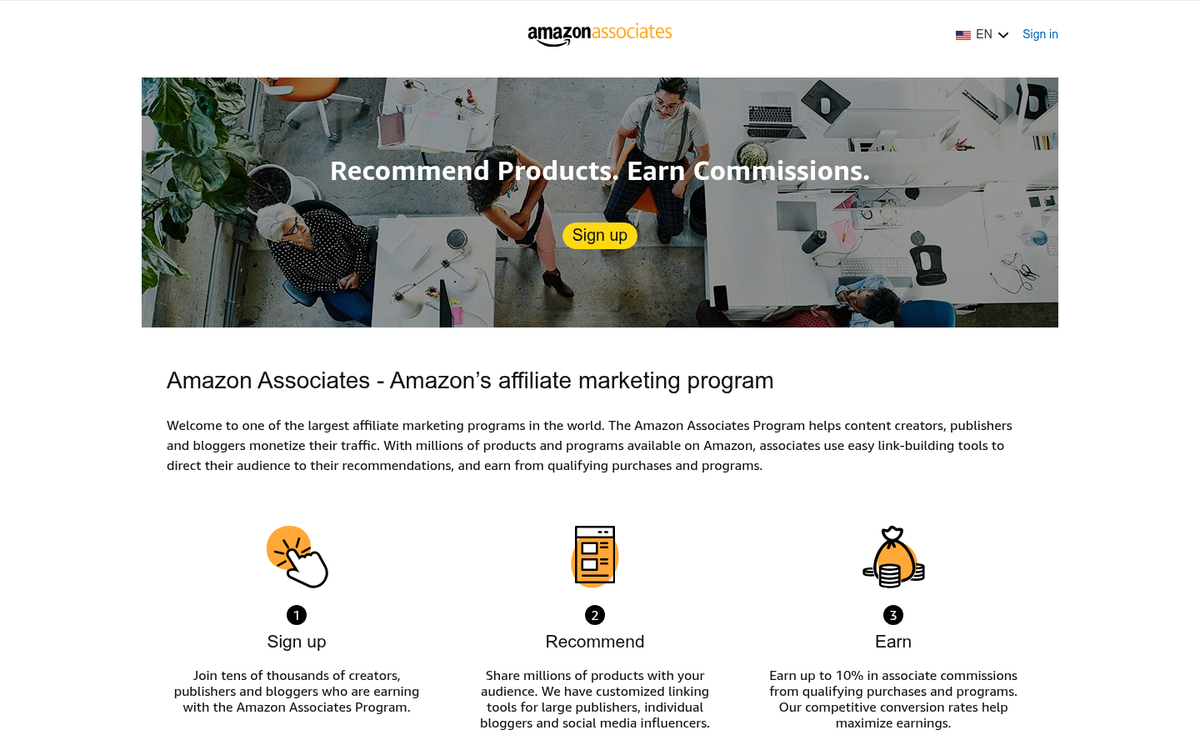
Before we get into negatives and alternatives, we should first discuss what makes Amazon Associates a great affiliate program. I do this not to convince you of the greatness of Amazon, but to show you what you should be looking for in another program if you want it to compete with Amazon.
It's easy to set up and get running. It's only a matter of minutes to set up an account, and you don't need to pass some detailed inspection of your site as a publisher. Many affiliate programs vet their publishers because they don't want spam sites and low-volume traffic on their system. Amazon doesn't have to worry about that - they're big enough to absorb low-volume publishers and filter problem sites on an ongoing basis. You can have a functioning account set up in minutes.
It has a lot of tools, features, and reports. Amazon's reporting suite is solid, with granular data and a range of link-building tools that make it easy to generate custom affiliate links on the fly. These days it's essentially a one-button process to create a shortlink you can embed in your content. You can also view sales for an individual product on Amazon to help you understand what's performing best.
Amazon is one of the biggest and most trusted brands in the world. This is something no other affiliate program can fully replicate. Amazon has global name recognition and trust. People feel a lot more comfortable buying through Amazon than through an unfamiliar third-party website. Their price guarantees, return policies, fast shipping, and customer support all work in your favor as an affiliate.
You can earn commissions on products you didn't directly sell. This is perhaps the best part. With most other affiliate programs, you need to promote a specific product and hope the user buys that exact item. With Amazon, anything the user buys after arriving via your referral link earns you a commission. You could refer someone to a $10 book, and if they also throw a $1,000 TV in their cart, you get the commission on that too.
Amazon seasonal sales can dramatically increase your conversions. Prime Day, Black Friday, Cyber Monday - Amazon's sales calendar is a gift to affiliate marketers. Unlike many other programs where sales can undercut your margins, Amazon's deals are so compelling they tend to drive more conversions, not fewer.
You can find just about anything to sell. Amazon carries hundreds of millions of products. No matter what niche you're in, there's almost certainly something relevant to promote. If you want to build a successful Amazon affiliate site, understanding these core strengths is a great place to start.
Reasons You Might Want an Alternative
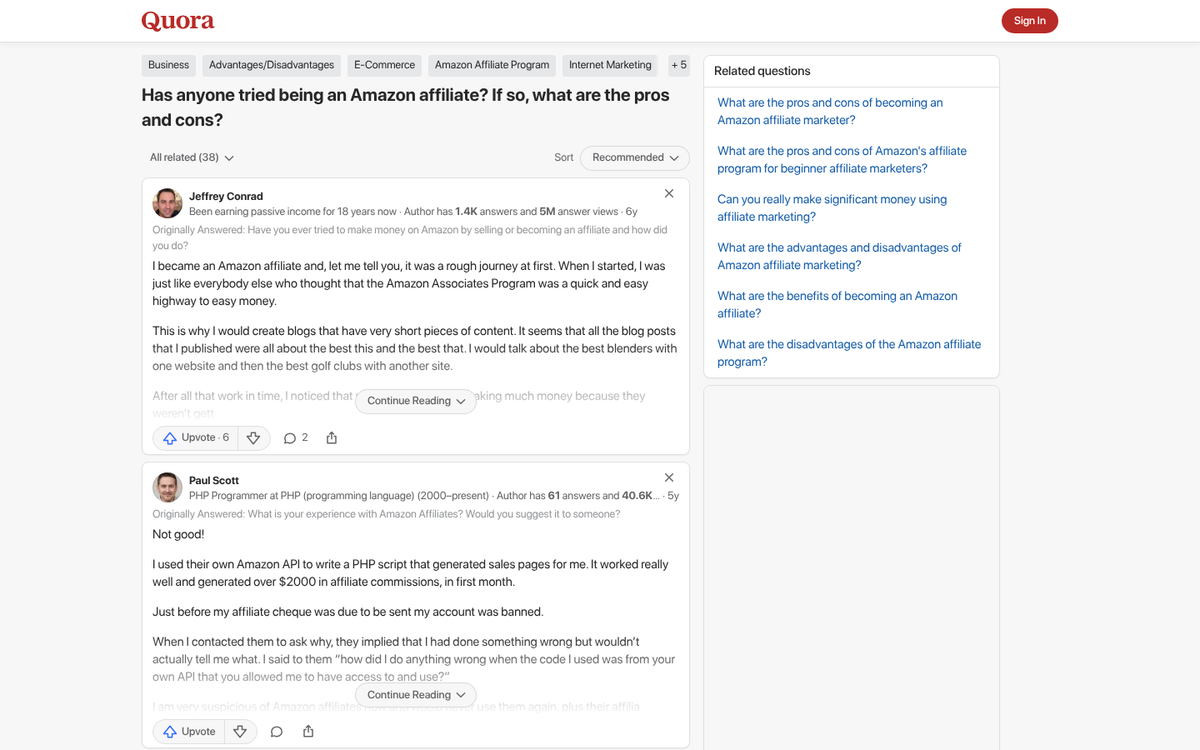
Unfortunately, all is not sun and rainbows with Amazon Associates.
The program has some real drawbacks, ranging from mildly annoying to deal-breaking. If you're looking for an Amazon alternative, chances are you've already run into at least one of these.
The commissions have been slashed and are generally quite small. This is the biggest complaint about Amazon Associates - and it got significantly worse in April 2020, when Amazon cut commission rates by up to 50% across many categories. Some categories, like health and personal care, now sit at just 1%. Furniture and home improvement aren't much better. What was already a low-commission program became even harder to justify for many publishers after those cuts.
The affiliate cookie expires after just 24 hours. When you refer a user to Amazon, the tracking code activates and stays live for exactly one day. If someone takes 25 hours to decide on a purchase - which is entirely reasonable for higher-ticket items - your cookie is gone. You get nothing. For expensive electronics, furniture, or anything that requires research and consideration, this is a serious problem.
There's a lot of competition in the best niches. Despite the hundreds of millions of products available, the high-volume, high-value niches are already saturated with established affiliate sites. Breaking in is tough.
You might not be eligible, or you could lose your account with little warning. Amazon has suspended and closed affiliate accounts with minimal explanation, sometimes due to policy violations that weren't clearly communicated. If your account disappears overnight, you need a fallback. This is reason enough to diversify.
Even Amazon can pull the rug out. There was a period where they removed entire states from the program due to tax legislation. No platform is too big to break something that smaller publishers depend on. Diversification isn't just smart - it's a survival strategy.
The Ten Best Amazon Affiliate Alternatives in 2026
Let me be upfront: this isn't an exhaustive list, and your mileage will vary depending on your niche, audience, and content strategy. But these are all legitimate networks worth your attention.
- Awin - Awin has grown into one of the most powerful affiliate networks in the world, with access to over 25,000 brands including Etsy, HP, AliExpress, and hundreds of major retailers. Cookie durations and commission rates vary by advertiser, but the sheer breadth of options makes this a genuine Amazon competitor for almost any niche. If you're only going to add one network to your stack, Awin deserves serious consideration.
- ShareASale - Now operating under the Awin umbrella, ShareASale remains a strong standalone option with its own publisher dashboard and merchant relationships. One standout advantage: many ShareASale merchants offer a 12-month cookie duration, compared to Amazon's 24 hours. That alone can make a significant difference to your conversion rate on content that takes time to warm up readers. Their merchant catalog skews toward fashion, home goods, and lifestyle, but has expanded considerably in recent years. If you want to explore similar options, there are also affiliate network alternatives to ShareASale worth considering.
- CJ Affiliate (Commission Junction) - CJ Affiliate is one of the most established and professional networks in the industry. They work with major brands across virtually every category, and their reporting and attribution tools are genuinely impressive - arguably better than Amazon's in some respects. Approval is more selective than Amazon, but the quality of offers tends to be higher as a result.
- Skimlinks - Skimlinks automatically monetizes your outbound links by converting them to affiliate links across their network of 48,500 advertisers and more than 50 affiliate networks. You write your content naturally, and Skimlinks does the heavy lifting. It's a particularly good fit for content-heavy publishers who don't want to manage individual affiliate relationships. Revenue share is taken by Skimlinks, but the convenience factor is real.
- ClickBank - ClickBank is primarily a digital products marketplace, which means commissions are dramatically higher than physical product networks - typically ranging from 10% to 75%, with access to over 1,000 merchants. The product quality varies wildly, so vetting what you promote matters. But for publishers in niches like health, personal finance, online education, or software, ClickBank can be extremely lucrative compared to Amazon's current rates.
- Fanfuel - Worth calling out specifically for anyone in the health and wellness space. Fanfuel pays 40% commissions with a 90-day cookie. Compare that to Amazon's 1% commission and 24-hour cookie for the same category. That's not a small difference - it's a fundamentally different business model. If you're writing about supplements, fitness, or wellness products, this is one to investigate seriously.
- AvantLink - A solid network for outdoor, sporting goods, and lifestyle niches. AvantLink offers cookie durations starting at 60 days and extending to 120 days when link placement is confirmed - a stark contrast to Amazon. Their merchant roster includes well-known brands in outdoor gear, cycling, and fitness. Approval is selective, which helps maintain quality across the network.
- Rakuten Advertising - Formerly Rakuten Marketing and before that LinkShare, Rakuten continues to be one of the top-tier affiliate networks globally. They work with major brands and offer strong support for publishers. Approval for individual programs can take time, and not every advertiser is easy to get into, but the quality of partnerships available is excellent.
- VigLink (now Sovrn Commerce) - Like Skimlinks, Sovrn Commerce (the rebranded version of VigLink) automatically converts your existing content links into affiliate links. It's a set-it-and-mostly-forget-it option that works well for publishers who produce a lot of content and want passive monetization without managing dozens of individual affiliate relationships.
- Other Major Retail Affiliate Programs - Don't overlook the big-box retailers. Walmart's affiliate program offers commissions ranging from 1-4% with cookie durations up to 14 days for some categories - not wildly better than Amazon, but the 14-day window is a meaningful improvement. Etsy's affiliate program comes with a 30-day cookie window and works well for lifestyle, craft, and gift-focused content. Target and Best Buy also run their own programs and are worth a look depending on your niche. You might also want to explore affiliate sites with recurring commissions to further diversify your revenue.
Finding Success with Affiliate Programs, Amazon or Not

Amazon is undoubtedly easy to sell through, and that's partly what makes finding a replacement difficult. But the 2020 commission cuts changed the calculus for a lot of publishers, and the case for diversifying has never been stronger.
First, you need traffic. Without Amazon's benefit of earning commissions on everything a user buys after clicking your link, you need more targeted traffic to move product. There are entire blogs dedicated to growing your audience - you're on one right now - so I won't go deep on this here.
The second factor that drives conversions is trust. Amazon has this baked in through decades of brand building. Most other networks don't. That's why your own credibility as a publisher matters more when you're promoting through lesser-known programs. Your audience needs to trust you if they're going to click through to a merchant they've never heard of.
User intent is everything. Darren Rowse of ProBlogger famously told the story of his photography blog, where traffic was growing but conversions weren't. The problem? His content attracted people who already owned cameras and wanted shooting tips, while he was trying to sell cameras. You need to attract people who are in buying mode, not just browsing mode. Match your content to the intent of a buyer, not just a reader.
Relevance is non-negotiable. Your affiliate links need to match your content and your audience's actual interests. Shoehorning in a product recommendation that has nothing to do with your niche will erode trust and produce zero conversions.
Genuine product recommendations outperform everything else. If you can't honestly recommend something, it will show - both to the readers who know the space well enough to call it out, and to the ones who sense something is off without being able to articulate why. A thorough, honest product review will outperform a hundred thin posts with affiliate links buried in them.
Cookie duration matters more than most people think. One of the most underrated factors when evaluating an affiliate program is how long the cookie lasts. Amazon's 24-hour window is a real handicap for high-consideration purchases. When you're evaluating alternatives, always check the cookie window - programs offering 30, 60, 90, or even 120 days give your content far more time to earn.
At the end of the day, if you can use Amazon, you probably still should - it remains a useful baseline. But layering in one or two of the alternatives above, particularly ones with longer cookies and higher commissions in your niche, is a smart move in 2026.
Don't put all your eggs in one basket. Affiliate program terms change, accounts get suspended, and commission rates get cut - sometimes overnight, with no warning. Diversify your income streams before you're forced to.


3 responses
Thoughtful replies only - we moderate for spam, AI slop, and off-topic rants.
Are you sure that one can be Affiliate of Amazon and other sites at the same time?
Is it possible to use homedepot affiliate program with amazon affiliate program in a single website?
Hey Kimhak, yes this shouldn't be an issue. There's nothing in their rules that mention using other services in conjunction with Amazon.