Cost per conversion is probably the most important metric for any paid advertising plan, regardless of whether you're running Meta ads, Google ads, TikTok ads, or ads through any other network. Cost per conversion is your return on investment, the cost to make a sale, and by optimizing that cost, you can get more sales out of your budget.
The thing is, while you're monitoring cost per conversion, it often changes. It changes in response to just about everything you do, but it also changes when you're not doing anything at all. Why does it fluctuate up and down, and what can you do about it?
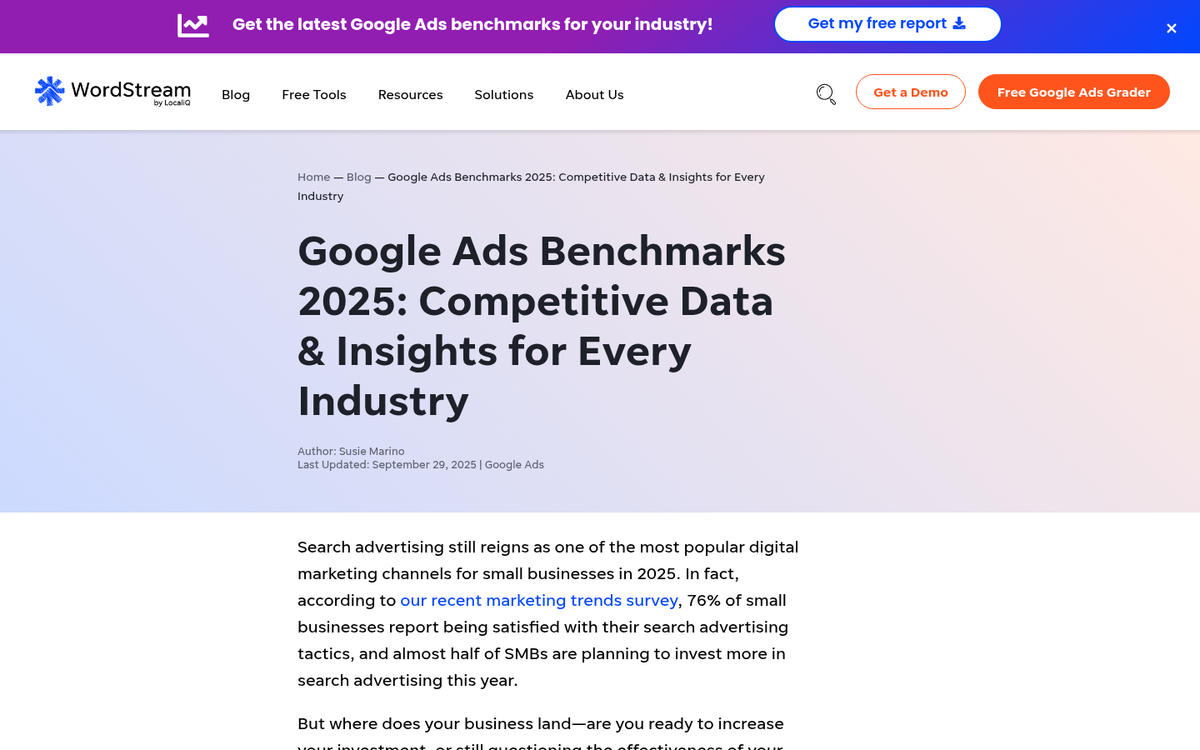
For context, the average Google Ads cost per acquisition (CPA) was $66.69 in 2024 and climbed to $70.11 in 2025 across industries, according to WordStream. Google Ads costs have been increasing roughly 5-10% year over year, and in 2025, cost per click increased for 87% of industries. Some sectors like Education and Instruction and Beauty and Personal Care saw increases of over 40%. So if your costs have been creeping up and you haven't changed anything, you're not imagining it. The landscape itself is getting more expensive.
Key Takeaways
- Cost per conversion fluctuates due to bidding styles, competition, time of day, geography, keyword types, ad fatigue, and platform algorithm changes.
- Competition heavily drives costs; if a competitor raises their bid, your cost per conversion rises immediately with no changes on your end.
- Exact match keywords average $22.50 cost per conversion versus $61.47 for broad match - nearly a 3x difference that significantly impacts averages.
- Google and Meta can spend up to 200% of your daily budget on a single day, making daily cost reporting appear unpredictable.
- To manage fluctuations, review costs on weekly or monthly timescales, optimize creatives regularly, and monitor keyword match types closely.
Factors that Change Cost per Conversion
There are a lot of different factors that go into calculating cost per conversion. Let's run down the list.
First of all, you have your bidding style. Automatic bidding will adjust your bid on the fly, which means your costs will change based on any factor the platform considers worthy of adjustment. Smart bidding strategies on Google, like Target CPA or Maximize Conversions, are particularly prone to this, and your cost per conversion will likely be changing by the hour, not to mention by the day and by the week. Meta's Advantage+ campaigns work similarly, using machine learning to optimize delivery in ways that can make daily costs look unpredictable even when performance trends are actually healthy.
Even manual bidding styles have some level of adjustment built in. When you bid $25 on an ad, you're not necessarily paying $25 every time. Many platforms use auction mechanics where you pay just above what the next highest competitor is bidding. Every ad platform understands that you're going to optimize your ads for cost, so they do some of it automatically rather than have you waste your time making micro-adjustments.
Next up, you have your competition. Competition is generally one of the biggest factors when it comes to rising costs. Most ad platforms will only charge you a hair above what the second highest ad is paying. If you bid $50 and the second-place advertiser is bidding $20, you're going to be paying around $20.01. If that second advertiser ups their bid to $25, suddenly your cost per conversion jumps to $25.01, with no other changes on your end.
This happens when existing competitors change their bids in an attempt to outrank you, and it happens when newcomers decide to target the same keywords or the same audience you're reaching. Given that we operate in a world where there are millions of advertisers competing in overlapping ways, changes in competition in an entirely different industry can lead to shared keywords becoming more expensive. It's very hard to trace and is simply a fact of life for online advertising.
One concrete data point worth knowing: according to Optmyzr's analysis of 1,402 accounts, exact match keywords average $22.50 cost per conversion compared to $61.47 for broad match. That's nearly a 3x difference, and it's a major hidden driver of fluctuation. If your keyword match types are mixed, or if Google has been expanding your broad match reach, that alone can swing your averages dramatically.
Beyond that, you have to consider temporal factors like time of day, time of week, and time of year. Sometimes your costs change because the audience you're trying to reach is more or less available than before. On an hourly basis this follows a fairly regular pattern, with costs rising during peak hours and dropping off when people are asleep or less active. On a day-to-day basis you also tend to see weekly trends, though holidays and special events can skew this. Even seasonal shifts can change your costs, though you should be able to broadly predict these changes once you have enough historical data.
There are often also geographical factors that you might need to consider. Any time there is a large-scale event - a natural disaster, a major local news cycle, a regional economic disruption - it skews advertising in that geographic area. People dealing with a crisis have different priorities in the content they're consuming online, so some ads will benefit and others will falter.
Now, if you're advertising on a broad, country-level or global basis, a localized event won't be a huge blip on your radar. On the other hand, if you're targeting specific local areas - which you should usually be doing when it makes sense, since local audiences tend to be more engaged and easier to optimize - you can be significantly impacted when one of those areas is disrupted.
You can also look to see if any specific keywords are bumping up your costs. Costs are typically calculated on a keyword level, even when you're running ads that target a dozen or more keywords. Your cost per conversion for those ads will be averaged across all of those keywords, since it's an ad-level calculation. Dig into your campaigns and look at costs at the keyword level. Sometimes one keyword will go expensive for reasons tied to competition or some other factor. Cutting that one keyword out or tightening its match type can decrease your blended costs.
You do have to be careful doing this, because if that keyword was driving most of your traffic and conversions, cutting it out can dramatically decrease the overall performance of your campaigns. Always make sure you're paying attention to each factor and how it impacts your ads as a whole.
Some platforms use a budget pacing system that can cause costs to fluctuate significantly from day to day. Google Ads, for example, can spend up to 200% of your daily budget on a given day, averaging your spend across a 30.4-day billing period. Meta similarly allows a daily bid cap but can charge up to twice your cap in a single day, then under-charge the next day to even things out. Both platforms use this flexibility to capitalize on quick surges in opportunity and make up for it during slower periods. It's a feature designed to improve overall performance, but it makes daily cost reporting look extremely fickle if you're watching it too closely.
Other forms of audience engagement can have an impact as well. Platforms like Meta take outside factors into consideration when running your ads. Your organic content performance can alter how your paid ads are perceived and delivered. If you're running ads targeting an audience and then you have an organic post go viral in a positive way, suddenly a lot of people who didn't necessarily know about you before have some positive exposure to your brand. This means more people may see your ads in a new light and may convert when they otherwise wouldn't have, which can lower your costs.
The same goes in reverse. A negative news story, a public controversy, or even a poorly received organic post can negatively impact your paid performance. Public perception and brand sentiment are real factors in ad delivery efficiency on social platforms.
Clicks getting verified can change your cost per conversion as well. Google, for example, runs click data through a verification process to make sure traffic is legitimate. Processing this data isn't always immediate, and the volume of qualified clicks can change from day to day. Since Google filters out clicks they don't consider valid, those clicks don't factor into your cost per conversion calculation. As that data updates, your reported metric will shift.
Quality score matters too, on platforms where it's calculated. Quality score will change based on time and based on other changing factors, including historical ad performance, landing page experience, and expected click-through rate. On Google, a strong quality score can meaningfully lower your effective cost per click, which in turn affects your cost per conversion.
I highly recommend reading up on the factors that go into calculating both the Google Ads quality score and Meta's ad relevance diagnostics. If you're using a different ad network, check to see if they have their own version of a quality or relevance score and what affects it. Generally, optimizing your quality or relevance score will have a positive impact on your ad costs over time.
There are other external factors too, like changing algorithms in your ad platform. Most ad networks change the way they work and display ads on an ongoing basis. The changes aren't necessarily announced, and they usually don't affect everything at once, but as more changes accumulate, the landscape of advertising shifts. Google has continued rolling out AI-driven changes to how campaigns are managed and how auctions function. Meta has pushed further into AI-automated placements and Advantage+ campaigns. You simply have to adapt as these platforms evolve, or risk being left behind.
Another external factor is industry trends or announcements affecting attention. If you're Samsung and you're running ads for the latest Galaxy phone, Apple making an announcement for a new iPhone is likely to have an impact on your ad costs. Whether it's positive or negative depends on how your positioning stacks up. Of course, large companies often have competitive intelligence that helps them anticipate this, but smaller brands may not realize a competitor has launched something new until costs start moving.
Other trends can cause issues as well. A data breach in a related sector, a viral news story in your industry, or even a social media trend touching your audience can shift public perception and ad performance quickly. You never know what kind of news can affect exposure and conversion rates.
Your costs will fluctuate if you're using a platform or tool that optimizes ads on the fly. Tools that use algorithms to test large-scale variations - rotating creatives, audiences, and offers - will naturally produce fluctuating costs as they work toward efficiency. Usually this will trend costs downward over time, but it has to fight against all of the other forces that may be pushing costs upward. In a balanced world, you'll see minor fluctuations up and down. If one push wins out, you'll see a clearer trend emerge.
And, of course, ads simply grow stale over time. If you've been running an ad long enough to saturate your target audience, performance will decline and costs will rise. This is called ad fatigue, and it's a universal problem across every platform. Ads simply die over time, and there's nothing you can do about it aside from refreshing creative, rotating messaging, and expanding or shifting your audiences before the decline becomes severe.
How to Cope with Fluctuating Costs

There are a few ways you can handle fluctuating costs.
The first suggestion I always have is to pull back and look at costs on a longer time scale. Your cost per conversion fluctuating from hour to hour is completely meaningless. Look at it on a daily, weekly, or even monthly basis, and look for fluctuations or trends there. Ideally, when you zoom out, the fluctuations smooth out and you see some kind of directional trend. Costs decreasing is good, if conversions remain the same. Costs staying flat is fine. Costs rising may be cause for concern, or at least monitoring, especially given that industry-wide costs have been climbing year over year.
The second suggestion is to always strive to optimize your ads. Don't let ads get stale, don't give them time to die on their own, and push them to improve at every opportunity. Monitor your keyword match types closely - the difference between exact match and broad match performance is significant enough to move your averages on its own. Test your creatives regularly, sharpen your landing pages, and keep your quality scores healthy.
There are a thousand different ways you can tweak your ads for better performance, lower costs, higher volume, and better conversion costs. The more you push for improvement, the less the minor fluctuations will worry you, and the better positioned you'll be as the overall cost environment continues to rise.
How often do your ads fluctuate? Do they change wildly from day to day or week to week, or are they more stable? Tell me stories about the best and worst platforms you've used - I'm interested to hear your experiences in the comments.