One of the top things you can do to sell more online is to make your storefront more trustworthy. Some sites do this by being hilariously huge, like Amazon or any of the big brand name web stores. Some of them do it by accumulating massive amounts of positive feedback, like top tier sellers on eBay. Unfortunately, these aren't options for the average small business, which not only has to compete with those giant juggernauts, but with legions of other small businesses in the same or similar niches. After all, who wants to buy something from Joe's Widget Shack when they can buy it from Amazon, and know they're protected if something goes wrong?
One thing Google did in an attempt to promote smaller businesses was to establish the Google Trusted Store program. This was a benefits program that did two things, primarily. First, it added trust to your site, because you managed to jump through the hoops necessary to gain approval from Google, one of those aforementioned massive web juggernauts. If Google approved of you, customers could too, right?
Secondly, it essentially insured your sales for up to $1,000. It wasn't insurance on your end, though - it was for the consumer. If they made a purchase for anything under $1,000 in your store, and your product didn't arrive, they could seek recompense from Google. Google would pay them back if you didn't take care of the issue. Of course, if there was an issue and you didn't resolve it, you were liable to lose your trusted store status, so the whole thing was moot.
Being a Google Trusted Store tended to get you better positioning in both organic search and through the Google Shopping system, and cheaper and better ad positioning for your text ads. They also allowed you to add lines to your text ads. One line showed up at the bottom indicating that your store was a trusted store, and one was up at the top showing reviews for your store, if you had them. Seller ratings showed in a system of one to five stars, so having a nice high star rating and a trusted seller badge helped people trust you enough to click your ads.
However, it's important to note that Google Trusted Stores no longer exists as a standalone program. In 2017, Google began developing Google Customer Reviews as a direct replacement, and the transition was completed shortly after. If you've been searching for information on applying to Google Trusted Stores and found this article, the program you're actually looking for today is Google Customer Reviews.
The good news is that Google Customer Reviews carries forward much of the same spirit as Google Trusted Stores - helping smaller businesses build credibility against the Amazons of the world - while being more streamlined and easier to implement.
Key Takeaways
- Google Trusted Stores no longer exists; Google Customer Reviews replaced it in 2017 as the current credibility program.
- Google Customer Reviews lets stores collect post-purchase ratings displayed as stars in Google Shopping and Search ads.
- Unlike its predecessor, Google Customer Reviews is simpler to implement and requires no lengthy monitoring period before benefits appear.
- Google Customer Reviews no longer includes the $1,000 consumer purchase protection that Google Trusted Stores previously offered.
- Small businesses need an active Google Merchant Center account to enable and participate in Google Customer Reviews.
What Was Required to Become a Google Trusted Store
For historical reference, and because many of the underlying principles carry over to Google Customer Reviews, here's what the Google Trusted Stores program required. There were a lot of requirements, which was fitting given the benefits and the purchase protection involved.
The first and most minor of requirements was that you were able to implement JavaScript on your site. If you didn't have access, like if you were using a third party app and couldn't actually add or change the code, you may have had to ask the provider of the storefront to add it for you.
Next, you had to be in one of the limited selection of countries where Google was willing to vouch for storefronts, including Australia, France, Germany, Japan, the United Kingdom, and the United States.
There were also a lot of rules you had to adhere to, summarized here:
- Your store could not be one storefront of a common marketplace served by a number of different domains, such as Etsy.
- Your store had to provide accurate estimations of ship dates, costs, and other order-level and item-level details in a format accessible by the Google JavaScript.
- Your store could not rely on in-store pickup or ship-to-location when the location was anything other than the customer.
- Your store could not be primarily digital goods. Some digital goods were allowed, but the purpose was to monitor and insure physical delivery of items.
- Your store had to be the merchant of record for at least 80% of transactions. You could not become a Google Trusted Store as a dropshipper or affiliate marketer.
- Your site had to provide and maintain your corporate profile, logo, contact information, terms of service, privacy policy, and return policy.
- Your site could not attempt to hard-code any Google iconography or trusted store badges; they could only be served via script from Google.
- Your site could not attempt to obscure or hide elements of the Google Trusted Store program.
- Your store had to bill on or at most one day before shipment of the items, unless specific explanation of early billing practices was in your terms of service.
- Orders had to be made online, not by phone or mail, and could not be paid for in virtual currency such as Bitcoin.
- Your store had to fulfill at least 600 orders on a rolling 90-day basis, which worked out to an average of 200 orders per month.
- At minimum 90% of your orders had to be shipped by the estimated ship date, and at least 80% had to be delivered on time.
- Your store had to maintain at least a 4.0 star rating through seller ratings on a 90-day rolling basis.
- If more than 1 out of every 300 protected orders was escalated to Google for reimbursement, your eligibility was removed, on a 90-day rolling basis.
- You had to respond to customer service escalations within four calendar days.
- If Google's escalation payouts exceeded $5,000 per year on a rolling basis, you could be suspended or terminated from the program.
What You Should Be Using Instead: Google Customer Reviews
Google Customer Reviews is the current program you'll want to pursue. It's free to participate in, integrates with your Google Merchant Center account, and allows you to collect valuable reviews from customers post-purchase. Those reviews contribute to your seller ratings, which can appear as star ratings in Google Shopping and Search ads - carrying forward one of the most visible trust benefits of the old Trusted Stores program.
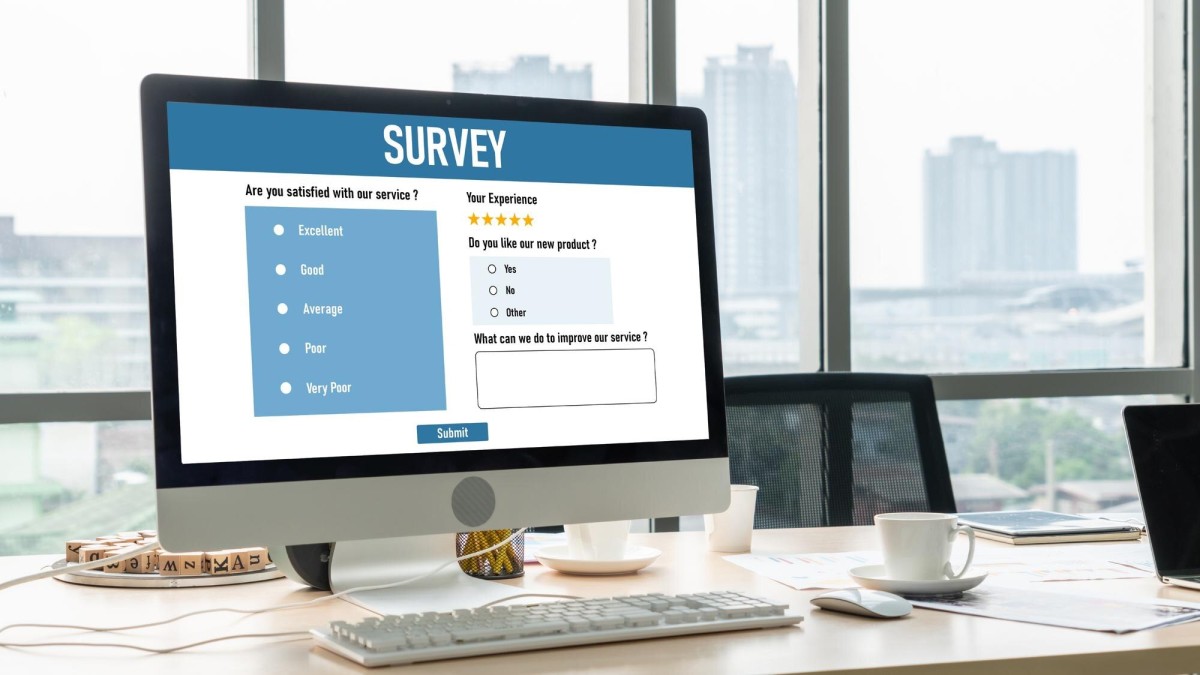
The integration is considerably simpler than what Google Trusted Stores required. You add an opt-in survey module to your order confirmation page, customers are invited to leave a rating after their purchase, and Google aggregates those ratings for display in search. There is no lengthy monitoring period of 60 to 90 days before you see benefits, and there is no complex merchant agreement to work through before getting started.
To get started with Google Customer Reviews, you'll need an active Google Merchant Center account. From there, the program can be enabled directly in the Merchant Center dashboard, and Google provides straightforward implementation instructions for adding the survey opt-in code to your site.
While Google Customer Reviews does not include the purchase protection component that Google Trusted Stores offered (the up-to-$1,000 consumer insurance), the trust signal of displaying verified seller ratings in search results remains one of the most effective ways for small businesses to compete with larger retailers on credibility. Pairing Google Customer Reviews with a strong Google Shopping presence gives smaller storefronts a meaningful edge in an increasingly competitive landscape.