Any time you're running a business, reviews are helpful. Though, I suppose I should clarify; reviews are helpful to your users. If your business stinks, your product breaks, your shipping is slow, or your service is terrible, reviews will call you out on it. Users are helped in that they are forewarned and can avoid your business. Of course, if you're a high quality business with none of those issues, a heap of positive reviews can help you out a lot.
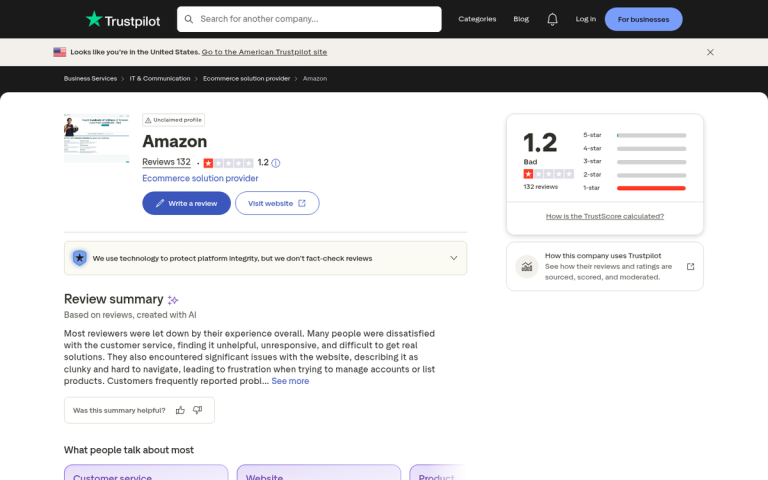
The problem is, it's often very difficult to obtain positive reviews, particularly on third party sites. Think about it; when you buy a product online or from a retail store, how often do you think "hey, I should leave those guys a review"? I would venture to guess not very often. Most people only think to leave reviews when those reviews are negative, to hurt the company that hurt them, to warn other potential customers away, and to express their negative feelings. This is even more true if you don't have satisfying customer service.
This means negative reviews are a lot easier to come by than positive ones. Meanwhile, companies like Yelp and TripAdvisor know that businesses accumulate negative reviews more than positive reviews, so they protect those reviews. It's difficult to remove a review unless you can positively prove it was faked, like someone reviewing a bad flight you booked when you don't cover that airline, or negatively reviewing a food you don't sell.
There used to be a lot of different ways to try to get negative reviews removed, and unscrupulous businesses would go far out of their way to do it. Some companies went so far as to harass and bully users online until they removed those reviews, even threatening legal action for damages against the company. That has largely been put to a stop due to consumer protection laws, but it still happened for a while.
The best way to deal with negative reviews is to obtain enough positive reviews to overpower those negative reviews. The question is, can you pay for those reviews, or do you have to accumulate them more naturally?
Key Takeaways
- Buying fake reviews became explicitly illegal under the FTC's Consumer Review Rule, effective October 21, 2024, with penalties up to $53,088 per violation.
- Platforms like Yelp and TripAdvisor actively combat fake reviews using honeypot businesses, filtering algorithms, and reporting suspicious activity to social platforms.
- Review fraud causes approximately $300 billion in annual consumer harm across home services, legal, and medical sectors alone.
- Offering incentives like discounts or gifts in exchange for reviews also violates FTC rules, even if the reviewer is a legitimate customer.
- Legitimate alternatives include follow-up emails, responding to existing reviews, simplifying the review process, and providing excellent customer service.
What Constitutes Buying Reviews?
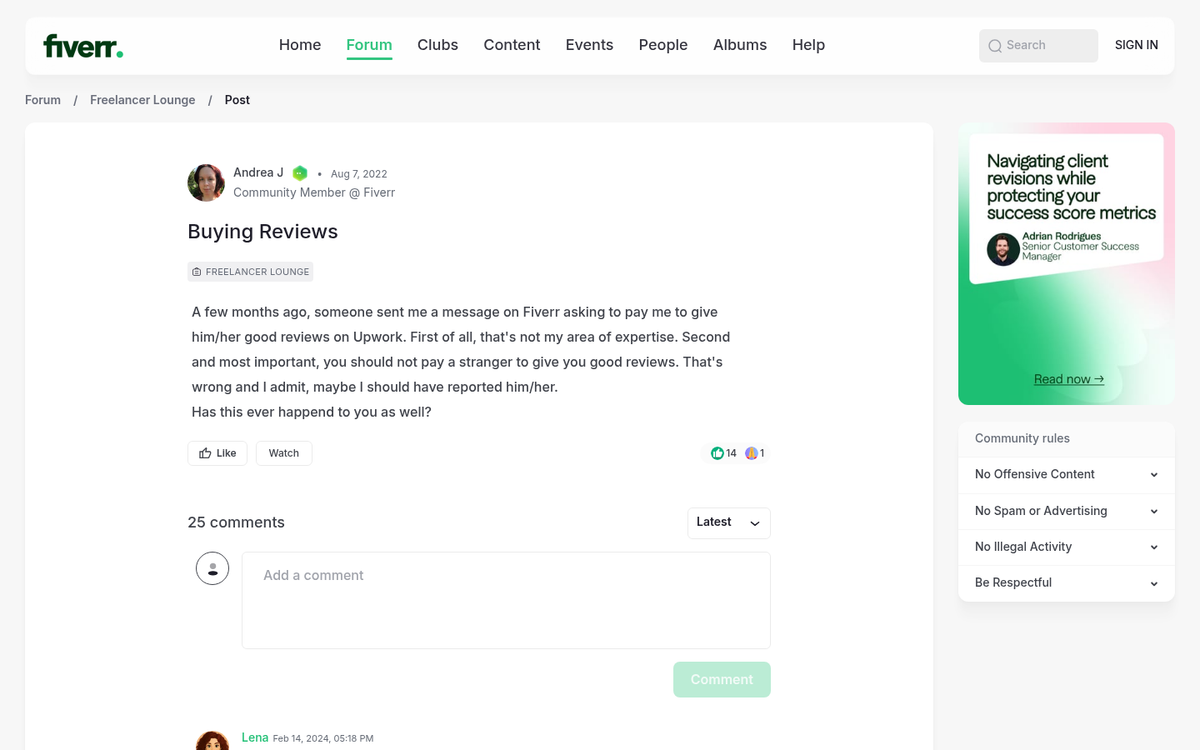
Buying reviews in the most basic form just means paying money for a review. However, there are a lot of little details to cover. For example, if you pay a customer who bought your product to leave a review, does that count as buying a review? It certainly counts if you just go to Fiverr and buy a review package.
Depending on the terms of service of the sites involved, buying a review could mean anything from paying someone on Fiverr to offering an additional item, coupon, or discount to people who review. If you follow up on purchases with a "here's a 10% off your next order coupon, claim it by leaving a review on Yelp" you could be in violation of the terms of service of the site.
Any exchange of goods, services, upsells, discounts, or money for a review constitutes buying a review. Even if that review is from a legitimate customer, the fact that you incentivized it means they're more likely to leave a positive review, since they don't want the repercussion of not getting their reward. That incentive skews opinion and perception, which makes your reviews inaccurate.
The same goes for the opposite; incentivizing the removal of negative reviews. One home improvement company offered $50 gift cards for the removal of a negative review, written about here. That, too, is skewing your review profile in an unnatural way, and can lead to action taken against your profile on the site.
Yelp, TripAdvisor, and other platforms often create "honeypot" businesses on their site to try to trap people leaving fake reviews. They have filtering algorithms to stop bots and common fake review templates. The fake businesses they set up might end up posting a Craigslist ad, or going to Fiverr and buying review packages. This shows them the usernames of people who leave fake reviews, which they can then ban across the site. In 2024 alone, Yelp submitted more than 900 reports to sites including Reddit, Facebook, and LinkedIn about suspicious review activity - showing just how seriously these platforms take the problem.
Is it Legal?
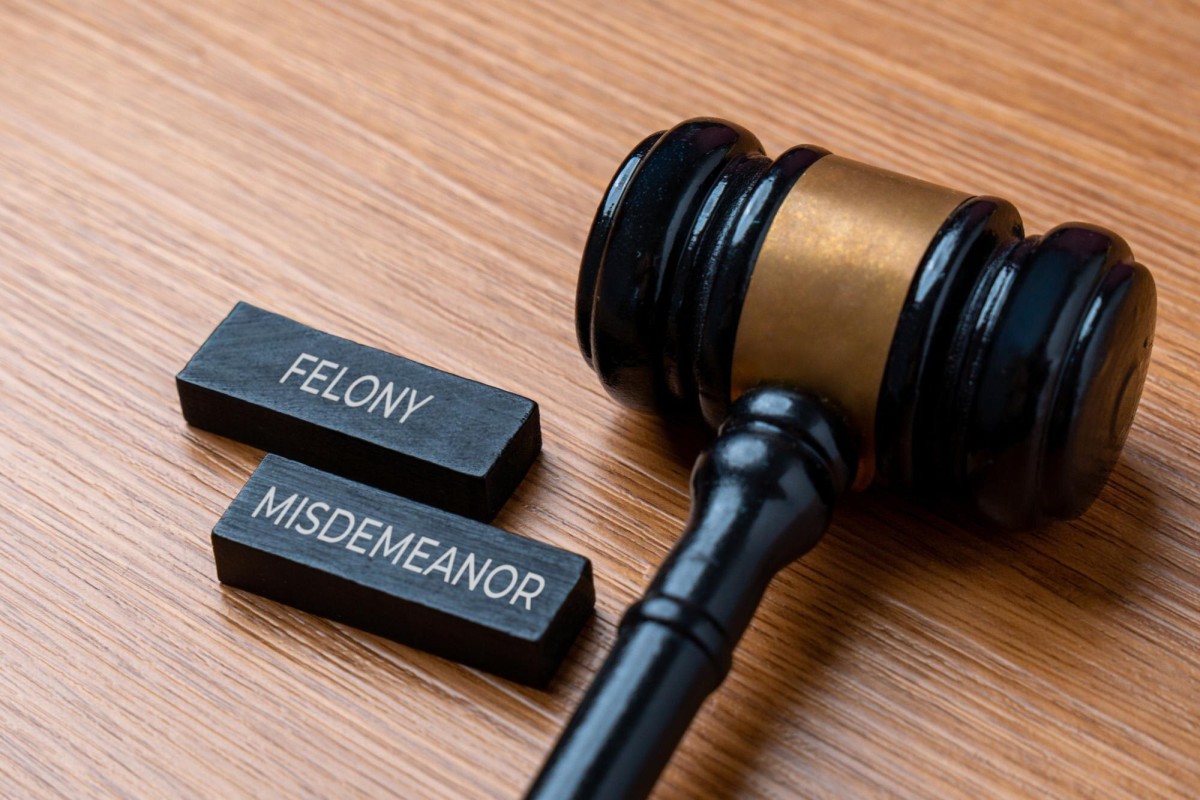
So, the actual, specific question in the title is this: is it actually legal, or illegal, to buy fake reviews for a business on a review site like Yelp or TripAdvisor?
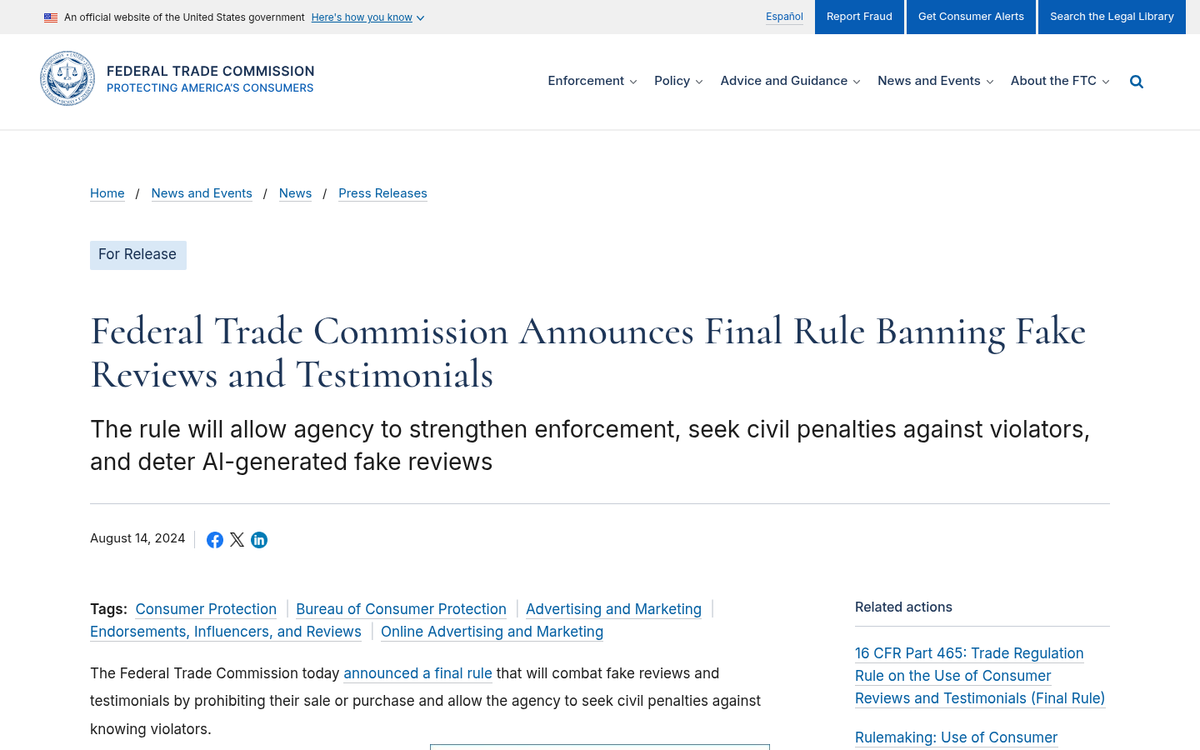
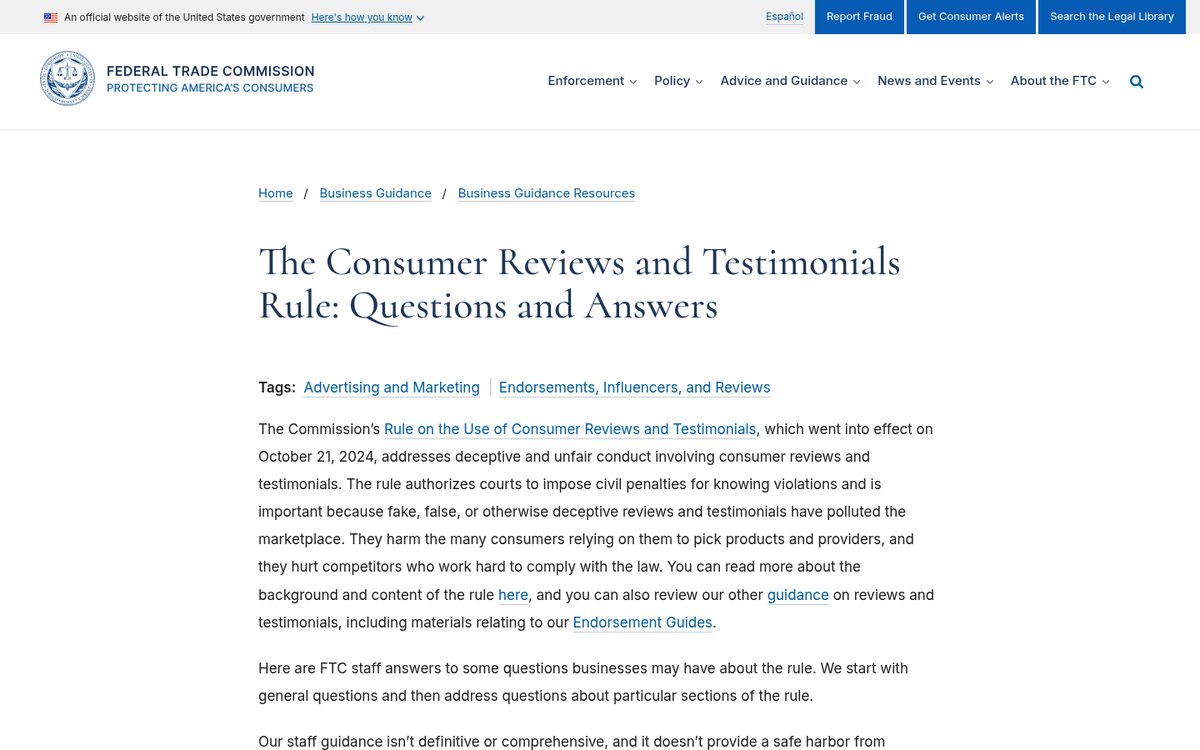
This used to be a somewhat murky area, but it no longer is. The FTC - that's the Federal Trade Commission - finalized a rule explicitly banning fake reviews, and it went into effect on October 21, 2024. The rule was passed on a unanimous 5-0 vote, and it carries real teeth: violations can result in federal lawsuits and civil penalties of up to $53,088 per violation. That's per review, not per campaign - so the costs can add up fast.
The rule makes it illegal to create, buy, or disseminate fake or misleading reviews, reviews that don't disclose a material relationship between the company and the reviewer, or reviews that are incentivized without proper disclosure. This isn't just theoretical enforcement, either. Following New York's "Operation Clean Turf" investigation, companies were required to pay over $350,000 in penalties for disseminating fake reviews. And on December 22, 2025, the FTC issued warning letters to 10 companies for potential violations of the Consumer Review Rule - a clear sign that active enforcement is ongoing.
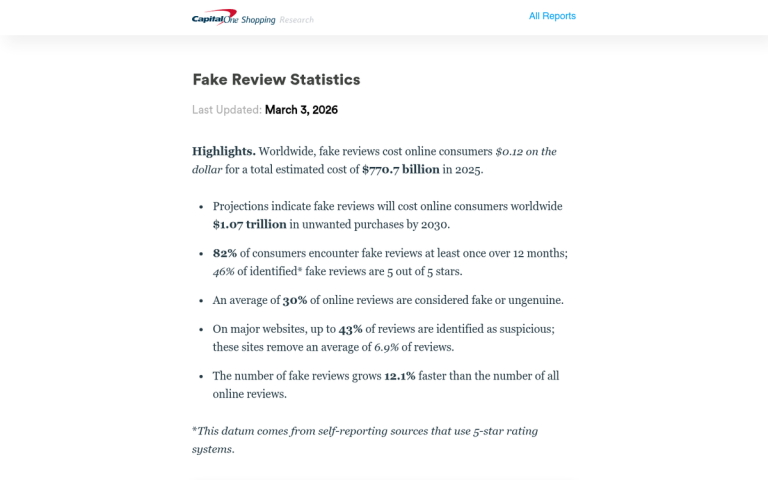
The scale of the problem helps explain why regulators are taking it so seriously. An economic analysis estimates review fraud causes approximately $300 billion in consumer harm annually in the home services, legal, and medical sectors alone. The FTC also estimates that services impacted by consumer reviews generate over $341 billion in annual revenue - making the integrity of those reviews a significant economic issue.
Now, what are the chances that you specifically will be punished for buying fake reviews? It depends on your scale and visibility, but the risk is far greater than it used to be. It's also a very risky investment for other reasons - similar to the risks that come with buying website traffic.
- If you buy fake reviews, you have a chance of having those reviews discovered and removed. In fact, it's actually pretty likely that, sooner or later, those reviews will be identified and removed.
- While your business won't necessarily be punished beyond having reviews removed, sites like Yelp will monitor your profile to see if more fakes show up, and will remove them on sight.
- The site, seller, or individuals leaving the fake reviews can be punished, sometimes severely. Yelp or TripAdvisor can ban accounts, and the FTC can pursue civil penalties against businesses that buy reviews. Glowing Reviews - a company that specialized in fake reviews on Edmunds - was sued and ruined as a result. You can read a post from the owner here.
For the full picture on the FTC's rules relating to testimonials and endorsements - the technical term for reviews - you can review their guidance directly on the FTC's website. I highly recommend reading it, and/or having someone with a legal background summarize it for you.
All of the above mostly concerns buying additional positive reviews for your own business. You open yourself up to an entirely new can of worms if you buy negative reviews for your competitors. That action constitutes internet defamation and can certainly be punished - and under the new FTC rule, it's explicitly prohibited as well. If you're wondering more broadly whether buying and selling traffic is legal, that's a related question worth exploring separately.
I am not myself a lawyer, nor am I completely fluent in all of the FTC rules, so don't cite me as an authority here; go straight to the source.
What About Violating a Site's Terms of Service?
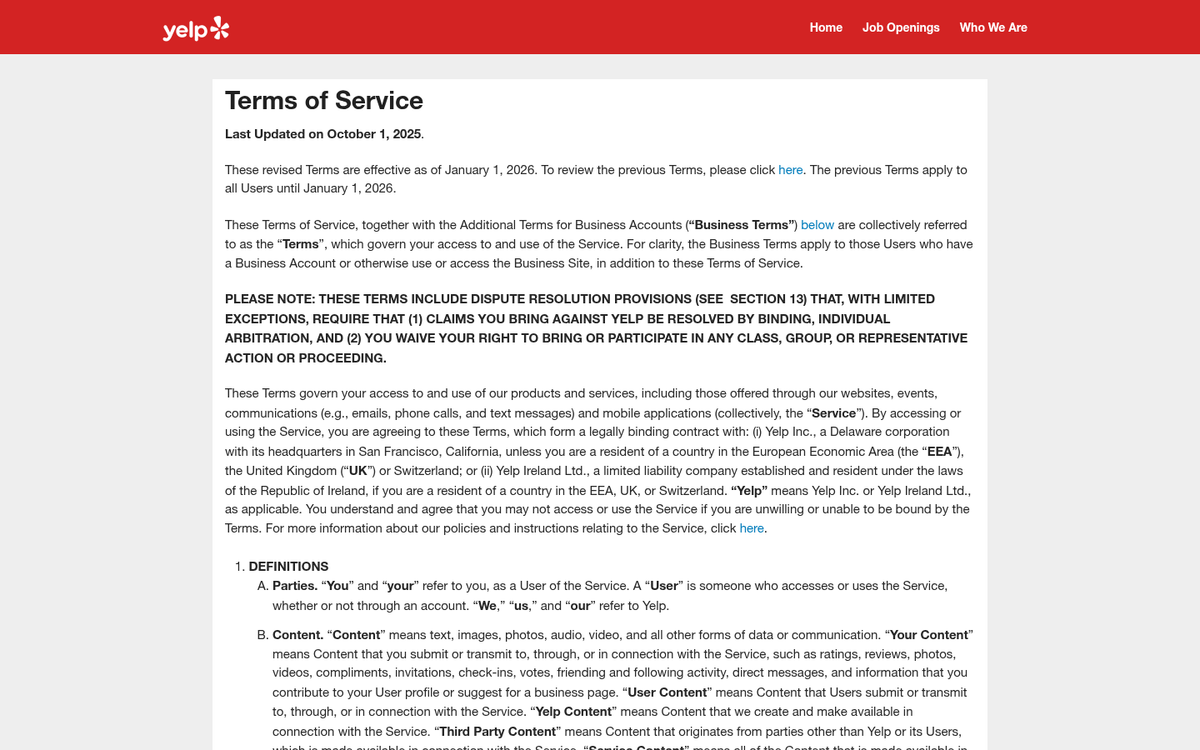
Now, a site's terms of service document is not itself a legally binding document. It is, however, exactly what the name says; a terms of service, or terms of use, document. If you violate the terms of service for a website, you cannot be sued unless the action you're taking is also illegal. And as of October 2024, buying fake reviews is explicitly illegal under federal rule - so punishment can and does ensue. However, if what you're doing is not breaking the law, you can't be sued for it.
That said, if you violate the terms of service of a site, that site is perfectly within their rights to punish you by banning you from the site. So while you might not always be violating the law, Yelp might ban you or purge your profile, which can hurt significantly. You don't have a recourse, either; you broke the rules, so you accept the punishment.
Even if fake reviews were legal, both Yelp and TripAdvisor have something to say about it.
- Yelp: You can read the Yelp content guidelines here. In addition, in their terms of service, they say "you agree not to, and will not assist, encourage, or enable others to use the Site to: Violate our content guidelines, for example, by writing a fake or defamatory review, trading reviews with other businesses, or compensating someone or being compensated to write or remove a review."
- TripAdvisor: The TripAdvisor ToS is here. They say "By using any interactive areas, you expressly agree not to post, upload to, transmit, distribute, store, create, or otherwise publish through this website [...] any message, data, information, text, music, sound, photos, graphics, code, or any other material that is unlawful, libelous, defamatory, [...] fraudulent, or otherwise objectionable."
So, on either site, posting fake reviews is considered against the terms of use. Combined with the FTC's 2024 rule, it's not only against platform policy - it's now a federal matter with real financial penalties. Of course, you might try to be clever about it; you're not technically the one posting the reviews if you're buying them. But the FTC rule explicitly covers purchasing reviews, not just posting them. That angle no longer provides cover.
Should You Do It?
No. Buying fake reviews has major problems.
- It is explicitly illegal under the FTC's Consumer Review rule, which took effect October 21, 2024, with civil penalties of up to $53,088 per violation.
- It's illegal to post fraudulent reviews, and it's now equally illegal to pay for them.
- The reviews that end up on your page can be removed without notice or compensation.
- Users can generally spot a fake review from a mile away.
- Enforcement is active - the FTC issued warning letters to 10 companies as recently as December 2025.
So it's illegal, immoral, and ineffective to buy fake reviews, either positive for yourself or negative for your competitors. It's a temporary investment, as those fake reviews can often be spotted and removed, and the potential for legal action - including significant federal civil penalties - is no longer slim.
You don't want to be involved in such legal action, trust me. If you're looking for legitimate ways to grow your site's credibility, consider adding trust signals to your site or reducing friction on your landing pages instead.
Encouraging Good Reviews
We've already talked about how NOT to get more positive reviews, and that's through incentives. Offering financial incentives, gifts, discounts, or any other compensation in exchange for a review - or the removal of a review - is against the FTC rules and is thus illegal. Even if everyone does it, it's not legal.
So how can you encourage more positive reviews?
- Send a follow-up email or include a card with a shipped product that asks the user to leave an honest review of their experiences with your company and your product. It should be noted that Yelp doesn't even want you to ask for reviews, but it's harder for them to enforce if they're actual, real reviews.
- Respond to customer reviews. When a positive review comes in, write a genuine thanks - preferably with something customized to their review so it doesn't look like a robot or intern is copy-pasting the response. When a negative review comes in, see if you can match up the user with the customer and provide support, or just leave contact information and treat review support as a priority.
- Make it easier to submit reviews. If your product is digital, send links to sites that users can leave reviews on. If your product is physical, include web addresses they can use or shortlinks they can type in.
- Host reviews on your own site. You don't have to worry about ToS violations if the site is your own, and you can encourage reviews there in ways you can't on a third party site. However, if you have an open review page, make sure to allow negative reviews; don't filter them. It becomes very obvious when a negative review is filtered, and sometimes those people will call you out on other sites as well.
- Provide a great product or service, with great customer care before, during, and after the purchase. You can use a live chat system for support at all times, make sure to follow up with emails, and take your quality seriously. The better the customer experience, the more likely they are to review.
Remember; no incentives, no financial compensation, and no bullying. You don't want to do anything illegal - you just want better reviews.