




E-E-A-T stands for Experience, Expertise, Authoritativeness, and Trustworthiness. It comes directly from Google's Quality Rater Guidelines, a document used to train human evaluators who look at the quality of search results. These aren't direct ranking signals in the traditional sense - they're the underlying properties Google is trying to measure when it determines if a page deserves to rank well and, increasingly, if it deserves to be surfaced by AI-powered tools.
That last part is what makes E-E-A-T especially relevant right now. As AI Optimization (AIO) and Answer Engine Optimization (AEO) become central to how people find information online, the standards baked into E-E-A-T are shaping which content AI systems pull from, cite, and recommend. If your site doesn't have enough signals of experience, expertise, authority, and trust, it's less likely to be treated as a reliable source - by Google or by the AI tools your audience is starting to use.
This page breaks down each component of E-E-A-T in plain language, explains why it matters in the latest search and AI landscape, and gives you a helpful sense of what stronger E-E-A-T signals actually look like on a website.
Quick Answer
E-E-A-T stands for Experience, Expertise, Authoritativeness, and Trustworthiness. It's a framework Google uses to evaluate content quality. Experience refers to first-hand knowledge of a topic. Expertise means having deep subject knowledge. Authoritativeness reflects your reputation in your field. Trustworthiness measures overall credibility and accuracy. Google's quality raters use E-E-A-T guidelines to assess whether content is helpful and reliable. High E-E-A-T signals can positively influence search rankings, particularly for YMYL (Your Money or Your Life) topics like health, finance, and safety.
Where E-E-A-T Comes From and What It Actually Stands For
E-E-A-T stands for Experience, Expertise, Authoritativeness, and Trustworthiness. Google uses these four tells to look at how credible and helpful a piece of content is. The version most are familiar with started as E-A-T, which first appeared in Google's Quality Rater Guidelines around 2014.
Quality Raters are hired by Google to review search results. They don't directly change rankings. But their feedback helps Google train and smooth out its algorithms over time.
In late 2022, Google expanded E-A-T by adding a second "E" for Experience - and this wasn't a small update. Google added 11 new pages to its Quality Rater Guidelines to explain what that extra letter means and why it matters. The core idea is that real-world experience with a topic is different from simply having learned quite a bit about it.
Each letter has a meaning in helpful terms. Expertise is about having genuine knowledge in a subject area. Authoritativeness is about how your site or name is regarded by others in your field. Trustworthiness covers the reliability and honesty of your content and site. Experience is the newest addition, and it asks if the person creating the content has actually done the thing they're writing about.
Trust is considered the most important of the four. The other three tells all feed into it.
| Signal | What It Means | How It Shows Up |
|---|---|---|
| Experience | The creator has first-hand involvement with the topic | A product review written by someone who actually used the product |
| Expertise | The creator has a strong knowledge base in the subject | A medical article written by a qualified doctor |
| Authoritativeness | The creator or site is recognised as a go-to source | Other reputable websites linking to your content |
| Trustworthiness | The content and site are accurate and transparent | Clear author bios, cited sources, and honest disclosures |
E-E-A-T is not a direct ranking factor in the way that page speed or keywords are - it's more of a framework that Google's systems are designed to reward over time.
How Google Uses E-E-A-T to Judge Your Content
There is an important distinction worth making here, and it changes how you should think about E-E-A-T. The Quality Rater Guidelines don't directly control where your pages rank. Instead, human quality raters use them to review if Google's ranking systems are working well.
So a rater could visit your site, score it poorly, and your rankings might not move at all. That doesn't matter. But it does - because rater feedback shapes how Google trains and refines the systems that do affect rankings.
Quality raters are basically grading the exam, not your website. Their scores feed into a feedback loop that helps Google understand what good content looks like. Over time, that shapes the algorithms, and the algorithms are what your site actually has to satisfy.
When a rater visits a page, they are looking at the full picture. They want to know who wrote the content, if that person has knowledge on the subject, and if the website itself is a credible source for that topic. They also look at the purpose of the page and if it legitimately helps the person who might land on it.
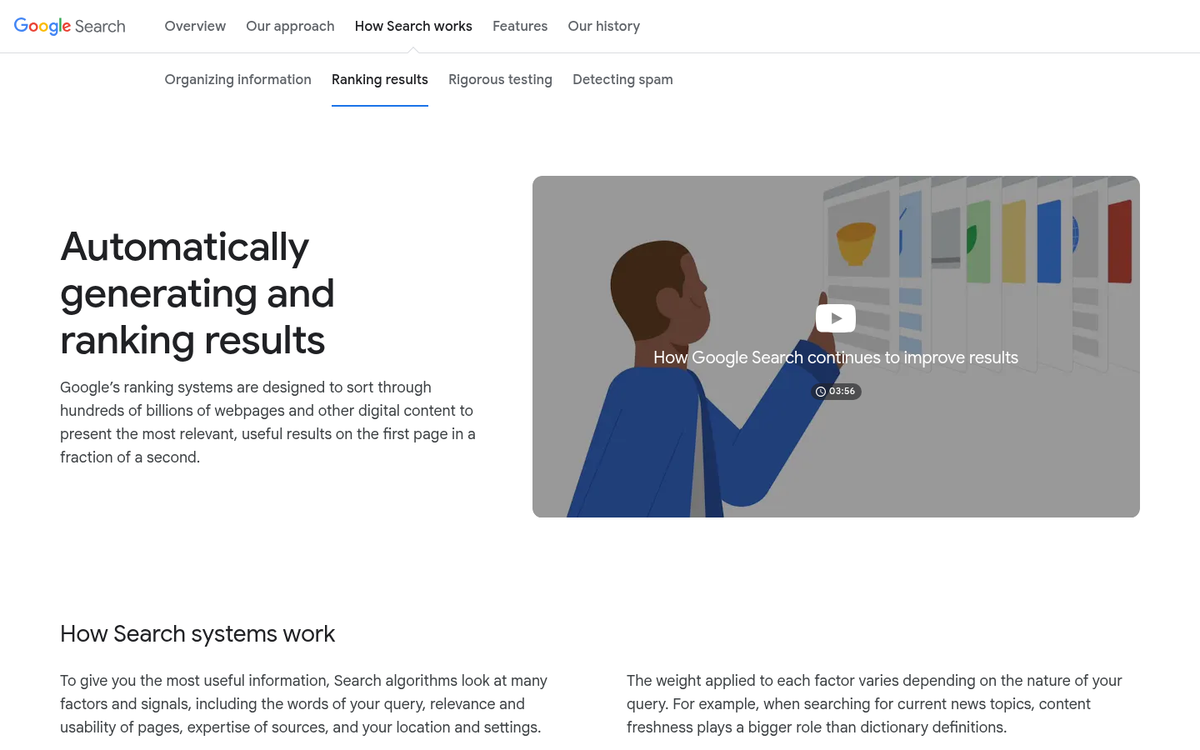
The line between being ranked and being rated is helpful to know. Your ranking is determined by automated systems running at scale. But being rated is a human evaluation process that informs those systems over time. You can't game the raters directly, and you would not want to try.
What you can do is build a site that would hold up well under that scrutiny. A rater looking over your content should be able to find out who wrote it, why they are qualified, and what the site is about. If that information is buried or missing, it's a problem regardless of where you currently sit in search results.
E-E-A-T is not a score you receive or a box you check - it's a framework Google uses to define what quality looks like, and it runs through almost every choice about how content gets ranked. The rater guidelines make that definition concrete, and your content is always being measured against it in some form. If you want to take action on this, there are practical ways to improve your E-A-T score that are worth working through.
The Four Signals and What They Look Like on a Real Website
It's helpful to try to remember each signal separately, because they each show up differently depending on the type of page you're looking at.
Experience is about showing that a person has actually done the thing they're writing about. On a service page, maybe the number of years you've been working in a field or a reference to a client outcome - without crossing into fake testimonial territory.
Expertise is less about credentials and more about depth. Google's human quality raters are trained to see when content was written by a person who legitimately knows the subject versus a person who researched it for an hour.
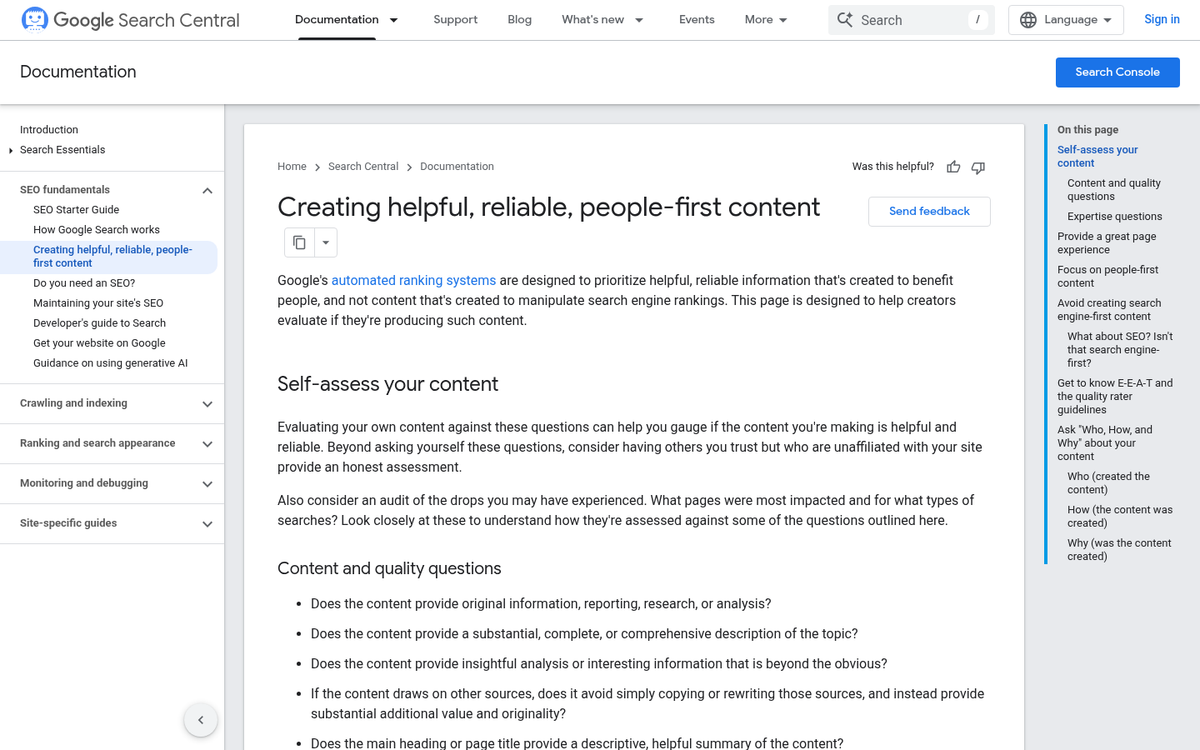
Authoritativeness is built over time and lives off your own site as much as on it. Other respected websites linking to you, mentions in industry publications, and a steady track record all give you this - it can't be faked with a well-written bio.
Trustworthiness is the foundation the other three rest on - this includes having a privacy policy, accurate contact information, transparent authorship, and pages that do what they say they will. A site that looks polished but hides who is behind it will struggle here.
The table below shows what weak and strong versions of each signal look like in practice.
| Signal | Weak Example | Strong Example |
|---|---|---|
| Experience | Generic advice with no personal context | First-hand detail, real scenarios, specific outcomes |
| Expertise | Surface-level content that covers the basics | In-depth explanation that includes nuance and edge cases |
| Authoritativeness | No external mentions or backlinks from known sources | Citations from reputable sites and a recognisable presence in the niche |
| Trustworthiness | No author name, no contact page, vague about the business | Named authors, verifiable credentials, full contact and policy pages |
Reviewing that table with your own site in mind is a helpful exercise - gaps tend to become fairly visible once you know what to look for.
Why E-E-A-T Matters More in an AI-Driven Search World
AI-generated content has made it legitimately difficult to tell who actually knows what they're talking about. Anyone can now produce a well-structured, confident-sounding post on almost any topic in seconds, and that's the problem search engines are trying to solve.
Google and other search engines are leaning harder on E-E-A-T signals because they can no longer use content quality alone to separate expertise from generated noise. When the words on a page stop being a reliable indicator of knowledge, the signals surrounding the page - who wrote it, what their background is, and how the wider web responds to their work - become far more important.
This also extends to AI answer engines like ChatGPT, Perplexity, and Google's AI Overviews. These tools don't pull text at random; they pull from sources they can verify as credible. If your content doesn't have strong authorship, real-world credentials, or any third-party recognition, it's much less likely to get cited in an AI-generated answer - even if the content itself is accurate and well-written.
That's a real change to how visibility works online - it used to be enough to rank on page one. A growing share of users get their answers directly from an AI summary without ever clicking through to a website. The sites referenced in those summaries tend to have something in common: they show that a knowledgeable person stands behind the content.
E-E-A-T is ranked as one of the three biggest SEO disruptions heading into 2026, alongside generative AI and zero-click searches. All three forces are connected. Generative AI creates the content flood, zero-click searches change where users get their answers, and E-E-A-T is how search and AI systems choose what to trust within that environment.
For anyone who publishes content online, this changes the question from "is my content good?" to "can search engines and AI tools verify that I'm a credible source?" That's a harder standard to meet. But it rewards those who have knowledge to share instead of those who are making content at scale.
How to Start Strengthening Your E-E-A-T Today
None of these are one-time tasks. E-E-A-T is a signal you earn and strengthen over time - not a setting you toggle on. Every piece of content you publish is either building your credibility or quietly eroding it. As AI continues changing how search engines and people take in information, the credibility difference between businesses that show genuine expertise and those that just produce volume is only going to widen. Google, ChatGPT, Perplexity, and every other answer engine are all moving toward surfacing sources they can vouch for. The businesses that invest in trust now are the ones that will get cited, recommended, and chosen tomorrow.
FAQs
What does E-E-A-T stand for?
E-E-A-T stands for Experience, Expertise, Authoritativeness, and Trustworthiness. These are the four signals Google uses to evaluate how credible and helpful a piece of content is, originating from Google's Quality Rater Guidelines.
Is E-E-A-T a direct Google ranking factor?
No, E-E-A-T is not a direct ranking factor like page speed or keywords. It's a framework Google uses to define content quality, which indirectly shapes its ranking algorithms through human quality rater feedback over time.
Which E-E-A-T signal matters most?
Trustworthiness is considered the most important of the four signals. The other three - Experience, Expertise, and Authoritativeness - all feed into and support it.
How does E-E-A-T affect AI-generated search answers?
AI tools like ChatGPT and Google's AI Overviews prioritize content from verifiable, credible sources. Without strong authorship, credentials, or third-party recognition, your content is less likely to be cited in AI-generated answers.
How can I improve my site's E-E-A-T signals?
Start by adding named authors with verifiable credentials, publishing in-depth content based on real experience, earning backlinks from reputable sites, and ensuring your site has clear contact information, a privacy policy, and transparent disclosures.