




For website owners and managers, this shift matters more than it might first appear. When a user asks an AI-powered answer engine a question, that engine isn't linking out to ten blue links - it's generating a response, usually pulling from a handful of trusted, well-structured sources. If your content isn't optimized for how these systems read and review information, you could be invisible to an entire category of modern search behavior.
The better you understand how these models work, the better positioned you are to create content they surface, cite, and trust - this entry breaks down what generative AI is, why it's changing online visibility, and what you can do to make your site a favorite source for AI-generated answers.
Quick Answer
Generative AI is a type of artificial intelligence that creates new content such as text, images, audio, video, or code by learning patterns from training data. Unlike traditional AI that classifies or analyzes existing data, generative AI produces original outputs. Popular examples include ChatGPT for text, DALL-E for images, and Sora for video. It uses models like large language models (LLMs) and diffusion models to generate realistic, human-like content, with applications in writing, art, coding, marketing, and more.
How Generative AI Actually Produces Content
Generative AI doesn't pull content from a database of pre-written answers- it builds replies word by word, predicting what comes next based on patterns it learned during training on vast amounts of text, images, or other data.
That training process is where everything starts. The model reads through large amounts of human-created content and learns the relationships between words, ideas and structures- it doesn't memorize any of it - it learns patterns.
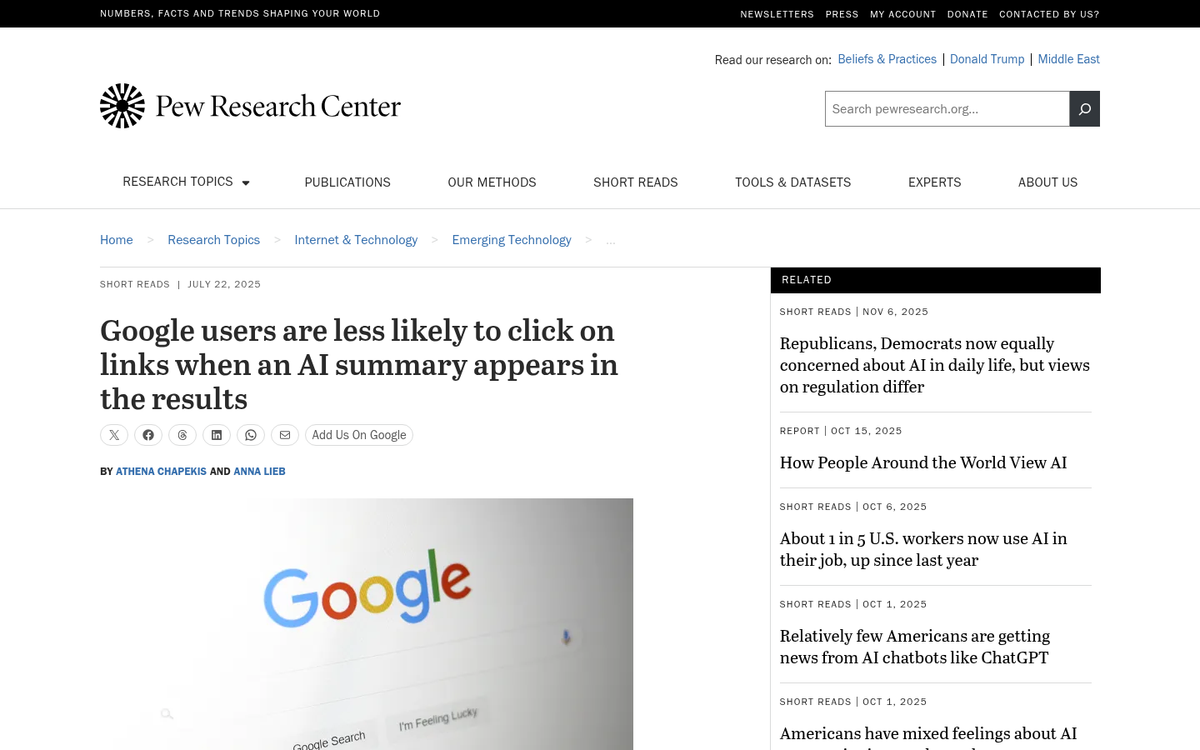
When you type a prompt, the model uses those patterns to calculate the most likely next word, then the next and so on until it produces a full response- this happens in fractions of a second and means billions of small calculations running in sequence.
The result can look quite like human writing because the model was trained on human writing- it has absorbed a vast number of styles, tones and formats, so it can adapt its output to match what the prompt seems to call for. This is also why the quality of your prompt matters - the model has no external knowledge of what you actually want, so it relies heavily on what you give it. If you're sourcing human-written content from services like Constant Content, you'll notice the difference in how intentional and directed that writing tends to be.
Why Generative AI Changed the Rules for Website Visibility
For a long time, traffic to a website meant ranking well in search results. Users would search, scan a list of links, and click through to read. That process put websites right in the middle of every information exchange.
Generative AI tools have changed that flow. When someone asks an AI assistant a question, they get a full answer right there - no clicking. The information reaches the user without a website visit ever happening.
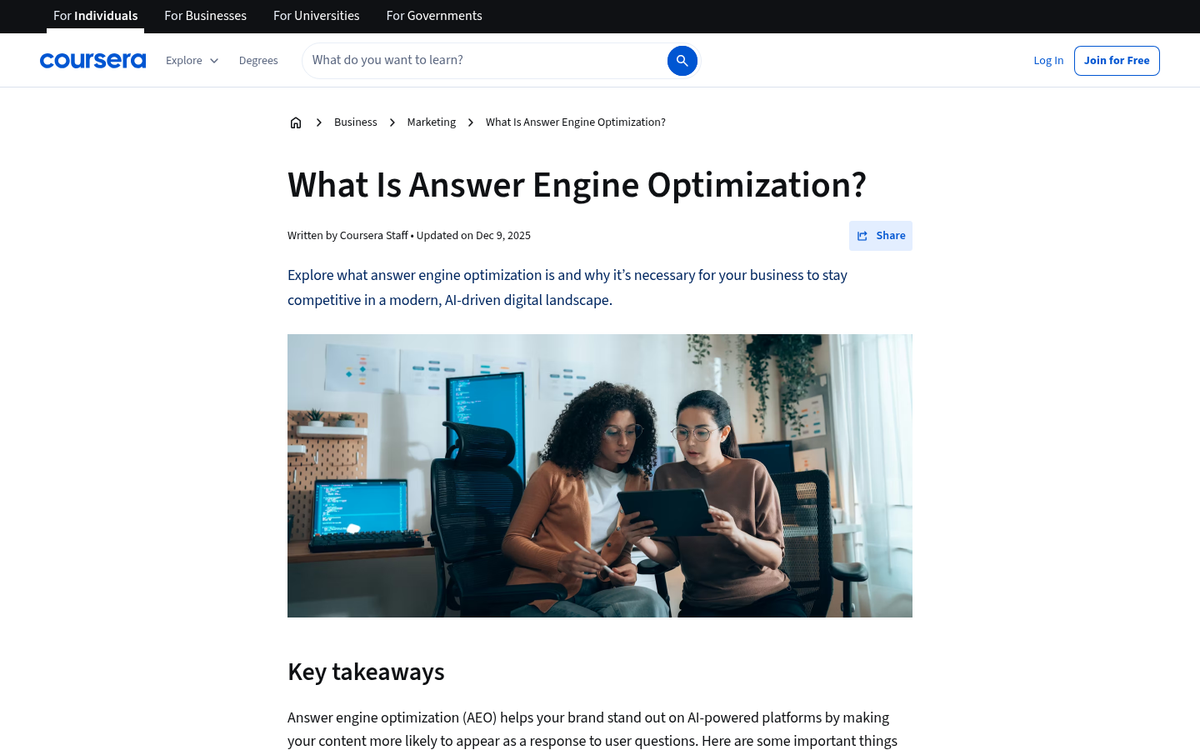
This matters because web traffic has value - it drives ad revenue, product sales, newsletter sign-ups, and brand awareness. If users stop clicking through to source websites, those sites lose a real part of their audience.
Search engines are also changing their layouts to include AI-generated summaries at the top of results pages. These summaries pull from existing web content but present it in a way that makes more clicks feel less necessary to the user.
The relationship between content creators and search platforms has always involved some give and take. But AI-generated answers have made that relationship harder to predict and harder to plan around.
What Answer Engine Optimization Means in a Generative AI World
Answer Engine Optimization, or AEO, is the practice of structuring your content so AI tools can read it, trust it, and use it to answer questions. It's a natural response to how people now get information - less scrolling through links, more a direct answer from a chatbot or AI search tool.
The difference between AEO and traditional SEO comes down to intent. SEO is about getting people to click through to your page. AEO is about your content being selected as the answer before a click even happens.
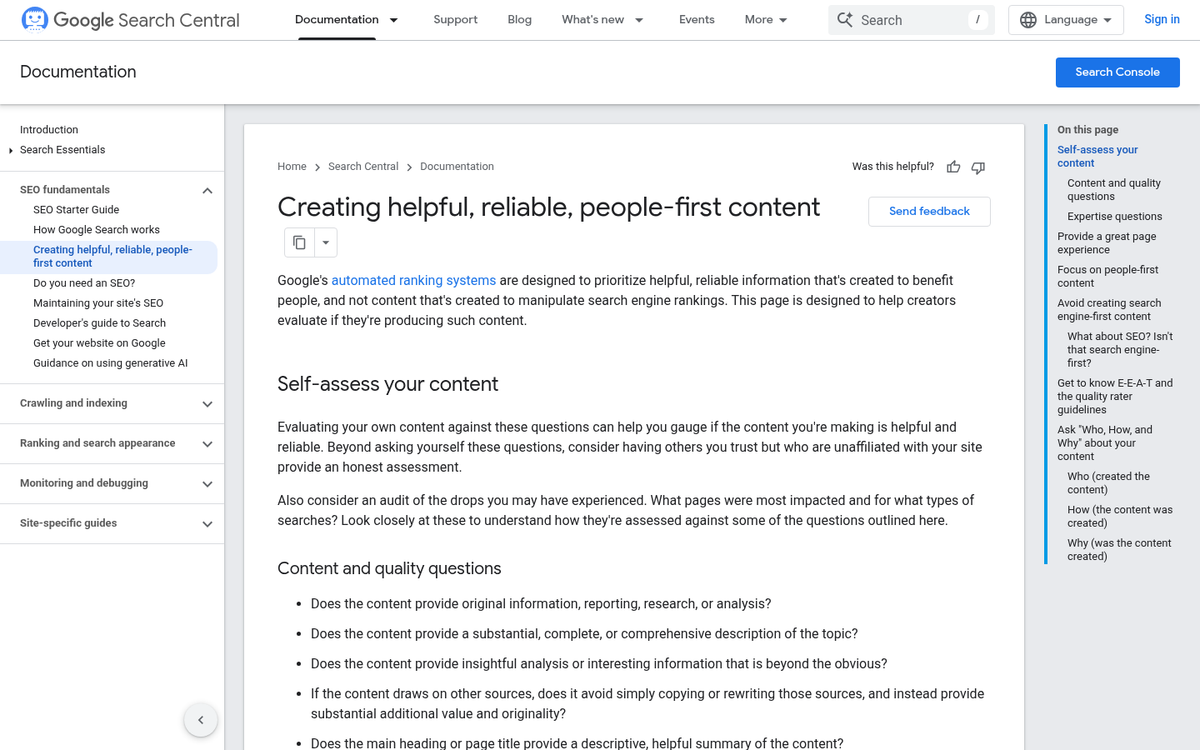
This matters because AI systems pull from content that's structured, clear, and authoritative. They favor pages that answer a question directly instead of pages that dance around a topic for a few paragraphs before getting to the point.
Practically, that means writing content that leads with answers and supports them with context, using clear headings that match the way people phrase questions. It also means building credibility through accurate information. AI tools are more likely to surface content from sources they can verify as honest. If you want to evaluate where you stand, an AEO readiness checklist can help identify gaps in your current content structure.
AEO is not a replacement for SEO. The two work alongside each other, and a page that performs well in one area will often perform well in the other.
Content Signals That Make Generative AI Trust Your Site
Generative AI doesn't pull from random places- it tends to draw from sources that show steady signs of credibility, and there are a few things you can do to become one of those sources.
First, accuracy matters more than volume. A site with 20 well-researched, up-to-date pages will get more traction than one with 200 thin ones. AI systems are trained to find this depth, so a page that legitimately answers a question from multiple angles is far more helpful to them than a page that skims the surface.
Citations and references help too. When your content links to respected sources or gets linked to by them, it builds a web of trust that AI models can find- it's the same reason Wikipedia gets cited so frequently - the content is structured, sourced, and steady.
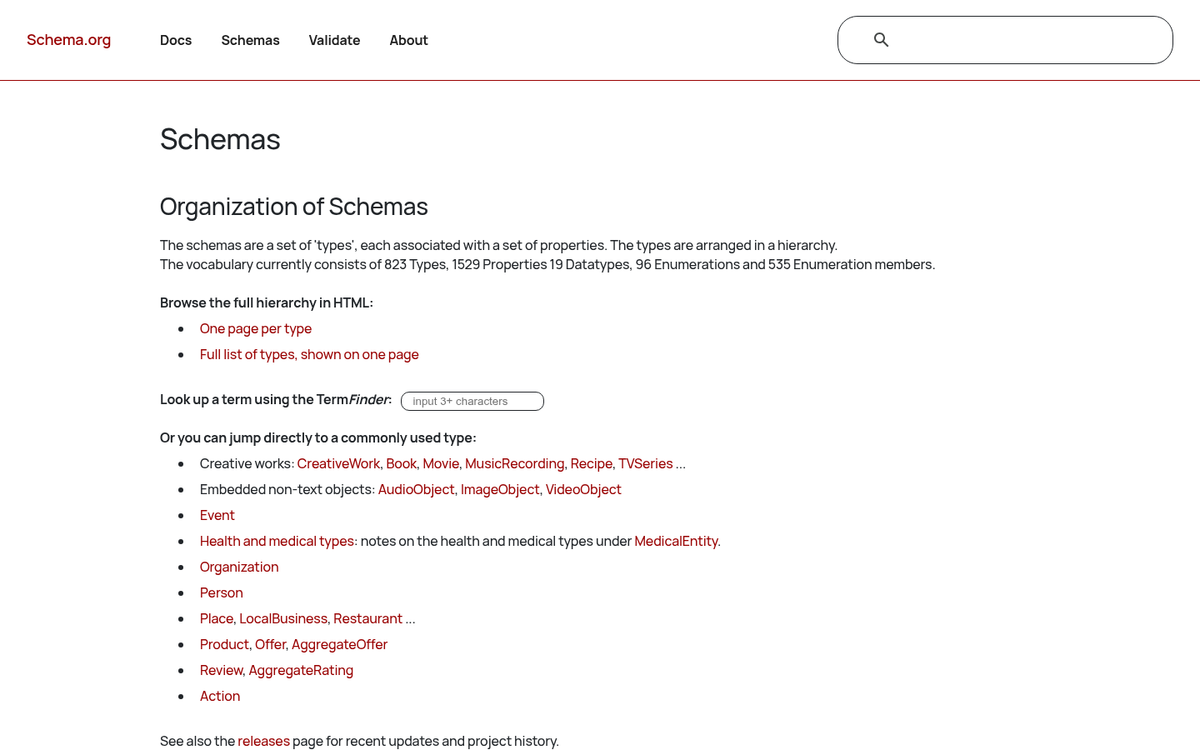
Author credibility is another factor to consider. Pages that include named authors with verifiable expertise fare better in AI-generated replies- this ties directly into Google's E-E-A-T framework, which looks at experience, expertise, authoritativeness, and trustworthiness. If you're blogging in a language that isn't your first, establishing that author credibility becomes even more important.
Finally, structure plays a big part. Content that uses headings, logical flow, and direct answers to questions is much easier for AI to parse and use. This is true whether you're writing on your own site or trying to grow a successful blog on a platform like Medium. Think of it as writing for a very attentive reader who wants the answer fast.
Structuring Your Pages So AI Can Read and Cite Them
AI models pull answers from pages that are easy to parse, so the way you put together your content matters just as much as what you write. Clean headings, short paragraphs, and direct answers near the top of a section all make it easier for a model to lift and use your text.
Think about how you would ask a question out loud, then structure your page to answer that question in the first sentence or two of each section. AI systems like to grab the most direct, self-contained answer they can find.

Structured data markup helps too. Adding schema to your pages tells AI crawlers what type of content they are reading, whether that's a product, a post, a FAQ, or a how-to guide - it removes any guessing.
Keep your internal links logical and your page hierarchy steady. A well-organized site helps AI understand which pages are most authoritative on a given topic. If your most important content is buried or hard to get to, it's less likely to be cited.
Short, descriptive subheadings are your best tool here. They are signposts that break content into digestible chunks, and AI models use them to know the scope of each section before pulling from it.
Stop Writing for Search Engines - Start Writing for Answers
The most important step is to start experimenting. Engage with the tools available, think critically about their limitations, and consider how they fit into your context. Those who treat generative AI as a collaborative instrument instead of a replacement will be best positioned to benefit from its continued growth.
As capabilities expand and ethical frameworks mature, staying well-educated will be just as helpful as staying technical. The conversation around generative AI is still being written - and increasingly, so are the laws. If you're building a content-driven site, understanding blog marketing tools like HubSpot can help you stay ahead as the landscape shifts.
FAQs
What is generative AI and how does it produce content?
Generative AI builds responses word by word by predicting what comes next, based on patterns learned during training on vast amounts of human-created text. It doesn't retrieve pre-written answers from a database - it generates new responses in real time using billions of calculations.
How has generative AI affected website traffic?
AI tools now answer user questions directly, reducing the need to click through to source websites. This cuts into web traffic that would otherwise drive ad revenue, sales, and brand awareness for content creators and site owners.
What is Answer Engine Optimization (AEO)?
AEO is the practice of structuring content so AI tools can read, trust, and use it to answer questions. Unlike traditional SEO, which aims for clicks, AEO focuses on getting your content selected as the answer before a click even happens.
What content signals make AI trust your website?
AI favors accurate, well-researched content with credible citations, named authors with verifiable expertise, and clear structure. Fewer high-quality pages outperform many thin ones, and links from respected sources help build the trust AI models look for.
How should pages be structured for AI to cite them?
Use clean headings, short paragraphs, and direct answers near the top of each section. Adding structured data markup, maintaining logical internal links, and using descriptive subheadings all help AI crawlers parse and cite your content effectively.