Key Takeaways
- Upwork skews more professional; Freelancer has more users but a wider quality range and race-to-bottom pricing.
- Define topic, keywords, word count, and budget before posting; vague briefs attract poor results and difficult writers.
- Ghostwriting is recommended for beginners, letting you publish quality content under your name without ethical issues.
- Watch for red flags: credential inflators, plagiarists passing off AI or spun content, and writers who disappear mid-project.
- Be a good client: give clear briefs, pay promptly, and respond to submissions quickly to attract repeat quality work.
Hiring writers is one good way to go from a mediocre blog to a great blog. Depending on how you hire them, you might just come across as an expert, or you might have a bigger multi-author blog. Or, if you have the budget for it. If nothing else, it's cheaper than training an in-house employee to manage your content.
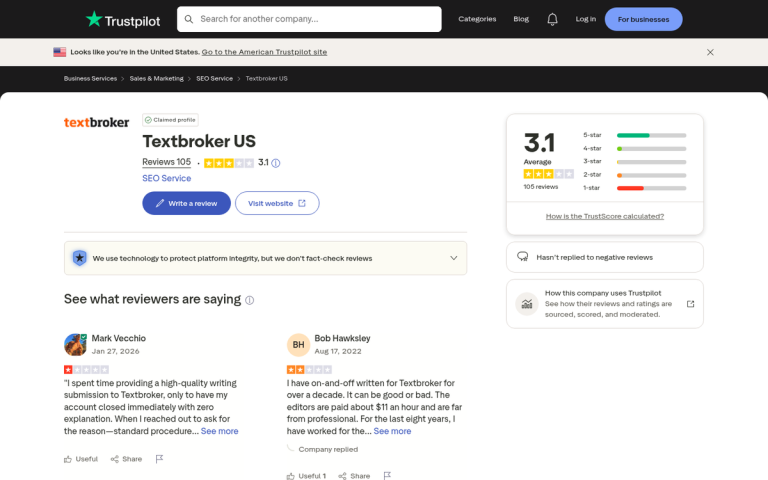
There's no problem with hiring writers as ghostwriters to produce content for your site, published under your name. Many places, ranging from Fiverr to Textbroker to Upwork and Freelancer, allow you to do this - it's how thousands of talented writers make their livings. Some of the big name writers in your industry probably hire writers for content for themselves and sell their services as ghostwriters.
If you're a newcomer to the idea of hiring writers, you have questions to answer before you can just get started. Well, I mean, you can get started directly if you want. But you might not be well-served without going through this checklist.
Establishing Your Needs
Freelance networks like Freelancer and Upwork are communities. The writers usually have some degree of communication with each other and the most influential writers usually have blogs of their own dedicated to freelancing - it means that if you prove yourself to be a poor client, you can gain a reputation, either on the site or on the internet as a whole - it's worth staying away from common problems and having an idea of your preferences first to avoid this reputation. Here are some things you should think about before registering for one of these sites.
Choosing a site. Freelancer and Upwork are large freelancing hubs, as opposed to sites like Textbroker, which focus exclusively on writing. While the post you're reading focuses on hiring a writer, know that you can also hire graphic designers, video producers, audio actors and a whole lot else, and each type of content has its own community and its own average pricing.
Both sites are fairly similar in terms of how they work, though there are a few known differences worth learning about. Freelancer.com is one of the largest freelancing platforms in the world, with over 70 million registered users globally. That massive pool of talent is a double-edged sword: you have plenty of options. But you'll also see a wider range of quality. Because Freelancer has been around longer, there has been a slow race to the bottom in terms of pricing on that platform. You'll find high quality workers. But you might find low-quality writers jumping at your pitch on the off chance you settle for one of them.
Upwork, by comparison, tends to skew slightly more professional. Writing accounts for 18% of all work categories on Upwork, second only to web and software development. Freelance writers on Upwork usually charge between $10 and $100 per hour, with the average sitting around $30-$40 per hour. One thing worth mentioning: the average number of applications per writing project dropped by 26% in 2024, the steepest decline of any category on the platform, largely attributed to the rise of AI-generated content cutting back on demand for some types of writing work. That means you might see fewer applicants than clients did a few years ago, so casting a wide net is a good idea.
I actually recommend trying out both places for a few projects, to see which one has what you want - it might take a few tries to find a writer that clicks with your preferences, so don't write off one site or the other based on one or two poor interactions.
Remember that sites have paid account tiers worth a deeper look. On Upwork, Business Plus members receive a curated candidate list in under six hours and most clients on that plan choose a writer within two to five days. If you need to move faster or want access to top-tier talent, it may be worth the upgrade. Also know that Upwork charges freelancers a variable service fee of 5-20% taken from their earnings, which experienced writers factor into their rates. Don't be surprised if top writers quote higher than you expect; they're accounting for the platform cut.
I recommend having an idea of the topic and keywords you want covered, the word count and any specifics like whether to include links or stay away from links. You might want to tell your freelancer to stay away from mention of your primary competitor, just to give you an example. Remember that most freelance writing work is priced either per word or per hour, so your prospective scope will do quite a bit towards:
Establishing a budget. How much are you willing to pay for quality writing? I've seen work for less than a penny per word and remember - it shows. I've also known blogs that pay writers thousands of dollars for a single under-1,000-word piece and get great content in return. With the average Upwork writer charging $30-$40 per hour, a well-researched 1,000-word blog post might reasonably cost you $60-$150 depending on the writer's speed and expertise. Remember: the higher the value of your pitch, the more applicants you'll attract and the more you'll have to filter through - though as noted, application volumes have declined.

Ghostwriting versus credited writing. Generally, you're going to want to start out with ghostwriting - this allows you to fill your blog with quality content without spending the time on writing it yourself, while still attaching your name to the value and quality it provides. There's nothing wrong with doing this and in fact a giant amount of the content you read on the internet every day has been ghostwritten.
Credited writing can add a benefit to the writer. But know that it can complicate that relationship. Freelancing networks usually have rules against contacting freelancers or clients directly outside the platform - violations can get your account, and that of the freelancer, closed, with any escrow payments seized. Think about it: the cut the site takes is their livelihood, so they don't want you to be able to poach their writers.
That said, high quality writers share their usernames or portfolios on other sites, so with a little careful searching you might be able to find them and contact them outside of the platform. Just know that some of them will be skeptical; they don't want to be caught and lose their main livelihood.
A note about contracts. You don't have to worry about specifically creating a contract; the site usually takes care of that. They will have a standard agreement and system in place to ensure that you have veto power over the content, but that you also can't take it and run - it protects writers and clients from scams. Read the terms of service. But know that if you're working through these platforms, you usually aren't able to request changes to the standard agreement.
Tips for being a client. As the person who is buying content, you want to avoid being difficult to work with. At the same time, you want to make sure that you can veto bad content so you don't have to pay for trash.
- Strive to be appropriately detailed with your pitches and projects. Writers hate when you micromanage every paragraph, but at the same time, it can be quite challenging for them to produce something that satisfies you if you don't give enough detail. If all you say is "write me an article about marketing" you can get content all over the board. If you give them a 10-page document of guidelines and rules, you'll turn off all but the most desperate writers.
- Pay on time and always keep in mind the ability to tip writers whose content you really appreciate. Most payment concerns are handled automatically through escrow on sites like Freelancer and Upwork, but staying on top of approvals keeps the relationship smooth.
- Don't let things linger. If a freelancer submits a finished piece, go over it and decide whether you want revisions or whether you want to accept or reject it promptly. Letting uncertainty drag on is frustrating for the freelancer and they'll be less likely to want to work with you again.
Also know that sometimes the writer will want to communicate, to ask questions or to ask for clarification. Be aware that they probably have to do this through an on-site messaging system, so you should monitor that in case they need something from you.
Be Aware of Potential Personalities
There are five kinds of tough writers you might see on a site like Upwork or Freelancer - it can be worthwhile to learn the warning signs of these types, so you can tell if you're in for a tough time or not.
Personality 1: The Credential Inflator. Some writers, and this is especially true of newer ones, inflate or fabricate their credentials. You can sometimes find these telltale signs: their writing looks amateur compared to their supposed advanced degree, or they write in wildly different styles and quality levels across samples. Unfortunately, sometimes you basically don't see this until they submit work that's dramatically worse than their profile suggests it should be.
Another scam you might see is with per-hour work. If you're paying a writer per hour instead of per word, keep an eye on their billable hours and see how it compares to what they should be producing - it doesn't take anyone 25 hours to write a 500-word blog post.
Personality 2: The Reverse Micromanager. These kinds of writers, as soon as they pick up the project, bombard you with questions. They ask so many questions that in answering them you practically write the post yourself. Some of them don't know how to work independently and need that much input. But that's not your problem - cancel the project. Some are worse; they might think they know better than you what your site needs and even belittle you for your choices. Even if they're right, they aren't worth the stress, so just cancel the project and move on.
Personality 3: The Race-to-the-Bottom Bidder. Some writers price themselves extremely low, usually because they're based in regions with a much lower cost of living; even a few dollars goes a long way. Since they're willing to work for very little, it can be tempting to save money by hiring them.
Frankly, this is usually a bad idea. You get what you pay for and very cheap content tends to look like it. That said, every now and then you'll find a legitimately talented writer who hasn't yet established themselves and is pricing below their worth. If you find one of these, start paying them more than they expect and they'll be loyal for a long time.
Personality 4: The Criminal. Freelancing hubs usually have plagiarism scanners for written work. But not always, and sometimes stolen content can be spun to look original. In either case, these writers aren't actually writing anything for you - they're copying content, spinning content, or sourcing it from ultra-cheap content mills and reselling it at a profit. With AI content generation now widely accessible, some bad actors also pass off unedited AI output as original writing, which comes with its own quality and originality problems.
Always double-check your projects with direct plagiarism checks and similarity tools. Also be aware of speed; if a writer produces a 10,000-word ebook in an hour, something isn't right.
Personality 5: The Magical Disappearing Writer. As you might have guessed, it can be very disruptive if you get halfway through a project only to have the writer go missing. Sometimes there's a reason - a family emergency, a power outage, something legitimately unexpected. Sometimes the writer has found a more lucrative source of income and moves on. Sometimes they pick up every project they can and quietly drop the ones that prove tough.
To a certain extent you can cut back on this by being mostly hands-off and respectful of the writer's process. Writers are professionals and you're hiring them for their skill. Trusting them to do their job cuts back on the chances of them cutting and running. Of course, this doesn't guarantee anything - it just helps.
You can also screen for these kinds of writers by checking their work history before hiring. Low completion rates or a pattern of negative reviews are red flags worth noting.
From here, you have about as much as you'll need to get started - it's up to you if you can turn that first investment into a steady stream of quality content. I recommend giving it a shot. But always be prepared for a learning curve and don't invest more than you can afford to lose on your first few hires.