





Key Takeaways
- Blog comments add free, relevant content to your page; 10 comments of 100 words each adds 1,000 extra words.
- Good content is essential for attracting comments - aim for 1,500-2,000 words minimum, formatted for quick reading.
- Comments fall into three categories: spam, valueless, and good. Audit and remove low-quality comments across your entire site.
- Reinforce against spam using tools like Akismet, and add comment rules notices to encourage higher-quality responses.
- Respond to borderline comments to spark real conversations, and engage with good comments to build lasting community.
In the constant quest to improve search rankings, we bloggers look high and low for any advantage we can find. Yet one always debated feature of blogging lies dormant, abused or neglected by bloggers and readers alike.
Blog comments can be extremely helpful for your SEO, and in many ways. But first you'll have to write content that's good enough to warrant commenting on it.
The Core Principles of Good Content
Good blog content should, in my mind, follow three main principles.
- It should be long enough to hold reasonable value.
- It should help the user accomplish their task.
- It should be formatted for quick reading.
What do each of these mean?
The first is pretty easy. A short piece of content doesn't have space to talk about deeper topics or cover the bases. Rather than leave the reader well-educated, or leave the reader asking questions for more conversation, it leaves them feeling unsatisfied.
I usually recommend at minimum 1,500 words for your posts. I personally shoot for closer to 2,000 and have seen a big increase compared to when I was blogging with posts only 1,000 words in length. You can go longer. But anything over about 4,000 words has diminishing returns. Either you need to fluff quite a bit to reach your higher counts, or you drone on too long about a topic that's adequately covered in less space. Generally, a post that long can be broken up into two posts of greater combined value.
That said, follow your heart and your mind with these content lengths. If you reach 1,800 words and find you can't figure out how to keep going, then don't. If you reach 2,200 words and find you still have more to say, say it. You can always split a long post later. But publishing a sub-par post can be harmful.
The third is also pretty easy. You want shorter paragraphs with shorter sentences in them. You want standard or semi-standard bullet points and lists. You want to bold, italicize, or underline important points, though you shouldn't get carried away to the extent that you look like a spam site. You want links for expanded information and citations, and you want images to break up your content frequently. I admit I don't always hit every point here. But I do try.

No, I didn't skip the second; I saved it because it's the toughest of the three - it's going to need a little about the psychology of search.
When a user goes to Google - or uses voice search, AI-powered search features, or any of the growing number of search interfaces available - they're coming into it with a job in mind. Either they want something, or they want to learn something. Sometimes they want to learn what products fill a need. Sometimes they want to know how to replace the RAM in a computer. Sometimes they want to know how to balance a budget. Regardless, behind every set of keywords is an intent.
People have an intent that's usually either to find something or to learn something. Therefore, every piece of content you create should be composed to help them do something or to teach them something. You want to write the post about how to replace RAM. You want to write the guide to a type of product. This especially matters in today's search landscape; Google's AI Overviews and other generative search features are increasingly surfacing content that most directly answers a user's question.
What does any of this have to do with blog comments? Well, the number one thing you need in order to GET blog comments is great content. Nobody will come and leave a comment on a mediocre blog post. Hell, hardly anyone leaves a comment on a blog post, compared to the amount of traffic it gets.
How Blog Comments Help
When you have content and can get comments, you can start to see the ways they help to improve your SEO.
First of all, you have the mechanical benefit. Blog comments mean people are interested in your content enough to leave a comment. Either they're thanking you for the content, or they're asking you a question, or they're disputing a fact, or they're adding their own argument to improve yours. In every case, except maybe the first, it means they read your content. It's a great sign of a great, more involved community, and building a community is the first step to building something great.
When people comment, you are able to help bring them into your fold. You can continue a conversation, you can add their context to your post, you can expand upon what they've said or debate them. You can work to keep them involved moving forward, and you can connect with them in other places. If they're content creators themselves, you might even be able to strike up a mutually helpful relationship, with linking back and forth, talking about projects, and generally networking with each other.
Through blog comments, you can also discover interesting content you might not have seen before. Maybe someone leaves a link to a site that disputes your core point, or would be helpful to add to your list.
Allowing links in your comments, especially followed links, can be dangerous, of course - it can hurt your SEO to be one of the link dumps where spammers throw their links just to leech off your popularity. However, with filtering and a plugin that helps monitor for spam, you can welcome comments and links without opening yourself up to as high a penalty.
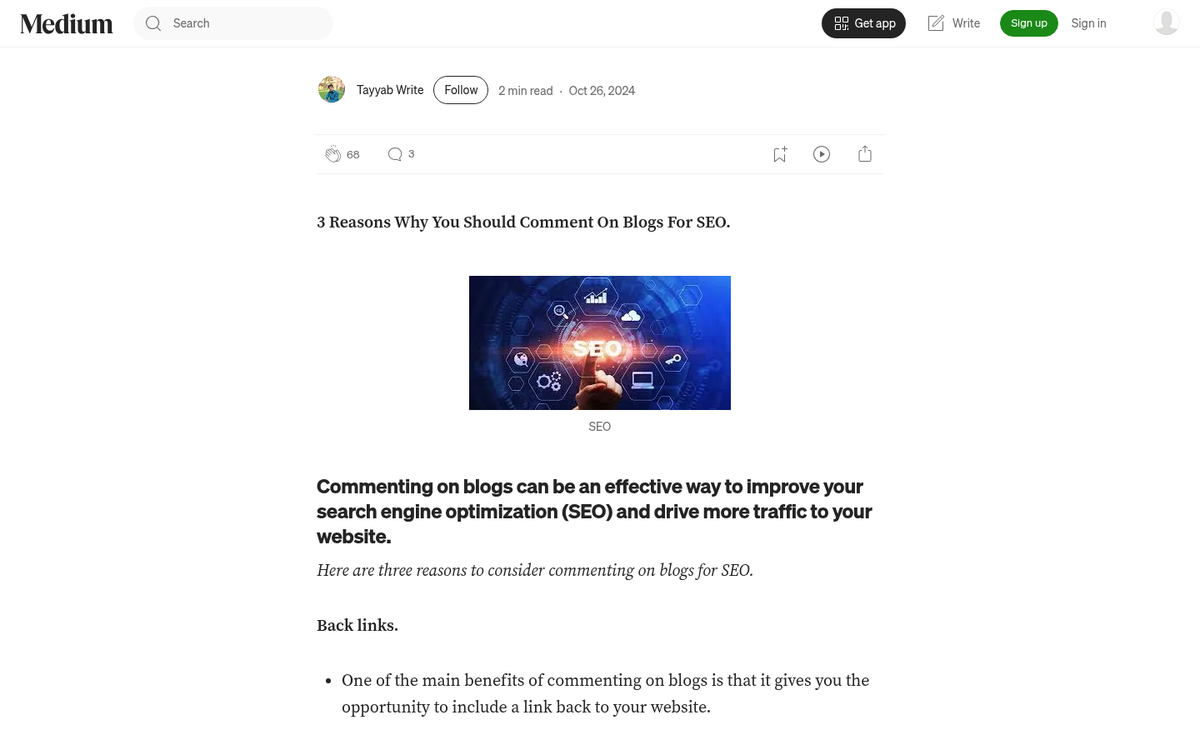
There's one way that blog comments improve your SEO more than you might know, though, and that's through their content.
If you have 10 people leave 100-word comments on your post, that's an extra 1,000 words of content on your page. If you have a 2,000-word blog post, that's 50% more content, for free. You didn't have to write it, and since it's on the same topic, it's relevant - it has keyword variation, it has more value, and it can associate high-profile author names with your content as extra contributors. Minor as that change may seem, if you have 20 comments of that length, it's double your content.
On some posts on blogs, the comment section can have five or six times the word count of the original post, if not more; it's quite an amount of free, relevant, topically-aligned value added to a single URL.
It's also worth mentioning the wider context here. According to HubSpot, businesses with active blogs receive 55% more website traffic and 97% more inbound links than the ones that don't. Comments are a natural extension of that engagement loop - they signal to search engines that your content is resonating with readers. And per Backlinko, moving up just a single position in Google's search results can increase your click-through rate by 2.8%, so even marginal SEO improvements from comment engagement can translate into actual traffic gains over time.
You don't even have to do it for your whole site - just disable comments for your best few posts. I'd be willing to bet you'll see a big drop in ranking.
How to Make Blog Comments Work For You
Not all blog comments are good. Comments can be actively harmful. There are three phases to the comment improvement process, and I'll help you through each of them.
Phase 1: Auditing. The first thing you need to do is audit the blog comments across your entire site. The way I see it, there are three categories of blog comment.
- Spam comments. These are pretty obvious. Some account with no picture and a garbage name comes in and leaves a comment unrelated to your topic, with a few keywords and a link to some spam site. Even the default spam filters will catch these, but now and then some of them will slip through.
- Valueless comments. These are the people who swoop in and leave that ever-ironic "First!" with nothing else. It's the people who drop a "thanks for writing this, it gave me a lot to think about." They're all comments that don't add anything to the conversation, don't open up a conversation of their own, and look like fluff to Google.
- Good comments. These are the people who ask questions, who start discussions, and who add value through links and through suggested content. These comments are the absolute best you can get; they add SEO value, they give you a place to start a conversation, and they help you out on every front.
The first step, then, is to go back through your entire site and audit the comments on every piece of content that has been published. It's going to be extremely tedious and time-consuming. But worthwhile when all is said and done.
What should you do with comments? On any post over a month old, provided it does not get traffic or new comments, I recommend removing anything from category one or two. Be harsh about it; those people aren't coming back to call you out on it, and you won't lose anything by removing them.
On posts that are newer or that still have activity - like evergreen tutorials or content that circulated - you'll want to remove category one comments with extreme prejudice. But you can leave some category twos depending on their contents.
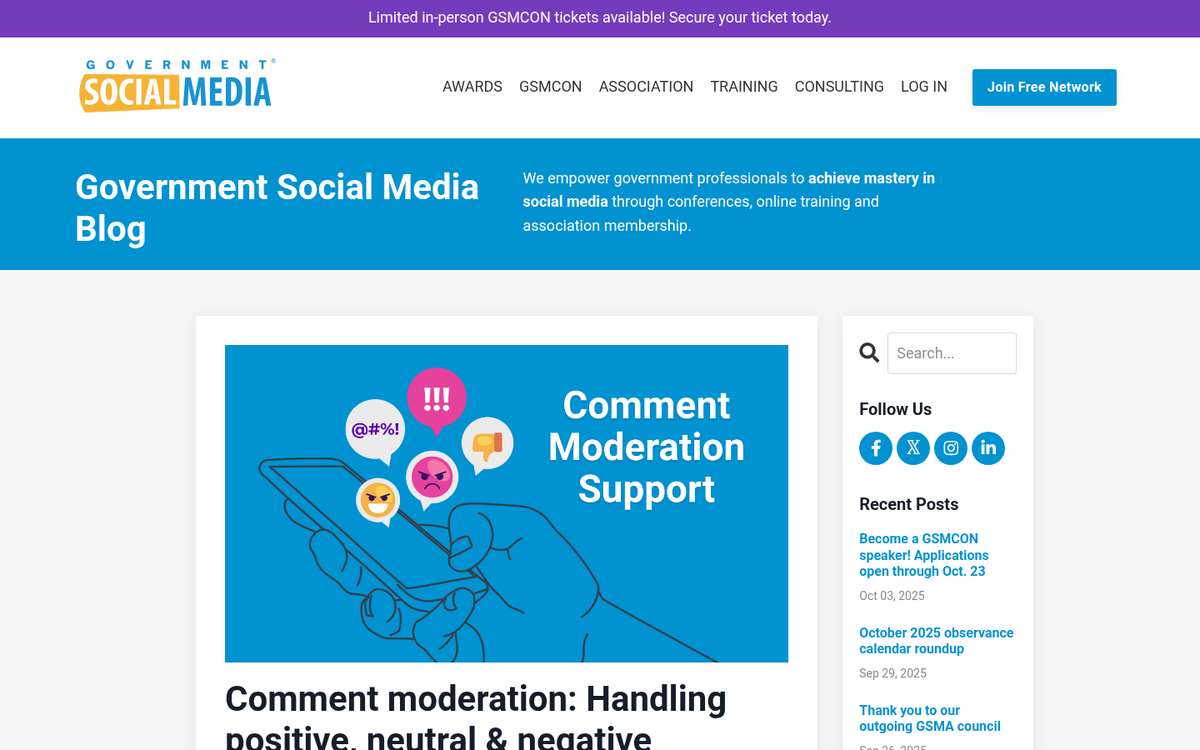
I'll mention what to do with category two and three comments in phase three.
Phase 2: Reinforcement. The second phase is to reinforce your blog comments against spam. How you do it will depend on your current setup. But here are a few ideas:
- Consider your comment platform carefully. There are several alternatives to the default WordPress comment system, each with different trade-offs around spam control, user experience, and indexability. Whatever you choose, make certain that Google can index the comments - some third-party systems render comments in ways that search engines can't easily crawl, which eliminates the SEO benefit entirely. Also ensure that any migration preserves your existing comment history.
- Install a reliable spam moderation tool. Akismet remains one of the most widely used anti-spam plugins and works well for most blogs, though there are solid alternatives worth evaluating. I recommend NOT setting comments to require manual approval for every submission; you want fast conversation and you don't want to be forced to constantly monitor and approve every single comment that comes your way.
- Get in the habit of monitoring and moderating comments. No spam comment should ever see the light of day, and the worst of the category two comments should be removed quickly as well.
- Add a "comment rules" notice above the comment section or between the comment box and the submit button. Inform users that you don't want them to leave those category two comments, and that you will delete them if they don't add value.
Phase 3: Encouragement. The third phase is the ongoing improvement of comments and community on your blog. You want to monitor comments on a regular basis, and respond to them accordingly. Obviously you're deleting category one comments. But those worthwhile category twos are still out there.
The category twos I'm talking about are those who say something like "this gave me a lot to think about." Sure, on its own, it's a garbage comment. However, it's also an opening. Why not respond with something like "what are your thoughts in particular? How does this apply to your situation?" If they don't come back and respond within a day or two, you can delete the comment chain. If they do, hey - new conversation!
As for category threes, they're usually great ways to start conversations and build engagement. Respond to them as you see fit, just stay away from pulling a reverse category two and saying "thanks for the comment."
By the time you're done with the audit and you get the comments rolling, you should see an actual increase in your ranking. And given that roughly 60% of pages ranking in Google's top 10 are more than three years old (per Ahrefs), the sooner you start building genuine comment engagement on your best content, the more of a long-term compounding benefit you'll create.

6 responses
Thoughtful replies only - we moderate for spam, AI slop, and off-topic rants.
I never really thought about how ten 100-word comments basically gift you an extra 1,000 words of free, relevant content for SEO. That said, I definitely need to go back and audit my older posts to clean out the valueless ones and set up a clear comment rules notice. Do you find that adding those rule notices actually deters the spammers, or do you still rely mostly on Akismet for the heavy lifting?
Great observation on the math there! Honestly, comment rules notices do help filter out some low-effort spam, but they mostly deter casual spammers rather than bots. Akismet still does the real heavy lifting for automated spam. Think of the rules notice as setting expectations for genuine readers while Akismet handles the noise. Running that audit on older posts is absolutely worth your time too!
The idea that just ten 100-word comments can add 1,000 words of free, relevant content to a page is a total eye-opener for SEO. I already use Akismet to block the obvious spam, but I definitely need to start auditing my older posts to clean out the valueless, low-quality ones. I'm going to try adding a comment rules notice this week to see if it helps nudge readers toward writing more substantial responses.
That 1,000-word insight really does reframe how you look at your comments section, doesn't it? Auditing older posts is a great move - even removing a handful of thin or off-topic comments can make a noticeable difference. And the comment rules notice is definitely worth testing! Keep it friendly and specific about what kind of responses you value, and you'll likely see quality improve pretty quickly. Let us know how it goes!
I never really thought about how ten 100-word comments essentially add 1,000 words of free content to a post, which is huge when you're aiming for that 1,500-word minimum. I've been getting a lot of borderline comments lately, so I'm definitely going to try adding a clear comment rules notice to help filter out the noise. Hopefully, combining that with Akismet will make auditing the spam a lot easier.
That math really does add up fast, doesn't it? A clear comment policy is a smart move - it sets expectations upfront and naturally filters out low-effort submissions before they even land in your queue. Pairing that with Akismet should save you a ton of time. You might also find that a policy notice actually encourages more thoughtful comments from genuine readers!