With online marketing, there are two ways you can get people to your site. You can use SEO, and passively become the place people go when they want to find information about your topic. Or you can buy traffic, incentivizing visits and hoping those people will be interested.
SEO is the better long-term strategy. It takes a significant investment, mostly in time, to get yourself into a position of authority. Once you're there, though, it's much easier to maintain that position. The people coming in are by default interested in what you have to say, so they're potentially easier to convert. Just keep in mind that SEO ROI should realistically be measured over a 6-12 month window - don't expect overnight results.
Paid traffic, on the other hand, is more of a supplementary measure. It's great for a quick influx of traffic to fill in the gaps between updates, or to give you a flow of customers before your organic ranking kicks in. According to Wolfgang Digital's E-Commerce Benchmarks Report, Google alone contributes around 67% of total revenue for most e-commerce sites - split between 42% organic and 25% CPC - which tells you just how important it is to have both sides of that equation working together.
When you're running a site, you might expect paid traffic to make up a large share of your incoming traffic early on. Once you establish some content and some SEO authority, that percentage will drop. Big sites with strong reputations often only rely on paid advertising for a fraction of their overall traffic.
Make no mistake; paid traffic is essential for a well-rounded website. Few websites are able to make it solely on organic traffic, and even if they can, paid traffic often has such a good ROI that it's worth investing in regardless. And in 2026, there's one more channel worth paying attention to: AI-sourced traffic. According to Discovered Labs, visitors arriving via AI platforms convert at an impressive 14.2%, compared to Google's standard rate of around 2.8%. That's a gap too large to ignore. Tracking all of this ROI properly, though - now that's where things get interesting.
Key Takeaways
- SEO is the better long-term strategy, but paid traffic fills gaps early on; both sides working together drive the most revenue.
- AI-sourced traffic converts at 14.2%, far exceeding Google's 2.8% rate, making it a channel worth actively tracking in 2026.
- Key metrics to track include impressions, clicks, costs, conversions, and ROAS to properly calculate paid campaign ROI.
- UTM parameters let you separate paid from organic traffic in analytics, making ROI calculations more accurate and actionable.
- Compare cost per conversion against average customer value - if acquisition costs exceed order value, you're losing money.
What to Track
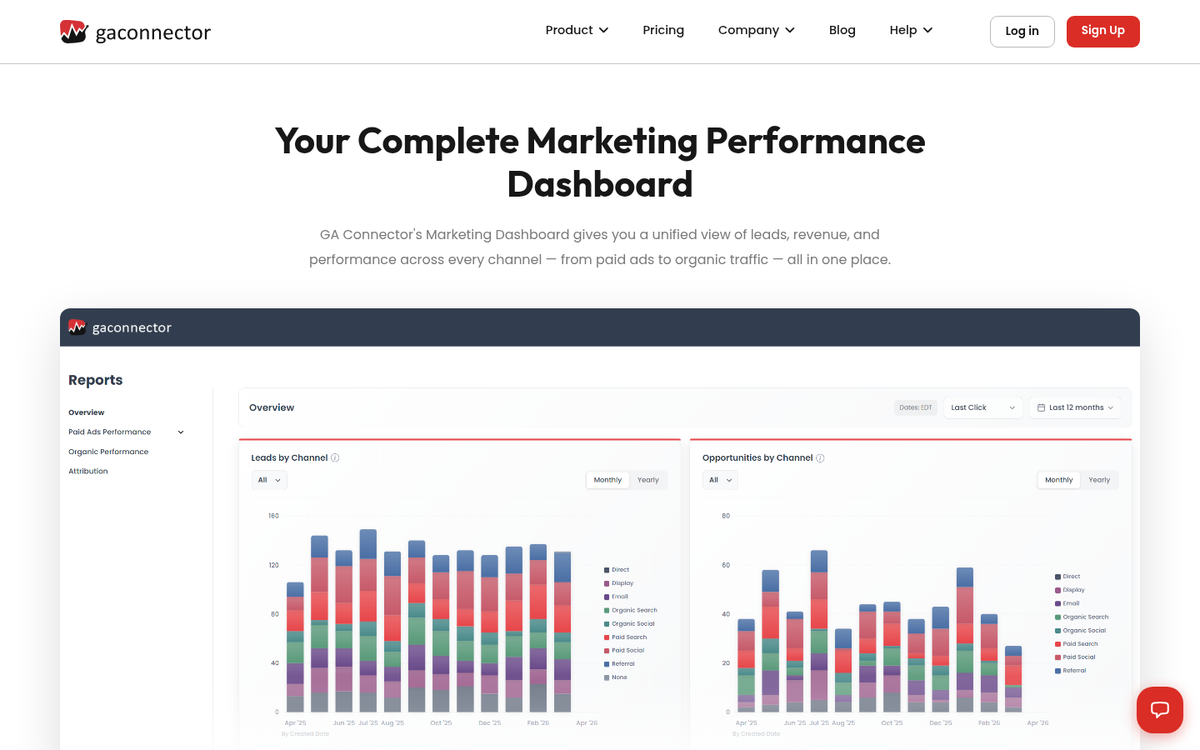
ROI is Return on Investment, and it's a simple calculation. How much money do you put in, and what do you get out of it? There are a bunch of pieces of information you can track and compare to come up with your ROI from different perspectives. What should you track?
- Impressions. At the heart of every paid traffic campaign is an advertisement that people see. You want to know how many people are actually being served a given ad.
- Clicks. Obviously, you want to find out how many people are clicking on the ads you run.
- Costs. Many paid traffic sources will give you a simple cost-per-click reading. If they don't, you can calculate it yourself by dividing your total spend by the number of clicks over the same period.
- Conversions. As a raw number, conversions alone aren't all that telling. But when compared against your costs and traffic volume, they become one of the most important metrics you have.
- ROAS (Return on Ad Spend). This is increasingly the go-to metric for paid campaigns. A simple example: if you invest $5,000 in ads and generate $25,000 in sales, your ROAS is 5:1 - meaning $5 back for every $1 spent. Knowing this number changes how you allocate budget.
You can also track less obvious information, like total revenue generated from paid traffic and the average cart value per customer. These can vary from week to week and month to month, so make sure you're not relying on a static snapshot for ongoing decisions.
One thing you need to do when tracking this information is make sure you're differentiating between paid and organic traffic. When calculating ROI for your paid campaigns, you can't factor in traffic you didn't pay for.
One of the easiest ways to track specific paid traffic is by using UTM parameters. UTM parameters are additions to a URL that you've almost definitely seen but haven't recognized. A normal URL might look like www.example.com. Meanwhile, a URL with UTM parameters would look like www.example.com?utm_source=FacebookAds&utm_campaign=CampaignName
Both URLs lead to the same page, but the one with UTM parameters feeds extra data into Google Analytics and other analytics platforms. You use a specific set of parameters in the links tied to your paid sources. Organic traffic doesn't carry those parameters, so filtering becomes straightforward. It's a simple setup that pays dividends in clarity.
Beyond UTM tracking, companies are increasingly turning to unified marketing dashboards and dedicated analytics tools to manage this data at scale. The efficiency gains are real - organizations using unified ROI dashboards report spending 90% less time monitoring performance and 80% less effort modeling standard datasets. Tools like Funnel.io have delivered documented results too, with one digital agency reporting a 12x return on investment in a single year after implementing it for ROI tracking. More broadly, companies using marketing analytics tools grow 54% faster and save up to 100 hours per week, according to Slashexperts.
Comparisons to Make
With all of the information you're tracking, the raw numbers don't give you much. It's in the comparisons that the data really matters.
Clicks and impressions. Comparing these tells you how effective your ads are at capturing attention in your niche. Say you get 1,000 clicks in a week - that sounds decent. But if only 1,100 people saw your ad, that's an exceptional click-through rate. If 100,000 people saw it and only 1,000 clicked, you've got a problem worth investigating.
If your click-through rate is low, consider whether you're targeting the right audience, whether your creative is compelling enough, or whether the landing page experience is living up to the ad's promise.
Clicks and costs. This gives you your cost per click, one of the most commonly referenced metrics in paid advertising. Platforms like Google Ads and Meta Ads Manager surface this number directly, so you rarely need to calculate it manually - but it's worth knowing how to derive it yourself so you can cross-reference across platforms.
Conversion rate. If 1,000 people come in from your ads and 100 convert, that's a 10% conversion rate. The other 900 aren't necessarily lost - you can remarket to them, or capture them into an email sequence for future messaging. Knowing your conversion rate gives you a foundation to work from and a benchmark to beat.
Cost per conversion. This tells you what it actually costs to acquire a customer. Once you have this number, you can start optimizing - testing creative, adjusting targeting, refining landing pages - all in service of bringing that number down.
With your cost per conversion in hand, compare it against your average customer value. If you're spending $10 to acquire a customer whose average order is $7, you're losing money. If their average order is $250, you're doing very well. Either way, you need to know - because you can't optimize what you're not measuring.