





Key Takeaways
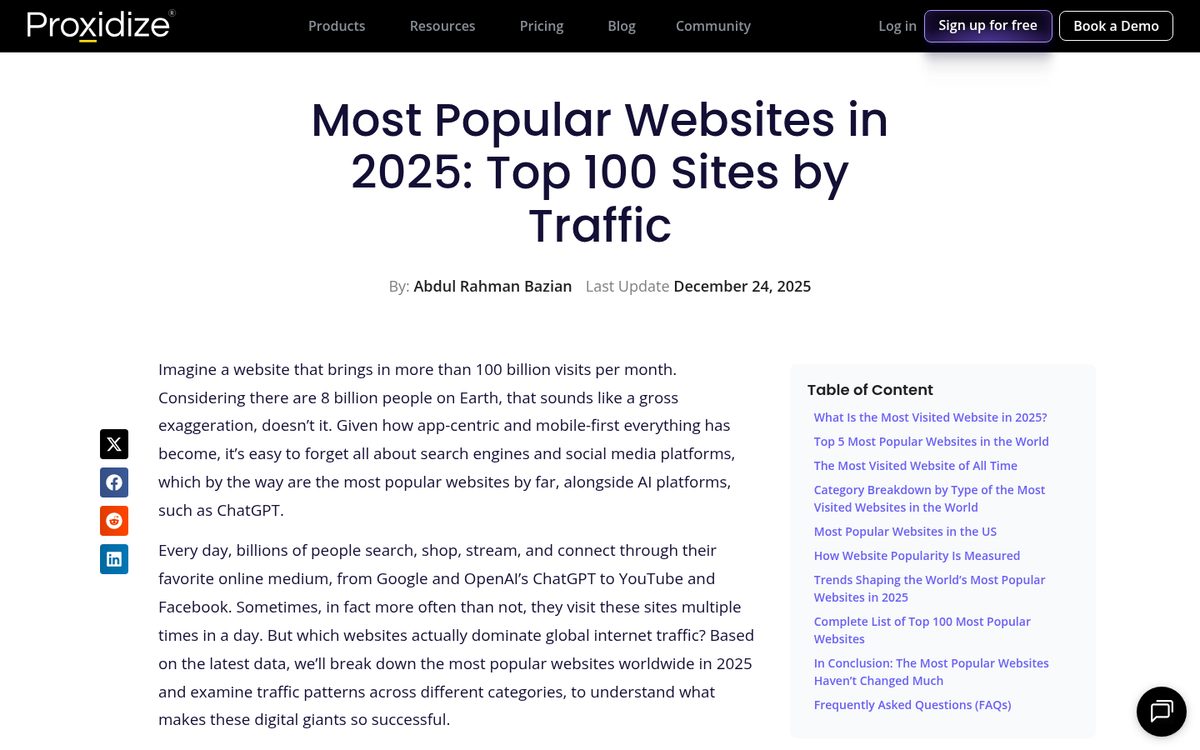
- Google dominates web traffic with roughly 3.5 billion daily visits and over 8.9 billion searches per day in 2025.
- YouTube ranks second with 28.8 billion monthly visits, with users watching over 1 billion hours of video daily.
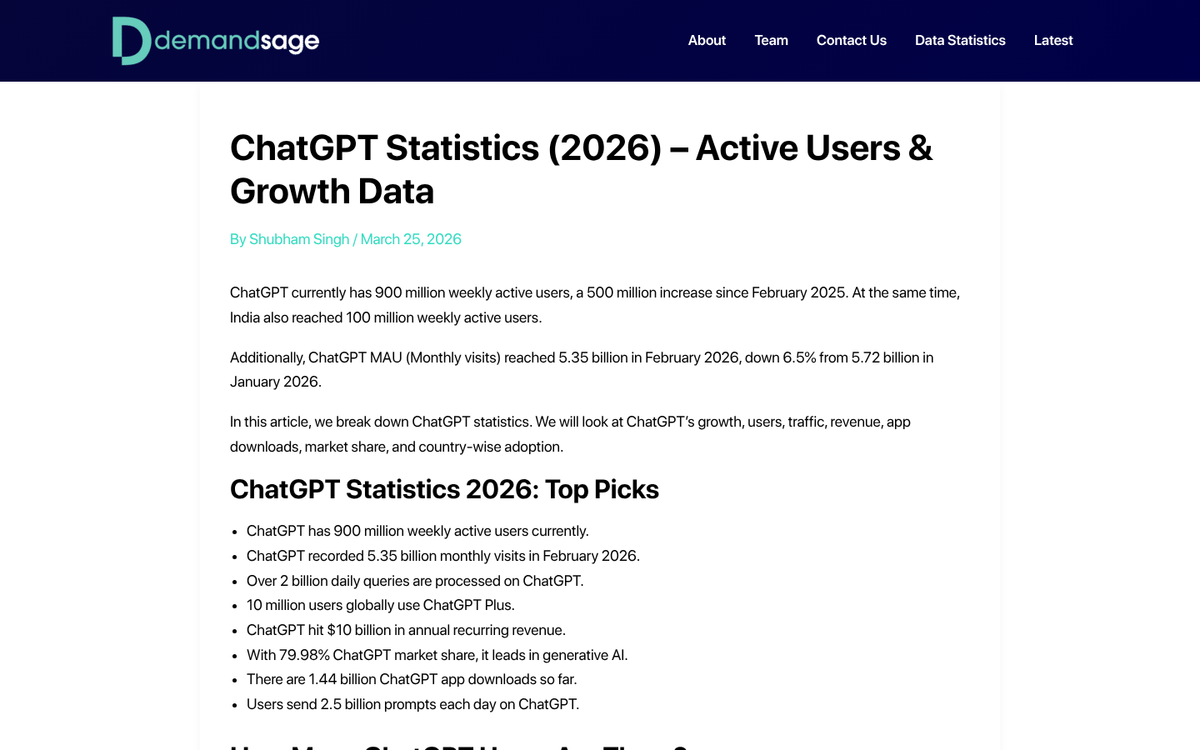
- ChatGPT has rapidly climbed to 4.57 billion monthly visits, rivaling platforms that have existed for decades.
- Large platforms like Google, YouTube, and Facebook can be leveraged as traffic pipelines for smaller businesses through SEO and marketing.
- The traffic landscape shifts constantly, making reliance on a single traffic source a significant risk for any website.
How Much Traffic Do the Biggest Websites in the World Actually Get?
Everything about SEO and internet marketing revolves around getting more people to visit your site and getting more of those people to do what you want them to while they're there. Time and again, the question gets asked: how many visitors should your site see in a day, a week, a month?
The answer is a difficult one. What may be an excessive, site-shattering amount of traffic for one site - something it could only dream about - would be considered an abnormally low dip for another. A small company with a dozen employees running a blog might see a few hundred hits per day. A large company with a few hundred employees might see thousands of hits per hour.
No matter who you are or what your business is, there's one thing we all share: a healthy mix of awe and envy for the traffic achieved by the biggest sites in the world. We know we can't compete with the likes of Google, YouTube, Amazon, or Facebook. But it's still worth understanding the scale - because these numbers tell an important story.
How Much Traffic Does Google Get?

If you had to guess, how many visits would you think Google gets every day? As of 2025, Google receives approximately 105.41 billion visits per month - that works out to roughly 3.5 billion visits per day. Google's total daily searches have also grown, crossing 8.9 billion searches per day in 2025, up from 8.5 billion the year prior. That's not just a staggering number - it's a number that's still actively growing.
To put it in perspective: Google is processing over 100,000 searches every single second. That's enough traffic to vaporize most shared web servers before they knew what hit them.
Where Does Everyone Else Stack Up?
Google doesn't stand alone at the top. Here's a look at how some of the biggest properties on the internet perform on a monthly basis in 2025:
- YouTube - 28.8 billion monthly visits, with users watching over 1 billion hours of video and 5 billion individual videos every single day - if you're a content creator, check out our ultimate guide to increasing views on your YouTube video
- Facebook - 11.2 billion monthly visits
- ChatGPT - approximately 4.57 billion monthly visits, a platform that barely existed a few years ago
- X.com (formerly Twitter) - 4.27 billion monthly visits
- Amazon - approximately 3 billion monthly visits, averaging 2.8 billion in Q1 2025 - see how to view sales for an individual product on Amazon
- Yandex - 3.71 billion monthly visits
What Does This Actually Mean for Your Site?
The point of all this is not to be demoralizing. Quite the opposite.
For one thing, these massive platforms can be leveraged to funnel traffic into your own business. You won't see a fraction of a fraction of their traffic - but even the fragment you receive can be meaningful. Google, YouTube, Facebook, Amazon - these are traffic pipelines, and with the right SEO and marketing strategy, you can tap into them.
Second, take a look at that list again. ChatGPT stands out as the modern equivalent of the disruptor. In just a few years, it has climbed to nearly 4.6 billion monthly visits - sitting comfortably alongside platforms that have existed for decades. That's a powerful reminder that no domination is so complete that it can't be challenged by something new with a different model. AI tools like Perplexity are reshaping how people find information, and that shift has real implications for where traffic goes next.
Traffic ebbs and flows. The landscape in 2025 looks very different from even five years ago, and it will look different again five years from now. any site that relies too heavily on a single source of traffic is taking a risk - but any site with the right perspective, the right foundation, and an eye on where attention is shifting can carve out a meaningful piece of it.



2 responses
Thoughtful replies only - we moderate for spam, AI slop, and off-topic rants.
2 questions....in plain ole everyday English, what;s the diff between a hit and a visit?
Next Question.....what is the best way to screen out garbage hits and just get local traffic on your site?
tks,
bobby
Hey Bobby! Hits and visits are nearly the same, though one could argue a hit could be a very low quality visitor that loads your site for a split second, which might be considered a hit but not necessarily a visitor. A visitor implies that they can see your site and continue to click through and use it, where-as a hit could in theory be from software or a program, which is lower value.