Etsy doesn't come up all that often when talking about social media, and the reason for that is the nature of the site. Etsy isn't really a social network at all; it's a large marketplace connecting buyers with independent sellers offering handmade, vintage, and creative goods. With over 80 million active buyers on the platform, it represents a massive opportunity for the right kind of seller. For businesses that choose to use an Etsy storefront over a hosted solution, it's a great place to be.
However, like all forms of web storefront, there are methods you can use to improve your chances of success. There's Etsy-based SEO, advertising strategies, and much more.
Key Takeaways
- Instagram, Pinterest, and TikTok are the top social platforms for driving traffic to Etsy stores in 2026.
- TikTok's "make it with me" and "Etsy shop" content categories consistently generate strong engagement and storefront traffic spikes.
- Pinterest pins have unusually long shelf lives, continuing to drive clicks months or years after posting.
- Using all 13 available Etsy tags and keyword-rich titles significantly improves visibility within Etsy and Google search results.
- Etsy Offsite Ads promote listings across Google and Facebook, charging fees only when a sale is successfully made.
Leverage Social Media
Etsy itself doesn't have a meaningful social component, so if you want to build your audience into a community, you need to establish a presence on other platforms. Facebook is where many people start, but with Etsy, the clientele tends to skew toward visually driven platforms.
The best social networks to use in conjunction with Etsy in 2026 are Instagram, Pinterest, and TikTok. All three are well suited to the nature of an Etsy business. You're already taking product photos and developing a brand aesthetic, which means a good portion of your content creation work is already done.
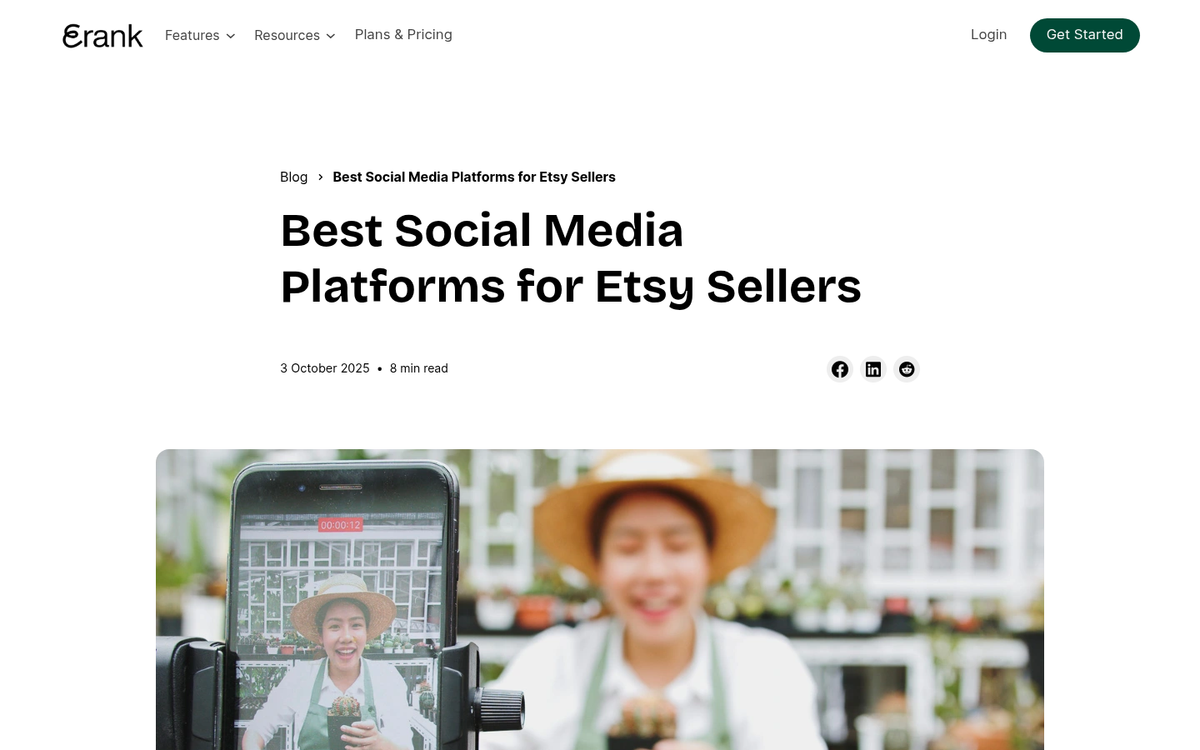
TikTok has become one of the most powerful discovery tools for Etsy sellers. Short-form videos showing your creative process, packaging orders, or revealing finished products have driven enormous spikes in traffic for many sellers. The "make it with me" and "Etsy shop" content categories consistently pull strong engagement and can send waves of new visitors directly to your storefront.
Instagram remains valuable for building a polished visual brand. Post pictures of the items you create, behind-the-scenes shots of your process, packaging details, and lifestyle imagery that shows your products in context. Etsy sellers have a natural advantage here because buyers already expect a human being behind the brand rather than a faceless corporation. Lean into that. Reels in particular continue to outperform static posts in reach.
Pinterest is still a strong long-term traffic driver because pins have an unusually long shelf life compared to other social content. A pin can continue driving clicks months or even years after it was posted. Sizing your images correctly for Pinterest is worth getting right, along with implementing rich pins, which pull product information directly from your storefront, for the added visibility and seamless shopping experience they provide. You can also use the most popular pins on Pinterest as inspiration for what kinds of content resonate with buyers in your niche.
Twitter, or X as it is now known, has declined significantly in relevance compared to Facebook for most Etsy sellers and is no longer a priority recommendation for this type of business. Your time is better spent on the three platforms above.
Maintain a Blog

Just because you don't have your own hosted storefront doesn't mean you can skip having a blog. A blog tied to your Etsy shop is still a worthwhile investment, particularly for long-term organic search traffic.
When running a blog, keep SEO fundamentals in mind. This includes keyword targeting, proper formatting, meta descriptions, internal linking, and social integration. It's a learning curve, but the compounding traffic benefits over time make it worth the effort.
As for content, there's always something to write about. How you source your materials, how individual items are made, trends in your niche, gift guides featuring your products, or spotlights on what's new in your shop. You can also build goodwill and community by writing about other interesting makers in your space.
With more than 50 percent of Etsy traffic now coming from mobile devices, make sure your blog is fully mobile-optimized. Slow load times or poor mobile formatting will hurt both user experience and search rankings.
Optimize Etsy SEO
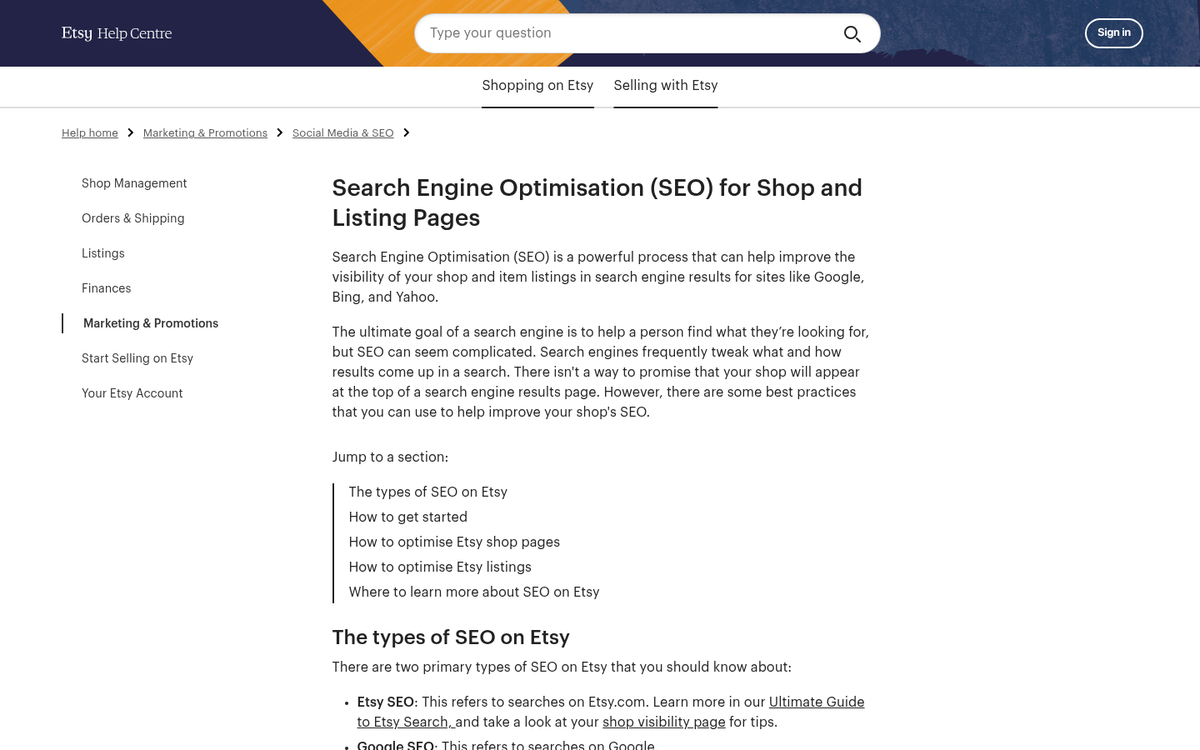
Etsy itself has text and images throughout, which means there are plenty of opportunities for on-platform SEO. Strong Etsy SEO helps your listings surface both within Etsy's own search results and in broader Google searches. Here's how to optimize each part of your listings:
- Write clear, descriptive listing titles that lead with the most important keyword. Think about how a buyer would search for your item rather than how you would describe it internally. Etsy gives you up to 140 characters for a title, and those early words carry the most weight.
- Use all 13 available tags for every listing. Tags are one of Etsy's primary ranking signals, and leaving any blank is a missed opportunity. Use multi-word phrases rather than single generic words wherever possible.
- Implement descriptive image alt text for your product photos. These serve both accessibility purposes and give search engines additional context about what's in the image, which can help your products appear in Google Image search results.
- Make sure your primary product image is high quality, well lit, and visually compelling. With a platform-wide average click-through rate of around 2 percent, your thumbnail image is doing the heavy lifting when it comes to getting shoppers to stop scrolling and click.
- Write thorough product descriptions that answer every question a buyer might have before they even think to ask it. Cover materials, dimensions, care instructions, production time, and anything unique about the item. A conversion rate of 2 to 3 percent is average for established sellers, while 3 to 5 percent is considered strong. Clear, detailed descriptions directly impact where you land on that scale.
- Brand your shop name thoughtfully. Something generic like "Laura's Crafts" blends into the crowd. A distinctive name is more memorable, more searchable, and sets the tone for your entire storefront.
- Keep your shop sections organized and logically named. These act as a secondary navigation for buyers browsing your store and also contribute to your overall SEO structure.
Consider Etsy Offsite Ads and On-Site Advertising
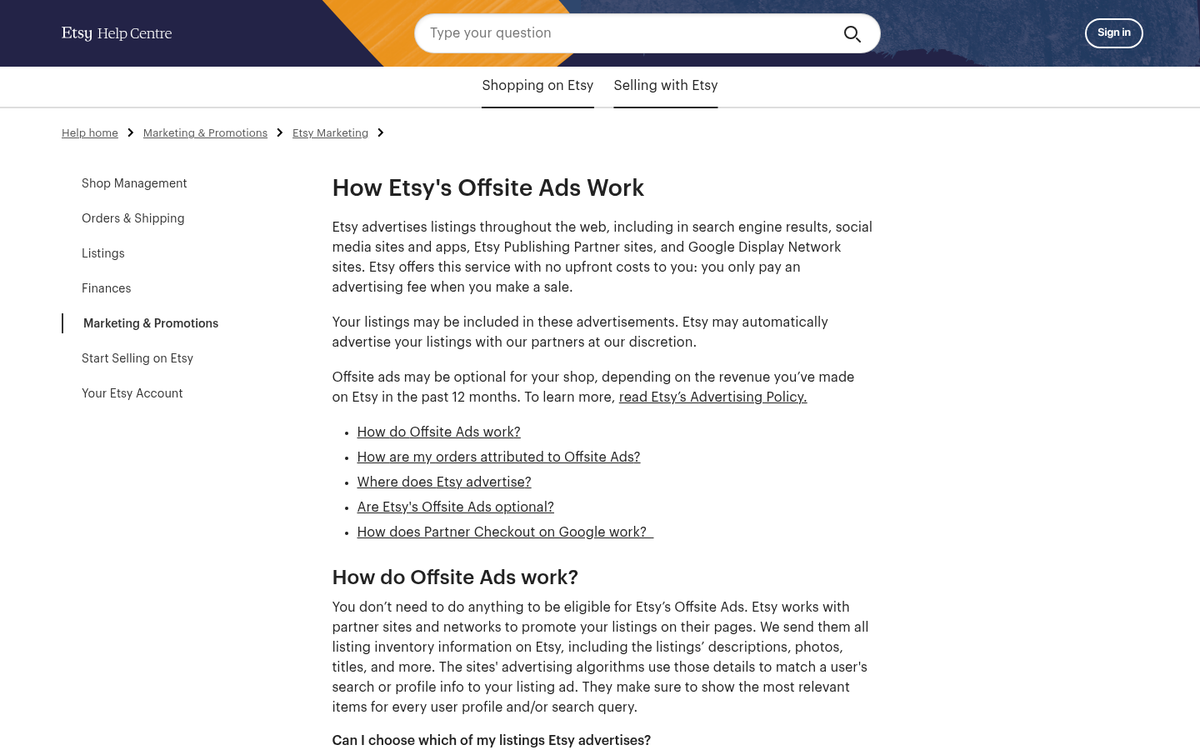
Etsy's advertising ecosystem has matured considerably. Etsy Offsite Ads automatically promote your listings across Google, Facebook, Instagram, and other external platforms, and you only pay a fee when a sale is made. That fee is either 12 or 15 percent of the order value depending on your annual sales volume. For sellers with lower annual revenue, participation is optional. For higher-volume sellers, it becomes mandatory, though the pay-on-conversion model means the risk is relatively low.
Etsy Ads, the on-platform option, lets you pay to boost your listings within Etsy search results. Starting with a modest daily budget and testing which listings respond best before scaling is generally the recommended approach. Not every listing benefits equally from paid promotion, so let the data guide where you invest.