





When you log into your Google Analytics account, you can see how much traffic your site gets. Wouldn't it be cool to see how much your competitors get, in the same way?
Unfortunately, there's only one way to get the numbers directly, and that's to access your competitor's Google Analytics account. Unless you own your competitor or have someone on the inside handing over login credentials, that's simply not an option for most people.
Instead, you need to rely on competitive analysis tools and some educated guesswork. You won't get exact numbers this way, but you'll get useful directional data you can benchmark against your own. For added context, try running these same tools against your own site and comparing the estimates to your actual internal data - this gives you a sense of how accurate each tool tends to be.
Key Takeaways
- You cannot access exact competitor traffic data; tools only provide estimates that should be treated as directional.
- Semrush, Ahrefs, Similarweb, Ubersuggest, and SpyFu are the recommended tools for competitor traffic analysis.
- Studies show tools like Semrush can overstate traffic by around 200%, so always triangulate across multiple tools.
- Alexa.com shut down in 2022 and is no longer a valid reference for competitor traffic data.
- Using two or three tools together and finding consensus gives more reliable estimates than trusting any single tool.
1. Semrush
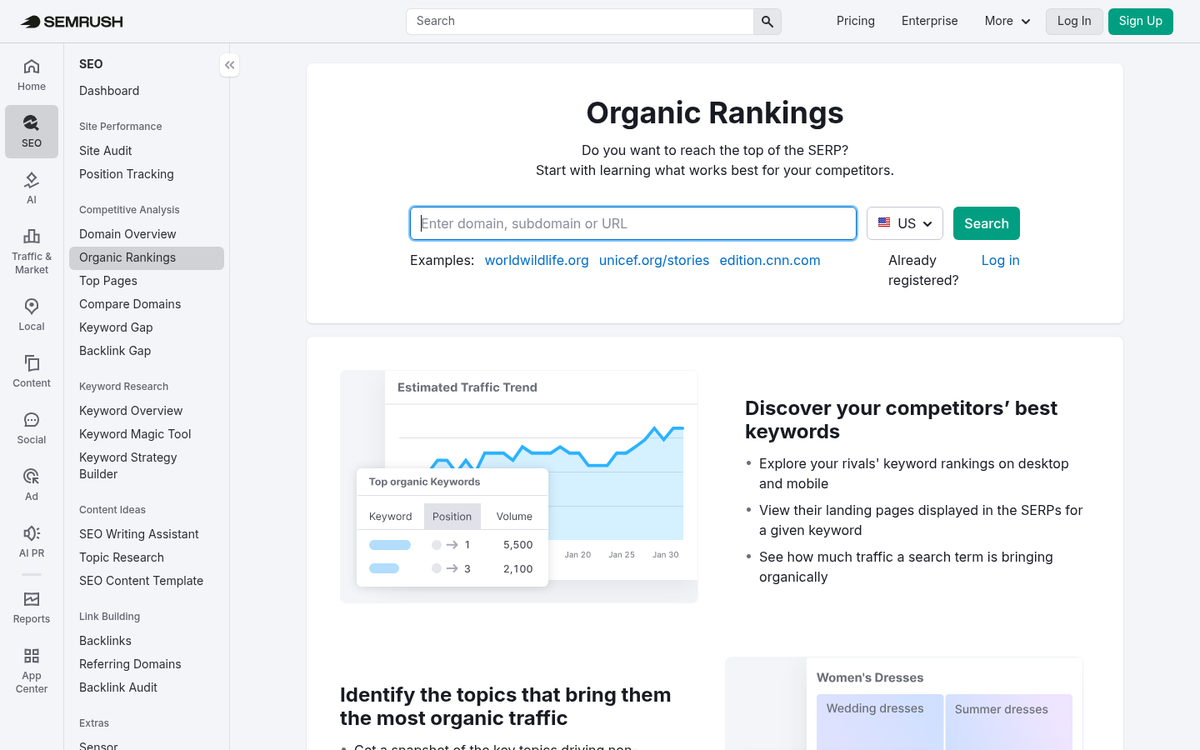
Semrush is one of the most powerful competitive analysis tools available. Just plug in a competitor's URL and start exploring the data. The most useful section is "Organic Research," where you can see the keywords they rank for, their positions, estimated search volume, and CPC data.
A few things worth knowing about Semrush in 2026:
- Their free Website Traffic Checker can be used up to 3 times per day without even creating an account.
- A free account unlocks up to 10 traffic analytics reports.
- Their clickstream data draws from over 200 million users, which makes the estimates reasonably reliable at scale.
- However, a study by Mark Webster that cross-referenced actual traffic data against multiple tools found that Semrush overstated traffic by around 200% on average. Take the numbers as directional, not definitive.
One thing to keep in mind: ignore branded keywords. The fact that a competitor ranks #1 for their own brand name tells you nothing useful. Focus on the generic, non-branded keywords you actually compete for.
2. Ahrefs
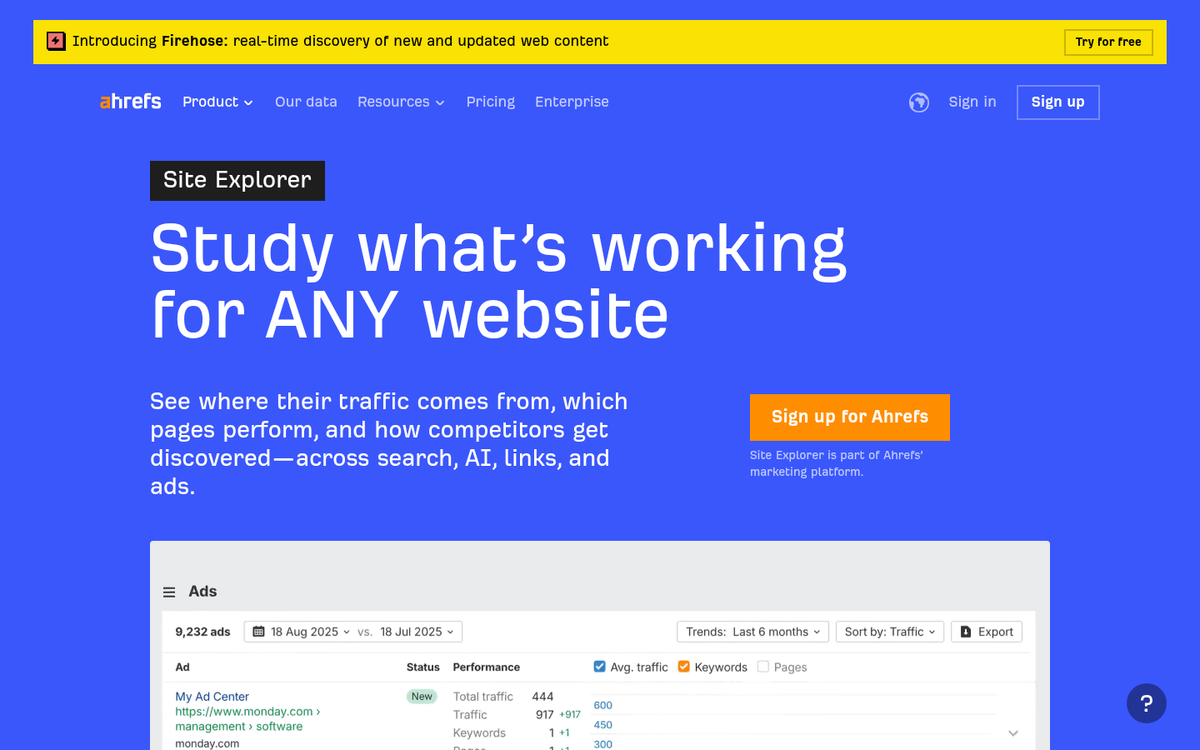
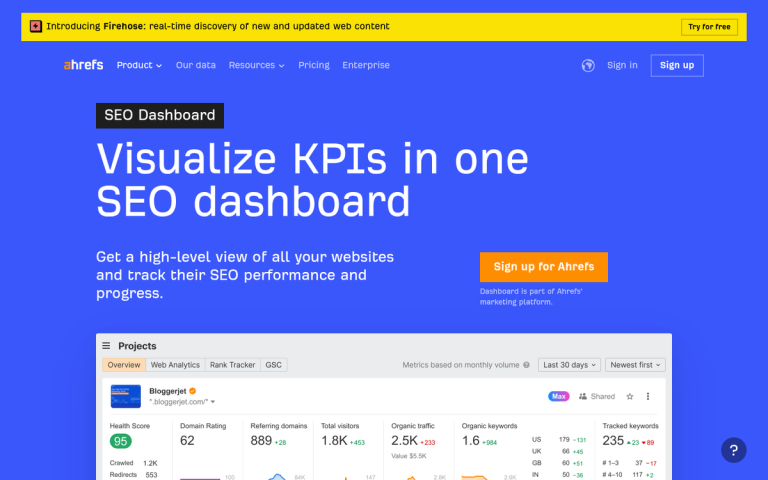
Ahrefs is another industry-leading tool for competitive research, and one of its standout features is that it updates hourly. This makes it particularly reliable for tracking recent ranking changes and spotting momentum shifts before they show up in other tools.
Beyond traffic estimates, Ahrefs excels at backlink analysis. You can see the number of referring domains pointing to a competitor's site, the quality of those links, and whether they're followed or nofollowed. This can reveal whether a competitor has been building links aggressively, buying links, or has been the target of a negative SEO campaign. Comparing their backlink profile to yours is one of the most actionable things you can do with this data - and if gaps appear, tools like HubSpot can help you close them through targeted outreach. You might also want to dig deeper into your top competitor's SEO to fully understand what's driving their results.
3. Similarweb

Similarweb is worth including in your competitive research toolkit. It provides traffic estimates, traffic source breakdowns (organic, paid, referral, social, direct), and audience data. The free version gives you 5 daily comparisons, which is enough for casual competitive monitoring.
It's particularly useful for getting a high-level view of where a competitor's traffic is coming from, which can inform your own channel strategy.
4. Ubersuggest
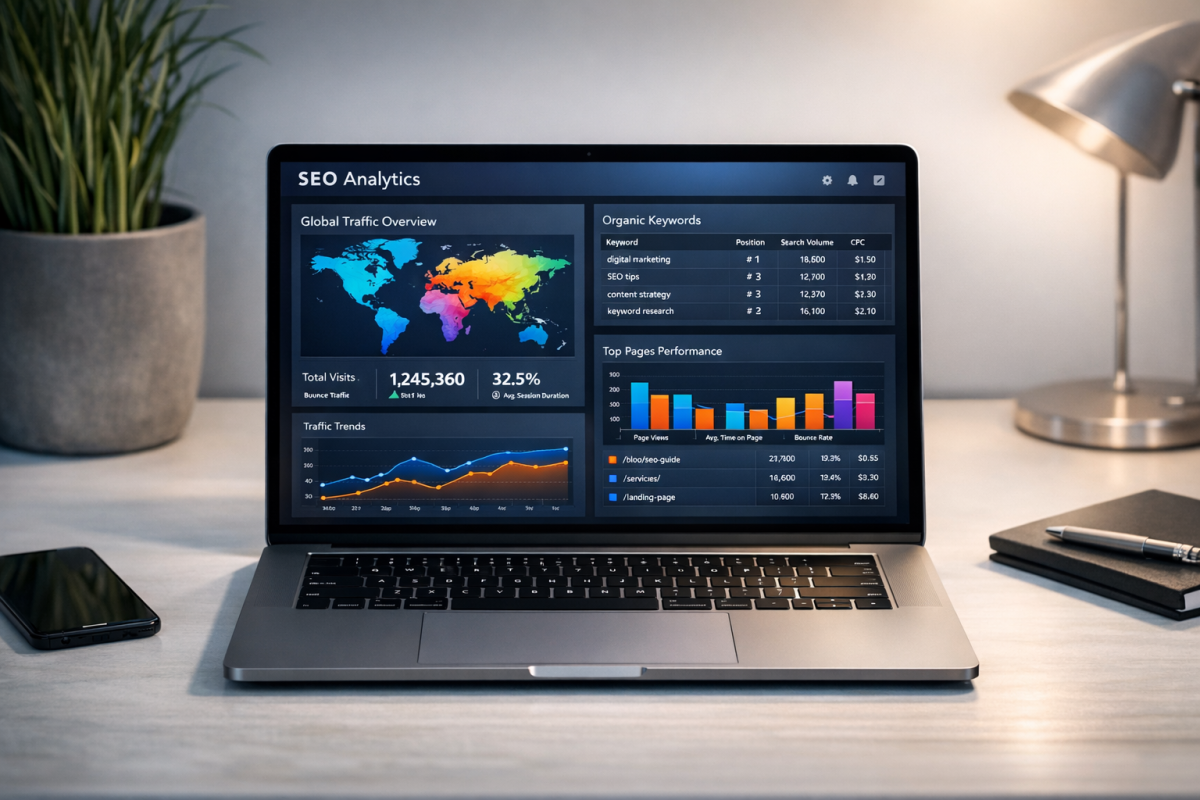
Ubersuggest, Neil Patel's keyword and traffic tool, collects data from over 250 countries, making it one of the more globally comprehensive options available. It provides traffic estimates, keyword rankings, backlink data, and content ideas - all through a relatively accessible interface.
The same cross-tool study mentioned above found that Serpstat overstated traffic by 334%, so if you're using multiple tools, it's worth triangulating across several rather than relying on any single one.
5. SpyFu
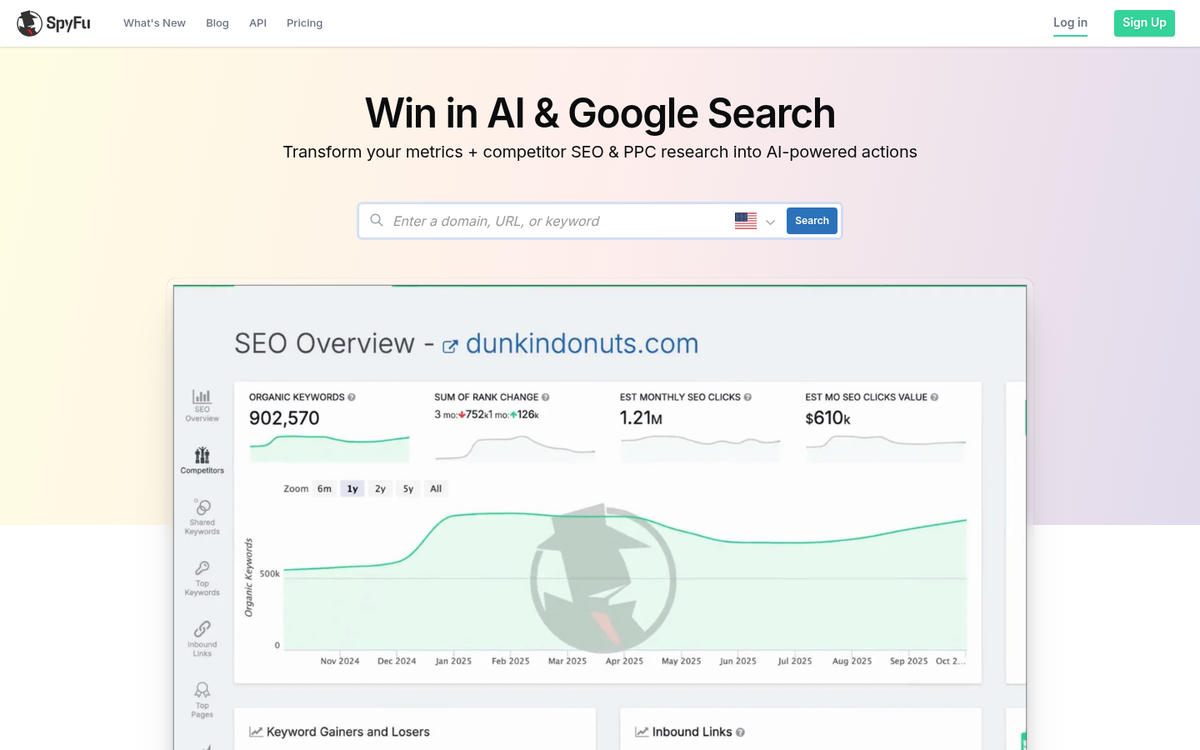
SpyFu focuses specifically on paid and organic search data. You can see the keywords a competitor has targeted in Google Ads, the ad copy variations they've tested, estimated ad spend, and organic rankings. This is especially useful if you're running or planning PPC campaigns - seeing what's worked for competitors in your niche gives you a strong starting point rather than building from scratch.
The free version gives you a preview of the data, but a subscription is needed for deeper analysis. It's most worth it if you're doing ongoing competitive monitoring rather than a one-time audit.
6. Tools to Avoid or Use With Caution

Some tools get mentioned frequently but deserve a closer look before you put too much weight on them.
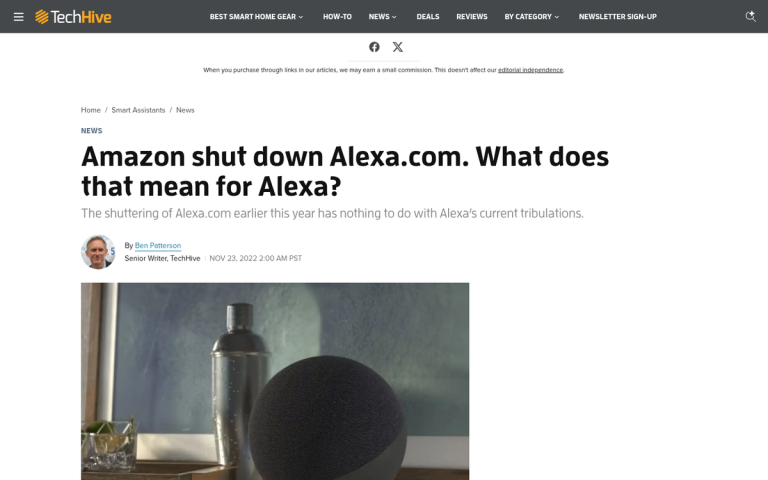
Alexa: Amazon officially shut down Alexa.com's web ranking service in 2022, so if you still see it referenced in older articles, it's no longer available. Any tool still citing Alexa data is pulling from outdated or unreliable sources.
Social media statistics in isolation: Comparing follower counts or raw engagement numbers with a competitor can be misleading. The metric that actually matters is engagement relative to reach - and since you can't see a competitor's reach, the raw numbers don't tell you much on their own.
Any single tool on its own: Given that studies have shown tools like Semrush and Serpstat can overstate traffic significantly, the best approach is to use two or three tools together and look for consensus rather than treating any single estimate as ground truth.
With a combination of these tools, you can build a reasonable picture of how much traffic a competitor is getting and, more importantly, where it's coming from and how they're earning it. Exact numbers aren't the goal - understanding the relative scale and the strategy behind it is what actually helps you compete.

2 responses
Thoughtful replies only - we moderate for spam, AI slop, and off-topic rants.
Seems a bit nebulous, but I guess the takeaway is that you have to estimate their traffic based on freely available data, right? I wish sites like Compete / Alexa weren't so inaccurate...
Yes, aside from having access to their analytics, the best way is to estimate based on trackers like Alexa / Compete.