




This is no longer an edge case. More than half of all Google searches in the United States and the European Union now end without a single click. For anyone building a website, running a content strategy, or tracking organic traffic, that number has consequences.
This page breaks down what zero-click search means, what drives it, and what it means for how websites strategy visibility in search.
Quick Answer
Zero-click searches occur when a user's query is answered directly on the search engine results page (SERP) without requiring a click to any website. This happens through featured snippets, knowledge panels, weather forecasts, calculators, and other instant answers. Studies show over 50% of Google searches now end without a click. For businesses and content creators, this means reduced organic traffic even when ranking well. To adapt, focus on brand visibility, optimize for featured snippets, target long-tail conversational queries, and prioritize clicks that still occur by ensuring compelling meta descriptions.
How Zero-Click Search Actually Works
When a user types a query into Google, the search engine doesn't always need to send them somewhere else to get an answer. Instead, it pulls information directly onto the results page through built-in features called SERP features. These elements are designed to give users what they need without requiring a single click.
Featured Snippets
A featured snippet is a box that appears at the top of search results and shows a direct excerpt pulled from a webpage. Google selects this content automatically to answer a question. The source page is credited with a link. But users read the answer and move on without visiting the site.
Knowledge Panels
Knowledge panels appear on the right side of the results page and present structured facts about a person, place, organization, or thing. Google assembles this information from trusted sources like Wikipedia and its own Knowledge Graph. They're especially common for branded searches and known entities.
AI Overviews
AI Overviews are Google's AI-generated summaries that sit at the very top of the results page for queries. They synthesize information from multiple sources into a single, conversational response, and this feature represents one of the newest and most significant drivers of zero-click behavior.

People Also Ask Boxes
People Also Ask boxes display a set of related questions that expand to show short answers when clicked, and each answer loads directly within the results page, so users can check out a few related topics without clicking away. The boxes expand and generate new questions as users use them.
Local Packs
A local pack is the map-based cluster of business listings that appears for searches with local intent, like "coffee shop near me." It shows business names, ratings, hours, and addresses pulled from Google Business Profile data. Users can get directions, a phone number, and hours directly from this feature - enough to choose without clicking through.
Each one of these features serves a different type of search intent, from quick factual lookups to location-based decisions. Together they form the infrastructure that makes zero-click search possible at scale. Understanding how Google structures its results page for your blog can help you adapt your content strategy accordingly.
Zero-Click Search by the Numbers
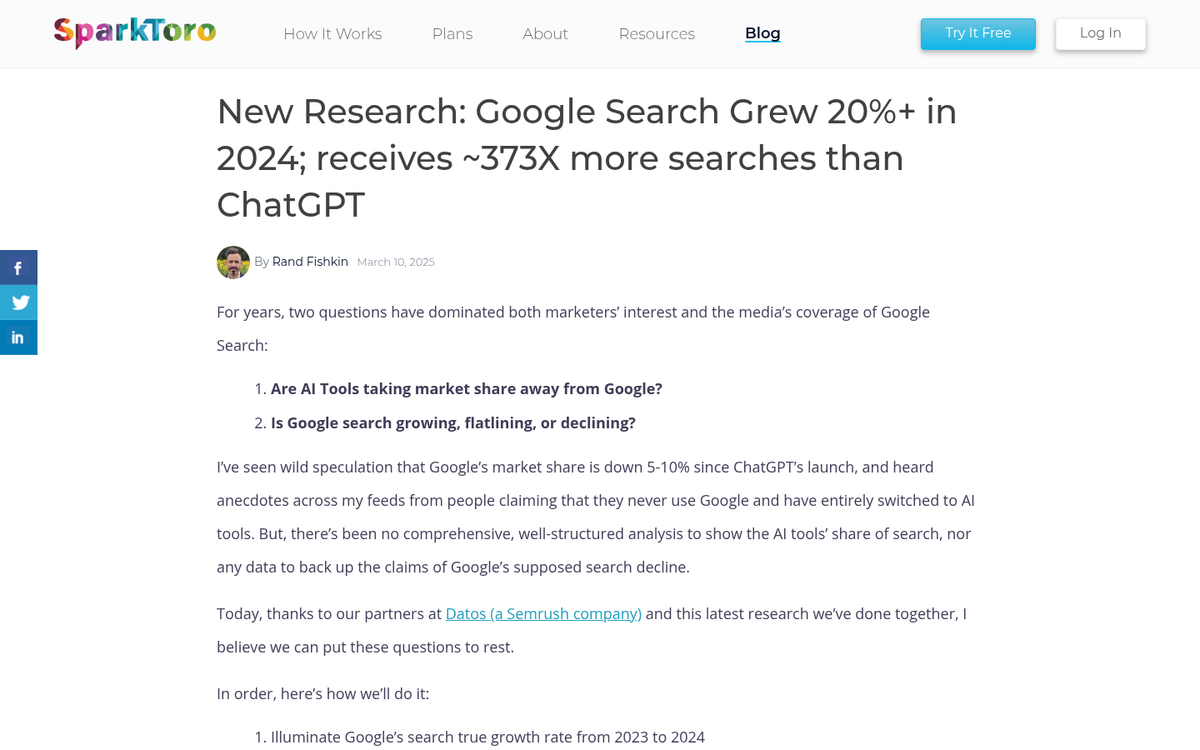
The scale of zero-click search is significant and measurable. According to SparkToro's 2024 research, more than half of all Google searches in the United States ended without a single click to an external website. The European Union showed an even higher rate at 59.7%, which means the majority of searches across two markets never sent traffic anywhere.
| Timeframe | Region | Zero-Click Rate |
|---|---|---|
| 2024 | United States | 58.5% |
| 2024 | European Union | 59.7% |
| March 2025 | United States | 27.2% (session-based) |
| March 2025 | EU / UK | 26.1% (session-based) |
The 2025 figures from Search Engine Land use a session-based measurement method, which counts zero-click behavior differently than a straight search-by-search calculation. That difference in methodology explains the lower percentages instead of a dramatic reversal in user behavior. Year-over-year comparisons from the same publication show the trend continuing to move upward.
Mobile vs. Desktop
Device type has a strong effect on whether a search ends in a click. Mobile searches produce zero-click results at a rate of around 77%, compared to roughly 47% on desktop. The smaller screen, the prominence of instant answers, and the structure of mobile results pages all contribute to that gap, which makes mobile searches far more likely to never reach a website at all. If you're concerned about the cost of making your site mobile friendly, that investment becomes even more critical given how mobile search behavior continues to evolve.
Why Zero-Click Rates Keep Rising
The growth in zero-click searches isn't accidental - it reflects a deliberate change in how Google designs its search experience - one that prioritizes keeping users on Google's own platform instead of routing them to third-party websites. Every new feature that answers a question directly inside the results page cuts back on the need for users to click anywhere at all.
Google's Platform Strategy
Google has steadily expanded the number of answers it surfaces natively in search results. Knowledge panels, featured snippets, local packs, and direct answer boxes all serve this job. The more query types Google can resolve within its own interface, the longer users stay involved with Google products- this gives you a self-strengthening cycle where improved on-page answers generate more zero-click behavior, which as you might expect validates more investment in those same features.
The Impact of AI Overviews
The 2024 rollout of AI Overviews marked an acceleration of this trend. AI Overviews generate synthesized, multi-sentence replies drawn from across the web and display them at the very top of the results page. For informational queries - the type users search when they want to learn something - this format can resolve the entire need before a single result is clicked. The click-through rate drop that followed its rollout was most pronounced on these kinds of queries; users historically relied on organic results for answers.

A Shift in Search Intent Coverage
This trend is significant because it now extends past easy factual lookups. Early zero-click features handled short, direct questions like unit conversions or weather. AI-generated summaries can now address tough, multi-part informational queries that previously required users to visit a few sources. As the technology improves, the number of queries that resolve without a click continues to expand. Sites that bring older content back to life may find that zero-click trends affect their recovery efforts.
Where the Trend Is Heading
Industry forecasts point to continued growth in zero-click rates well into the late 2020s. The forces behind this change - AI capabilities, Google's platform incentives, and growing user expectations - are all moving in the same direction. Users have also adapted to expect instant answers, which makes them less likely to click even when organic results are visible. That behavioral change reinforces the structural changes Google is building into its product. Understanding how Google evaluates content signals can help publishers adapt their strategies in this evolving landscape.
What Zero-Click Search Means for SEO Strategy
The rise of zero-click search doesn't make SEO less helpful - it changes what "winning" looks like. Ranking at the top still matters. But the goal has moved away from driving clicks to earning visibility and authority. Marketers who adapt their thinking past click-through rates will find new ways to stay competitive.
Redefine What Success Looks Like
Brand impressions now carry strategic weight - even when no one visits your site. When Google surfaces your content in a featured snippet or knowledge panel, users see your name as the trusted source of that answer. That authority influences decisions long before anything is clicked. Measuring impressions, branded search volume, and position-zero appearances gives a fuller picture of organic performance.
Optimize for the Formats Google Surfaces
Featured snippets, People Also Ask boxes, and knowledge panels pull content that's well-structured and directly answers a question. Concise, question-and-answer style content helps with your opportunities of earning these positions. Schema markup helps search engines understand what your content contains, which makes it more likely to appear in rich results. Targeting navigational and branded queries also protects your presence in searches where users already know who they're looking for.
Build Content That Earns Its Position
Content that answers a question - without requiring a click to get value - is what earns high-visibility placements. Appearing as the definitive source builds the trust that brings users back later. Prioritize depth in content that targets high-intent informational queries. The more helpful your content is at the search result level, the stronger your authority signal can become over time.
| Tactic | What It Targets |
|---|---|
| Optimize for featured snippets | Position-zero visibility for informational queries |
| Add schema markup | Rich results and enhanced SERP appearances |
| Target branded queries | Navigational searches from existing audiences |
| Track impressions alongside clicks | Full picture of organic search value |
| Write direct question-and-answer content | People Also Ask and voice search placements |
Adapt Your Approach to the Zero-Click Reality
Audit your latest SEO strategy with zero-click behavior in mind. Think about where branded impressions, structured data, and answer-ready formatting could be working harder for you right now. Tools like the AEO Content Grader can help you evaluate how well your content is optimized for these demands.

Explore related terms like Featured Snippets and Search Intent in this glossary, or speak with our team about a content audit built around how search actually works.
FAQs
What is zero-click search?
Zero-click search occurs when a user's Google query is answered directly on the results page, requiring no click to an external website. Features like featured snippets, AI Overviews, and knowledge panels deliver answers instantly within Google's interface.
How common are zero-click searches today?
Over half of all Google searches in the US and EU end without a click. SparkToro's 2024 research found rates of 58.5% in the US and 59.7% in the EU.
Do mobile searches produce more zero-click results?
Yes. Mobile searches result in zero-click behavior roughly 77% of the time, compared to about 47% on desktop, due to smaller screens and prominent instant answers.
Why are zero-click rates continuing to rise?
Google's platform strategy prioritizes keeping users within its own interface. The 2024 rollout of AI Overviews significantly accelerated this trend by resolving complex informational queries before users click any result.
How should SEO strategy adapt to zero-click search?
Focus on earning visibility through featured snippets, schema markup, and structured question-and-answer content. Track branded impressions alongside clicks to measure the full value of organic search presence.