Key Takeaways
- Responsive design is the industry standard, automatically adjusting layouts across all screen sizes under a single URL and codebase.
- Mobile-friendliness costs range widely: $12-$40/month for DIY builders up to $25,000+ for complex responsive redesigns.
- Google's mobile-first indexing means your mobile site directly impacts search rankings, making responsive design essential for SEO.
- 74% of users are more likely to return to a mobile-friendly website, making the investment worthwhile for most businesses.
- Mobile apps cost $10,000-$30,000+ and are only worth pursuing if a website genuinely can't serve your core use case.
There are two ways to make a mobile site. One is to create a dedicated mobile site on a subdomain or in a subfolder. It was once common with retailers and businesses, but has largely fallen out of favor as responsive design has become the industry standard.
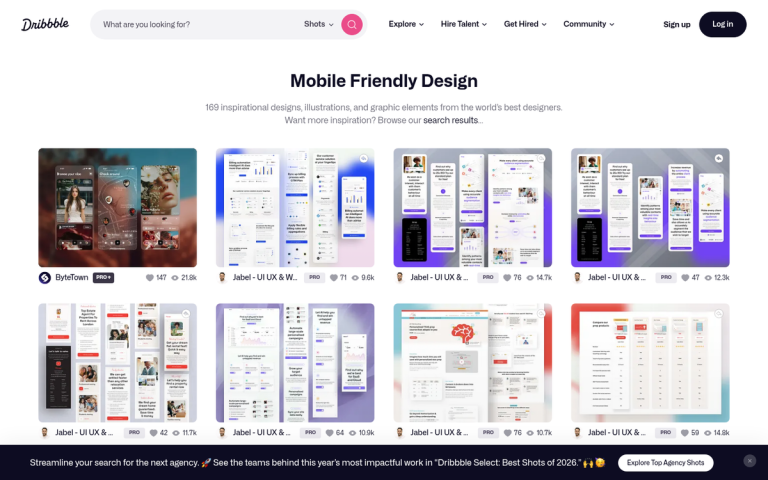
The other option is a responsive design, now by far the most widely used strategy. A responsive site automatically adjusts its layout, images, and content to fit whatever screen size is viewing it - whether that's a widescreen desktop, a tablet, or a smartphone. You can simulate this yourself by resizing your browser window on almost any modern website.
How expensive is it to make a site mobile-friendly? Consider that well over 60% of worldwide web traffic now comes from mobile devices. The cost of going mobile-friendly is usually dwarfed by the revenue you stand to gain - or lose - depending on if you act. Still, let's talk about the costs.
A Dedicated Mobile Site
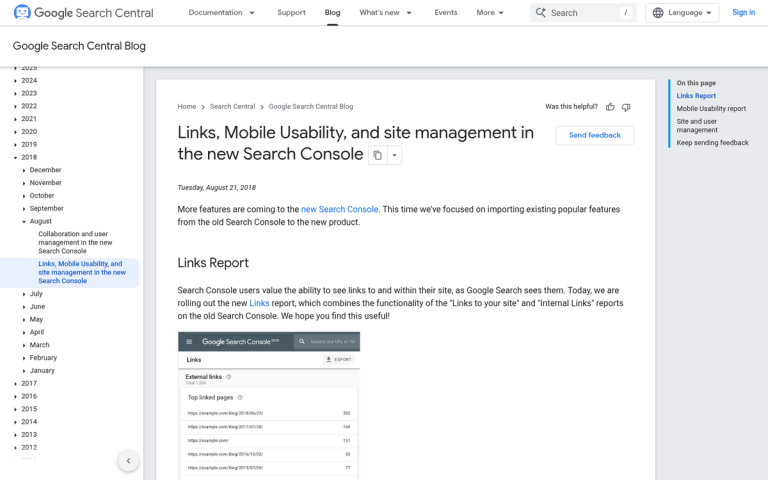
Dedicated mobile sites - the kind that once lived on subdomains like mobile.example.com - are largely a thing of the past. Google officially deprecated support for separate mobile URLs as a recommended strategy and strongly prefers responsive design for SEO purposes. That said, some legacy systems still use this model, and it's worth understanding the tradeoffs.
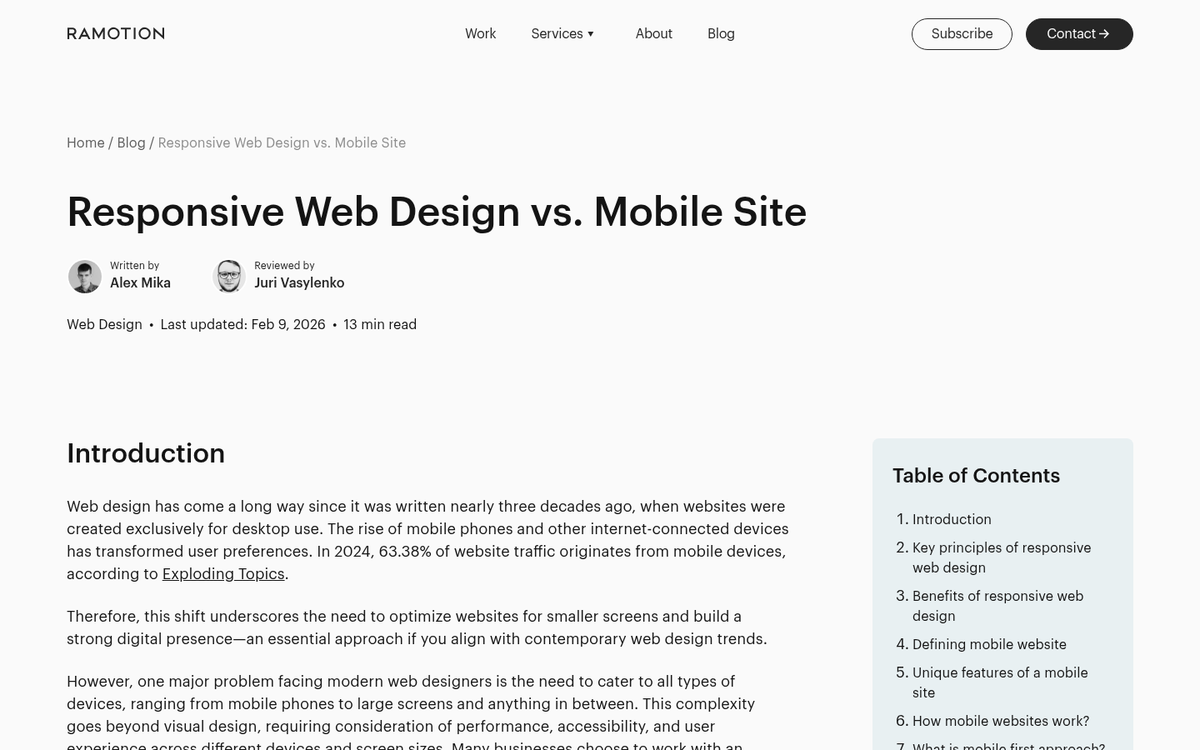
The main dangers of a dedicated mobile site include: duplicate content problems, split link equity between your desktop and mobile URLs, and the standard maintenance burden of taking care of two separate codebases. For most businesses in 2026, this is not a path worth pursuing.
If you're on a very tight budget and need a quick stopgap, DIY website builders like Wix or Squarespace now automatically produce mobile-responsive sites and usually cost between $12 and $40 per month. These aren't dedicated mobile sites in the old sense - they're responsive by default - but they're the modern equivalent of a low-cost entry point.
Responsive Design
A responsive design is, without question, the best strategy for virtually every business in 2026. Google has been operating on a mobile-first indexing basis for years now, which means it primarily uses the mobile version of your site for ranking and indexing.
Responsive sites also scale gracefully across every device size: large desktop monitors, laptops, large tablets, smaller tablets, and phones of varying screen dimensions. You get a single URL, a single codebase, and a single SEO footprint - no duplicate content dangers, no split authority.
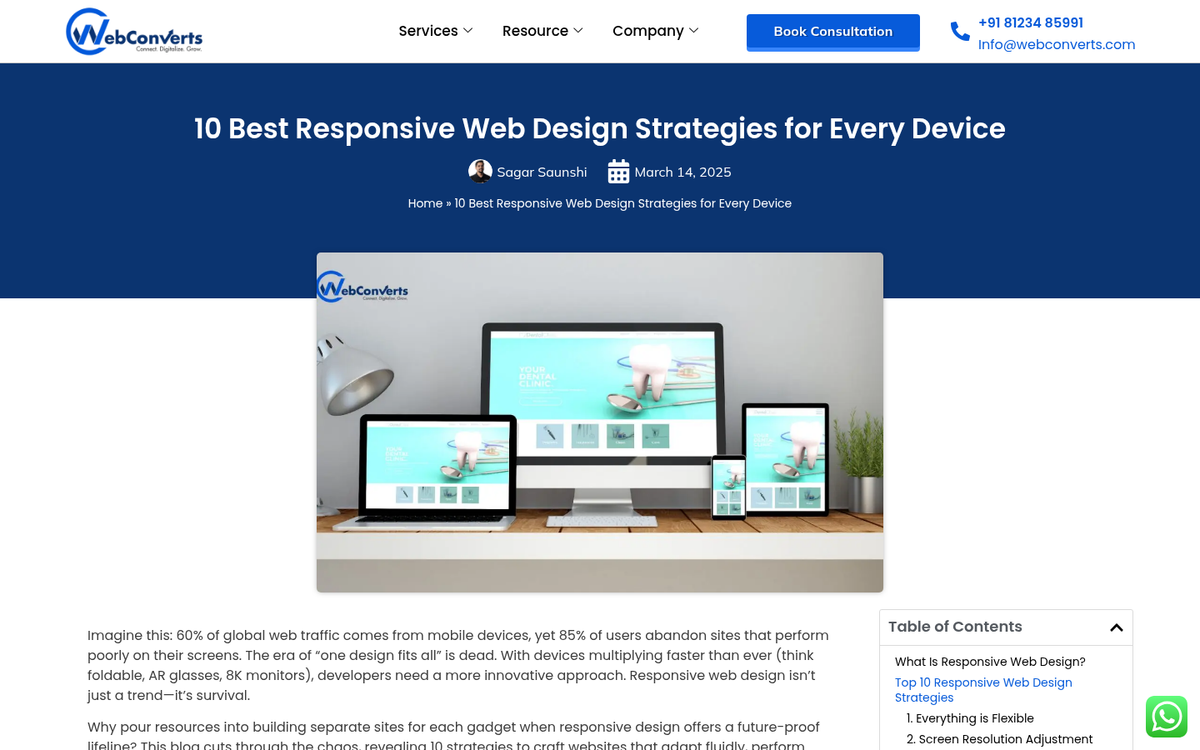
The good news is that responsive design is far more accessible and affordable than it once was. Here's a basic overview of current costs:
- DIY website builders (Wix, Squarespace, Shopify): $12-$40/month. All produce mobile-responsive sites automatically with no coding required.
- Basic mobile responsiveness fixes on an existing smaller site: $100-$1,500, depending on complexity and whether you hire a freelancer.
- Professional custom mobile-friendly build: $500-$5,000 for most small to mid-sized sites.
- Full responsive redesign of a larger, more complex site: $5,000-$25,000 or more.
It's also worth mentioning that 74% of online users say they are more likely to return to a website that's mobile-friendly, according to Network Solutions. That single statistic alone makes the investment an easy one for most businesses. If you run WordPress and have run into mobile-related issues, our guide to fixing Google mobile usability errors is a helpful resource to review.
Mobile Apps
There's a third option that makes sense for some businesses but not others. If you can identify a single core action that most of your mobile users are coming to perform - booking an appointment, checking in, accessing a loyalty program - a dedicated mobile app may be worth thinking about.
Apps give you a more controlled, optimized experience for that use case, and they can use native device features like push notifications, GPS, and camera access in ways that even the best mobile websites can't.
That said, apps have costs and ongoing commitments. A basic app built through a template or low-code platform can run a few hundred to a few thousand dollars. But quality varies. A well-designed, custom-built app usually costs between $10,000 and $30,000 at minimum, and bigger feature-rich apps can run considerably higher. You'll also need to factor in ongoing maintenance, updates for new OS versions, and App Store or Google Play compliance.
For most small to mid-sized businesses, a well-executed responsive website will outperform a hastily built app every time. Start with responsive design - add an app only if you have a defined use case that a website legitimately can't serve.