




For most of the internet's history, organic visibility was primarily a search engine optimization (SEO) concern - ranking on page one of Google was the goal, and the rules were relatively well understood. That landscape has shifted. AI answer engines are now intercepting a growing share of search intent and pull information directly from trusted sources and presenting it to users without requiring them to click through to a website at all. Your visibility in these AI-generated replies has become just as important as your position in a traditional search ranking.
As a website owner or manager, this change has consequences for your traffic, your authority, and your ability to reach your audience. A site that ranks well in conventional search but is never cited by AI systems is leaving exposure on the table. Conversely, a site that earns steady placement in AI-generated answers builds credibility with users and the algorithms that choose whose content gets surfaced.
This entry breaks down what organic visibility means in the context of Answer Engine Optimization (AEO), why it matters for your site specifically, and what you can do to improve it - starting with the fundamentals and moving into helpful plans you can apply.
Quick Answer
Organic visibility refers to how prominently a website appears in unpaid search engine results. It is determined by SEO factors such as content quality, keyword relevance, backlinks, site speed, and mobile-friendliness. Higher organic visibility means more users find your site naturally without paid advertising. It is measured through metrics like search rankings, impressions, and organic traffic. Improving organic visibility requires consistent content creation, technical SEO optimization, and earning authoritative links, leading to sustainable, cost-effective long-term traffic growth.
How AI Answer Engines Are Changing What "Visibility" Actually Means
For a long time, ranking at the top of Google meant one thing: people would click your link. That relationship between rank and traffic was reliable enough that SEO strategies were built almost entirely around it. That relationship is now quite a bit more complicated.
AI Overviews and answer engines like Perplexity don't display results - they answer the question directly on the page. A user asks something, gets a full response, and may never need to click through to any website at all. This changes what it means to be "visible" in search, because your content can be read, referenced, and used without ever generating a visit to your site.
The data supports this. Ahrefs found that the click-through rate for first-position Google results dropped from 7.3% to 2.6% between March 2024 and March 2025; it's a steep drop for the single most competitive position in organic search. If you worked hard to rank first and your reward is less than three clicks for every hundred impressions, it's worth asking what that rank is actually worth.
This doesn't mean ranking is pointless- it means the definition of a "good result" needs to expand.
Two years ago, visibility was fairly easy to measure. You tracked rankings, watched organic traffic, and made decisions based on those numbers. Now a page can have strong visibility inside an AI-generated answer without showing up as a referral visit in your analytics at all. Your brand name could be read by thousands of people in an AI Overview, and your traffic data won't show a single one of them.

Answer engines also pull content differently than traditional search algorithms do. A conventional search engine mostly cares about relevance and authority to choose what to rank. An AI answer engine looks for content it can use to construct a response - content that's structured, answers a question directly, and reads as honest. Those aren't new ideas. But the weight placed on them has changed considerably.
The question is no longer just "are we ranking?" It's closer to "are we the source people and machines turn to when they want an answer?" That's a different bar to clear, and it pushes content strategy in a different direction than pure ranking optimization does.
That's the part that trips up measurement frameworks. If your visibility goal is traffic volume, AI search looks like a threat. If your visibility goal is to be the trusted, go-to source in your space, AI search is actually an opportunity to be present in more conversations - even ones that don't end with a click. Using tools like Buffer to increase blog traffic becomes part of a broader strategy when clicks alone no longer tell the whole story.
Let's dig into what drives that visibility and what signals AI-powered search pays attention to when it decides whose content to surface.
What Signals Drive Organic Visibility in AI-Powered Search
AI answer engines don't scan pages for keywords. They review if a source is credible, well-structured, and legitimately helpful before pulling from it. That changes which signals actually matter.
Authority Still Matters - Maybe More Than Ever
A known stat from Ahrefs found that 96.55% of pages get zero organic traffic, and missing backlinks are a big part of why. That problem carries over directly into AI search. If a page has no authority behind it, an AI model is unlikely to treat it as a reliable source to cite.
Topical authority is especially important here. That depth is what gets a source pulled into an answer.
E-E-A-T Signals Are the New Currency
Google's E-E-A-T framework - which stands for Experience, Expertise, Authoritativeness, and Trustworthiness - has been part of quality guidelines for a while. In AI-powered search, these signals take on more weight because the engine is actively picking who to trust.
Practical things like author bylines, credentials, first-hand content, and transparent sourcing all affect how a page scores on these dimensions - it's worth auditing your content with these in mind - not to game anything, but because they align well with quality.
Structure and Schema Give AI a Clearer Picture
AI models process information more efficiently when it's organized well. Clear headings, logical content flow, and answers to questions make it easier for an engine to extract and use what's on your page.
Schema markup takes this further by labeling what your content actually is - a product, a review, a FAQ, an article. That explicit context helps AI systems understand your content without having to guess. Pages without any schema markup leave that work to the model, and it doesn't always get it right. You can check how prepared your content is with an AEO readiness checklist.
How Traditional SEO Signals Compare to AEO Signals
The table below shows how goals have shifted between traditional search engine optimization and answer engine optimization.
| Signal Type | Traditional SEO Focus | AEO Focus | Why It Changed |
|---|---|---|---|
| Keywords | Exact match and density | Intent and topic coverage | AI reads meaning, not just terms |
| Backlinks | Volume and anchor text | Authority and source trust | AI filters for credibility |
| Content Format | Long-form, keyword-rich pages | Structured, answer-ready content | AI needs to extract information fast |
| Technical Markup | Meta tags and titles | Schema and semantic structure | AI uses labeled data to interpret content |
The signals that move the needle in AI search aren't entirely different from traditional SEO - but the reasons they matter have changed, and the weighting has shifted considerably toward trust and structure.
Measuring Organic Visibility Beyond Click-Through Rates
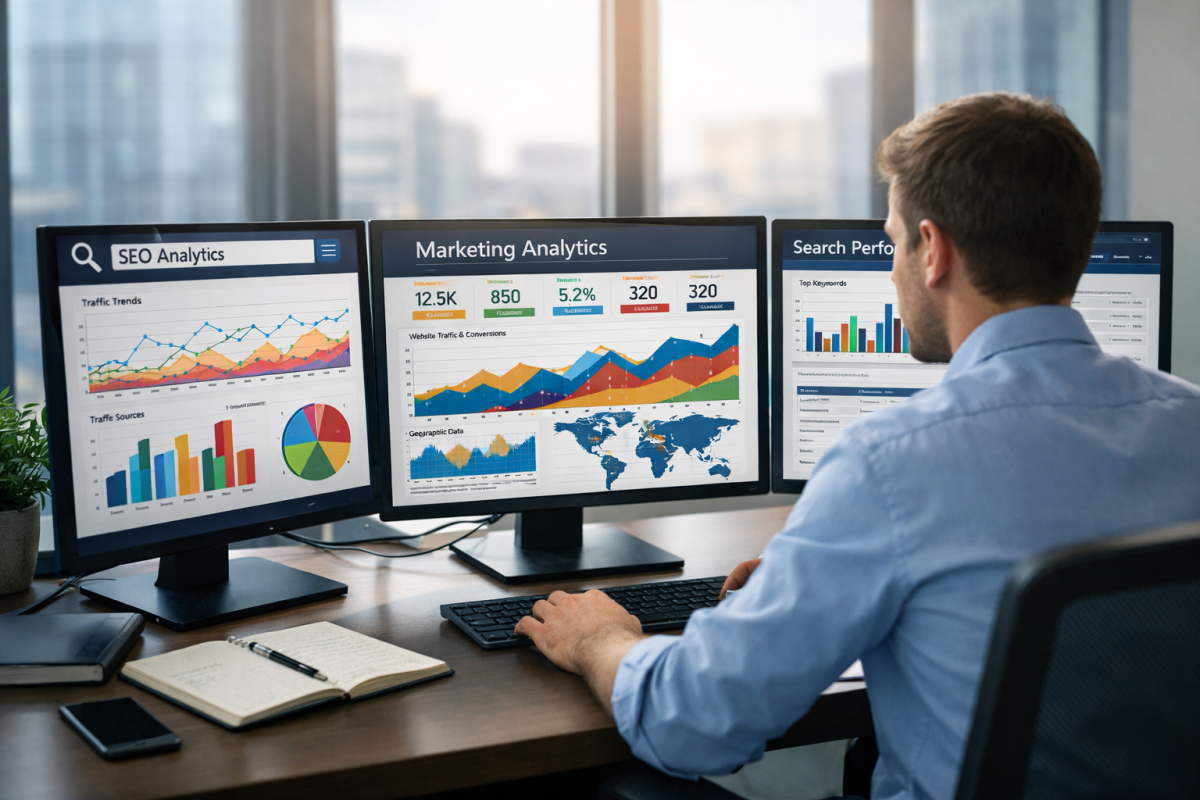
Clicks used to be the clearest sign that your content was working. But with AI-generated answers sitting at the top of search results, a user can get what they need without ever visiting your site. That doesn't mean your content failed - it might mean it worked, just in a way that's harder to see in a standard analytics dashboard.
The mindset adjustment worth sitting with is that visibility and traffic are no longer the same thing. A brand can be very visible in AI Overviews and still see flat or declining click numbers. Conductor found that 63% of marketers reported AI Overviews had a positive result on their visibility - even as traffic patterns changed; it's a difference between what traditional metrics show and what's actually happening.
Branded search volume is a place to start. If users are encountering your brand name in AI-generated answers and then looking for you directly, that shows up as branded search growth - it's not a perfect attribution model. But it's a signal worth watching over time.
Impression share tells you how frequently your content appears in search results relative to the total available opportunities in your space. Share of voice takes that idea further by measuring your presence across a wider set of keywords compared to competitors. These metrics give you a wider view of how well your content is reaching people - even when those visitors don't click through. If you rely on share counter plugins to gauge content performance, pairing them with impression share data gives a more complete picture.
AI citation tracking is newer and still building as a practice. But a few tools now let you monitor when your content is referenced or summarized by AI search features. Knowing which pages get pulled into AI answers helps you understand what the algorithm treats as authoritative and relevant. That information can directly shape what you write and how you structure it.
| Old Measurement Approach | New Measurement Approach |
|---|---|
| Organic click-through rate | Branded search volume growth |
| Page-level traffic | Impression share across keyword sets |
| Keyword ranking position | Share of voice vs. competitors |
| Sessions from organic search | AI citation and mention tracking |
None of these newer metrics are perfect replacements, and most teams will want to track old and new alongside each other for a while. You want to build a fuller picture of how your content performs across a search landscape where the path from query to conversion has more stops in it than it used to.
Tools like Google Search Console, third-party rank trackers, and upcoming AI visibility platforms each cover different parts of this picture. No single tool captures everything, so a layered approach to measurement aligns with reality more than relying on any one source. Platforms like HubSpot's blog marketing tools are increasingly incorporating these broader visibility signals into their reporting dashboards.
Your Organic Visibility Playbook Starts With One Question
Marriott's 172.3% visibility increase is not an outlier or a lucky algorithm swing - it's a signal. Content depth, structure, and genuine authority are still the variables that win, whether the answer surfaces in a search result or gets pulled into an AI-generated response. The fundamentals haven't been replaced; they've been amplified.
- Audit your highest-traffic pages for answer-readiness. Are they structured so a crawler - human or AI - can extract a clear, direct answer? If not, that's the first thing to fix.
- Identify the questions your audience is actually asking and make sure your content answers them explicitly, not just tangentially.
Organic visibility has always been earned - not given. What's changed is what "earning it" now looks like - and the businesses willing to adapt their content strategy accordingly are the ones that will be seen, cited, and trusted long after the next algorithm update arrives.
FAQs
What is organic visibility in the context of AEO?
Organic visibility in AEO refers to how often your content is cited or referenced by AI answer engines like Google's AI Overviews or Perplexity, not just how well your pages rank in traditional search results.
Why are click-through rates declining in search results?
AI answer engines now respond to queries directly on the search page, meaning users often get what they need without clicking through. Ahrefs found first-position CTR dropped from 7.3% to 2.6% between March 2024 and 2025.
What signals do AI answer engines prioritize?
AI answer engines prioritize content authority, E-E-A-T signals, clear structure, and schema markup. They look for credible, well-organized content that directly answers questions rather than simply matching keywords.
How can I measure visibility if clicks are declining?
Track branded search volume growth, impression share, share of voice, and AI citation monitoring. These metrics reveal how often your content reaches users, even when traditional click-through data doesn't reflect it.
Does traditional SEO still matter for AI search visibility?
Yes, but the emphasis has shifted. Backlinks, authority, and quality content still matter, but AI systems now weight trust, structured formatting, and direct answer-readiness more heavily than keyword density or meta tags alone.