There are good ways and bad ways to buy traffic. On the good side, you have reputable third-party services and direct PPC networks like Google and Meta. On the bad side, you have disreputable third-party sellers, poor quality PPC networks, link exchanges, and individual sellers. There's also software-generated traffic, though there are very few legitimate reasons you'd ever want to use that.
If you're buying traffic and you're not getting any results, you need to look at where the traffic is coming from and whether or not it's bot traffic. This is more important than ever - automated bot traffic surpassed human-generated traffic for the first time in a decade in 2024, accounting for 51% of all web traffic. Malicious bots alone now make up 37% of all internet traffic, up from 32% the year prior, according to the 2025 Imperva Bad Bot Report. Ad fraud losses are projected to reach $170 billion by 2028, with 14-22% of paid ad clicks being fake. If your traffic isn't converting, there's a very real chance a significant chunk of it isn't human.
Key Takeaways
- Bot traffic now accounts for 51% of all web traffic, with ad fraud losses projected to reach $170 billion by 2028.
- Even reputable PPC networks like Google and Meta aren't fraud-free; 14-22% of paid clicks are estimated to be fake.
- Poor traffic results from legitimate PPC often stem from bad targeting, not the platform itself - tighten geo and audience settings.
- Link exchanges primarily deliver automated bot views or disinterested webmasters, not real potential customers.
- Software-generated traffic cannot convert and is largely filtered out by modern analytics; its only legitimate use is load testing.
Traffic Quality Control

I like to break traffic down into a few categories.
At the very top, you have the highly interested, highly targeted individuals. These are people who find you organically while searching for you or your products, complete with the intent to buy. They're the people you target directly with Google or Meta PPC. They're the leads generated by your sales team. They're the best, because they're real people with an intent to buy, and you can realistically convert them into customers. Even so, keep expectations grounded - average conversion rates for paid search sit around 4.8%, and that's considered good.
Just below this tier, you have real people who may be interested, but who aren't necessarily ready to buy. These are also good leads to have, and ideally they will make up the majority of your traffic. Yes, you'd love to have the higher quality leads in volume, but realistically that's rarely the case. Still, genuinely interested users are far better than the alternative.
Below that tier are the disinterested users. These are people who come in from PPC or organic search looking for something, but they aren't sure what. Maybe your site satisfies them, maybe it doesn't. They aren't interested enough or ready enough to buy, and they probably won't even opt into a mailing list. Think of them as filler - the water in which you suspend tea to steep.
One step lower and you have the completely worthless users. These are real people, but they're totally outside your range. If you sell products strictly within the United States, visitors coming from regions where you can't fulfill orders hold no value to you. It doesn't matter how interested they might be - if you can't sell to them, they don't move the needle. The exception is if you can monetize them another way, but that's rare.
The lowest tier, then, is fake traffic. This is traffic generated by software or bots - no real person is there, so it cannot possibly convert. The only theoretical way to earn anything from it is through CPM ads, but reputable ad networks have increasingly sophisticated filters to weed out bot traffic, making it largely worthless even for that. The only bots you actually want visiting your site are the good ones, like Google's web crawlers, which keep you indexed in the first place.
Now let's take a look at the various traffic sources you might pay for, and what kind of traffic you're actually getting.
Source: Legit PPC
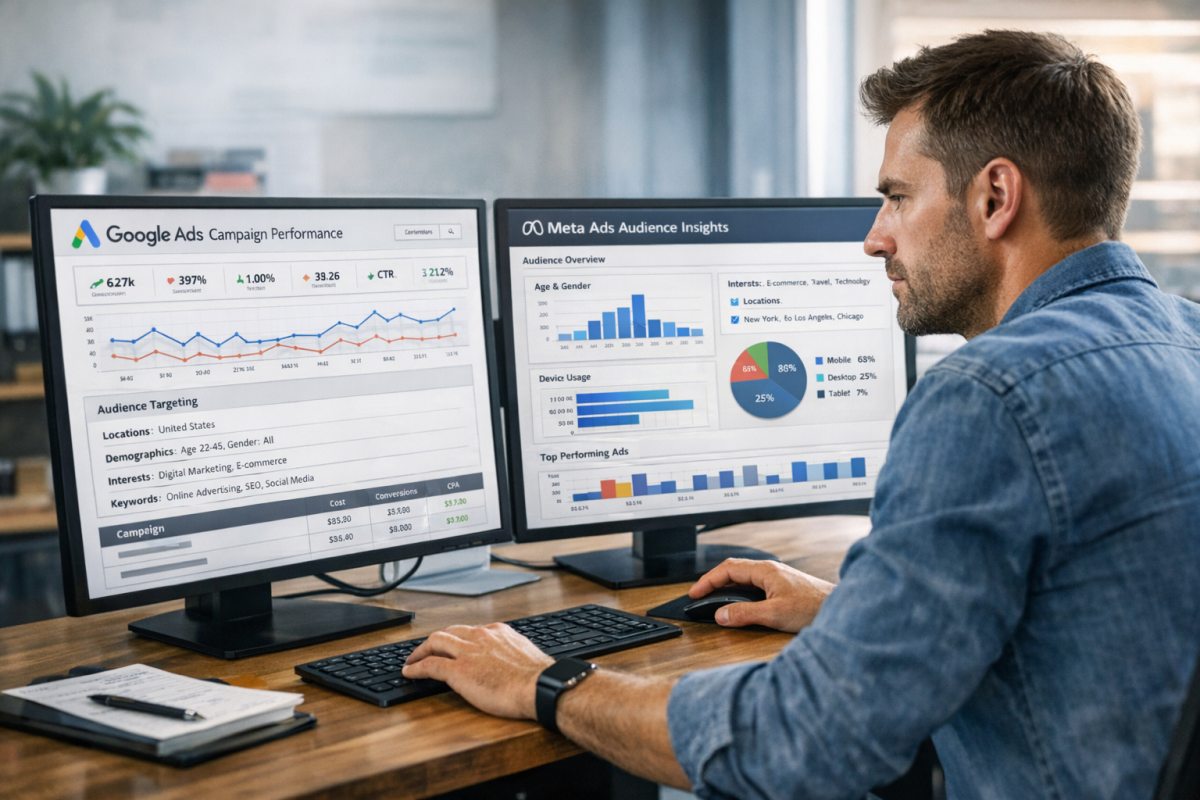
Good PPC traffic - the kind you get from Google Ads or Meta Ads - tends to land in the upper categories. It's rarely pure bot traffic, though some fraud will inevitably be mixed in. PPC Shield data suggests anywhere from 14-22% of paid clicks are fake even on major networks, so it's not zero.
That said, if your traffic is low quality and it's coming from a reputable network, the fault usually isn't the platform - it's your targeting. If you're pulling in a lot of traffic from regions that can't convert, or your audience targeting is too broad, you're wasting budget on disinterested users. Tighten your geo-targeting, refine your audience segments, and use negative keywords aggressively. The tools are there; you just have to use them.
Source: Poor PPC

Have you ever looked into the economics of CPM ad monetization? One of the oldest black hat tricks is to flood a thin site with the cheapest possible traffic - bots, click farms, or wide-open PPC campaigns fishing for penny clicks - just to rack up ad impressions and pocket the payout.
If you're buying traffic from a low-quality PPC network, your ads are likely showing up on exactly those kinds of sites. The Association of National Advertisers estimates ad fraud now costs advertisers $120 billion annually worldwide. A meaningful chunk of that flows through sketchy networks where inventory is cheap for a reason. Between 25-45% of affiliate traffic is estimated to be fraudulent, according to mFilterIt. Sometimes you go cheap and discover, the hard way, that you really do get what you pay for.
Source: Link Exchanges
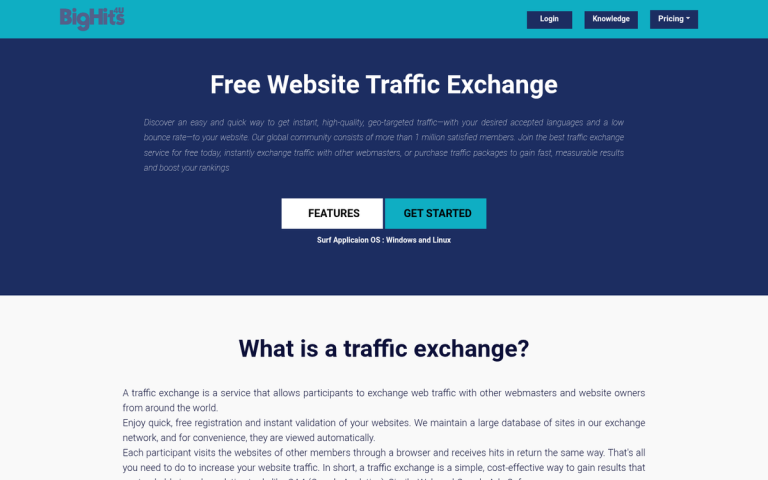
Link exchanges operate through a central hub on a credits system. You browse other sites in the network to earn view credits, then spend those credits to get your site shown to other members doing the same thing.
There are two problems with this setup. The first is structural. The only people participating are webmasters trying to promote their own sites. They're not there to buy anything from you - they're there to earn credits. You're not reaching customers; you're reaching competitors and fellow self-promoters.
The second problem is that the credit system practically invites automation. Most of these networks have browser plugins or standalone software that cycles through pages automatically so you rack up credits faster. The views your site receives aren't humans reading your content - they're bot refreshes on a timer.
In the best case, the traffic is low-tier and disinterested. At worst, it's entirely automated and worthless - and if you're curious how these automated tools work, our review of Supreme Traffic Bot gives a closer look at what's actually happening under the hood.
Source: Software Generators
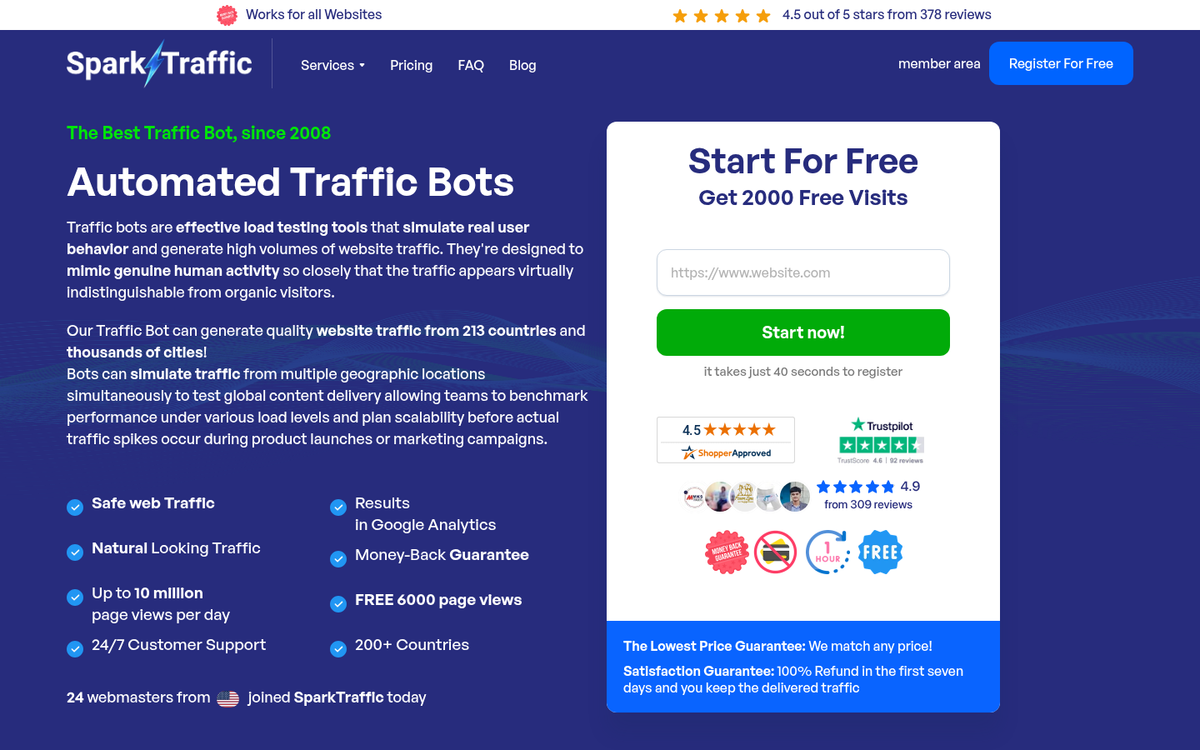
If you're "buying" traffic by purchasing software that generates it for you, understand what's actually happening: it's not forcing real users to visit your site. It's sending automated hits from your own machine or a network of bots. This does nothing for your business. It won't convert, it won't build an audience, and modern analytics platforms are increasingly good at filtering it out anyway.
The one genuinely legitimate use case for traffic generation software is load testing. By spinning up enough concurrent bot threads, you can simulate a traffic spike or minor DDoS scenario against your own servers to see how your infrastructure holds up before something real tests it for you. Outside of that specific technical use case, software-generated traffic is a waste of money.