





In the pursuit of cheap advertising, there's only one thing that can beat penny clicks, and that's completely free advertising. Now, you're pretty unlikely to get truly free advertising. Any actual ad network will require some minimal amount of payment if you want to use it. Free sources of advertising are things like organic posting on social media, word of mouth advocacy from brand allies, and news coverage in industry journals. While good, they aren't quite what we're talking about.
Penny clicks are an artifact of pay per click advertising. The entire business model is easy to simplify; you want people to click through to your website, so you pay them. Clicks have an inherent value based on a number of different factors, which combine to make the cost of each click. The cheapest possible payment per click is a single cent, a penny. Thus, the cheapest possible way to use PPC advertising is with penny clicks.
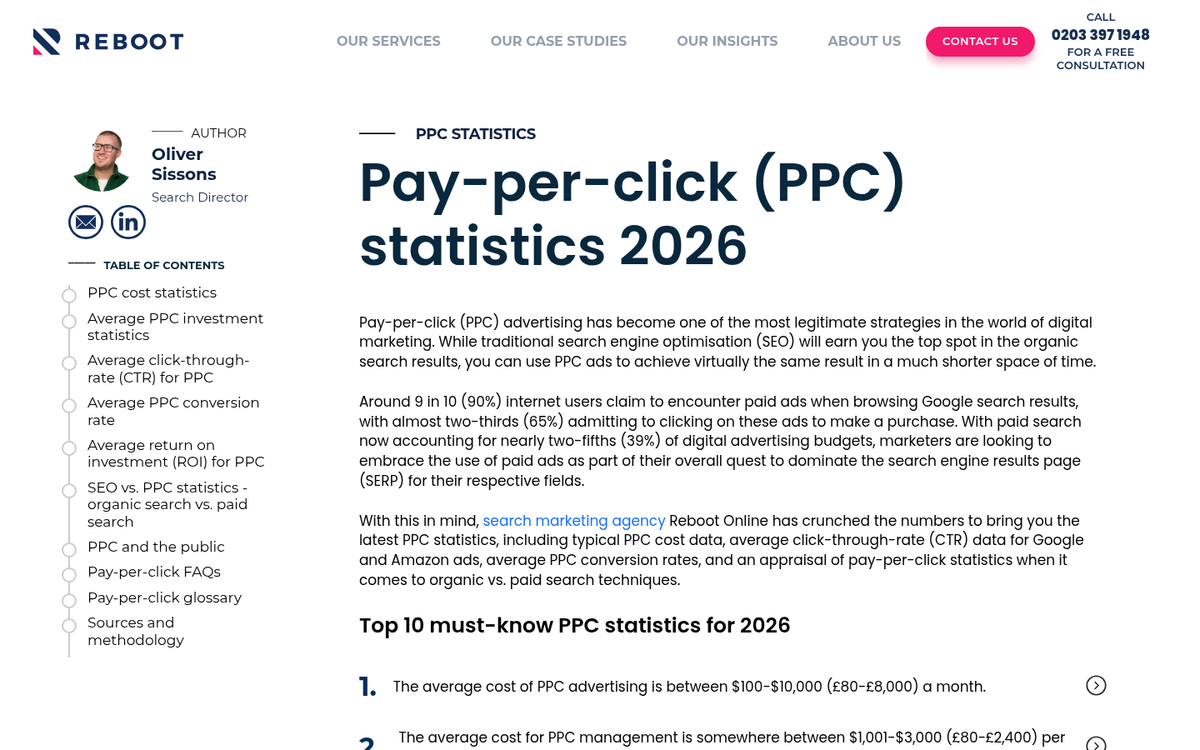
To understand how to get penny clicks, you need to understand the factors that go into calculating the price of clicks in the first place. And to put those factors in context: the average cost per click on Google Ads in 2026 is around $2.69 for search ads and $0.63 for display ads. At the high end, legal industry clicks average $9.21. So when we talk about penny clicks, we're talking about something far, far below market rate - which should tell you something right away.
Key Takeaways
- Penny clicks are technically achievable but require sacrificing audience quality, publisher quality, and realistic conversion potential.
- Key factors determining click costs include ad network choice, keyword competition, bid caps, quality score, seasonality, and geographic targeting.
- Low-competition keywords that enable cheap clicks typically have negligible search volume, making meaningful scale nearly impossible.
- Targeting low-income geographic regions lowers click costs but destroys conversions due to purchasing power mismatches with your product pricing.
- Automated bidding systems now dominate major platforms, meaning manually capped penny bids often simply don't serve at all.
The Ad Network
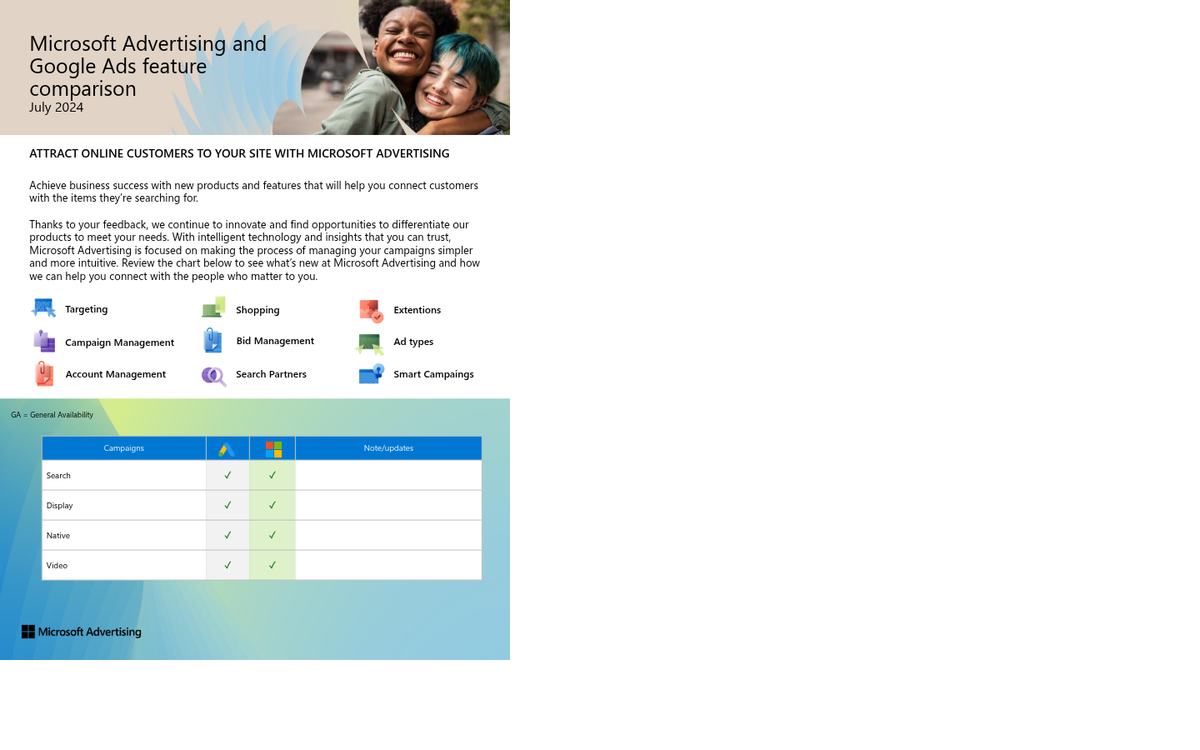
Your first choice when working with PPC is the ad network you want to use. Google Ads is still the dominant player, and Meta's ad platform (formerly Facebook Ads) remains a major force, though it operates more as a comprehensive paid social platform than a simple PPC system. Microsoft Advertising (formerly Bing Ads) has grown considerably as a legitimate alternative, often offering lower CPCs than Google while still reaching quality audiences. Beyond those, there are dozens of smaller networks, each with their own publisher base and pricing floors.
Your choice of ad network matters because, to get cheaper costs, you need ad networks that have publishers willing to accept lower rates. If you're only paying a penny per click, how much do you think the publisher is making after the network takes its cut? Not much. It might take them 3-5 clicks to earn that single penny - and that reality tells you a lot about the quality of publishers willing to work under those terms.
Choice of Keyword
Keyword targeting remains the central pillar of PPC strategy. Each keyword carries its own audience, search volume, and estimated costs. High traffic, high competition keywords attract a lot of bidders, which drives prices up fast. The legal industry, as mentioned, sees average CPCs of $9.21 - you won't find penny clicks there.
In order to lower the cost of your clicks in the realm of keywords, you need to adjust the keywords you're targeting. Specifically, you want to find keywords with lower competition. In 2026, with AI-assisted keyword research tools now widely accessible, the bar for finding genuinely underutilized long-tail keywords has risen considerably. Everyone has access to the same data. That said, highly specific, fringe long-tail queries can still yield lower CPCs - just don't expect them to drive meaningful volume.
Actual Bid Cap

Every PPC network allows you to set a maximum bid for a keyword. The auction mechanism is straightforward: in most systems, the winning bidder pays just one penny more than the next highest bidder - not their full maximum bid. So if you bid $5 and the next highest bidder bid $1, you pay $1.01, not $5.
If you want penny clicks, you're probably going to want to set your maximum bid very low, possibly even at that penny if the ad network will allow it. But most major ad networks have minimum bid floors that make true penny clicks essentially impossible on their platforms. And with automated bidding strategies now the default across Google Ads and Meta, manually capping bids at rock-bottom rates often means your ads simply don't serve at all.
Account Quality Score

Quality score is a metric that measures how relevant your landing page is to your ad, how high your click through rate is, and influences your ad positioning and effective costs. It's a significant factor on Google Ads and Meta, though smaller networks typically don't use a comparable system.
Quality score is tricky to balance, because if it's too low, your costs increase - much like a bad driver seeing rising insurance premiums. Conversely, a high quality score generally means you've invested in well-crafted, relevant ads and landing pages, which takes time and money. That investment runs counter to the goal of penny clicks.
Keyword Competition

I touched on this earlier, but competition has a massive effect on the cost of keywords. Imagine five ad slots available at any given time, awarded to the highest bidders. If you bid one cent, you're fine as long as no one else bids. The moment a competitor enters with even a modest bid, you're pushed down or out of rotation entirely.
With AI-driven bidding strategies now standard across major platforms, your penny-level manual bids are competing against automated systems optimizing in real time. The practical ceiling on staying competitive with rock-bottom bids has never been lower.
Your main option is finding keywords with little to no competition - and as covered above, those tend to come with little to no traffic as well.
Search Seasonality

Some keywords and industries spike at certain times of year and go quiet the rest of the time. This can both help and hurt your pursuit of penny clicks. During the off-season for a given keyword, competition drops, and you can sometimes target valuable terms for much less than their peak rates.
On the other hand, it's difficult to actually capitalize on this. Very few people are searching for those terms during the off-season, so your volume is negligible. You get the worst of both worlds: low traffic and, when the season returns, prices you can't compete with at penny-level bids.
Audience Relevance
This is one of the bigger factors, but it only comes into play when you're running on a network with granular targeting options. If your network only lets you choose a keyword and a country, you won't be able to fine tune your audience targeting to the degree needed to find genuinely cheap, convertible audiences.
On platforms like Google and Meta, where demographic, behavioral, and interest-based targeting are highly developed, you have more flexibility. The challenge is finding the intersection of a cheap audience and one that will actually convert. Broadening your audience lowers costs but drops conversion rates. You're essentially trading precision for volume - and in most cases, that trade doesn't work in your favor.
Audience Geolocation
Geographic targeting is arguably the single biggest lever for getting cheap clicks. Audiences in the United States, United Kingdom, Australia, and Canada are among the most expensive to reach. Western Europe is cheaper. Eastern Europe, Latin America, Southeast Asia, and parts of Africa and the Middle East can be dramatically cheaper still.
By targeting lower-income regions, you can get cheaper clicks. That's why when you buy bulk traffic packages, you'll notice a large share coming from countries like India or Indonesia - it's simply cheaper to acquire, regardless of method. But this brings us directly to the core problem.
Why Penny Clicks Hurt

Let's go through the entire list above and talk about why chasing cheap clicks through each of these levers is going to hurt you.
The ad network choice hurts you because quality publishers want to maximize revenue. They go with high-paying networks. The publishers willing to work with ultra-cheap networks tend to be low-quality content farms, made-for-advertising sites, or outright spam. The users on those sites aren't going to be your customers.
The keyword choice hurts you because low-competition keywords come with low volume. Fringe keywords are hard to build a reliable funnel around unless they happen to match your niche exactly - and even then, scale is a constant problem.
The bid cap choice can take you out of the game entirely. A one-cent maximum bid means any competitor can outbid you for almost nothing. In an environment where automated bidding strategies are the norm, your manually capped penny bids won't survive contact with real competition.
The seasonality angle hurts because you lose on both ends. Off-season keywords have almost no traffic. On-season keywords spike in price well beyond penny-click territory. You're left with either no volume or unaffordable costs.
The audience relevance trade-off hurts because broadening your audience to lower costs is the opposite of conversion rate optimization. Yes, PPC traffic converts 50% better than organic on average and delivers around a 200% ROI - but those numbers assume you're targeting the right people. Gut your audience precision in the name of cheap clicks and you'll see those numbers collapse.
The geographic targeting choice is perhaps the most harmful of all, and for one straightforward reason: purchasing power. Even if you're selling an inexpensive software product at $29, that price represents a significant sum in many lower-wage markets. The average daily wage across much of Southeast Asia, South Asia, and sub-Saharan Africa still sits well below $20 USD. Even a "cheap" digital product from a Western perspective can be an unaffordable luxury to that audience. You'll get clicks. You won't get conversions.
So yes, penny clicks are technically achievable. All you have to do is sacrifice meaningful audience targeting, competitive positioning, publisher quality, and any realistic shot at a return on your investment. You'll get clicks. You'll get sessions in your analytics. That's about where it ends. PPC works exceptionally well when it's done right - the data supports that clearly. Penny clicks are what happens when you optimize for the wrong metric entirely.

2 responses
Thoughtful replies only - we moderate for spam, AI slop, and off-topic rants.
Hi Kenny, you mention "They won't buy anything you sell, unless you happen to be targeted at those markets, which is pretty unlikely." What does this mean?
You can get low cpc .02p by searching for high volume low competition keywords in keyword planner. Then capping your ad at .02p. It will work but you may not appear on page one and you will get traffic from countries such as Angola or somewhere where there is not much competition. Just filter out all the countries you don't want to get traffic from. And you should get some traffic. Google with time will suggest other keywords. Add them to your account and you will get more traffic. Also add long tail keywords around your ads to get more low cpc traffic
Dont take my word for it. Play with it and see