Bandcamp is a global platform for hosting and selling music, used predominantly by small independent musicians. It's excellent for its purpose, but it's also a crowded platform. How can you make effective use of Bandcamp for music promotion? Let's talk about it.
Key Takeaways
- Bandcamp remains highly active with 92,000 records sold daily and merch generating $625 million, making it worth pursuing in 2026.
- Choosing your main genre tag carefully is critical, as it controls sub-genre visibility and determines your discoverability on the platform.
- TikTok and Instagram should be priority social platforms, as TikTok can drive thousands of listeners to your Bandcamp page overnight.
- Around 50% of buyers voluntarily pay above the minimum price, so enabling flexible pricing is a simple but powerful revenue strategy.
- Merch now accounts for roughly half of all Bandcamp sales, with vinyl up 438% and cassettes up 232%, making physical products essential.
About Bandcamp
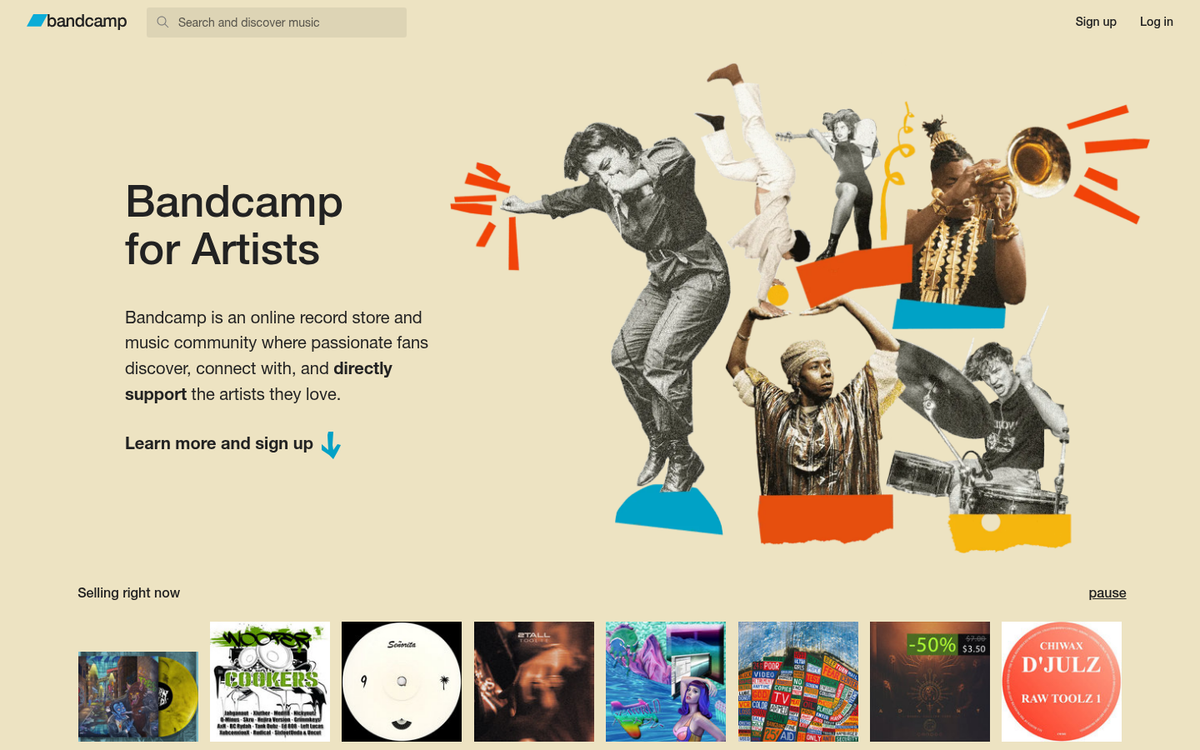
Using Bandcamp is free and pretty easy for musicians and artists. Sign-up is a quick and painless process, as is uploading music. Music fans can create accounts and follow individual artists, maintain wishlists, and explore similar music to what they already like. Artists can sell directly, with complete control over pricing and how accessible the music is to stream. I've seen some albums available on Bandcamp with unlimited streaming, and others that only allow each track to be played 2-3 times before it's locked behind a purchase. Bandcamp also works directly with some music labels, and it can be a great discovery platform.
It's worth noting that Bandcamp has had a turbulent few years. After being acquired by Epic Games in 2022 and then sold to Songtradr in 2023, significant layoffs followed. Despite the upheaval, Bandcamp continues to operate and remains one of the most artist-friendly platforms available. Artists still sell roughly 92,000 records every single day on the platform, and merch has become an enormous part of the ecosystem - fans have purchased over 32.8 million merch items totaling $625 million USD, with vinyl sales up 438%, cassettes up 232%, and t-shirts up 250% in recent years. That's a platform still very much worth your attention in 2026.
Since we're talking about selling music, I'm going to look at things from the perspective of an artist looking to sell. So here's what Bandcamp offers musicians:
- Easy accessibility for fans. The website and mobile apps allow unlimited streaming of purchased music in high quality formats.
- Total control. You can charge any price and change prices whenever. You can charge a minimum price and let users pay more if they choose. You can even require nothing more than an email address.
- Global availability. Bandcamp accepts 18 different currencies from around the world.
- Analytics. Bandcamp offers fairly rich analytics about links to albums, music embeds, track popularity, purchasing, search terms, and more.
- Product sales. You can bundle music sales with physical items, ranging from CDs or vinyl to apparel to whatever else you want to sell. Merch now makes up roughly half of all sales on the platform - it's a serious revenue stream, not an afterthought. You can even sell tickets to your shows directly through Bandcamp.
- Chart access. Bandcamp submits sales reports to several global music charts, meaning you can place on them if you're popular enough.
- Search engine visibility. Everything is indexed, so band names, lyrics, and song titles can all show up on Google's results page.
- Album codes. Artist accounts come with the ability to generate 200 codes for free albums to send out and give away. You earn more by selling - an additional 1,000 codes for every $500 in sales - or you can purchase more directly for a few cents each.
- Customizable band and album pages. You can make your pages look pretty dang slick with minimal effort.
- Community-driven discovery. Bandcamp's community features - fan collections, wish lists, and follower feeds - drive around 30% of monthly sales. Building a genuine following on-platform pays off in a real, measurable way.
Plus, of course, there's the element of trust. Bandcamp is a trusted platform that processes millions of dollars in payments on a monthly basis. Users know that if they pay for something on the platform, they'll get it.
The only major downside to Bandcamp is them taking a cut of the profits off any album sold. That's not a big surprise, though; every platform and every record label, manager, and anyone else involved in selling music is going to want their cut. Bandcamp takes 15% of digital sales and 10% of merch sales, which decreases once you top $5,000 in total sales. That's a lot less than most alternatives.
Bandcamp also has a Pro version, for artists who want to pay a fee to gain access to additional features.
- Batch uploads, to queue up uploading an entire album plus assets all at once instead of track by track.
- Messaging to reach fans, with geographic targeting and other features.
- Private streaming organization - you can send invites to specific people via email, message, or any other contact method, and stream to a DIY audience.
- Video hosting without ads.
- A custom domain name for your Bandcamp profile page.
- More advanced analytics, and Google Analytics integration.
- The ability to disable streaming for specific tracks.
All of this comes at the cost of $10 per month, which is pretty reasonable if you're getting any sales at all from the platform. Which, if you follow the tips I've accumulated below, you should be!
Tips for Bandcamp Success
These tips are divided into a few categories to make things simpler. For example, this first category covers off-site benefits.
You want to establish a presence outside of Bandcamp, because no one platform alone can reach enough people to become a great success.
- Build a website. You want at least one web presence that you 100% control on your own. You can do it through a website builder like Squarespace or Wix, you can set up a WordPress template and run on a cheap web host, you can pay for a web developer and set up a custom site - it doesn't really matter. What matters is that you have a bandname.com URL people can use to find you and find information about your band, your show dates and locations, your albums, and so on.
- Build social media profiles. Social media is how millions of people interact with the bands, brands, and people they want to engage with on a daily basis. In 2026, your priority platforms should be Instagram, TikTok, and YouTube. TikTok in particular has become one of the most powerful music discovery tools in existence - short clips of your music performing well there can drive thousands of listeners to your Bandcamp page overnight. Facebook still has its place for older demographics and event promotion, but if you're only going to focus your energy on a couple of platforms, make TikTok and Instagram your starting point.
- Build a mailing list. It might seem old-fashioned, but a mailing list remains one of the most reliable ways to stay connected with fans. You don't have to rely on going viral or reaching the front page of some suggested music feed - you have your fans already at your fingertips. Platforms like Mailchimp or Kit (formerly ConvertKit) make it simple to maintain a list and send out a newsletter when you have news to share.
- Run a blog or content channel. Much like a newsletter, you don't often think of a blog when you think of a band, but regular content can go a long way towards increasing your visibility in search engines and keeping fans engaged. This doesn't have to be written content - behind-the-scenes YouTube videos, Instagram Reels of your recording process, or even a podcast about your creative journey all serve the same purpose. Share stories of being on the road, of composing, of performing, or even just life. Your fans won't complain.
- Set up your Bandcamp pages properly. Bandcamp is very easy to get up and running, and you can customize your album pages with colors and uploaded imagery quite nicely. Do so, and make sure to upload your albums and configure them properly. Writing album descriptions, uploading album covers, and a proper credits section are all quite useful for helping your music stand out.
Once you have your presence established, you need to get down to optimizing your presence on Bandcamp. One element too many musicians miss is the opportunity to optimize the little details that can have a big impact.
Specifically, these details can help you reach the Discovery section of Bandcamp, which means front page exposure and a lot of new listeners.
- Choose a Main Genre and Sub-Genres carefully. You have to understand your own music and, more importantly, the way others categorize your music. Maybe you feel like "Acoustic" as a genre fits you, but if most people think of you as Folk, you want to tag yourself as Folk so you can show up in those searches. Your choice of Main Genre is incredibly important, as you can only have one, and it dictates your sub-genre choices as well. If you try to pick sub-genres that fall outside your main genre, you get zero visibility for them. Do your research, and consider looking at case studies for how the Bandcamp algorithm treats genre tags.
- Pick a geographic location. Bandcamp's Discover section has city sections, but only a limited selection of cities. Browse through their available cities and see if one of them is close to you. If it is, choose that as your home city. It's ideal if you can visit the city on a regular basis, particularly for tours and establishing a presence. If you take off, you can become one of the top musicians in your genre in that city - a great jumping-off point for future gigs, bookings, local press, and other benefits. Don't choose a city you can't reasonably visit; if they want to interview you or have you perform, you'll want to be able to show up.
- Pay attention to your album art. Album art is quite important - it's an introduction to your album and your aesthetic. People choose whether or not to tap on something from the discovery queue based on imagery alone. Make sure your album art also works at a small scale, since a large portion of your audience will be seeing a scaled-down version on a smartphone screen. If your art loses a lot of fine detail at small sizes, you're losing potential listeners before they ever hit play.
- Specify your lyrics. If your songs have lyrics, upload them - accurately, proofread, and typo-corrected. This helps you show up in Google search results whenever someone tries to find a song they half-remember, fills out your album page, and allows listeners to follow along more closely. It's a small effort with a meaningful payoff.
- Choose your pricing strategically. Enable flexible payments - set a minimum price but allow users to pay more if they want to support you. Bandcamp has reported that around 50% of purchasers voluntarily pay more than the minimum, which is a remarkable statistic. Even in a streaming-dominated world, fans who love your music are often willing to pay a fair price directly to you, especially when they know more of that money reaches you than it would through a streaming service.
- Use image maps for links. Bandcamp allows you to put an image map on your page header, converting sections of the header image into clickable links. Design your header to include symbols or words that point to your website, social profiles, merch storefront, tour dates, and any other critical pages. Then use the image map to link those areas accordingly. Essentially, you're building top-bar navigation out of a header image.
Now let's get into a few of the more traditional marketing tips that help bring users to your page and convert them into paying customers.
- Take advantage of your free album codes. As mentioned above, Bandcamp gives you 200 codes for free copies of your album to start, with more earned through sales. Run contests and giveaways, reward dedicated fans, and send previews to music bloggers, playlist curators, and influencers to make the most of these codes.
- Share everything on social media. New releases, blog posts, behind-the-scenes content, and newsletter announcements should all be shared across your social platforms. More traffic means more listeners, more listeners means more buyers, and more buyers means a better chance of landing on best-seller lists in your genre and city. Getting into a Bandcamp discovery feed remains one of the best things that can happen to an independent artist on the platform.
- Offer discount codes. Discounts sent directly to your newsletter subscribers reward your most loyal fans. This works especially well in conjunction with flexible pricing - many fans will pay full price or more even when they have a discount code, simply because they want to support you.
- Invest seriously in merch. Given that merch now accounts for roughly half of all sales on Bandcamp - and that vinyl, cassettes, and apparel have all seen massive growth - don't treat physical product as an afterthought. A well-designed run of vinyl or a limited cassette release can generate significant buzz and revenue. Bundle it with digital downloads to make the offer even more compelling.
- Learn your listener persona. Who is listening to your music? More importantly, who is paying for it? Learn about those people, and use that knowledge to adjust your imagery, merch offerings, and pricing to appeal specifically to them. Data from your Bandcamp analytics combined with social media insights can paint a surprisingly detailed picture of your audience.
- Consider split testing. Split testing is when you run one option for a while, see how it performs, then try an alternative and compare results. You can test album imagery, tags, descriptions, and pricing over time. Unlike more chronologically rigid social networks, Bandcamp will happily surface a years-old album in the discovery queue after a new tag is added to it - so ongoing optimization is always worthwhile.
- Make sure your audio quality is high. Upload high-quality masters. Bandcamp supports lossless formats and will handle downscaling for streaming automatically. There's no reason to upload compressed audio when you can give your listeners - especially the audiophiles among them - the best possible version of your work.
What are your favorite or most successful ways you've sold your music on Bandcamp? Let us know in the comment section to share with others!