Imagine for a moment that you're the advertising director for Burger King, and your goal today is to figure out how to take a chunk out of McDonald's market share in PPC advertising. You know the ad networks they're using, you know the keywords they're targeting, and you know what kind of budget you have to use.
What would you do if I told you that you could target McDonald's itself, as a keyword, and get a share of the people who are searching for McDonald's on Google, Facebook, or another PPC network? What if you could simply poach their potential traffic? Would you do it?
If you're an older marketer, you might remember a time when this wasn't common practice. It wasn't illegal under U.S. law - in fact, the 2004 case 1-800 Contacts v. Lens.com established that keyword targeting alone does not constitute trademark infringement - but for years, Google's own policies prohibited anyone but the brand from bidding on brand names. Google lifted that restriction all the way back in 2008.
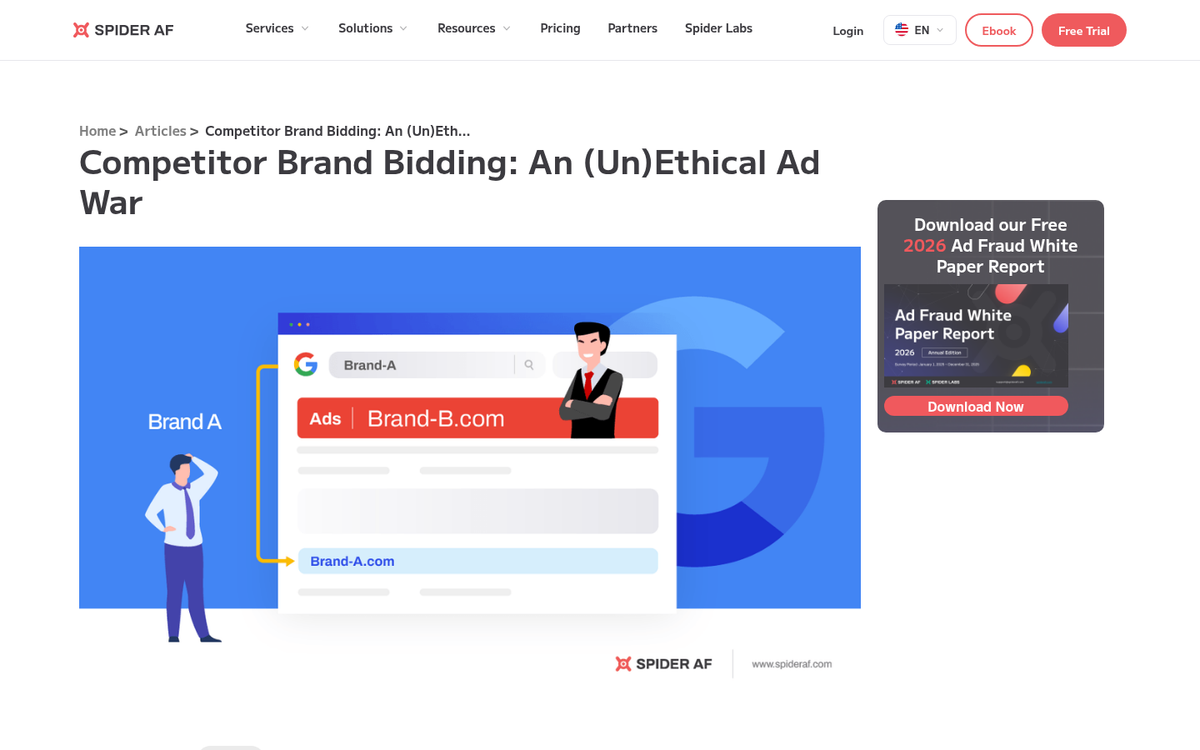
These days, it's perfectly acceptable, so long as you stay within certain guidelines. You can bid on your competition's brand name, but you can't mention their brand name in your ad copy. That can be a trademark violation. The rule is simple: target their name, but don't use it in the ad itself.
This is the situation you're in when you consider bidding on the brand names and primary branded keywords of your competitors in a PPC network. Is it a good strategy? Does it work? Let's look deeper.
Key Takeaways
- Bidding on competitor brand names is legal, but using their trademarked name in your actual ad copy is a violation.
- Competitor brand keyword CPCs can run up to 78% higher than standard campaigns, despite being cheaper than broad generic keywords.
- Quality Scores on competitor keywords typically land at just 2-4 out of 10, increasing costs and reducing ad visibility.
- Bidding on competitor names on mobile is largely ineffective, as mobile searchers usually want the specific brand they searched for.
- Targeting competitor keywords can trigger retaliation, raising your own brand keyword costs and potentially hurting your overall campaign performance.
The Pros of Bidding on Competitor Brand Names
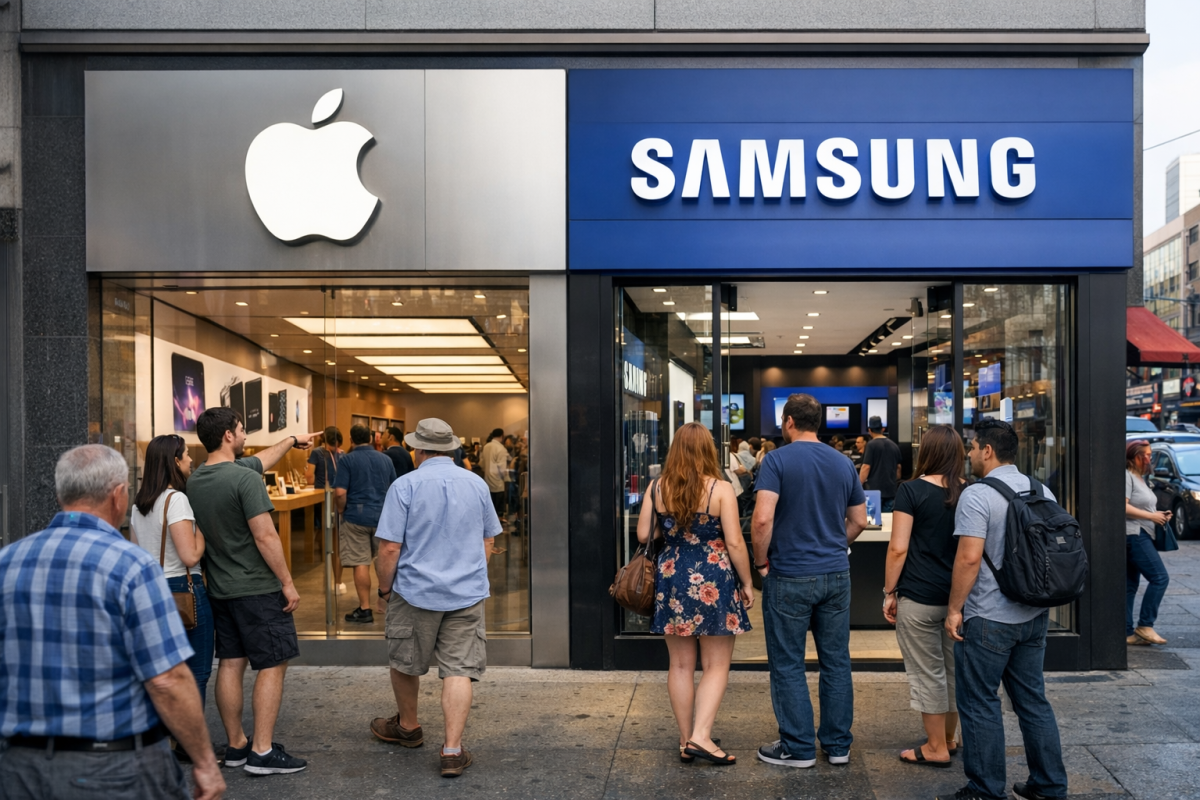
First, let's talk about the pros of the situation. You know the brand name of your competitors, and you can bid on it at an ad auction, so why not do it? Here are some of the benefits you can get out of it.
Brand name keywords can be cheaper than generic keywords. If you're bidding on "burgers", you have to compete with every restaurant that sells burgers, every business that sells ground beef, and every grilling supply company looking to target people searching for cookout information. That's a lot of competition!
On the other hand, if you bid on "McDonald's", you're competing with a much smaller pool of advertisers. Typical CPCs on competitor brand terms tend to fall in the $3-$8 range, which is significantly cheaper than broad category keywords like "B2B lead generation" that can run $15-$30 per click. That said, be aware: analysis of Google and Bing accounts has found that competitor campaign CPCs can still run up to 78% higher than your standard campaigns, so "cheaper than generic" doesn't always mean "cheap." If you want to keep costs down, learn how to get the minimum bid and low click cost on AdWords.
You can gain brand awareness. Okay, so this is where the McDonald's and Burger King example falls apart; very few people in the world are unfamiliar with either brand. On a smaller scale, though, you can gain brand awareness by reaching the audience your competitors have built. Anyone searching for your competitors will see your name pop up in the ads, and may choose to investigate you further. This is doubly true if those customers have issues or problems with your competitors - according to BrightLocal's 2025 Consumer Review Survey, 88% of consumers read reviews before purchasing a service, which means complaint-related competitor queries carry especially high switching intent. Someone searching for "[Competitor] reviews" or "[Competitor] problems" is a warm prospect for you.
You can promote what makes you unique. Let's say Bissell is running ads targeting the keyword "Bissell Vacuums". You're Dyson, and you know you make a vacuum with a different mode of operation and stronger suction. You can run advertising targeting Bissell Vacuums and use your ad copy to point out explicitly what makes your vacuums superior. Anyone searching for vacuums who hasn't heard of your brand before will now see both your brand name and a reason why your vacuums are better than theirs.
You open a new avenue for conversions. Conversion rates on competitor brand campaigns tend to run 2-4x higher than cold audience campaigns, because searchers have already expressed specific category intent. They know what they want - they may just need a reason to consider you instead. If you have benefits for switching, like a lower introductory price or a free trial, this is a strong audience to put that offer in front of. Be mindful, though - common conversion mistakes can still undermine results even with highly motivated traffic.
The Cons of Bidding on Competitor Brand Names

Now, it's not all sunshine and rainbows when you're bidding on competitor brand names. In fact, there are some pretty serious potential downsides when you try.
You're likely going to have a low Quality Score and click-through rate. Most of the time, when someone is searching for a specific brand name, it's because they want that brand. According to WordStream's 2025 benchmarks and real-world client data from 2024-2026, Quality Scores on competitor keywords typically land at just 2-4 out of 10. That low score means Google sees your ad as less relevant, which drives up your effective cost per click and reduces how often your ad is shown - compounding the challenge further.
You're going to start a war. This is a high-risk strategy for two reasons. For one thing, you're spending extra money to bid on competitor keywords, which will drive up competition for those keywords and end up charging you and your competition more for the ads.
More importantly, though, you're telling your competitors that all bets are off. Absolutely nothing stops them from targeting your keywords. Is this a fight you can win?
Think about it objectively. If public perception favors your competition, when they start bidding on your keywords, they poach more of your traffic than you poach of theirs.
Plus, when they start bidding on your keywords, your own ad costs rise, and then you have to spend more just to maintain position. Are you getting more out of bidding on theirs than you lose from them bidding on yours?
Google's AI Overviews are shrinking the battlefield. As of 2025 and into 2026, Google's AI Overviews have become a permanent fixture at the top of search results pages, claiming significant above-the-fold real estate. Brands not holding a top ad position now risk a potential 12-15% drop in CTR just from that displacement alone. When you're already fighting low Quality Scores on competitor terms, losing that visibility makes an already difficult campaign even harder to justify.
Common Mistakes When Bidding on Competitor Names
If you're considering the pros and cons of bidding on your competitor's brand name, you need to be aware of the common mistakes marketers make.
The first and most important mistake is thinking it's universally a good strategy. In fact, while bidding on your competitor's name is potentially valuable, it can also have no returns.
If you have a limited budget, it's better to spend that budget elsewhere. Even if the cost of ads on your competitor's name are low, you're going to end up paying a lot per action simply because of the low Quality Scores, lower click-through rates, and conversion rates that come with the territory. It's often much better to spend your money elsewhere, at least until you've established enough of a consistent budget that you can expand.
The second mistake you might make is bidding on the wrong competitors. I've used the example of McDonald's and Burger King, but they aren't the only players in the world of fast food burgers. They have to contend with the likes of everyone from Sonic to White Castle to Dairy Queen. Which ones do you try to bid on, and which ones do you ignore? Which ones are more likely to fight back?
It can be tempting for a small-time burger joint to start running ads competing with McDonald's or Burger King, hoping to poach away the fast food audience with their gourmet offering. The thing is, while the food item is superficially the same, they aren't actually competing. People who want a burger are going to go get a good burger. People who want fast food are going to go get a cheap burger from a fast food joint. You're not likely going to sway people away from a $1 burger with your $9 offering.
Finally, you have to understand mobile intent when bidding on advertising. If you only take away one point from this entire article, this should be it.
Mobile has been an increasingly large and important aspect of search, and consequently, of PPC advertising. It makes sense that you would want to bid aggressively to capture mobile traffic. And yet, when bidding on competitor brand names, you're going to find dramatically lower returns on mobile. Why is that?
Mobile intent is actually quite a bit different than desktop intent. When I'm searching for a brand name on a desktop, I'm likely doing research. I might be looking up reviews, or reading pricing pages, or comparing services. I'm fairly open to looking at competitors, because I'm not necessarily immediately planning to purchase.
When I'm searching on mobile, chances are I'm not at home - I'm out on a shopping trip. If I'm looking for burgers while I'm out, am I looking to compare different burger joints? Maybe, but more likely I'm just looking for the closest store for the brand I already have in mind. If I search for Burger King while I'm on a road trip, I want Burger King, not someone else.
What this means is that mobile traffic is much less likely to click and convert when you're bidding on competition names than desktop traffic. That means it's even more expensive and even less effective. Frankly, bidding on your competitors' names on mobile is a waste of money in almost every situation.
How to Cope if it Happens to You
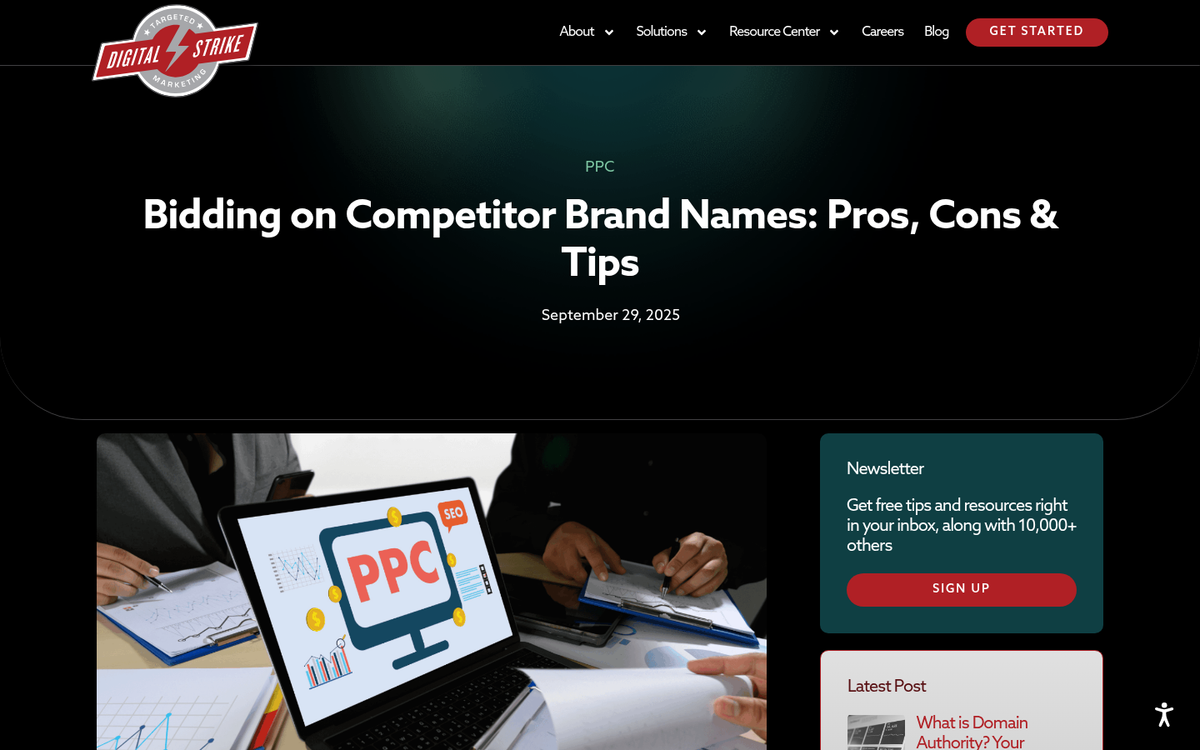
Let's flip the scenario on its head for a moment. What if you're the one whose competitors are bidding on your brand name? What can you do? Alternatively, what might your competitors do if you're bidding on their brand name?
First up, coming to terms with this new reality is step one. Your competitors may be testing your keywords, and if they perform well enough, they may never stop. It's simply a new form of competition you have to deal with.
That's not to say you should ignore it, though. Keep an eye on the ads they're running, and specifically look for ad copy that includes your trademarks. Using your brand name in targeting is fine, but using it in ad copy is a violation. If they're using brand names, product names, or anything that you have as a trademark, you can report it to Google. Trademark violations are actually vectors for legal repercussions, so Google will generally take action to remove the offending ads.
You might also consider checking Bing and other major advertising networks. Google isn't the only company that runs PPC, and you never know how much traffic you're missing out on by not using some of these other networks. At the very least, if you find your competitors targeting you in a PPC network you don't use, you should consider signing up and testing if it's worth starting to use. There's no sense in letting your competition run unopposed, right?
If you've been running ads against them and they're picking up the fight, or if you're being targeted but you haven't countered by targeting them yet, you might consider sending a (polite) email to whoever manages the company. Why not ask them to stop targeting your brand name, in the interest of fair play? A few things might happen.
- They might ignore you and keep on targeting your keywords, in which case, you've lost nothing.
- They might agree and withdraw, especially if you agree to stop or avoid targeting their brand as well.
- They might find out the advertising agency they hired is targeting you without their permission, and solve the issue internally.
The worst that can happen, really, is that they say no. If they're particularly spiteful they might double down, assuming you're asking because it hurts your brand. Otherwise, well, you're just back to square one.
If you feel like you're well positioned to continue the war by attacking their keywords as well, you can go for it. As long as you're willing to spend the money for what few conversions you can get, there's nothing wrong with it. And hey, if you're particularly effective, maybe they'll be the ones sending you the surrender email.
If all else fails, just double down on your own advertising, primarily in the ads targeting your own brand name. With Google's AI Overviews now pushing paid results further down the page for some queries, maintaining a strong top position on your own branded terms is more important than ever - don't cede that ground while you're busy fighting on your competitor's turf. The less effective their ads are, the less incentive they have to keep running them. If you're concerned about why your paid efforts aren't producing results, it may be worth reviewing your overall strategy before escalating the bidding war.