Google's ads platform - now simply called Google Ads (rebranded from AdWords back in 2018) - remains one of the most powerful tools in a digital marketer's arsenal, particularly as a complement to Meta (Facebook) ads. Meta tends to be cheaper for top-of-funnel awareness, but Google Ads reaches users across Search, Display, YouTube, Shopping, and more, capturing people at the exact moment they're searching for something. That intent-based targeting is hard to beat.
One thing that still puzzles many newcomers to Google Ads is the minimum bid - and more importantly, why two advertisers targeting the same keyword can pay wildly different amounts per click. The answer comes down to your Quality Score, and understanding it in 2026 is more important than ever, given that the cross-industry average Search CPC has climbed to $2.96 in Q1 2026, up 12% year-over-year from $2.64 in Q1 2025.
The minimum bid is Google's way of telling you the floor price to get your ad shown in the search results. You can bid more to achieve a higher position, but there's a ceiling - bidding beyond what's needed for the top position is just handing Google money for no additional benefit.
Here's the critical part: minimum bid is not purely based on the keyword. The keyword and query are factors, but the other major variable is your Quality Score. Quality Score is Google's assessment of how relevant and useful your ad, landing page, and overall account are to the user searching that query.
Google wants to surface the best possible results - including paid ones. They charge lower-quality advertisers significantly more money to achieve the same positions that higher-quality advertisers can reach at a fraction of the cost. This isn't a small difference. Accounts with Quality Scores of 8 or above pay 37% less per click than the industry median. Accounts scoring 4 or below pay 64% more. At the extreme end, Quality Scores of 1-3 can inflate your CPC by up to 400% compared to what a high-quality advertiser pays for the same position.
Raising your Quality Score directly decreases your minimum bid. Each Quality Score point increase typically yields roughly a 10% CPC reduction, and hitting the 8-10 range can cut your cost-per-click by as much as 50% compared to a low-scoring account. So if you want cheaper clicks across the board, the most leveraged thing you can do is raise your Quality Score.
Key Takeaways
- Quality Score is the key driver of minimum bid costs; scores of 8+ pay 37% less per click than the industry median.
- Low Quality Scores (1-3) can inflate your cost-per-click by up to 400% compared to high-quality advertisers targeting the same position.
- Each Quality Score point increase yields roughly a 10% CPC reduction; reaching 8-10 can cut costs by up to 50%.
- Click-through rate is the most influential Quality Score factor, making ad relevance and intent-matching your highest-leverage optimization.
- Smart Bidding combined with strong Quality Scores produces CPCs 14-22% lower than manual bidding, compounding savings further.
What Goes Into Quality Score?

There are five factors that feed into your Quality Score. Improving any one of them moves the needle, and improving all of them can have a dramatic compounding effect. Some are easier to fix than others. Let's break them down.
- Click-Through Rate. A higher click-through rate improves your Quality Score. The logic is straightforward - Google wants to promote ads that users actually engage with. If your ad consistently gets clicked, that's a signal that it's relevant and compelling. If it sits there getting ignored, Google reads that as a poor match for the query. CTR is arguably the most influential of the five factors, so it deserves a disproportionate amount of your attention.
- Tightly Themed Ad Groups. When you're running ads across multiple keywords, those keywords should be as closely related as possible within each ad group. An ad group targeting running shoes, golf clubs, and wireless headphones simultaneously is going to score poorly here. Tight grouping signals to Google that you're a thoughtful, structured advertiser - not someone who dumped a hundred unrelated keywords into one campaign and called it a day.
This only applies within ad groups, which are the containers that hold your keywords and ads. If you're selling multiple product categories, the answer isn't to cram them together - it's to build separate ad groups for each theme, each with its own relevant keywords and ad copy.
There are two reasons Google cares about this. First, tight grouping is a marker of a quality advertiser. Second, loosely structured accounts often belong to thin affiliates or resellers whose ads Google has little interest in elevating over the brands actually selling the products.
- Ad Copy Relevance. Google semantically analyzes your ad copy against the search query and the broader landscape of results for that query. The closer your ad text aligns with what the user is searching for, the better. This is generally in your interest anyway - you want your ad to feel like the obvious next step for someone searching that query, not a jarring non sequitur.
The most common place this breaks down is when advertisers use the same generic copy across a wide range of keywords. The core keywords might match well enough, but the more peripheral ones can create enough of a semantic gap to hurt your score. In 2026, with Google's AI systems doing far more nuanced language analysis than they did even a few years ago, relevance gaps that once went unnoticed are increasingly penalized.
- Landing Page Relevance. Your landing page needs to match both your ad copy and the user's query. Google's systems crawl and evaluate your landing page, and what they find needs to be consistent with what your ad promises.
This is where bait-and-switch issues get punished. If someone searches for a specific product and your ad promises that product, your landing page needs to deliver it - not a general homepage, not a broad category page, and certainly not something unrelated. A common mistake for e-commerce advertisers is linking to a homepage when a specific product or category page exists. That inconsistency hurts your score and your conversion rate simultaneously.
Another frequent culprit is a simple copy-paste error - wrong URL in the wrong ad. When you're managing large campaigns with dozens of ads, it's easy to mismatch a URL, especially when they're differentiated by ID numbers rather than readable slugs. Always audit your URLs before launching.
- Your Historical Performance. This is the hardest factor to improve because your account's track record follows you. Past low CTRs, poor landing page scores, and weak relevance signals accumulate over time. There's no reset button. The only path forward is sustained improvement - maintaining strong metrics long enough that your historical average catches up. Some advertisers consider starting a fresh account, but Google actively discourages this and can suspend both accounts if they detect it.
Improving these five factors - or really four, since the fifth is a rolling record of the other four - will lift your Quality Score, reduce your minimum bids, and stretch every dollar in your budget further. Google rewards advertisers who put in the work, and the math on it is significant. The difference between a score of 3 and a score of 9 can be the difference between paying $6 per click and paying $1.50 for the same position.
Improving Click-Through Rates
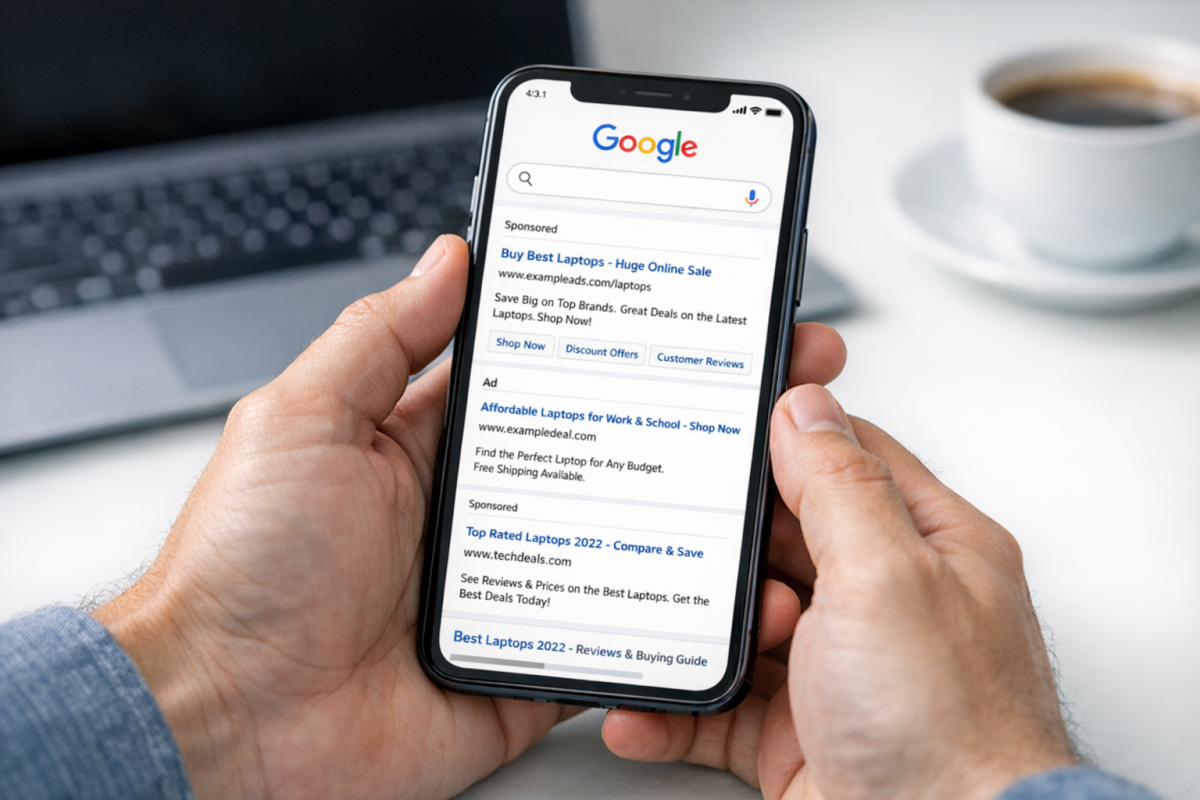
Click-through rate is the single most impactful Quality Score lever you have direct control over, and it deserves serious strategic attention.
Ads with high click-through rates tend to have a few things in common. They're tightly targeted to their keywords, they speak directly to user intent, and they say something specific rather than something generic.
Keyword intent matters more than ever. Some queries are clearly informational - the user wants to learn something, and they're going to scroll right past your sales ad to find a blog post or video. Other queries carry strong commercial intent: "best running shoes under $150," "buy noise-cancelling headphones," "emergency plumber near me." These are the queries worth bidding on aggressively, because users are primed to act.
Branded and local keywords consistently outperform generic ones for CTR because you're reaching people who are already oriented toward what you offer. If someone searches your brand name or a near-me query in your category, your ad is highly relevant by definition.
One thing worth knowing in 2026: mobile now accounts for 65% of all Google Ads clicks, but only 47% of conversions - meaning mobile CPC tends to run about 24% lower than desktop, but the traffic converts at a lower rate. This means your mobile ads need to be written with mobile user behavior in mind. Short, scannable, action-oriented copy with click-to-call extensions and location extensions tends to outperform on mobile. If you want to understand how to optimize your website for mobile traffic, that's worth addressing alongside your ad strategy. Don't just let your desktop ads run unchanged on mobile and call it a day.
Also worth using: responsive search ads (now the standard ad format in Google Ads), which let you input multiple headlines and descriptions that Google's systems test and optimize dynamically. This replaced the old expanded text ad format and, when used well, tends to produce better CTRs than static copy because Google can assemble the combination most likely to resonate with a given query. Pairing strong ad copy with properly optimized Google AdWords ads gives you the best chance of seeing meaningful improvements in performance.
Improving Ad Groupings
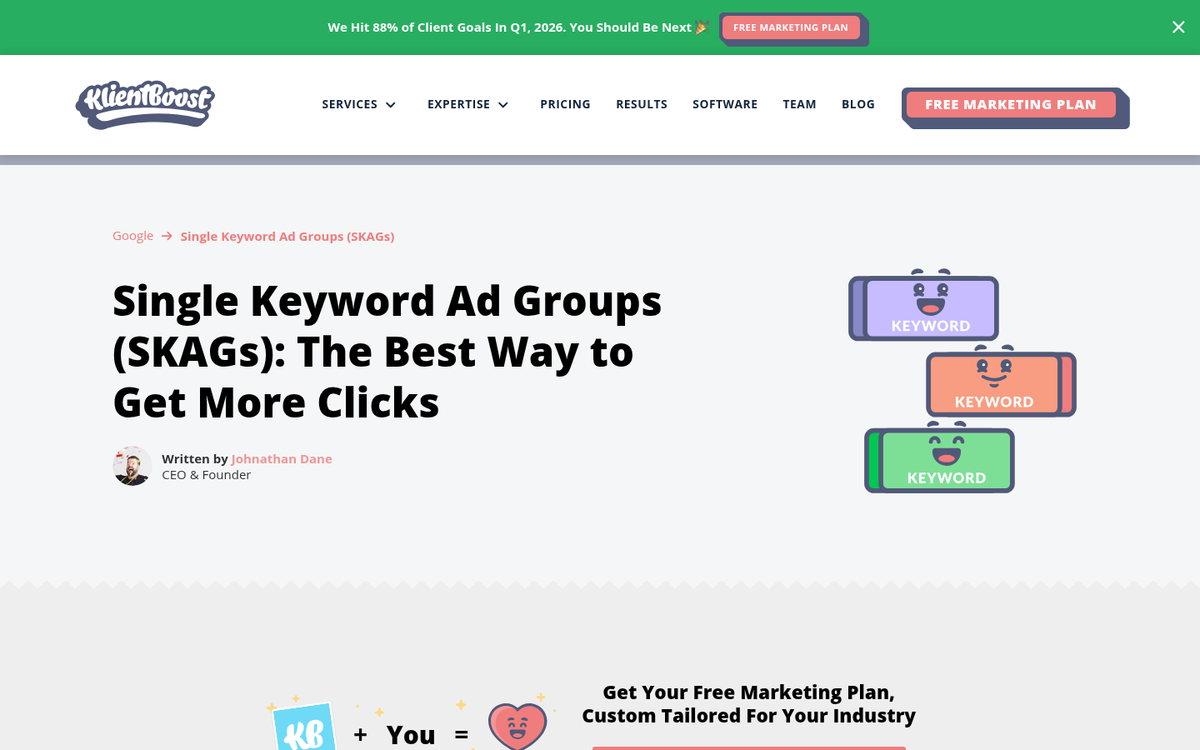
The principle here is simple: segment your keywords ruthlessly. Keep each ad group focused on a single tight theme, and don't be afraid to split groups when they start to feel loose.
One practical approach is the Single Keyword Ad Group (SKAG) structure, or a close variant of it - grouping keywords so tightly that each ad group essentially targets one core concept with a handful of closely related match-type variations. This makes it much easier to write ad copy that's genuinely relevant to every keyword in the group, which cascades positively into your CTR and relevance scores.
Don't worry about running out of room. A single Google Ads account supports up to 10,000 campaigns (active and paused combined), with up to 20,000 ad groups per campaign, and up to 5,000 keywords per ad group. Space is not a constraint. When in doubt, split.
Every ad group should have internal consistency - the keywords, the ad copy, and the landing page should all point at the same thing. If you're running a 15% off promotion on a specific product, your keywords should reflect that product, your copy should mention the discount, and your landing page should show that exact discount on arrival. Any gap between those three elements is a Quality Score problem and a conversion problem.
Improving Ad Copy

Ad copy is part science, part art - and in 2026, the landscape has shifted meaningfully toward AI-assisted testing. Google's own responsive search ad format does a lot of the combinatorial work for you, but you still need to feed it strong raw material.
Some principles that hold up:
- Know your competitors on the SERP. Look at what other advertisers are saying for your target keywords. Then figure out your differentiated angle - what you offer that they don't, or what you can say more convincingly than they can. Use a competitive analysis tool for PPC ads to understand your unique value proposition and make sure it shows up in the copy, not just generic category language.
- Write specific calls to action. "Learn More" and "Buy Now" are table stakes. In competitive auctions, a CTA that speaks to the specific outcome the user is trying to achieve - "Find Your Perfect Fit," "Get a Free Quote Today," "Compare Top Models" - tends to outperform generic options. Learn more about how calls to action affect your overall strategy.
- Avoid generic copy at all costs. Copy that could belong to any advertiser in your category earns no loyalty and no clicks. Specifics convert. If you're offering free shipping, a money-back guarantee, same-day delivery, or a specific discount, say so explicitly.
- Use all available ad extensions (now called "assets"). Sitelink assets, callout assets, structured snippets, price assets, and promotion assets all expand your ad's footprint on the page and give users more reasons to click. They also signal to Google that you're a serious, well-structured advertiser.
- Build variation into your headlines and descriptions. In responsive search ads, give Google 10-15 distinct headlines and 4 descriptions with real variation - different angles, different benefits, different CTAs. For inspiration on crafting strong headlines, check out these tips copywriters use to create perfect headlines. The more genuine variety you provide, the more effectively Google's system can optimize toward what resonates.
Keep your copy aligned with your landing page and your keywords. Relevance across all three is the throughline of everything in Quality Score.
Improving Landing Pages
Landing page relevance is evaluated by Google's systems and there's no shortcut around it - the page needs to genuinely deliver on what the ad promises. A fast, mobile-optimized, highly relevant landing page helps both your Quality Score and your conversion rate, making it one of the highest-ROI investments you can make in your Google Ads performance.
A few things to prioritize in 2026:
- Page speed is non-negotiable. Google's Core Web Vitals are factored into landing page quality assessments. A page that loads slowly on mobile - which is where 65% of your clicks are coming from - will hurt your score and kill your conversions simultaneously.
- Message match matters enormously. The headline on your landing page should echo the promise in your ad. If your ad says "Free Shipping on All Orders Over $50," that message needs to be visible above the fold on the landing page without the user having to hunt for it.
- Don't send paid traffic to your homepage. Build or use dedicated landing pages that match the specific intent of each ad group. A user who clicked an ad about waterproof hiking boots should land on a waterproof hiking boots page, not your store's front door.
For deeper guidance on landing page optimization, there are plenty of strong resources available from Unbounce, CXL, and Nielsen Norman Group - all of which publish regularly updated best practices grounded in real testing data.
Once you've worked through all of these improvements, the compounding effect is real. Smart Bidding users who also maintain strong Quality Scores are seeing CPCs 14-22% lower than manual bidders, and that's before factoring in the Quality Score discount itself. Getting to a score of 8-10 across your key ad groups, combined with automated bidding strategies like Target CPA or Maximize Conversions (which requires at least 15 conversions in the past 30 days, with 50+ recommended for full efficiency), puts you in a position where your budget works significantly harder than your competitors'.
The math is simple: higher Quality Scores mean lower CPCs, lower CPCs mean more clicks for the same spend, and more relevant clicks mean more conversions. Do the work once, maintain it consistently, and Google will keep rewarding you for it.