Key Takeaways
- Affiliate links aren't inherently bad for SEO; Google won't penalize sites simply for using them without recommended markup.
- The real problem is tunnel-vision thinking that prioritizes conversions over quality, historically driving black hat techniques like keyword stuffing and spun content.
- FTC law requires affiliate disclosures to appear before content, be clearly visible, and not rely solely on a linked disclosure page.
- Google's site reputation abuse policy penalized major publishers like Forbes and CNN for hosting third-party affiliate content disconnected from their editorial identity.
- Link quantity matters less than content quality; contextual, substantive content with naturally earned backlinks remains the most durable affiliate SEO strategy.
Are Affiliate Links Bad for SEO?
Affiliate links themselves are not inherently bad for SEO. Having an affiliate link isn't really all that different from having a normal link with tracking parameters attached. Google can identify affiliate links, but their presence alone isn't detrimental - Google's own John Mueller confirmed that websites won't receive a manual penalty simply for using affiliate links without recommended markup.
The problem isn't the links themselves. It's the mindset they can create.
People who invest heavily into affiliate programs often develop a kind of tunnel vision. Rather than thinking about their site as a whole - as part of an industry, a community, or the broader web - they narrow their focus down to one thing: the conversion. Everything becomes a vehicle for that affiliate click, and that's where things start to go sideways with Google.
This approach historically led to techniques that exploit loopholes in Google's algorithm - techniques that are either already labeled black hat, or eventually get cleaned up once Google finds a reliable way to combat them. For example:
- Keyword stuffing was used with affiliate links to force pages to rank for search queries they had no business ranking for. Not a great conversion strategy, but affiliate marketers back then would try anything to generate traffic.
- Copied content made a site look active and valuable without putting in the work. Essentially a form of deceiving users in pursuit of a commission.
- Low quality content gave sites the appearance of being fleshed out without actually offering anything useful. If a user doesn't look closely, they might not notice there's nothing of real value there.
- Spun content filled sites with words that were ultimately meaningless - taking one article and republishing it a dozen different ways, each one slightly reworded but covering identical ground.
- Redirected pages pushed users through affiliate links and dropped cookies without the user ever knowingly choosing to support that affiliate.
Basically any black hat technique you can think of has at some point been used in pursuit of illegitimate affiliate clicks.
From a purely technical standpoint, there are two link attributes worth knowing:
- rel="nofollow" - introduced by Google in 2005, this tells Google not to pass PageRank through a link. It's a reasonable precaution but not strictly required for affiliate links.
- rel="sponsored" - introduced by Google in 2019, this attribute is specifically designed for paid placements, advertisements, and sponsorships. Google recommends using it on affiliate links, though as Mueller confirmed, not using it won't trigger a manual penalty.
Google's Stance on Disclosure
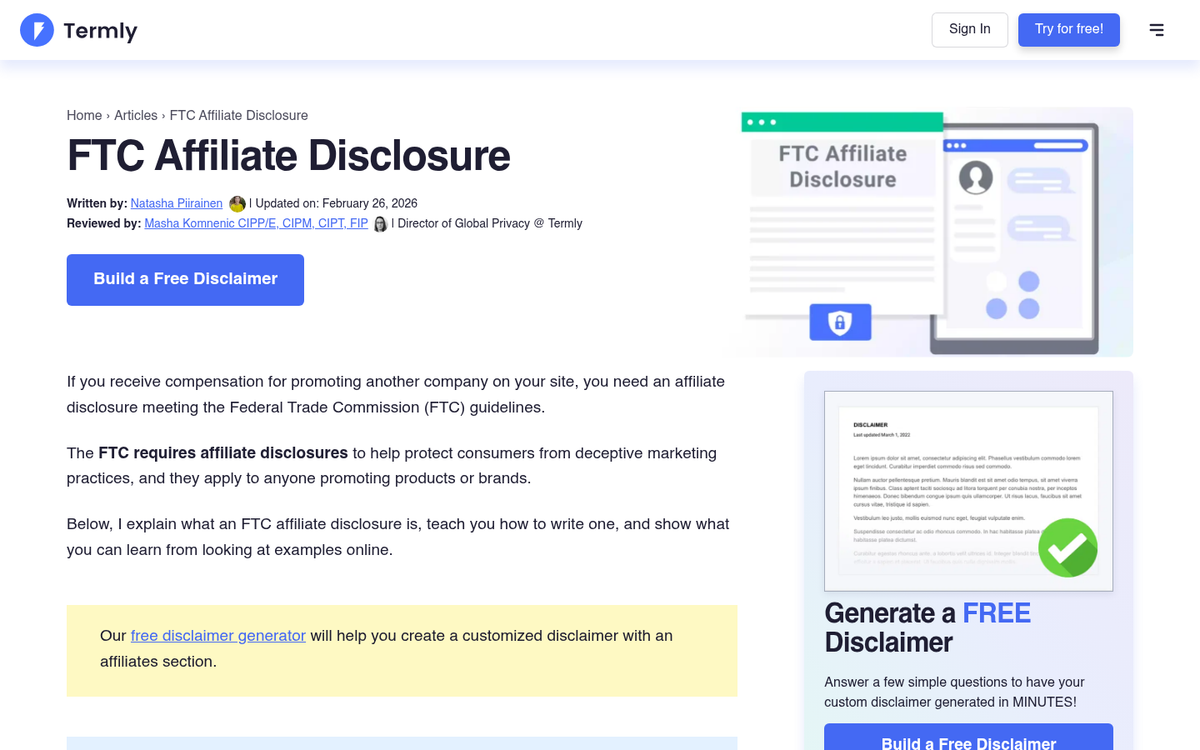
Google places a strong emphasis on transparency in affiliate marketing - but the original requirement doesn't come from Google. It comes from the United States Federal Trade Commission.
The FTC has clear rules governing how affiliate relationships must be disclosed to consumers. Their guidance has been updated several times to reflect the modern web, and the core principle has never changed: if you're being compensated for a recommendation, your audience needs to know that before they read or act on it.
- Disclosure must be present. This is why you see "Ad" labels on Google search results, "Sponsored" tags on social posts, and affiliate disclaimers at the top of product reviews.
- Disclosure must come before the content, not buried at the bottom after the reader has already been influenced.
- Disclosure must be visible and legible - not hidden in fine print, not white text on a white background, and not something that disappears or becomes unreadable on a mobile screen.
- A link to a disclosure page is not sufficient on its own. It may be necessary as a supplement, but the disclosure itself needs to be present in context.
To be clear about how this chain of accountability works:
- The FTC publishes consumer protection laws that marketers must follow under threat of corrective action.
- The FTC publishes guides and examples to help marketers understand how those laws apply to modern formats.
- The FTC does not typically go after small affiliate marketers - but that is not a valid excuse to ignore the rules.
- Google reinforces FTC guidelines algorithmically and through manual review, penalizing marketers who violate them before the FTC ever gets involved.
Think of Google as an early warning system. You may trip their filters long before you ever attract the FTC's attention.
Too Many Affiliate Links

This one is more nuanced than it used to be. John Mueller stated in a 2021 Google Search Central SEO Hangout that the raw number of affiliate links on a page is irrelevant - what actually matters is whether the main content is genuinely helpful to the reader.
That said, density still matters in practice. Acceleration Partners recommends keeping links to no more than one per 100-250 words as a general guideline to avoid negatively impacting rankings. A page that reads like a thinly veiled product catalog, with affiliate links stacked one after another and minimal supporting content, is going to struggle - not necessarily because of the links, but because the content isn't serving the reader.
The cleaner approach: use affiliate links contextually, within substantive content, and let the content do the work. If you're looking for more ways to share and distribute your affiliate links effectively, there are plenty of strategies that prioritize quality over quantity.
Site Reputation Abuse and the Affiliate Penalty Nobody Saw Coming
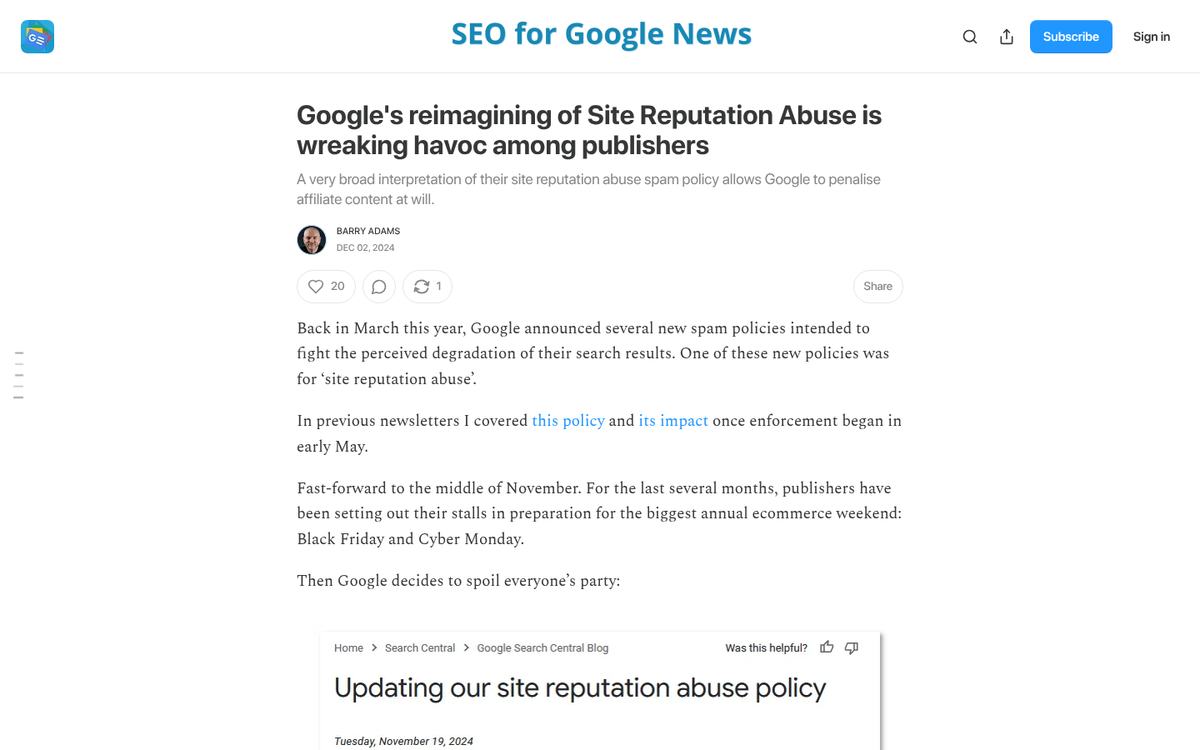
This is the big one that has reshaped affiliate SEO in recent years, and it's worth paying close attention to.
Google rolled out its site reputation abuse policy as part of its ongoing spam updates, and the impact on affiliate publishers has been significant. CNN Underscored, Forbes Advisor, WSJ Buy Side, and a number of other major publishers had their shopping and recommendations sections wiped entirely from Google search results. These weren't small niche sites - these were established brands with massive domain authority.
The issue was that large, trusted domains were effectively renting out their authority to third-party affiliate content that had little to do with their core editorial identity. Google's message was unambiguous: authority is earned by the content itself, not borrowed from the domain it happens to live on.
If you're running affiliate content, it needs to be genuinely yours - original, expert-driven, and editorially integrated into your site. Slapping a comparison table onto a high-authority domain and calling it a review is no longer a viable strategy.
Bad Incoming Links
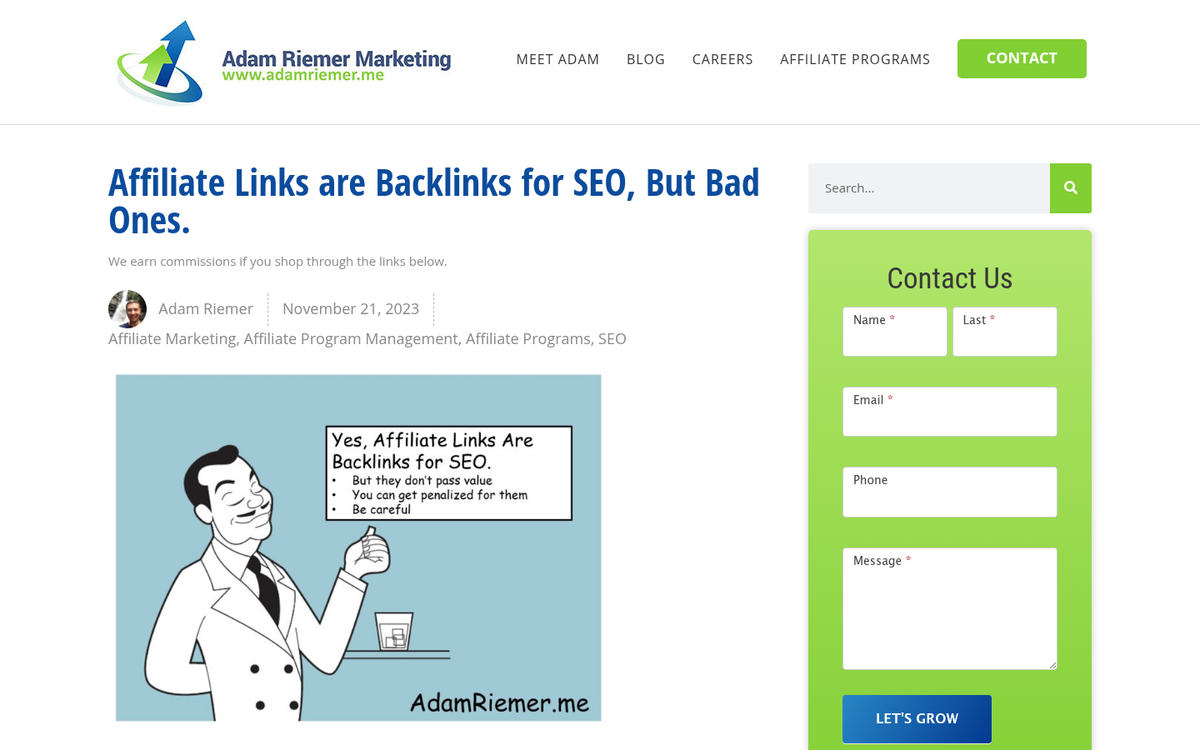
Affiliate tunnel vision extends beyond on-page content. More affiliate clicks require more traffic. More traffic requires more links. And the temptation to shortcut that process through low-quality link building is exactly where a lot of affiliate sites have gotten themselves into trouble.
Shady link schemes and manipulative link building are black hat by definition and have been for a long time. Google has gotten substantially better at identifying and discounting them.
If your site is genuinely valuable - if it's building real authority in a niche - links follow naturally. That's still the most durable strategy, and it's the one that holds up when algorithm updates roll through.