Key Takeaways
- Link building remains essential; Google's core ranking system originated from measuring inbound links and still relies on them.
- Link quality matters more than quantity; one authoritative industry link can outweigh hundreds of low-quality backlinks.
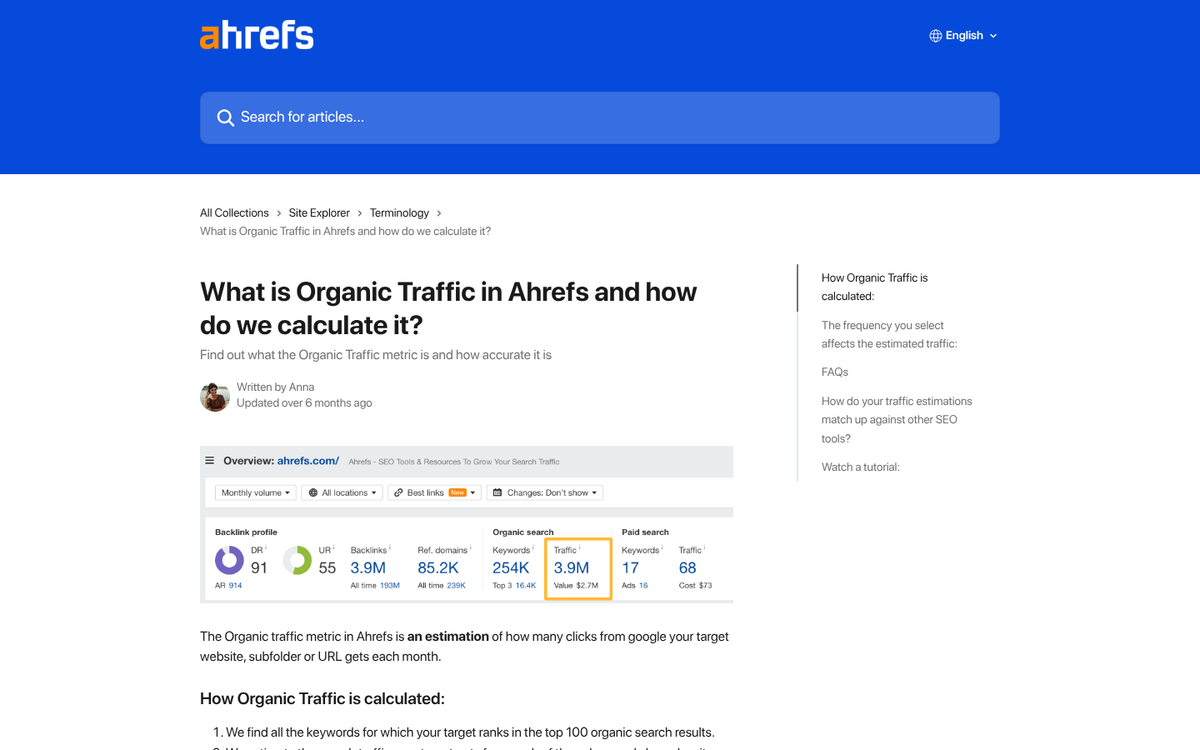
- Ahrefs data shows 96.55% of pages get zero organic traffic, and pages that rank almost always have backlinks.
- A page can rank without direct links if the overall site has strong link equity, but new sites cannot.
- Popular alternatives like great content, social media, and AI Overview optimization still ultimately depend on attracting links.
Link building is incredibly tricky. It takes work and caution, because if you do it wrong, your site rankings will tank. So many strategies are gray or black hat, and so those links have little or no value. You could be wasting your work or spending time building links that do nothing for you - and with AI-generated content now flooding the web, the competition for quality links has never been fiercer.
Despite that, link building still matters. The very core of Google itself began with the predecessor to PageRank, which was a measurement of links coming into a site. Despite everything that has changed since then - like the explosion of AI in search - Google hasn't moved away from that core foundation.
If you've paid attention to Google over the years, you might think otherwise. They're always talking about how the value is in great content and how links aren't as important as the value you give to your readers. But the data shows something different. Here's why links still matter in 2026:
- When someone likes your post and shares it on social media, what is that? It's a link from that platform to your site.
- When someone likes your post and references it on their blog? That's another link, from one site to another.
- When you provide solid data and someone cites you as a source in their case study, that's yet another link.
- When an AI tool like ChatGPT or Perplexity cites your content as a source, it often drives referral traffic and signals authority - which tends to attract even more links.
Nearly everything Google promotes as a path to visibility still circles back to attracting links, one way or another.
Of course, that's not the whole picture. Google isn't saying links don't matter. They're saying that the way you build your links matters enormously. Context matters. You can build a million links. But if you did it by spamming thin directories and low-quality sites, you're not going to get value out of the links. Your site won't rank.
It's all part of Google's standard effort to reward legitimate tells of authority and punish manipulation. They can't remove links from the foundation of search ranking. But they can - and do - weigh context heavily. Think of it this way:
- One link from a site to your page is +1 unit of value by default.
- If that site is a spam site, it has a -1 modifier, so that link now has a +0 unit of value to you.
- If that site is a minor authority in your niche, that link has a +1 modifier, making it worth +2.
- If that site is a major authority - like a link from Ahrefs or Search Engine Journal in the SEO space - that link might carry +3 or +5 or more in relative value.
That's why the focus of link building has always been on earning quality, contextually relevant links - it's why a single link from an established industry site can outweigh hundreds of links from low-authority domains.
So, the easy answer to the question "can you rank without links" is a pretty firm no. Let's look at some of the common alternatives recommended and why they still come back to links:
- Write about trending topics. Sure, that's fine, but why are you writing about trending topics? Because they're on people's minds, and other people are writing about them. Those other people will link to or share your posts. Thus, links.
- Focus on social media. Google has consistently said social signals are not a direct ranking factor. However, people tend to forget that every share on a social network is a new link from a different profile, and visibility on social media often leads to someone linking to your content from their own site.
- Sending out emails. Traffic numbers alone aren't a search ranking factor. No, sending your link out in email puts it in front of people who will then either link to it or share it - again, links.
- Write great content. Great content with no links pointing to it isn't going to rank. We see this constantly. If you think otherwise, go ahead and create a new blog on a new domain and try to rank it without links. The data backs this up - according to Ahrefs, 96.55% of pages studied across 14 billion URLs get zero organic traffic from Google. Quality content is necessary, but it's not sufficient on its own.
- Write guest posts. Writing guest posts can help you as an author, but the only way it sends ranking value to your site is if you link to it. That's still link building.
- Improving your user experience. User experience is a ranking factor, but it functions more as a baseline. Poor UX drives users away and hurts you. Good UX alone won't rank you.
- Target long-tail keywords. You can potentially rank for long-tail keywords with fewer links, but if you're doing it without any links at all, you're generally only targeting keywords with so little competition they're not worth much.
- Optimize for AI Overviews and SGE. This is the newest angle people are pushing in 2026 - optimizing content to appear in Google's AI Overviews. But here's the thing: the pages that get cited in AI Overviews tend to be the same authoritative, well-linked pages that were already ranking well. Surprise - links still matter.
Looking Into the Data
All of the above is logical. But logic alone isn't enough. Let's look at what the data actually says in 2026.
Ahrefs studied approximately 14 billion webpages and found that 96.55% of them get zero organic traffic from Google. Zero. The pages that do get traffic share a common trait: they have backlinks. Ahrefs CMO Tim Soulo confirmed that roughly only 5% of pages in their billion-page sample received any organic traffic at all while having no backlinks; it's an extremely narrow exception - not a viable strategy.
An April 2025 analysis of 11.8 million Google search results found that the #1 ranking result had an average of 3.8 times more backlinks than results in positions 2 through 10. A separate study by Internet Marketing Ninjas found that 95% of websites ranking in the top 10 for commercial keywords had at least 1,000 backlinks. These aren't coincidences.
Ahrefs also randomly sampled 2 million pages first seen a year prior and found that just under 6% reached Google's top 10 within a year; it's already a tough climb - and the pages that made it usually had backlinks helping them get there. Additionally, about 60% of pages ranking in Google's top 10 are more than three years old, and only 22% were created in the last 12 months. Domain age and link accumulation over time play a big part.
Sure, correlation is not causation. But the case being made here is extremely strong. For decades, webmasters have observed that building quality links gives you higher search rankings. The data has supported this, and that hasn't changed in 2026 even with the changes in how Google shows results.
- Virtually every competitive search query is dominated by pages with substantial external links pointing at them.
- It's possible for an individual page to rank with no direct links, but only if the site as a whole has strong link equity. Link authority distributes across your entire site - a well-linked domain lifts all of its pages to some degree.
- More high-quality links consistently correlate with higher rankings. This has been observed before and after every major algorithm update, including the AI-driven changes of 2024 and 2025.
There are basically three things Google can do when they see a link pointing at your site. They can assign it a positive value, a negative value, or no value at all.
Links from helpful, topically relevant sources tend to carry positive value. A link to an SEO blog from Ahrefs or Search Engine Land would carry positive value.
Other links - even from high-value sources - can be assigned neutral value. Nofollowed and UGC-tagged links are examples of this - they signal that the linking site isn't vouching for the destination, and Google largely respects that.
Links with negative value tend to come from spam sites, link farms, or hacked sites. Any time it looks like a link was purchased or obtained through manipulation, that's a link that can hurt you. How much can depend on volume and pattern - a handful of suspicious links may be written off as unavoidable. But a pattern of them signals manipulation and earns you a manual or algorithmic penalty.
Drawing Back
One of the biggest things Google considers is trust and authority. Trust comes from your reputation as a legitimate publisher, your associations with other authoritative sites, and your history of making quality content over time. To a large extent, that trust is measured in links - but it also builds through steady content production, brand mentions, and being cited as a source across the web - like by AI tools that synthesize information from trusted sources.
Let's come back to the question for a bit. Can you rank a post without building links directly to that post?
Yes - with a caveat. A page with no direct links can still rank if the site as a whole has some strong link equity. There are page-level and site-level signals at play, and links feed into both. Enough site-level authority will lift pages that have no direct links pointing at them - which is why established blogs can publish a new post and see it rank faster. But a brand-new site with the exact same content languishes in obscurity.

So the answer can depend on what you mean by building links. You will, sooner or later, need to build links to your site. If you don't have links, no one finds you organically, no one shares you as an authority, and you don't rank for anything past branded or near-zero-competition keywords. If you're trying to rank an entire site with no links, the data is clear: it's not going to happen at any actual scale.
If you don't want to bother building links to one post, that's fine - as long as the rest of your site has link equity pulling the tide up. But why would you deliberately leave a post behind if you want it seen? If you care if it ranks, you might as well put effort into ranking it directly instead of hoping site-level authority does the work.
You can rank a single post without direct links to that post. But you can't rank an entire site without links; it's how Google is built, and no amount of AI Overviews, social media activity, or content quality alone will change that basic reality. The game has evolved - but links are still the scoreboard.