Key Takeaways
- Content marketing and SEO are inseparable; ignoring either means missing traffic, especially as AI reshapes search visibility.
- Google's Panda and Penguin updates ended thin, spammy content, making high-quality, authoritative writing essential for rankings.
- AI Overviews and answer engines now dominate search results, requiring structured, citable content optimized beyond traditional SEO.
- Content must meet high standards: 2,100-2,400 words, E-E-A-T signals, proper formatting, accuracy, and genuine value for readers.
- Links still matter enormously; Google's top result has 3.8x more backlinks than positions 2-10, making outreach critical.
SEO, content marketing, and social media marketing are all parts of the same overall heading of Internet Marketing. They're all facets of the same gem, and they all work together. If you're ignoring one of the three, you're missing out on possible traffic - and in 2026, with AI changing how search and content work, the stakes have never been higher.
What is SEO? In a narrow definition, SEO is the art of optimizing your website to make it appear higher in the search engine results pages. When a user types in a query - or increasingly, asks an AI assistant - you want them to find your website. To do this, you create pages targeting different keywords, you optimize your headlines, meta titles, and meta descriptions for choice appearances, you do Schema.org markup, build backlinks, optimize for Core Web Vitals, and increasingly, you optimize for AI Overviews and answer engine visibility.
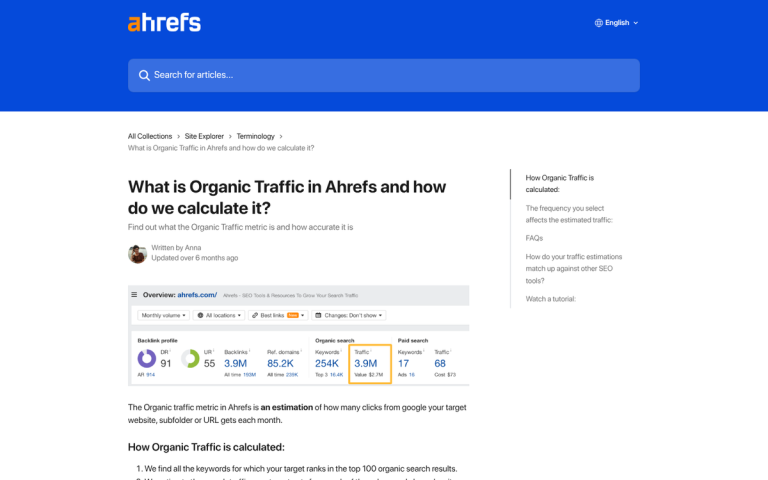
What is content marketing? Essentially, the goal is writing content in a way that you can get it in front of as many people as possible. Sound familiar? You create a blog, you write posts on a number of subjects relevant to your audience. You market this content through channels like organic search, paid advertising, and social media. The data supports this: content marketing costs 62% less than traditional marketing and generates about 3x as many leads. Content marketing leaders also experience 7.8x more site traffic than non-leaders.
Let's dig into how these two go hand in hand - and how AI has fundamentally changed the game.
The Old Days of SEO
Before 2011, SEO was in something of a "dark age," though it didn't seem like it at the time. Thousands of marketers flooded every niche with template websites with very little content, copied and pasted or spun, built up out of nothing. Back then, content didn't matter. Links were all that mattered, so the sites might not even have had relevant text. Stolen articles, poorly spun content, fragments of books stitched together - it all might as well have been lorem ipsum for all that it mattered.
The job of these sites was to build private blog networks which would number in the thousands or tens of thousands. These massive blog networks would be owned by one person and would come to that person for instant search ranking. They would pay a fee and the network owner would add a link to the target site from each of their private bot-blogs.
The sudden crush of thousands of incoming links would be enough to catapult a site into the top 10 on Google, unless the existing top 10 already did so with a higher volume - it was largely a competition with money.
There was a little more to it than that, of course. PageRank, Google's link ranking metric, also mattered. Sites with a higher PageRank would have more helpful links. Sites with a lower PageRank would have less helpful links. That's where tiered link building came in. Build 10,000 spam sites and have them all link to a set of 1,000 slightly better sites. Have those 1,000 sites link to 100 higher quality sites and have them link to 10 actually semi-helpful sites. Those 10 sites would be the sites from which paid links were purchased and the link tiers would filter PageRank to insulate the "money" sites and give them more power.
That's all a big simplification and it makes the pre-2011 internet sound like a hellish place - it wasn't all bad. But it was made quite a bit better when 2011 rolled around and Google released the first iteration of the Panda algorithm. To legitimate site owners, this was helpful, cleaning up the search results and making it easier for high quality sites to rank. To spammers this was the apocalypse. Everything they knew, everything they tried for, was now actively harmful.
The problem is, prior to 2011, there wasn't much emphasis on content. Sure, some pages would have some content and they might even rank well with it. But it was easier, cheaper, and faster to rank well with 100 pages of thin content than with 1 page of high quality content.
Panda changed everything, alongside its sidekick, Penguin. These two algorithm updates turned the internet on its head.
The Panda-Penguin Dynasty
Panda and Penguin worked together to destroy all that had come before and to usher in a new era for internet marketing. Google's goal behind them was simple: purge the bad and promote the good. People come to Google to find information and Google wants to give you that information through a combination of algorithmic sorting and human quality evaluation.
Panda as an algorithm promoted content. The shorter and less helpful the content on a page, the less of a chance it had to survive in search rankings. Longer, more helpful content was promoted, earning a higher search ranking on its own and giving its host site a better ranking overall.

Panda also included semantic and contextual analysis elements. Length was not the only metric that mattered. If your content was determined to be spam, it would be culled and your site penalized. If your content was copied from another source, in whole or in part, it would be culled. If your content didn't make sense in the context of the rest of your site, it would be deemed irrelevant and valueless.
Think of Panda as the upward pressure on content. Penguin, however, had a different agenda. Penguin was the link algorithm, working to analyze links and evaluate their source and quality. Sites that had bought links in the past would usually have to work to remove them to recover from the penalties on their site. Penguin put downward pressure on manipulative link building.
The end result is that content marketing more or less IS SEO. If you want to rank well in Google, then you'll have to create high quality content - and then market that content to collect the links and social signals needed to push your rank higher and protect it in place.
Modern Internet Marketing in the Age of AI
Modern SEO is part of content marketing, which is part of internet marketing, which is part of the sales and promotion of a business - it's all one standard process - and since 2023, artificial intelligence has added a new layer of difficulty and opportunity to every part of it.
Google's AI Overviews (formerly Search Generative Experience), rolled out broadly in 2024 and expanded through 2025, now appear at the top of a large percentage of search results, summarizing answers before a user ever clicks a link. Similarly, AI tools like ChatGPT, Perplexity, and Google Gemini are increasingly used as answer engines and pull information directly from web content.
Despite these changes, organic search remains the dominant driver of traffic and revenue. Organic search accounts for 52.7% of B2B revenue share and 53% of all content consumption still derives from organic search. The fundamentals haven't gone away - they've just become more demanding.
In order to rank well in search - and appear in AI-generated answers - you need pages that qualify. Pages that qualify are pages with high quality, authoritative content on them. This means several things.

- It needs to be long enough. The ideal length for SEO-focused content sits between 2,100 and 2,400 words, though some authoritative pieces stretch well beyond 3,000. Thin content under 1,000 words rarely competes for meaningful rankings, with the exception of highly specific, low-competition queries.
- It needs to demonstrate Experience, Expertise, Authoritativeness, and Trustworthiness (E-E-A-T). Google's quality guidelines place heavy emphasis on who is writing the content and whether they can be verified as a credible source. First-hand experience and credentials matter more than ever in 2026.
- It needs to include multimedia. Every post should have several images, and some may benefit from original graphics, data visualizations, or embedded video to break up the text and increase time on page.
- It needs to be well written. Readable language, accurate spelling, and no misused words are all crucial - and with AI-generated content flooding the web, authentically human and expert-driven writing stands out even more.
- It needs to be correct. Google's systems cross-reference facts, and AI Overviews are particularly unforgiving of inaccuracies. Where facts are concerned, they must be accurate and ideally sourced.
- It needs to be properly formatted. Headlines, subheadings, bullet points, FAQ sections, and short paragraphs are all essential. Structured formatting also makes content more likely to be pulled into AI-generated answers.
- It needs to provide genuine value. With 90% of web pages receiving zero organic traffic from Google, the bar for earning visibility is high. Good content answers questions thoroughly, serves a clear purpose, and goes deeper than what's already ranking.
That's all just the content itself. You also have everything the content needs in the context of the site as a whole.
- It needs to be relevant to your overall topic. Topical authority has become a major ranking factor. Google rewards sites that comprehensively cover a subject area over sites that scatter content across unrelated topics.
- It needs to cover topics you haven't already addressed, or meaningfully consolidate overlapping content. Keyword cannibalization, where two posts compete against each other for the same query, is a common and costly mistake.
- It needs to target keywords with search volume and intent alignment. Matching the search intent behind a keyword - informational, navigational, commercial, or transactional - is just as important as the volume itself.
- It needs strong internal linking that connects related pages across your site. Internal links distribute authority and help search engines understand the structure and depth of your content.
- It needs to maintain consistent tone, voice, and expertise in line with the rest of your site and the credited author. Author credibility signals continue to carry weight in Google's quality assessments.
You still need the foundational technical SEO elements - clean meta data, Schema.org structured data, fast load times, Core Web Vitals compliance, and full mobile optimization. In 2026, you can also add things like FAQ and How-To schema that improve your chances of being surfaced in AI-generated results.
Then you have the content promotion - the marketing part of content marketing. You promote your content across social media, build links from relevant sites, and earn citations that can feed into AI answer engines. Remember: Google's #1 result usually has 3.8x more backlinks than results ranked 2-10. Links still matter enormously.
To rank well in Google search, then, you'll have to bring this together into one cohesive whole. You can't write thin content and expect it to rank. You can't write great content and expect it to rank without promoting it. You can't use social media alone without substantive content behind it. They're all legs of the same table and without each one, it falls over.
Boosting SEO with Content Marketing in 2026
SEO, in my view, is the technical and strategic framework that amplifies content marketing. Keyword research, meta data, Schema.org, site architecture, Core Web Vitals - it's the rifling on the barrel of the content marketing gun. If you don't have it, even great content won't fly as straight or as far as it could.
But many marketers conflate "SEO" and "web marketing" as the same thing and a growing number have swung too far in the opposite direction - believing that publishing AI-generated content at scale is a substitute for genuine content strategy - it isn't. Google's Helpful Content system and its regular algorithm updates have become increasingly effective at recognizing and demoting content that exists to rank instead of to genuinely help.
With that in mind, here are concrete tips for content marketing to drive SEO results in 2026.
- Strive to create original, expert-driven content that demonstrates real experience. With AI-generated content now flooding virtually every niche, first-hand expertise and genuine authority are your strongest differentiators. Google's E-E-A-T framework rewards it directly.
- Aim for the 2,100-2,400 word sweet spot, but prioritize depth over length. A 2,200-word article that thoroughly answers a question will always outperform a padded 3,500-word piece that circles the same point repeatedly.
- If you can't find a unique topic, be the definitive source on an existing one. Look at what's ranking, identify the gaps - missing context, outdated stats, surface-level analysis - and fill them. Anything another brand has covered, you can cover better.
- Build topical authority through content clusters. Rather than publishing isolated posts, create interconnected clusters of content around core topics. A pillar page supported by a network of related posts signals deep expertise to search engines and increases your overall domain authority within that subject area.
- Optimize for AI Overviews and answer engines. Structure content with clear questions and direct answers, use FAQ schema, and write in a way that makes your content easy to cite. If Google's AI can pull a clean, accurate answer from your page, your visibility increases even if users don't always click through.
- Do your keyword research, but focus on search intent over keyword density. Keyword density has been a dead concept for years. Use keyword research to understand what your audience needs and match your content format to that intent.
- Publish consistently. Bloggers who publish two to six times per week are 50% more likely to report strong results. Consistency builds topical authority and keeps your site active in Google's crawl queue.
- Actively build links through genuine outreach. Promote your content to relevant blogs, journalists, and industry publications. Link building remains one of the highest-leverage SEO activities, with the top Google result holding 3.8x more backlinks than positions 2-10.
Kick your content marketing into high gear, back it with technical SEO, improve it through social media and link outreach, and structure it so AI systems can find and cite it. In 2026, with the search landscape more competitive and demanding than ever, the sites that win are those that treat these elements as one unified system - not isolated plans working in parallel.