




For website owners and managers, NLP isn't just a technical curiosity. It's quietly changing how your content gets found, evaluated, and served to users. Whether you're trying to rank in traditional search results, appear in AI-generated answers, or show up when someone asks a voice assistant a question, NLP plays a direct role in whether your site makes the cut.
You may have come across this term while looking at AI Optimization (AIO) or Answer Engine Optimization (AEO) - two growing areas of focus for anyone who wants their website to perform well in an increasingly AI-driven search landscape - it explains why writing quality now matters more than ever, and why stuffing a page with keywords is no longer the winning strategy it once was.
This glossary page breaks down what Natural Language Processing means, how it works in plain terms, and - most importantly - what it means for the way you create and structure content on your site. No computer science degree required.
Quick Answer
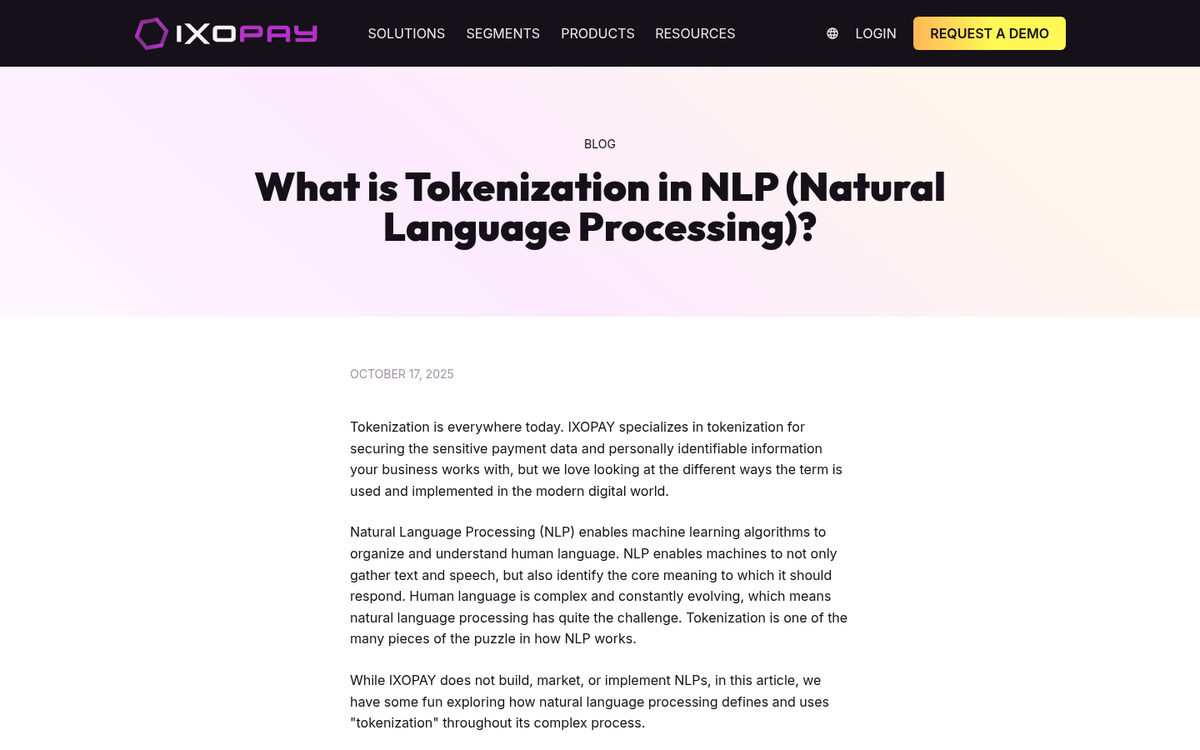
Natural Language Processing (NLP) is a branch of artificial intelligence that enables computers to understand, interpret, and generate human language. It combines computational linguistics with machine learning to process and analyze text or speech data. Common NLP applications include chatbots, language translation, sentiment analysis, speech recognition, and text summarization. Techniques involve tokenization, parsing, named entity recognition, and transformer-based models like BERT and GPT. NLP bridges the gap between human communication and computer understanding, making it essential for virtual assistants, search engines, and automated customer service systems.
What Natural Language Processing Actually Means
Natural Language Processing - NLP for short - is the branch of artificial intelligence that helps machines read, understand, and respond to human language - like the meaning behind the words.
Human language is messy in a way. We use sarcasm, shorthand, slang, and context that changes depending on who's speaking and why. A computer, by default, has no way to manage any of that. NLP bridges the gap between how humans communicate and how machines process information.
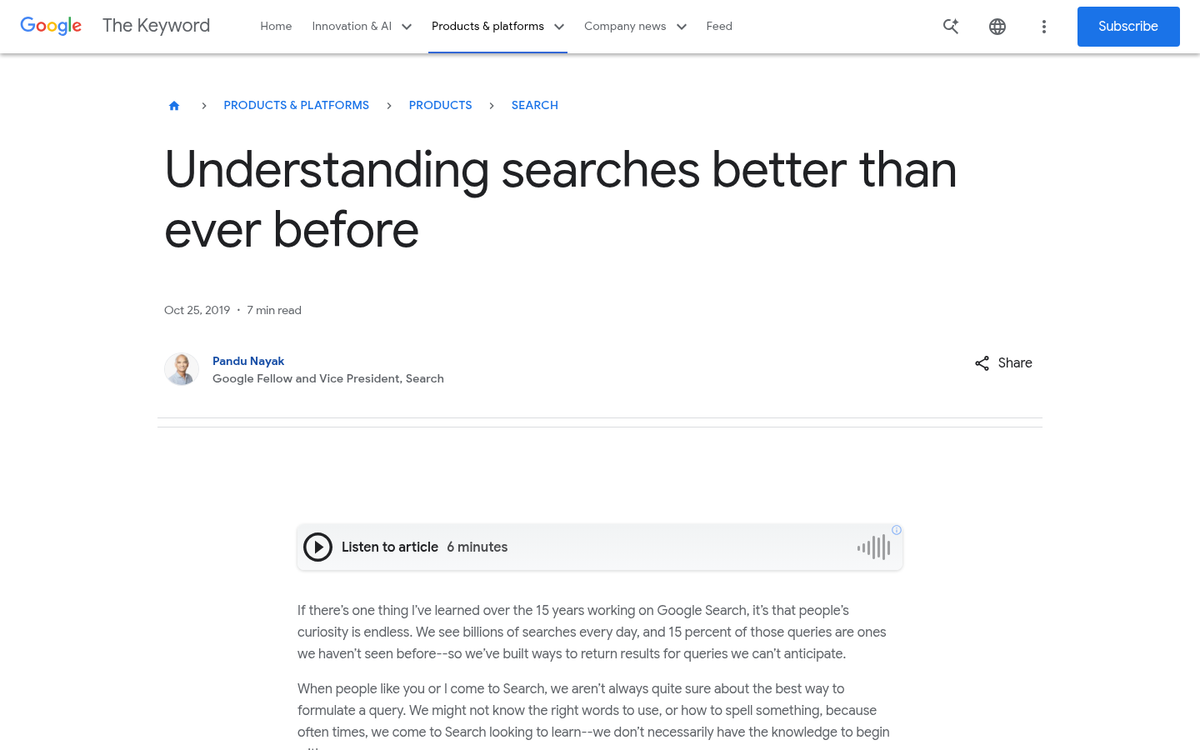
Consider this: if you type "I need something to eat near me" into a search engine, you're not being precise or logical. You're speaking the way a person speaks. NLP is what lets the machine figure out that you want nearby food - not a literal analysis of the word "near."
That's a small example. But it's something that matters. The goal of NLP is to help computers interpret language the way a person would - with all its nuance and flexibility, instead of following rigid commands.
You're already using NLP every day. When a search engine predicts what you're typing, when a chatbot answers a question, when your phone's voice assistant sets a reminder - it runs on NLP underneath the surface, working quietly in the background of tools you take for granted. This same technology is also reshaping how search engines handle queries, contributing to the rise of zero-click search results.
NLP sits at the crossroads of computer science, linguistics, and machine learning, and draws from all three to help with a problem that sounds easy but is hard to solve at scale. A machine that understands "I'm starving" as hunger and not a medical emergency takes quite a bit more work than it seems.
At its core, NLP is about helping machines make sense of human language in a way that's helpful and accurate. Everything else here builds on that foundation.
The Core Tasks NLP Performs Behind the Scenes
NLP breaks language down into smaller, manageable pieces and runs each piece through a series of tasks to build up a picture of what's being said.
The first step is usually tokenization, which is the process of splitting text into individual words or phrases. From there, the system can start doing more interesting things - like figuring out the mood behind a message or pulling out names and places from a block of text.
Named entity recognition, just to give you an example, lets a system find that "London" is a location or that "Apple" refers to a company instead of a piece of fruit.

Summarization is another job worth learning about. A machine can take a long document and produce a shorter version that captures the key points - something that's already built into tools we use every day.
Here's a quick look at some of the main NLP tasks and what they do in practice:
| NLP Task | What It Does | Real-World Example |
|---|---|---|
| Tokenization | Breaks text into words or smaller units so the system can process them | A search engine splitting your query into individual terms |
| Sentiment Analysis | Detects the emotional tone of a piece of text | A chatbot flagging a frustrated customer for a human agent |
| Named Entity Recognition | Identifies people, places, dates, and organizations in text | A news app automatically tagging articles by location or person |
| Intent Detection | Works out what the user is trying to do or get | A voice assistant understanding "play something relaxing" as a music request |
These tasks don't run in isolation - they layer on top of each other to give the system a fuller understanding of language. That layered strategy is what makes NLP flexible enough to manage everything from a one-word search to a long customer complaint. If you're thinking about how this affects your content, it's worth considering how certain writing choices can impact your blog post rankings.
How Search Engines Use NLP to Rank and Understand Content
Google does not read a page the way a human does. But it has become remarkably close. That distinction matters quite a bit for anyone who owns a website.
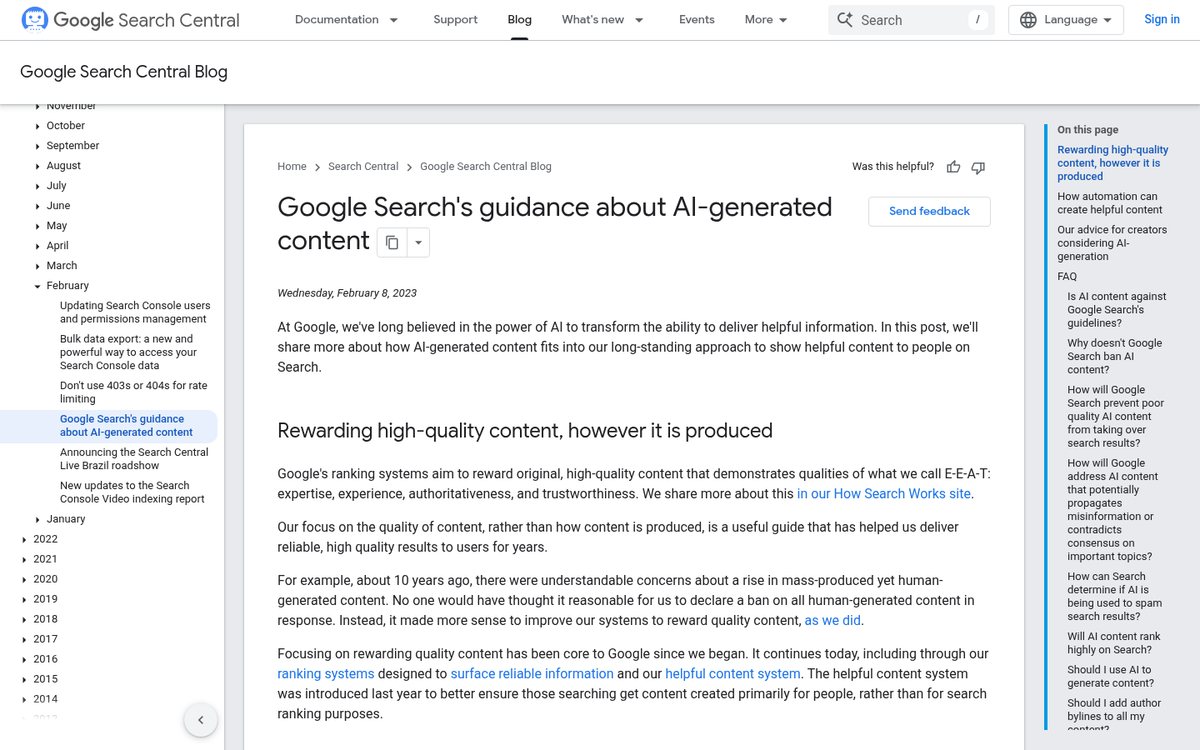
Before these models existed, search engines leaned heavily on keyword matching. A page that repeated a phrase many times had a decent shot at ranking well - even if the content itself was thin or unhelpful. NLP changed that by allowing Google to interpret the intent behind a query and find content that legitimately satisfies it.
Take a query like "best shoes for walking all day." There are no instructions in that sentence, no command, no rigid structure. But a person typing it wants helpful recommendations, probably with context about comfort or support. Google can now match that query to content that answers the underlying need, instead of just a page that contains those exact words.

This means natural writing is no longer just advice - it's actually how you get found. A page written in plain language tends to perform better than one built around a keyword list. Google's models are trained to find these actual, well-structured answers and reward them accordingly.
BERT, which stands for Bidirectional Encoder Representations from Transformers, was a turning point because it reads words in context instead of in isolation. The word "bank" means something different in a financial post than it does in a post about a riverbank, and BERT understands that. MUM goes further still, with the ability to understand nuance across different types of content and even multiple languages.
A page that answers a question well, uses natural language, and covers a topic with depth is the page these systems are built to find and rank. Keyword density is far less relevant than it once was because the algorithm is no longer just counting words - it's reading for meaning. Understanding how Google evaluates and ranks your blog can help you align your content with what these systems reward.
Where AIO and AEO Fit Into the NLP Picture
AI Overviews (AIO) and Answer Engine Optimization (AEO) are two of the most talked-about developments in search right now, and both of them run on NLP. Search engines use natural language processing to scan content, extract meaning, and choose what to pull to the top of results - and these features are a direct product of that process.
AI Overviews are the generated summaries Google places above traditional results. To build them, Google pulls from pages that answer questions in a direct and well-structured way. AEO is the practice of writing content specifically to get picked up by these kinds of answer-focused features - like featured snippets and voice search results.
NLP is what connects the two. Google's language models read your content the same way they process any search query - they look for context, intent, and structure. Content that's easy to parse and answers a question is more likely to get selected for these placements.
| Feature | What It Is | How NLP Enables It | Content Signals That Matter |
|---|---|---|---|
| AI Overviews (AIO) | A generated summary Google displays above standard search results | NLP extracts and connects relevant information from multiple sources | Clear structure, direct answers, well-defined topics |
| Answer Engine Optimization (AEO) | Writing content to get picked up by answer-driven features in search | NLP matches question intent to content that answers it directly | Question-and-answer format, concise responses, semantic relevance |
For website owners, writing with NLP in mind is not a separate job from optimizing for AI Overviews - it's the same job. Content that NLP can read stands a better chance of being surfaced in these features.
The connection between NLP, AIO, and AEO depends on how well your content communicates its meaning to a machine reader that thinks in terms of intent and context.
What Makes Website Content Easy for NLP to Process
NLP models don't read pages the way humans do. They scan for structure, context and patterns - so the way you organise your content matters just as much as what you actually write.
Descriptive headings are one of the first things to get right. A heading like "How to Reset Your Password" tells a language model what the section covers. But something vague like "More Info" gives it almost nothing to work with. That context helps the model place your content in the right category and connect it to relevant queries.
Natural, conversational language also helps all the time. Writing the way people actually talk - and ask questions - makes it easier for NLP systems to match your content to search intent. Keyword-stuffed writing tends to break that match because the sentence structure can become fragmented and the meaning gets muddled.
FAQ sections are helpful here. A well-written FAQ mirrors the direct questions typed into search engines, and NLP models are very good at pulling answers from that format. Keep the answers short and grounded in one idea per response.
Schema markup is where site owners miss an opportunity - it's a behind-the-scenes layer of code that tells search engines and AI systems what your content represents - a post, a product, a recipe, an event. If you don't have it, a machine has to guess from context alone. With it, there's no guessing involved.
Logical flow matters too. Content that jumps between unrelated ideas without transition makes it harder for NLP models to build a coherent picture of the page, and each section should work as a building block that connects to the next. If you're scanning your posts for errors, it's also worth checking whether the structure reads clearly from section to section.
Concise definitions also add value. If your page introduces a technical term or concept, a short plain-language explanation helps machines and readers understand it in the same pass. That clarity tends to get rewarded in AI-generated replies where accuracy is the priority. Original, well-sourced writing strengthens that further by signalling to both readers and AI systems that the content can be trusted.
Industries Already Seeing Results From NLP Integration
Some industries didn't wait to see how things would play out. They started integrating NLP into their workflows years ago, and the results are measurable enough to take notice of.
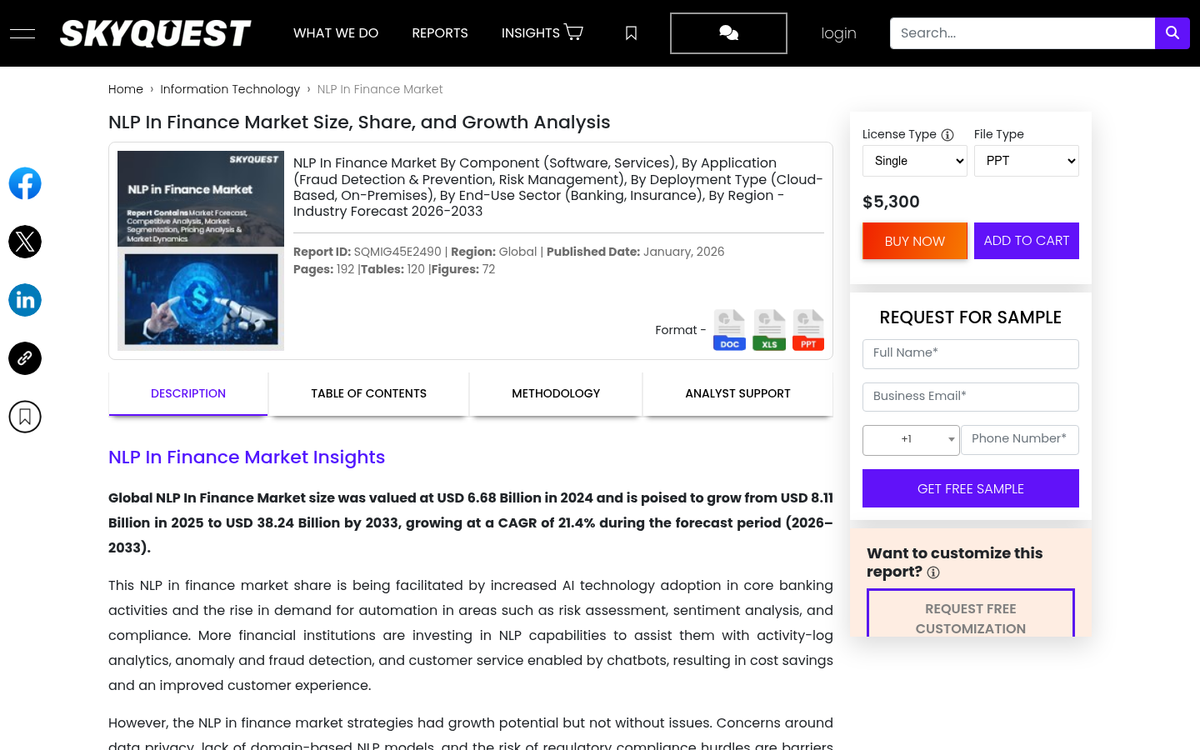
Financial services is one of the clearest examples. Around 25% of financial institutions were already using NLP for document processing and compliance checks as of 2024; it's a sizeable portion of an industry known for being careful about technology. The appeal makes sense - financial documents are dense, repetitive, and full of structured language, which makes them well-suited to automated processing.
Healthcare has also moved faster in this space. Medical records, clinical notes, and patient intake forms are being processed by NLP tools to help extract relevant data faster - this cuts back on the time clinicians spend on administrative tasks and helps surface information that might otherwise get buried in long documents.
E-commerce platforms use NLP to understand product reviews, answer customer questions, and personalise search results based on what a shopper actually means instead of just what they typed. A shopper looking for "running shoes for bad knees" is expressing something specific, and NLP helps a platform respond to that intent instead of treating it as a simple keyword match.
Publishing and media have been putting NLP to work on content tagging, audience segmentation, and automated post summaries. Large outlets manage too much content to categorise manually, so NLP tools help organise and surface the right content to the right readers at the right time.
What connects these sectors is that NLP is doing helpful, functional work - not experimental or theoretical work - it processes content, answers questions, and helps users get to information faster. Website owners in any of these fields are already operating in an environment shaped by these tools, whether they've thought about it that way or not.
Common Misconceptions That Hold Website Owners Back
One of the most persistent misunderstandings is that NLP is something only large tech businesses need to think about. In reality, any website that relies on search traffic or user engagement is already being evaluated by NLP systems. The size of your business does not change how search engines and AI tools process your content.
Another common belief is that optimizing for NLP means writing in a way that feels robotic or keyword-heavy. This is almost the opposite of the truth. NLP models are built to understand natural human language, so writing clearly and in a logical structure is what they respond well to. Awkward phrasing actually works against you.
Some website owners also believe that NLP optimization is a separate job from writing content. When you write in plain language, gather your ideas well, and answer questions directly, you are already doing what NLP models look for. There's no need to treat it as a technical layer on top of your existing work.
A lot of people hold back because they think any of this requires specialist knowledge. That concern is understandable. But it overstates the barrier. The foundational changes - like improving sentence structure, using descriptive headings, and being direct in your answers - are things any writer or site owner can do without a technical background. If you're thinking about training someone to write for your blog, these same principles apply from day one.
It's also worth pushing back on the idea that NLP is still too new to matter for most websites. Search engines have been using language models to interpret content for years now, and AI-generated answers pull directly from indexed web content. Waiting to engage with this is not a neutral choice; it means your content is already being evaluated by systems you haven't accounted for. This is especially true if you're trying to bring an older website back to life and rebuild its visibility.
Your Site Speaks - Make Sure the Machines Are Listening
To put this into practice, pick one page on your site and read it the way a machine would. Is the topic clear from the first sentence? Are your headings informative? Does the content actually answer what someone searching that topic would want to know? Small adjustments made with NLP principles in mind can meaningfully change how your content performs across Google, ChatGPT, Perplexity, and every other platform where your next customer could be searching.
FAQs
What is Natural Language Processing in simple terms?
Natural Language Processing (NLP) is the branch of AI that helps machines read, understand, and respond to human language, including its nuance, context, and flexibility, rather than just processing rigid commands.
How does NLP affect my website's search rankings?
NLP allows search engines like Google to understand the intent behind queries, rewarding content that genuinely answers questions in natural language rather than pages stuffed with repeated keywords.
What is the difference between AIO and AEO?
AI Overviews (AIO) are generated summaries Google displays above search results. Answer Engine Optimization (AEO) is the practice of writing content specifically to be selected for those answer-driven placements.
How can I make my content easier for NLP to process?
Use descriptive headings, write in natural conversational language, include FAQ sections, add schema markup, and ensure your content flows logically from section to section.
Do small websites need to worry about NLP?
Yes. Any website relying on search traffic is already being evaluated by NLP systems. The size of your business does not change how search engines and AI tools process your content.