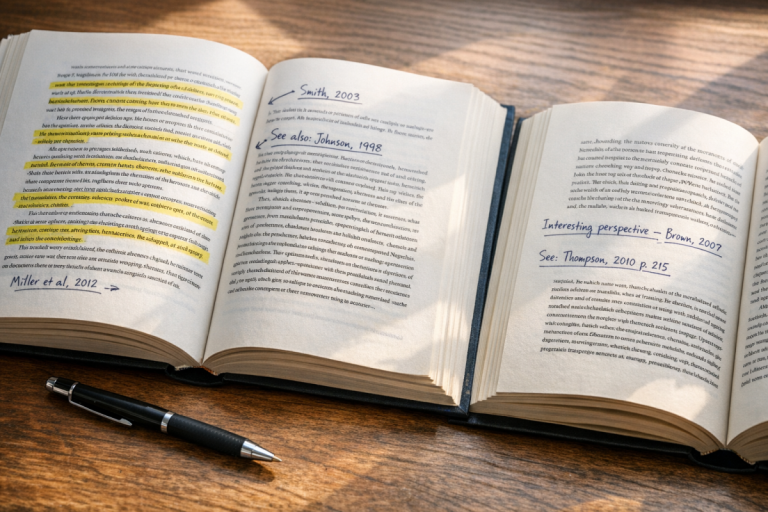
Key Takeaways
- Quoting small passages from other sources is not duplicate content and does not negatively impact SEO rankings.
- Google primarily penalizes sites lacking original value, not those using occasional quotes to enhance their own content.
- Using blockquote tags and proper attribution signals to Google that content is a citation, not stolen material.
- Citing sources and adding quotations ranked among top optimization strategies for performing well in AI-powered search results.
- 45% of content marketers already feature contributor quotes, making it a normalized, widely accepted blogging practice.
Duplicate content has long been a boogeyman for marketers, ever since the apocalypse that was the Panda updates in 2011. For nearly fifteen years now, marketers have lived in fear of duplicate content and its ability to destroy the search ranking of a site.
There are a few misconceptions about what is and isn't duplicate content and how bad the penalties can be. All many remember from those early days is the outcry when thousands upon thousands of websites cried out and were suddenly silenced. Unlike the inhabitants of a doomed planet, these websites weren't worth the space they took up on the internet. Good riddance to them.
What Duplicate Content Actually Means
So what is and what isn't duplicate content? Here's a quick test.
- Site A has a guide you really like. You want to reference it on Site B, so you copy three paragraphs and paste them as a quote in your article, surrounded by your own content.
- Site A has a guide you really like. You approach them and ask if you can syndicate it on your domain, and they agree. You publish the entire guide as-is, with a canonical link pointing to their domain.
- Site A has a guide you really like. You copy the guide and post it on your Site B, without a canonical link.
- You have just created Site A. A marketing firm you contracted to promote it copies your homepage and distributes it as a press release, making its content appear on sites B through Z.
Which of these is duplicate content? Depending on your definition of duplicate content, all of them can be. But what we're talking about is Google's definition.
In scenario 1, yes, you're directly copying and pasting some of the content of another site onto your site. However, it's just a small amount of content. Google doesn't care - this scenario is well fine.
Why doesn't Google care? Well, they know for one thing that it's well fine to quote and cite passages from another source. Quoting a relevant passage from a Google help center post or an industry study, linking to the original, and building your own commentary around it is very acceptable practice.
This is true stretching all the way back into the antiquated books and academic papers. You can't produce new research or a new study without referencing what exists elsewhere. Thus, quoting and citations have to be fine.
There's also the case where what you're quoting is not a reference post or paper or blog, but the data itself. You can't edit the data - it disrupts the data and can misrepresent it. Obviously, Google doesn't want to welcome misrepresentation.
There's only so many possible combinations of words in the English language. Two people can write the same sentence when talking about the same topic and it's not theft or plagiarism or copied content - it's basically two great minds thinking alike.
Of course, the odds of two entire 2,000-word blog posts being identical and independently created is slim to none. But that's not what we're talking about here.
In scenario 2, what we're talking about isn't copied content, but syndicated content. Syndication is when multiple sites publish the same content, all referencing back to the original version. This is explicitly what the rel="canonical" link attribute and meta entry is for. Syndicating your posts to platforms like LinkedIn works on a similar principle.

Syndication can be a way to get traffic to your site. You're publishing great content, which can show up in Google and which your users may value - even though you didn't produce it.
There are two keys that form the difference between copied content and syndicated content: canonicalization and permission.
Canonicalization basically requires you to add the rel="canonical" link to your page's meta data, pointing at the URL of the original version of the content - this tells Google the official source of the content when it's not you.
Permission basically means you make sure that the original source of the content gives you permission to use it in a legal and ethical way. If you don't have permission, the original content creator can file a DMCA request to have your version taken down and can pursue legal action if you don't comply.
In scenario 3, the process is more akin to theft. You like the content, you take it and publish it, and you hope no one notices. Google will see. Even then, if you do this for one blog post on a site with 100 other blog posts you created on your own, Google probably won't care. What Google cares about, usually, is value across the whole site. The reason thousands of sites were killed off in the Panda updates of 2011 was because those sites had no original content of their own. They didn't give you value - they basically stole content and tried to monetize it.
That's not to say your theft wouldn't be seen by other means. Anyone who finds the copied content can report it to the original copyright holder, who can then pursue legal action. You're not in the right just because Google doesn't automatically penalize you.
In scenario 4, we have copied content in the opposite direction. The content spreads to dozens of other domains and the original site ends up looking like the duplicate instead of the source - it can be fixed, but the point remains: if a site has no value outside of content published everywhere else, it has no value in the search rankings.
What Google Cares About
At the end of the day, Google only cares about one thing: value to the user. They don't care where that value comes from or how you put it together; it's why things that might feel like they're going against the rules are well fine.
For example: a post on one news outlet is identical to a post on another, with rel="canonical" links pointing to themselves. Google sees two identical pieces of content, both claimed to be the original. But neither is penalized. Why not?
Two reasons. First, both of them credit the original source and the original author. They aren't trying to represent the content as their own - they're saying "this is a post from the AP." It's syndicated content and Google knows it.
Second, Google knows that different people like to read different news sites for their information. Syndicating one piece of legitimate news across different connected news organizations means more people are exposed to the value of the news. And it doesn't dilute the value of the piece, because each different news site has different selections of content and ways of adding value.
Duplicate content will penalize a site when that site has no original value of its own. If you run a blog but all you do is steal blog posts from 100 different sources, you're not giving your own value. Semrush's Ranking Factors Study found that content quality had the second strongest correlation with high rankings, appearing in 76.9% of top 10 results on average.
Google ranks sites based on dozens of different factors and when they see the same content across multiple sites they'll filter out the lower-value versions. Sites that steal content are almost universally ranked lower than the original sources. Often they're ranked so far down that they never appear where anyone will find them.
How to Quote Content in an SEO Friendly Way
Quotes are not going to hurt your SEO. In fact, they can actively help it. One study found that citing sources and adding quotations or statistics were among the top three optimization strategies for ranking in AI-powered search results - a growing consideration as Google's AI Overviews and similar features continue to change how content is surfaced. According to Orbit Media's 2025 research, 45% of content marketers already feature contributor quotes in their blog posts, which speaks to how normalized and liked the practice has become.
If you want to be doubly and triply sure that you're not going to penalize yourself by quoting someone else, here are some steps you can take.
First, take as little of the source content as possible. Instead of "quoting" an entire blog post, quote a few relevant paragraphs. Better yet, instead of quoting a few paragraphs, quote one paragraph and write your own summary of the context that makes it make sense. Copy as little of the original content as possible to get your point across.
Second, add your own original content to the post surrounding the quoted content. The more of your own original value you have on the page, the better off you are. Even if you're writing something like "50 SEO Experts' Opinions on Content Strategy" with quotes coming from posts those marketers published on their own blogs, you can add value.
Third, you can use the blockquote format for quotes. WordPress's block editor has a Blockquote block you can use for a quoted passage. If you're not using WordPress, you can use blockquote tags in your code. When you flag the content as a quote, Google recognizes it as such and won't penalize you for it - it also tells your readers that they're reading a citation instead of your own words, which can add credibility.
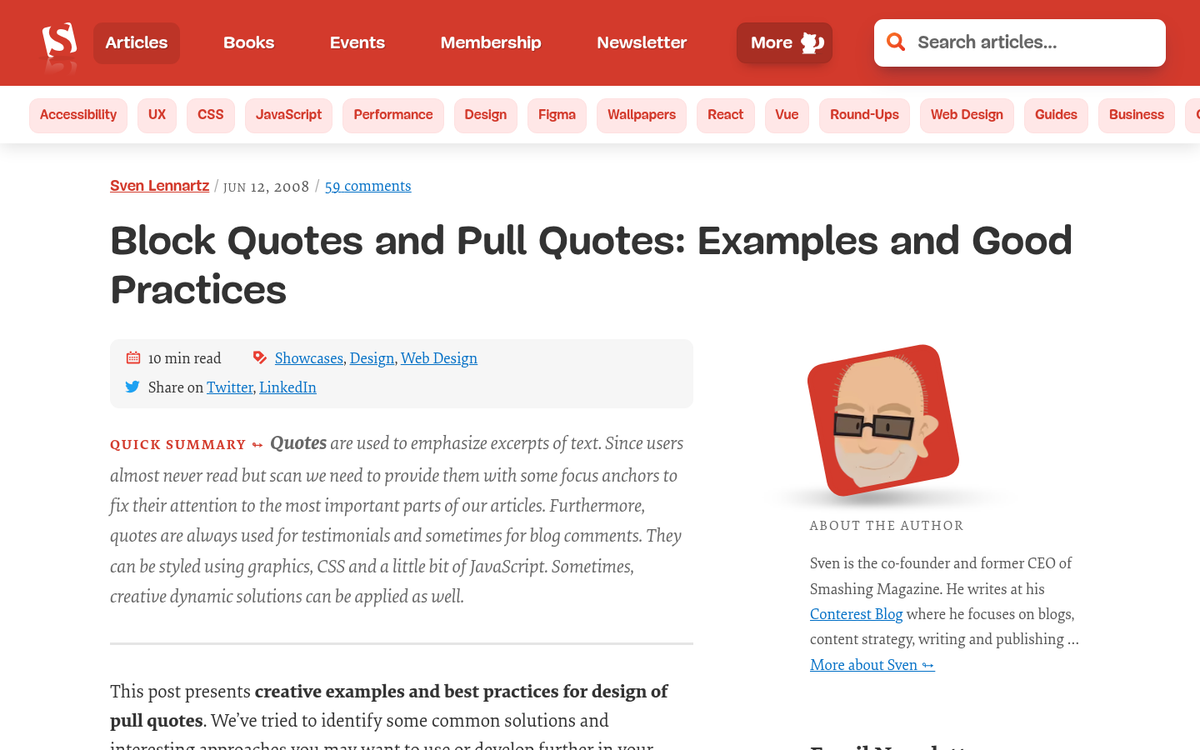
Fourth, make sure to cite the original source. Attribution is the main difference between reference and theft. You can say "from X:" before the quote, add "- X" after it, or use a footnote at the bottom of your page. In-text citations tend to carry more weight for readers and for creating the sourced, honest content that performs well in search.
Fifth, just don't worry about it.
- "Remember, Google has 2,000 math PhDs on staff. They build self-driving cars and computerized glasses. They are really, really good. Do you think they'll ding a domain because they found a page of unoriginal text?" - Anthony Crestodina
The fact is, if you're starting a campaign of content theft as a way to fill out a blog, you're going to be penalized with invisibility. If you're quoting a few passages as a way to add value to your own content, you're well fine. Duplicate content isn't nearly the boogeyman it seems to be - and in an era where cited, well-sourced content is increasingly rewarded by Google and AI-driven search features, quoting is less of a danger and more of a strategy.