




Search Generative Experience (SGE) is Google's AI-powered answer layer that sits above traditional organic search results and generates direct responses to user queries right on the search page itself. Instead of presenting a list of blue links and leaving users to click through and find their own answers, SGE synthesizes information from across the web and gives you a conversational, AI-generated summary - before a single organic result comes into view. It began as an experimental feature inside Google Labs in May 2023, and its influence on how users search has been growing ever since.
For website owners and managers, this matters enormously. The rules around visibility, authority, and traffic are being rewritten in real time. The disciplines now most relevant to this change are AI Optimization (AIO) and Answer Engine Optimization (AEO), both of which focus on making your content legible and trustworthy to AI-driven systems.
This article breaks down what Search Generative Experience is, how it works, and what it means for your site's presence in search. Think of it as a helpful foundation for navigating a search landscape that's changed more in the past two years than it did in the decade before.
Quick Answer
Search Generative Experience (SGE) is Google's AI-powered search feature that generates conversational, summarized answers at the top of search results pages. It uses generative AI to provide direct responses to queries, pulling information from multiple sources and displaying it alongside traditional search links. SGE allows follow-up questions within the same search session, creating a more interactive experience. It was introduced as an experimental feature in Google Search Labs in 2023 and has since evolved into Google's AI Overviews, now broadly integrated into standard search results.
How Search Generative Experience Actually Works
When you search on Google and SGE activates, the engine pulls information from multiple web pages at once and uses a large language model to generate a single summarized response. This response appears at the very top of the page, above everything else - it's a synthesized answer built from a few sources simultaneously, not a single highlighted source.
This is where SGE parts ways with a featured snippet. A featured snippet pulls a direct excerpt from one page and attributes it. SGE generates new text and may cite a handful of sources in a small carousel alongside the summary. The original phrasing from those pages doesn't necessarily appear word-for-word.
The practical result is that the first organic search result gets pushed down the page - way down. Research has measured that displacement at between 1,562 and 1,630 pixels. To put that in perspective, most users would need to scroll past a full screen of content just to reach what used to be the top result.
That's a real change in how much attention any given result can realistically draw - and it connects to a broader pattern known as zero-click search, where users get their answer without ever visiting a page.
The table below breaks down how SGE compares to featured snippets and standard organic results across a few dimensions that matter.
| Feature | SGE | Featured Snippet | Traditional Organic Result |
|---|---|---|---|
| Placement | Top of page, above all results | Top of page, above organic results | Below ads and any SERP features |
| Source Transparency | Multiple cited sources in a carousel | One clearly attributed source | Full URL and metadata visible |
| Click Potential | Lower - answer is often self-contained | Mixed - some users click for more detail | Higher - user must visit to get information |
| Content Format | AI-generated summary text | Extracted excerpt from one page | Title, meta description, and URL |
One thing worth noting is how Google decides what to pull into an SGE response. The model draws on pages it considers credible and relevant to the query and prefers content that directly answers a question. The selection process runs parallel to the standard ranking system - not directly from it, so the top-ranked organic pages are not pulled in by default.
So a page could rank well organically and still not appear in the SGE summary, and vice versa. The two systems work with overlap but they follow different logic.
Which Searches Trigger an SGE Response
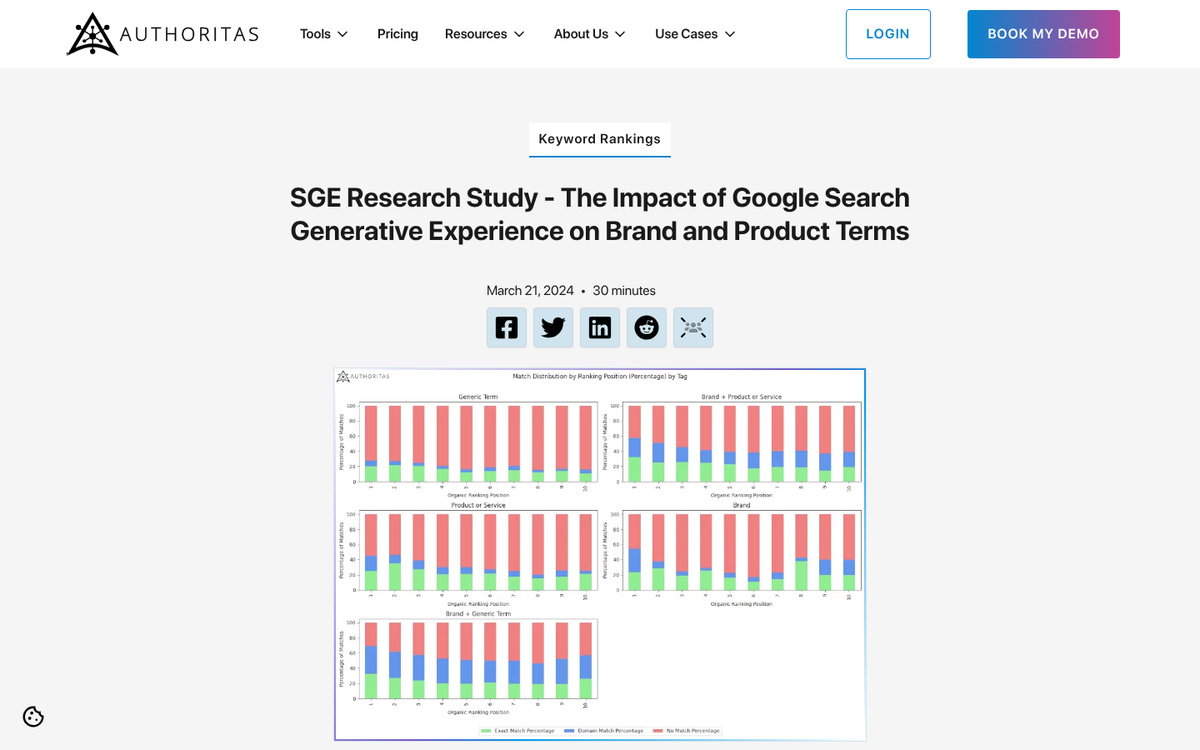
SGE doesn't show up for every search, but it shows up for most of them. A study by Authoritas found that SGE appears for around 86.8% of queries overall, which means AI-generated answers are now the norm instead of the exception for most searches.
That said, the rate changes quite a bit depending on the topic. Entertainment queries trigger an AI response about 91% of the time. But healthcare queries sit at just 17%; it's a giant gap, and it tells you something important about how Google decides when to let AI take the wheel.
Google tends to pull back on AI answers in sensitive categories. Health, legal, and financial topics fall into what Google calls "Your Money or Your Life" territory; a wrong or misleading answer could legitimately cause harm. Rather than risk that, Google defaults to traditional search results in those areas so users can review sources themselves.
For entertainment, news, sports, and general knowledge searches, the stakes are much lower. Google is more comfortable letting the AI summarize and respond directly because a slightly imperfect answer about a TV show doesn't put anyone at risk.
The first question to ask is where your industry lands on that spectrum. A recipe blog or a travel website sits in a very different position than a medical practice or a financial adviser's website.
Here's a rough way to remember it across different niches.
| Industry | Likely SGE Coverage | Reason |
|---|---|---|
| Entertainment & Media | Very high (~91%) | Low-risk answers, factual summaries |
| Travel & Lifestyle | High | Informational queries with clear answers |
| E-commerce & Retail | Moderate to high | Product comparisons and recommendations |
| Finance & Legal | Low to moderate | High-stakes advice, liability concerns |
| Healthcare & Medical | Low (~17%) | Patient safety, accuracy requirements |
Informational searches like "how does X work" or "what is Y" are more likely to pull an AI answer than transactional searches like "buy X near me." Google still tends to serve traditional results when someone is close to making a buy.
Navigational queries are another area where SGE stays quiet. If someone types in a brand name to get to a website, Google won't replace that with a generated summary. If you're concerned about how your site holds up in this shifting landscape, it may be worth looking at how to bring an older website back to life with updated content and structure.
What SGE Means for Your Website's Organic Visibility
The part that matters most to anyone who relies on search traffic: a study found that 93.8% of the websites cited in SGE replies don't appear in the top 10 organic results for the same query; it's not a small gap - it means the sources Google pulls into its AI answers and the pages that rank traditionally are almost entirely different groups.
This creates two separate races happening on the same page. You could hold a top-three ranking and still not get a mention in the SGE snapshot that sits above your result. Conversely, a page buried on page two could get featured in the AI response and pull in traffic it never would have earned before.
The visibility gap this opens up is real and measurable. BrightEdge estimated that SGE's rise could put around $40 billion in ad revenue at risk, which gives you a sense of the scale of attention and money behind this change. Within the SEO industry, around 70% of practitioners say they're concerned about how SGE will affect organic performance for the sites they work on.
The concern isn't unfounded. When a user gets a full answer at the top of the results page, they have less reason to scroll down or click through to a website. For informational content especially - blog posts, how-to guides, definition pages - the click might not happen at all. This is closely related to what happens with infinite scroll and how it affects user behaviour and rankings.
That said, this is a reason to know where your visibility stands and where it could slip - not a reason to panic.
The sites most at risk are those built around queries that SGE works with well: explanations, factual lookups, and comparison content that can be summarised in a few sentences. If a large portion of your traffic comes from that content, the exposure is worth acknowledging.
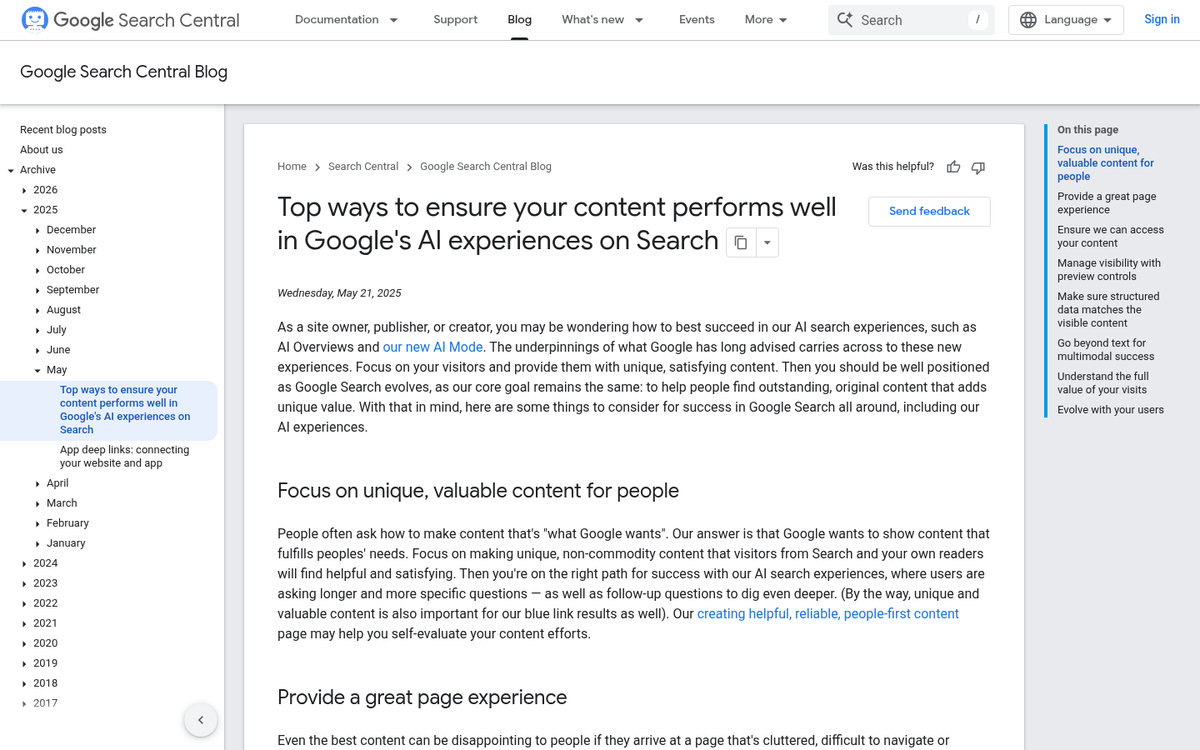
Some content types hold up better. Pages that answer questions with depth, first-hand experience, or original data are harder to replace with a generated summary. Google still needs sources to cite, and those citations do drive traffic - just to a different set of pages than traditional rankings reward. How you use quotes in your articles can also play a role in how well your content competes.
Treating SGE citations and organic rankings like the same thing is where site owners will find their traffic numbers don't match their ranking positions.
Both dimensions will matter more as SGE becomes a standard part of how Google presents results to users across different devices and regions. Understanding how Google sitelinks work is one small piece of the broader picture of maintaining visibility as search evolves.
Positioning Your Site for an AI-First Search Landscape
A few helpful places to start:
- Build structured, question-driven content that directly answers what your audience is searching for
- Establish topical authority by covering subjects comprehensively rather than surface-level
- Use AEO-friendly formatting - short answer summaries, clear headers, scannable structure
- Implement schema markup so Google and other answer engines can interpret your content with confidence
- Earn credibility signals - authoritative sources, accurate information, and consistent publishing that builds trust over time
None of this has to happen overnight - but it does need to happen at some point! You have at least a few great places to start in this list.
FAQs
What is Search Generative Experience (SGE)?
SGE is Google's AI-powered answer layer that generates direct responses to user queries at the top of search results, synthesizing information from multiple web pages before any organic results appear.
How does SGE differ from a featured snippet?
A featured snippet extracts a direct excerpt from one page and attributes it clearly. SGE generates new AI-written text citing multiple sources, meaning original page phrasing doesn't appear word-for-word.
Which industries are most affected by SGE?
Entertainment and lifestyle sites face very high SGE coverage (~91%), while healthcare and medical sites see much lower rates (~17%) due to Google's caution around high-stakes, sensitive topics.
Does ranking highly guarantee inclusion in SGE results?
No. Research shows 93.8% of websites cited in SGE responses don't appear in the top 10 organic results, meaning SGE citations and traditional rankings operate as two largely separate systems.
How can websites improve their chances of appearing in SGE?
Focus on structured question-driven content, topical authority, AEO-friendly formatting, schema markup implementation, and earning credibility signals through accurate, consistently published authoritative content.