Key Takeaways
- Choosing a specific niche and unique perspective is essential to stand out in the saturated, competitive travel blog market.
- Avoid forcing monetization early; display ads require 25,000-50,000 monthly sessions before generating meaningful income.
- Affiliate marketing is recommended as an early monetization priority, since it can earn income even from low-traffic posts.
- Build a content backlog covering at least two months of posts to maintain consistency during periods without travel.
- An email list is a critical marketing asset you fully own, unlike social media platforms with unpredictable algorithms.
In a way, a travel blog is the epitome of blogging as a career. Blogging in other forms, like for marketing, business, or finance, usually feels more like an office job. Even if you're working from home, you're still working in a home office and more often than not you're immersed in a steady business schedule.
Travel blogs have more than the opportunity to travel; they have the incentive, the imperative to do so. Instead of visiting interesting locations as a means to take a break from the grind, travel can become your lifestyle.
Travel blogs are also, to put it lightly, the "hard mode" of blogging. Anyone can start up a business blog from their bedroom, with minimal investment past the time it's going to need and the basic costs of web hosting and connected tools.
Starting up a travel blog is going to need travel- it's exceedingly difficult to fake visiting a location you've never been to before. You need images and experiences and you'll have to be able to portray them authentically. Anyone can download and review an SEO tool; very few have the resources to travel to the Caribbean to write a few blog posts.
Travel blogs are also a popular niche full of people trying to make their living with it, so it's saturated and competitive already. The start-up costs are high, the standard costs are high and the chance of success is low- it seems like a fool's errand. But it's very possible to build a new travel blog and become a success. You just need to stay away from the common dangers along the way, make sure that you have a stable base before taking excessive risks and you need the habits of a blog owner.
Here are 25 tips to help you along the way.
1. Identify Your Niche
The first thing you need to start a successful travel blog is to figure out your perspective. What makes your travel experience different from everyone else out there? Some thoughts to get you started might look like:
- Do you exclusively use public transport, do you backpack from place to place, do you travel in style?
- Do you stay in hostels and short-term rentals, or do you review the 5-star hotels and the experiences they offer?
- Do you focus on a particular hobby, like travel for astronomy, travel for food, or travel for landmarks and architecture?
- Are you aiming to help new travelers find their feet, writing for experienced vacationers, or trying to reach long-time expatriates?
Figuring out your value proposition helps you carve out a niche, so instead of "a travel blog" you become "The Wandering Chef" or "The Experienced Expatriate", or what have you. Understanding what makes a blog stand out and grow can also help you refine your angle from the start.
2. Do Some Competitive Research
Coming up with a niche is important. But you also want to know who else came up with that niche already. Do some searching for your niche and keywords you think you might target and look for competitors.
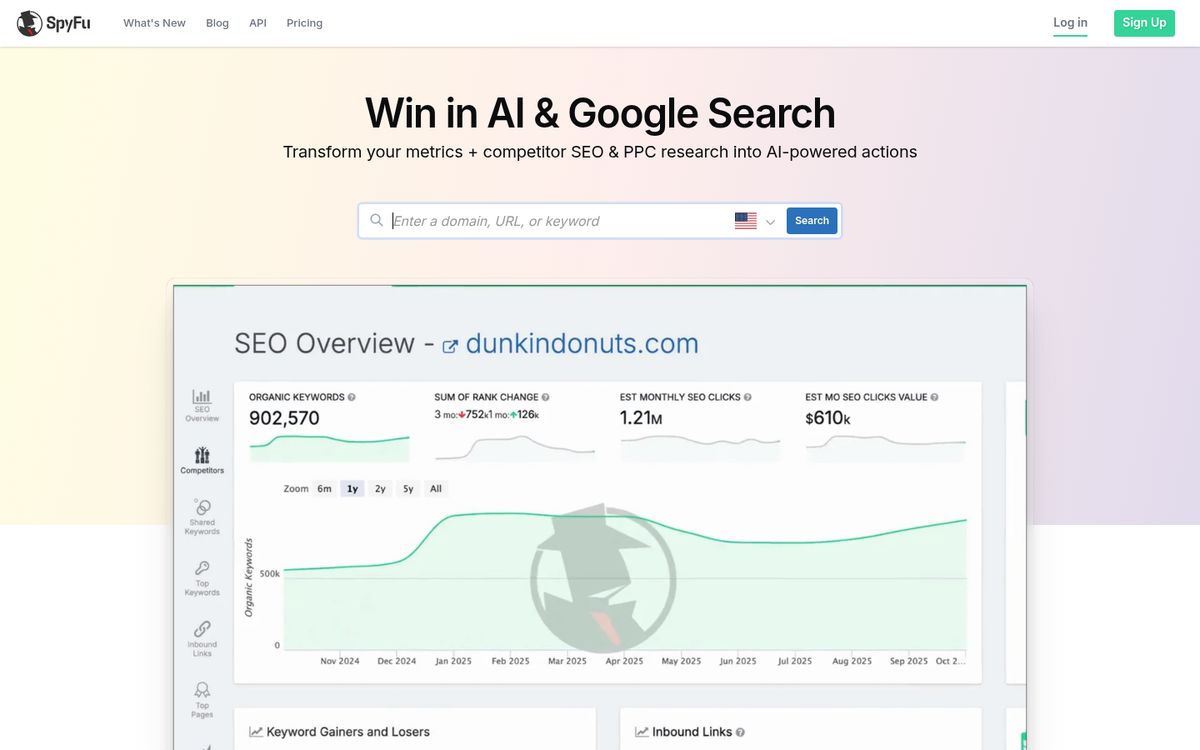
These are people you can learn from, who you compete with in search rankings and who you could even partner with going forward- it's extremely important to know who they are.
3. Register a Clever Domain
Part of the reason you'll have to choose your niche is so you can have branding. The Wandering Chef and The Experienced Expatriate are fairly well branded ideas; they're strong, evocative and memorable. They're also taken, I believe, so don't copy them. Come up with your own branding and look for a domain you can register to host your blog.
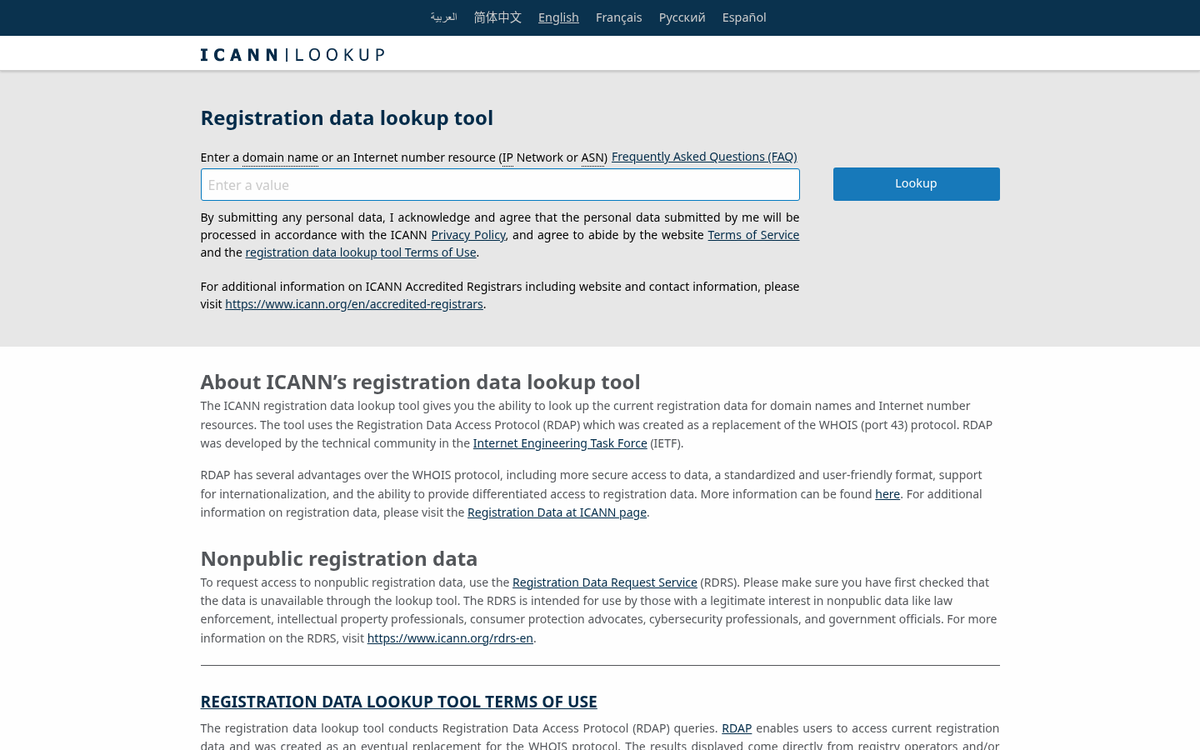
I recommend a custom domain as opposed to any sort of free blogger.com or wordpress.com style subdomain. I also recommend registering a .com with as little competition as possible. You don't want to try to register thewanderingchef.com when wandering-chef.com and fedbythewanderingchef.com already are out there, to give you an example.
Avoid .com domains where possible, as they are much harder to make memorable. You can pull it off in some cases. But default to thinking of .com as the standard for a website, so making them remember anything else is an uphill battle.
4. Set Up a Powerful Website
A website is going to need a few things.
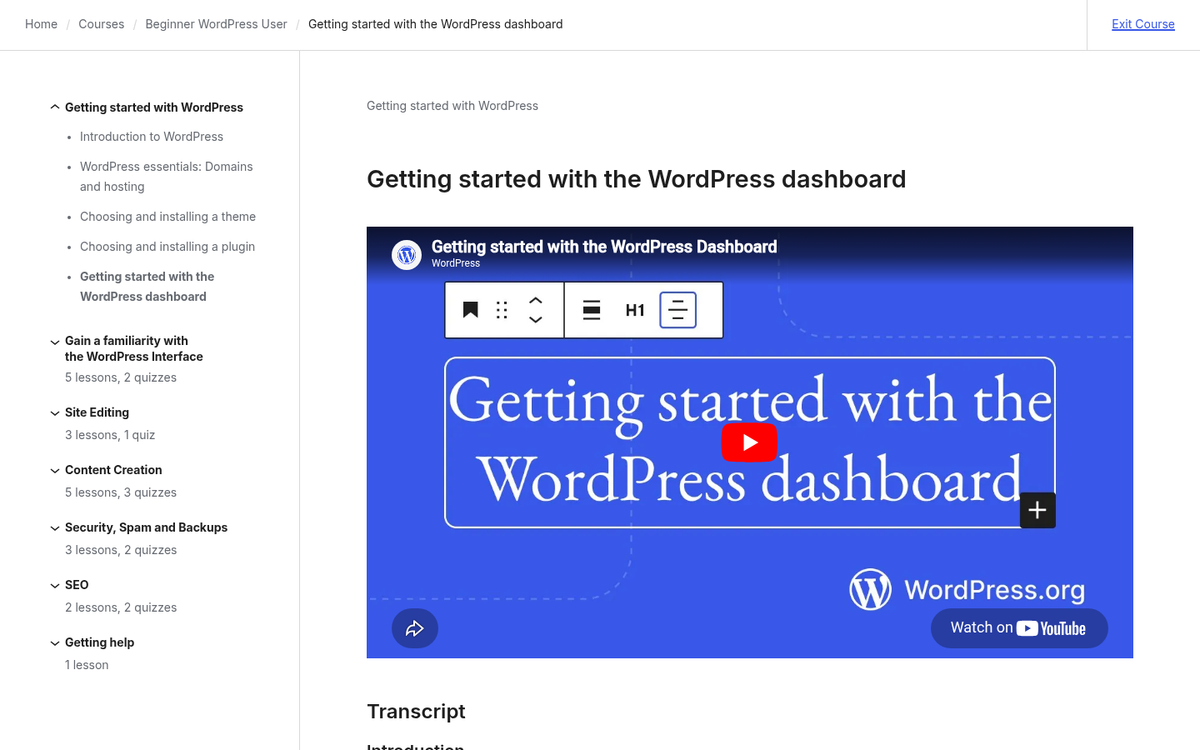
- A strong web host that is accessible globally and won't suffer downtime.
- A powerful architecture. I recommend WordPress.org.
- A good theme. You don't need to pay for a custom theme, but you want something that fits your aesthetic.
- A suite of robust plugins to handle SEO features.
You want something you can access from anywhere, update quickly and easily and can optimize for search engines. All of this is important for modern blogging.
5. Create Basic Pages
Every travel blog - and every blog, - needs to have basic pages set up. You want a homepage, an About page and a privacy policy page and that's also the case if you're collecting email addresses or running ads, as this is increasingly a legal requirement in many regions.
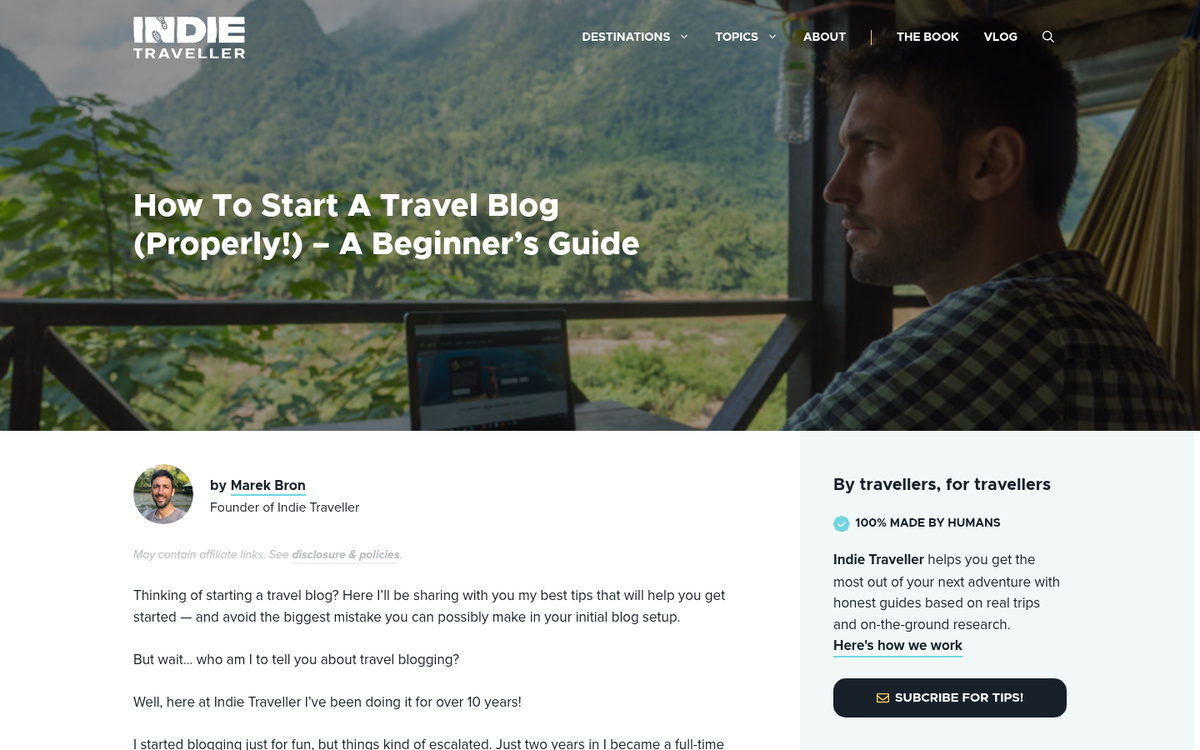
I also recommend writing a few blog posts to have them up and ready when you launch your site. Don't go for the stereotypical "this is why I'm traveling" blog post; that information is on your About section. Start right in with the travel writing.
6. Consider Buying a Logo
A brand doesn't necessarily need a logo immediately. But it can go a long way towards making your site look more professional and it can tie together your social media profiles which I'll mention in the next tip. A decent logo can be purchased for anywhere from $30 to thousands of dollars. I recommend checking out logo sellers on freelance sites like Upwork or Fiverr, or browsing designers on places like Dribbble until you find something that resonates with you.
7. Register Branded Social Media Accounts
Social media profiles are a giant part of modern blog success. They allow you to more easily accumulate an audience, share your content for maximum exposure and advertise to a ready-made group already interested in seeing your content. For a travel blog, I recommend Facebook, Instagram and TikTok as your core platforms. A Facebook Page remains a center for advertising and community building. Instagram is exceptional for travel bloggers given the very visual nature of the work. TikTok has become an increasingly important discovery platform and short-form video content showing destinations can drive traffic back to your blog.
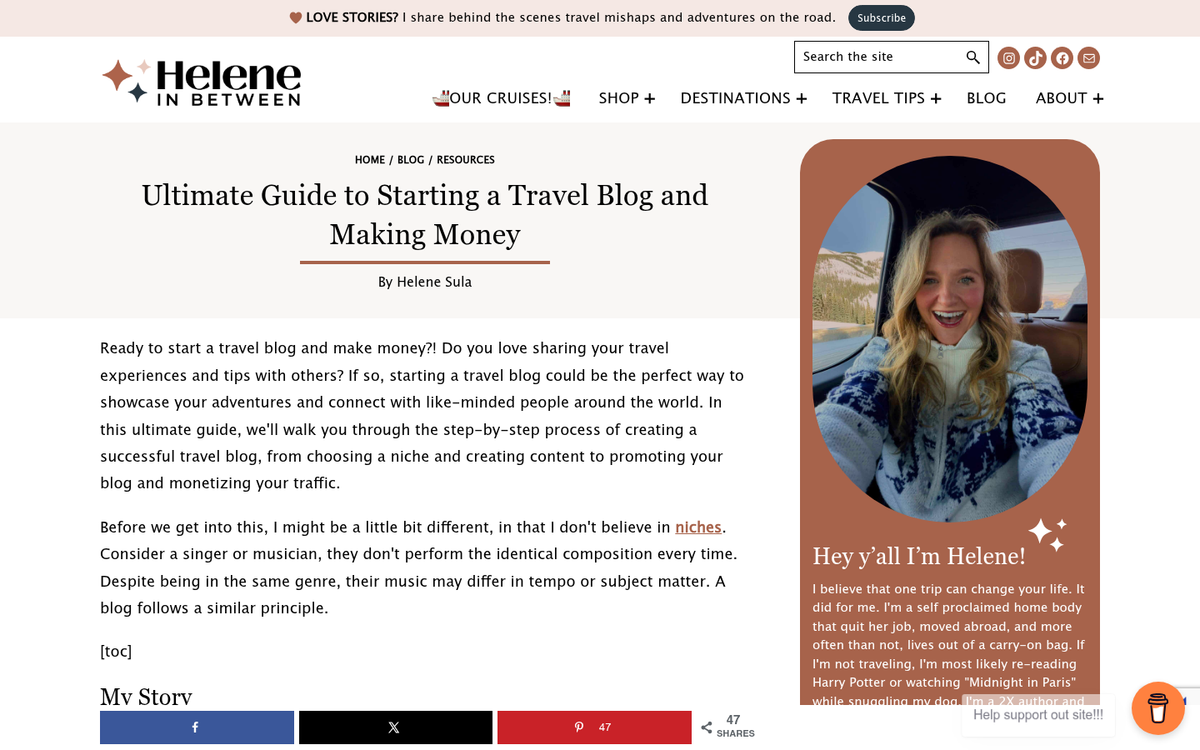
Optionally, see Pinterest and YouTube. Pinterest remains very useful for dominating image-based search results and driving passive traffic. YouTube is great if you're capable of making longer video content, though it's also a very competitive platform to grow on its own.
8. Generate Topic Ideas and Templates
Travel blogs tend to have a few basic styles of blog posts. Learn how to make each of them, as you'll be writing in the same basic template fairly frequently. A content title idea generator can help you brainstorm new angles for each format.

- The Review. Typically reviews will focus on one location, one piece of gear, or one business. These are optimized to target people searching for that item.
- The Guide. Guides can be focused on a particular experience, tour, or location. "The traveler's guide to dinner in Mexico City" would be one such example.
- The Experience. These are your more free-form "here's what I did today" style blog posts. They're the bread and butter of a travel blog, but are harder to monetize than the above.
Other posts you make on the fly can serve as filler content as well. If you're ever stuck, check out our tips on coming up with ideas of what to blog about.
9. Brush Up On Your Photography
Photography is an important ingredient to a travel blog- it's hard to connect with an interesting location if you can't see it. It's why people love reading about travel; it inspires them.
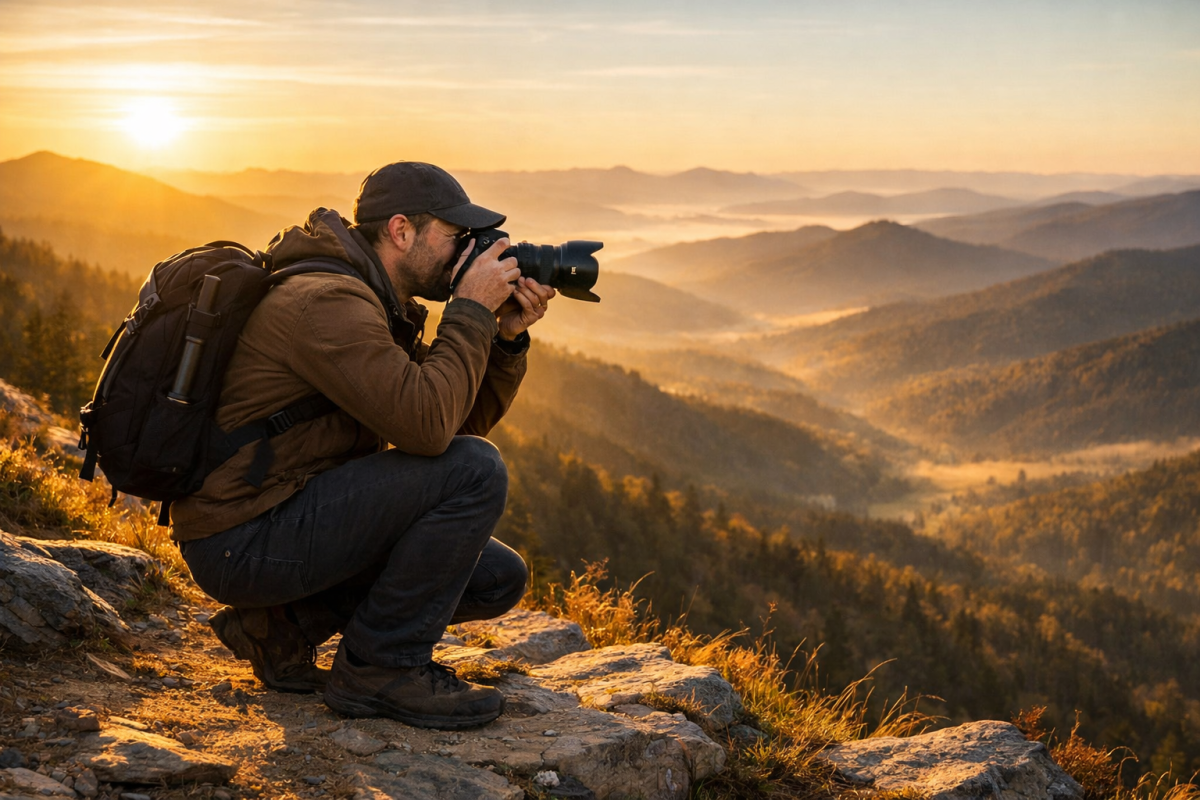
Investing in some photography gear and the skills to capture and edit photographs is an important skill for any travel blogger. If you don't want to learn to edit photos, or you have no talent for it, you can also contract that out and just snap as many photos as you can along the way. Short video clips for use in social content are also worth capturing while you're out, as they add a helpful layer to your content strategy while traveling.
10. Don't Quit Your Day Job
Remember: the road to a money-making blog is a long one. Even those who know what they're doing take months and that's with prior connections and audiences- not to mention a budget. If you're starting from scratch, you're going to need to put in some time.
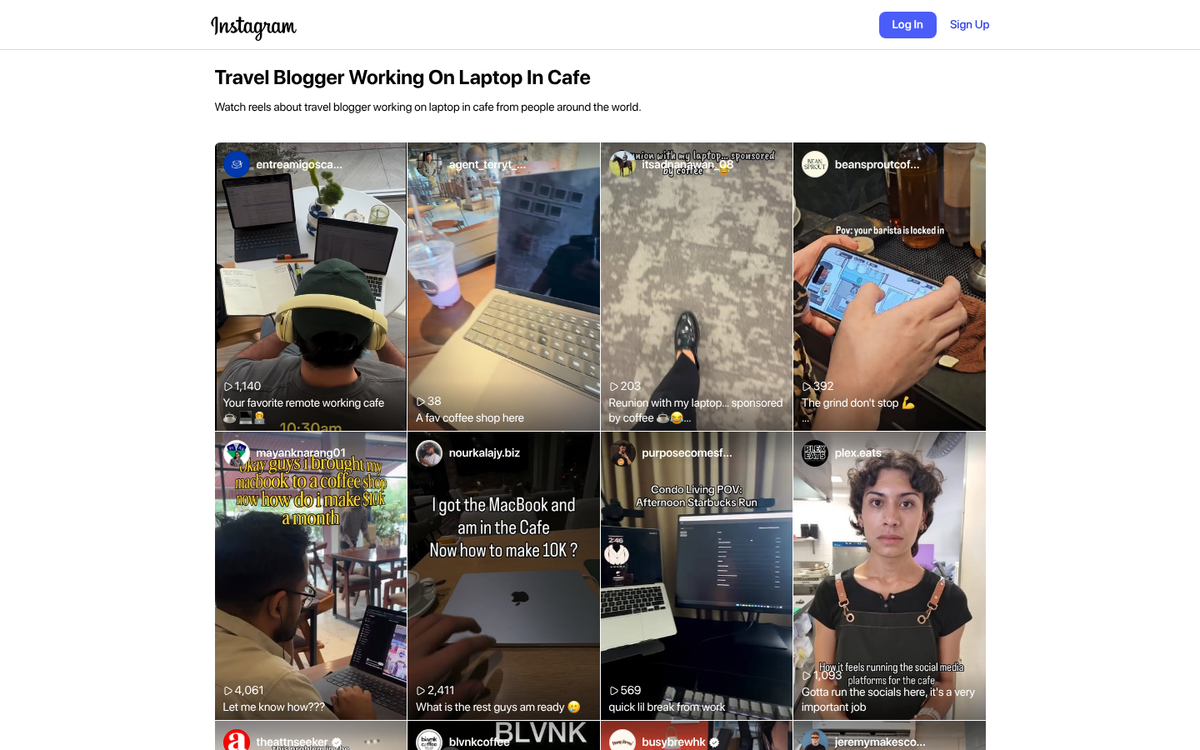
Thus, starting a travel blog is more a choice for anyone who already travels, either for their day job or for standard vacations. If you'll have to scratch up the time and budget to travel, it's easy to slip into a slump for months or years with nothing to write.
11. Don't Force Monetization Too Early
There's a self-defeating cycle new bloggers fall into and it's a trap. You apply a few display ads early on and make next to nothing and you think "maybe if I run twice as many ads, I'll get twice as much money!"
The problem is, you usually won't. More ads and more blatant monetization tend to drive away the engaged audience you want to build up. Beyond that, display advertising through quality networks like Mediavine or Raptive usually requires at least 25,000-50,000 monthly sessions before the payouts become meaningful. Trying to rush to hit those numbers usually isn't worth the trade-off in user experience. Monetize with a light hand and do it as organically as possible - our complete list of blog monetization techniques can help you find the right approach for maximum long-term effect.
12. Remember Blogging is a Lot of Work
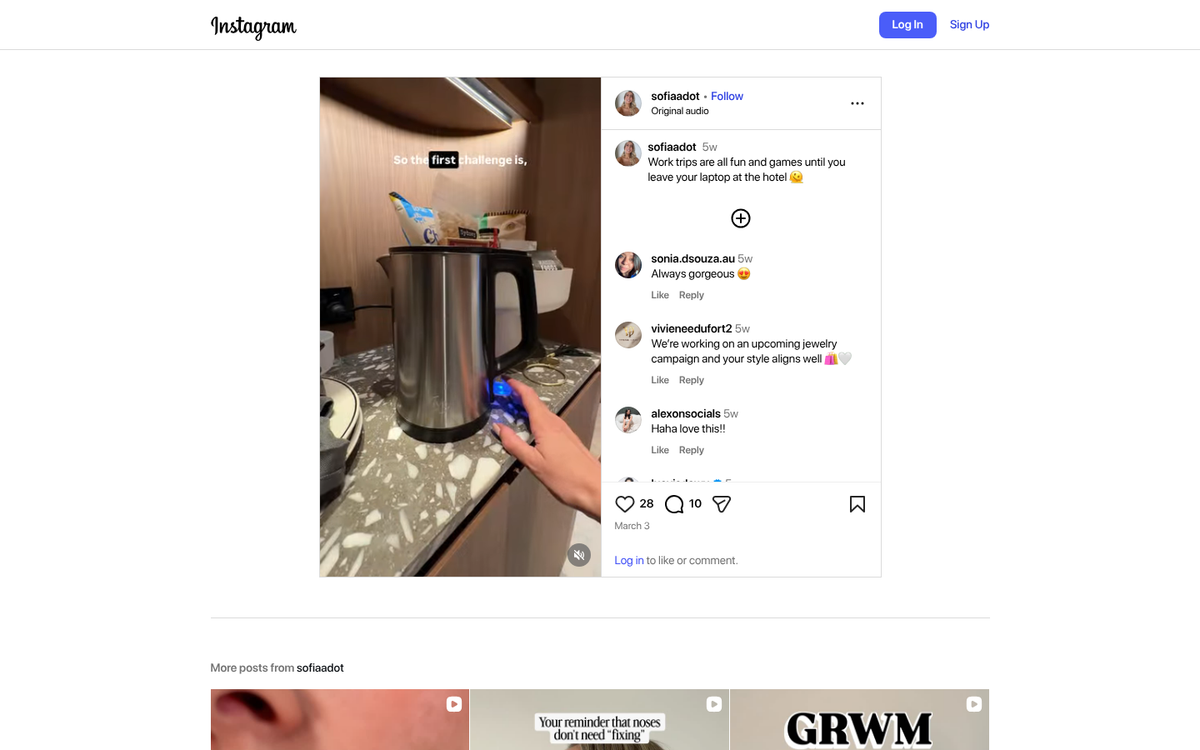
One common misconception with travel blogging is that your typical work day is waking up in a tent on a beach or in a mountain cabin, spending an hour on the porch looking at the scenery and writing a blog post and then experiencing nature. The reality is, you're spending 1-2 days out on your adventure and then another 3-4 back at a hotel, holed up at a desk writing your posts. Blogging isn't a glamorous lifestyle and you still have to take the time to actually work if you want to be successful. Let that slip and you're just another tourist with an Instagram.
13. Get Used to a Writing Schedule
Or at least a publishing schedule. A successful travel blog in the current era publishes new content consistently, whether that's once or twice a week or a handful of times per month. Consistency matters more than raw frequency, so choose a pace you can realistically sustain.
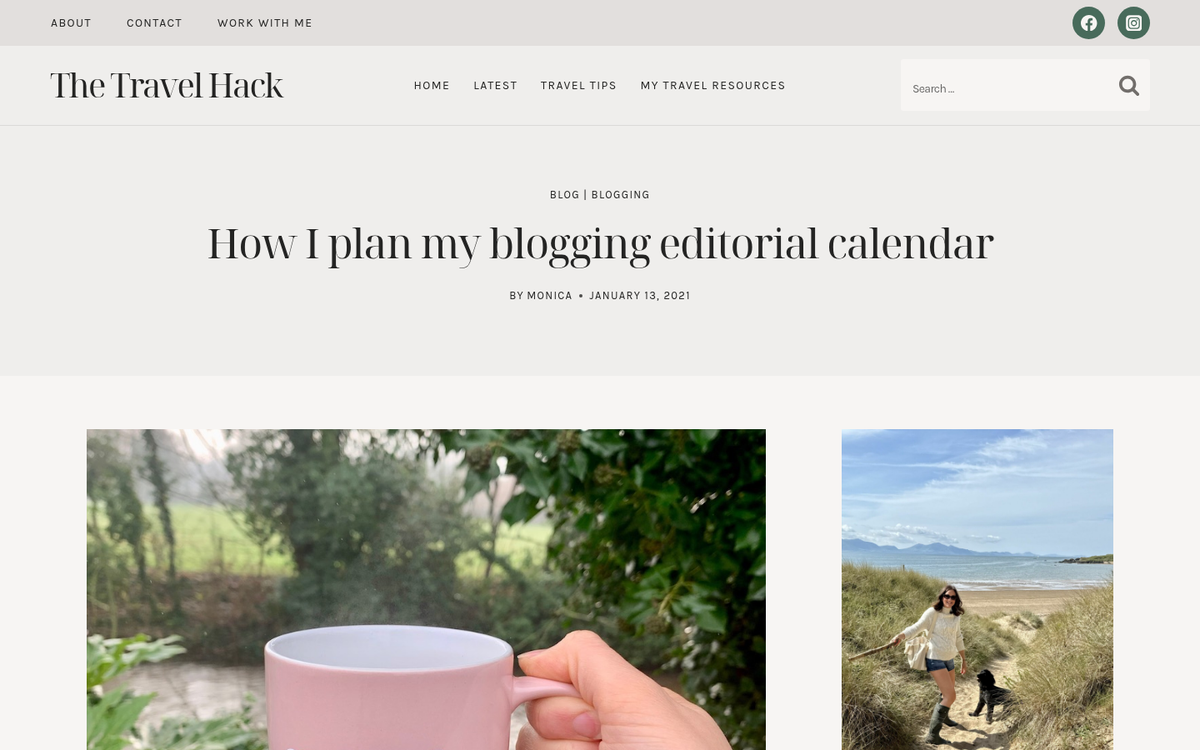
I recommend going for 1-2 posts per week while you're just starting out. Initially, it will take a while to write even a single post or come up with a single idea. But as you practice, it will be faster and easier, and you'll also find ways to keep yourself from burning out along the way.
14. Create a Backlog
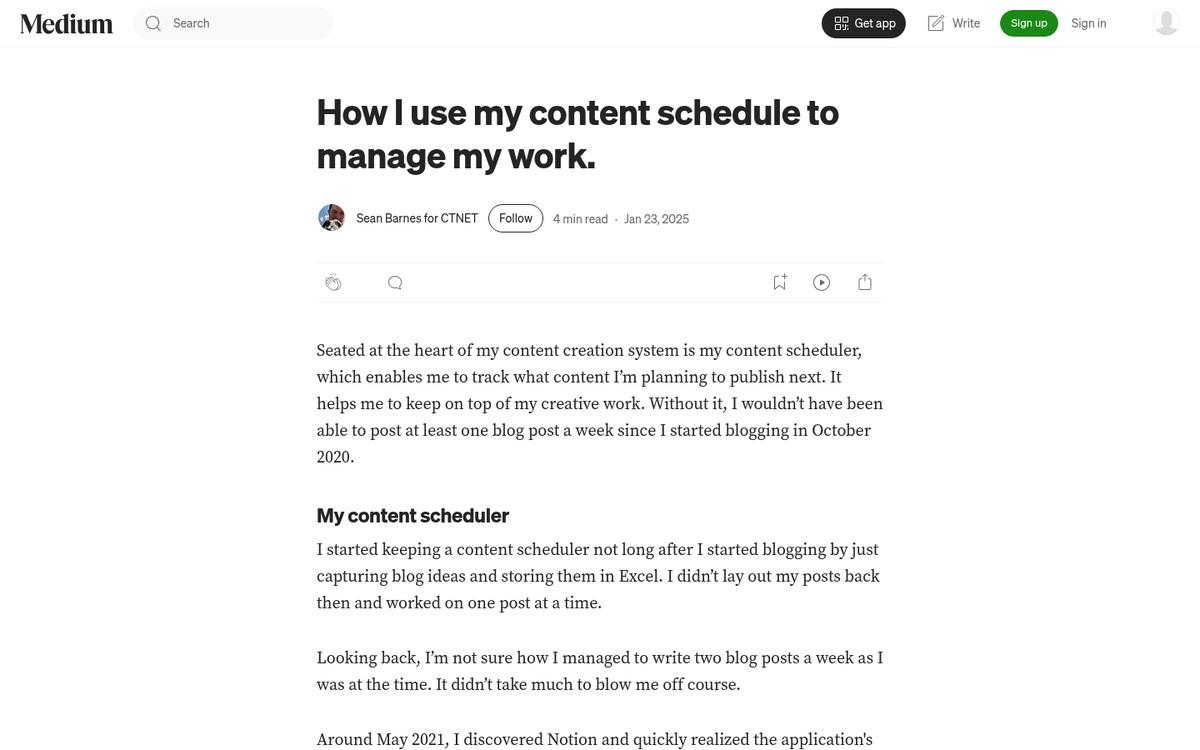
As much as you can, create a backlog of content you can publish during times you're not able to travel. This is the best use for the more generic non-travel-related posts. For example, posts about how you started your blogging process, posts about how you're monetizing or the other business parts of a travel blog and the more generic gear reviews and company reviews all work here. Maintain at least two months worth of these pre-written and ready to be published for when you can't publish an otherwise travel-focused post.
15. Travel Frequently
You need to travel as much as possible to give yourself the fodder for writing and to sustain the lifestyle. The more experienced you get with traveling, the easier it will be to get your schedule going in a new place each time.
I know, it's a basic tip. But I've seen people try to start travel blogs based on their once-every-six-months vacations.
16. Set Up an Email List
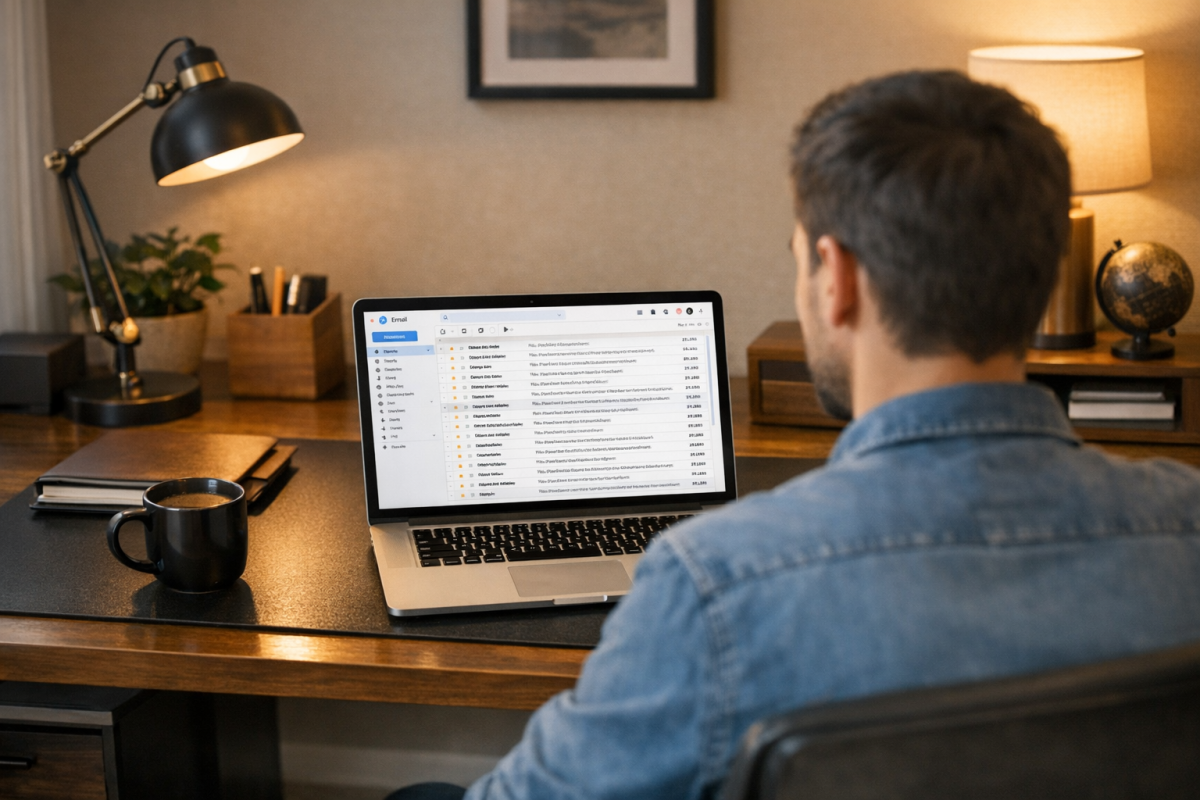
An email newsletter is a source of marketing and audience interest that only you control and it's one of the best marketing channels you can create. Unlike social media platforms which can change their algorithms or restrict your reach at any time, your email list is an asset you own outright. Start building it from day one- even if growth is slow. Once you have subscribers, learn how to email bloggers after you publish a post to maximize every piece of content you create.
17. Get Started with Display Advertising at the Right Time

When it comes to monetization, display advertising is usually the first thing new bloggers reach for- it has a low barrier to entry. But the returns are minimal until you have traffic. Ad networks like Ezoic, Mediavine and Raptive usually need anywhere from 25,000 to 50,000 monthly sessions before the income can become worthwhile. Mediavine, just to give you an example, requires 50,000 sessions per month. But bloggers who qualify report income jumps after making the switch from lower-tier networks. Use basic display ads in the very early stages just to offset hosting costs. But don't use them as a primary income stream until your traffic justifies it.
18. Register for Affiliate Programs
The second form of monetization you can use is one I legitimately recommend prioritizing early on: affiliate advertising. Amazon Associates, third-party affiliate networks and dedicated programs run by travel businesses, booking platforms and gear businesses can all generate actual income through your referrals.
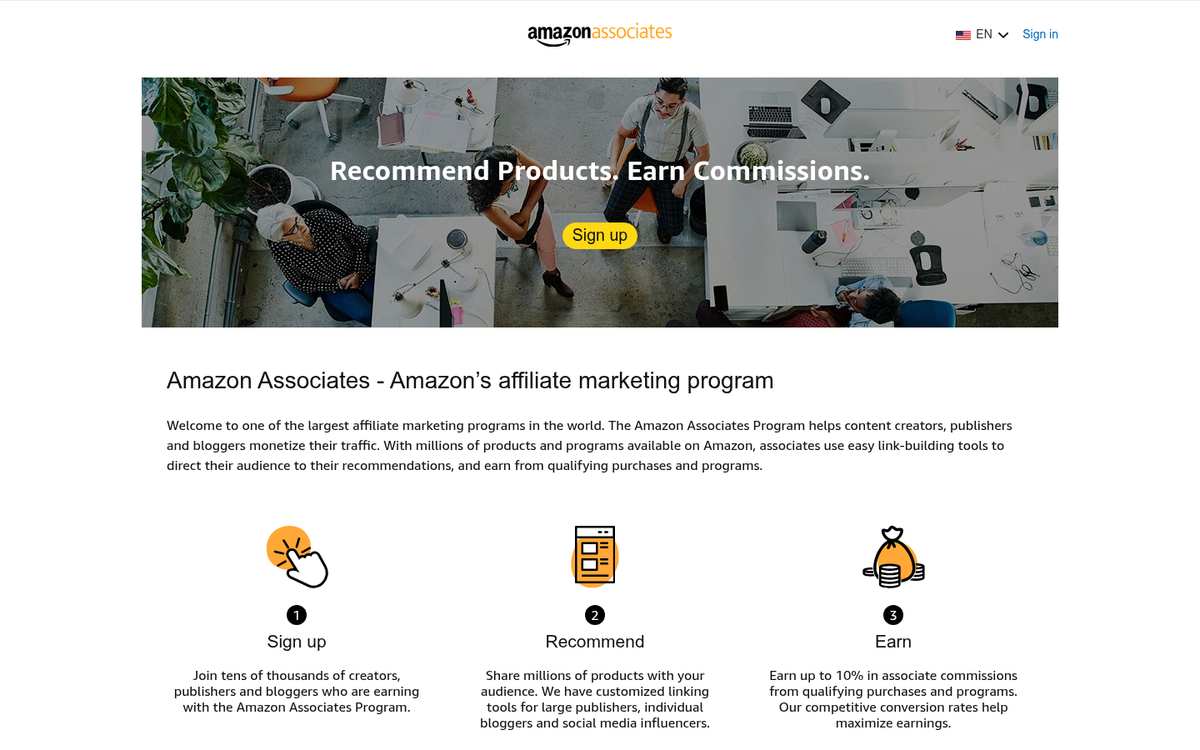
Affiliate marketing is its own discipline, so I recommend reading up on it if you want to use it as a monetization strategy. Done well, it can earn you income even from posts with pretty modest traffic.
19. Look for Partnerships with Travel Companies

Once you reach a level of audience, travel businesses - anyone from hotel chains to travel agents to local tourism boards - may be interested in sponsoring a post or mention on your site. They will pay you to feature them and you can do so in an organic way that still serves your readers while generating income.
20. Create a Sponsorship Page
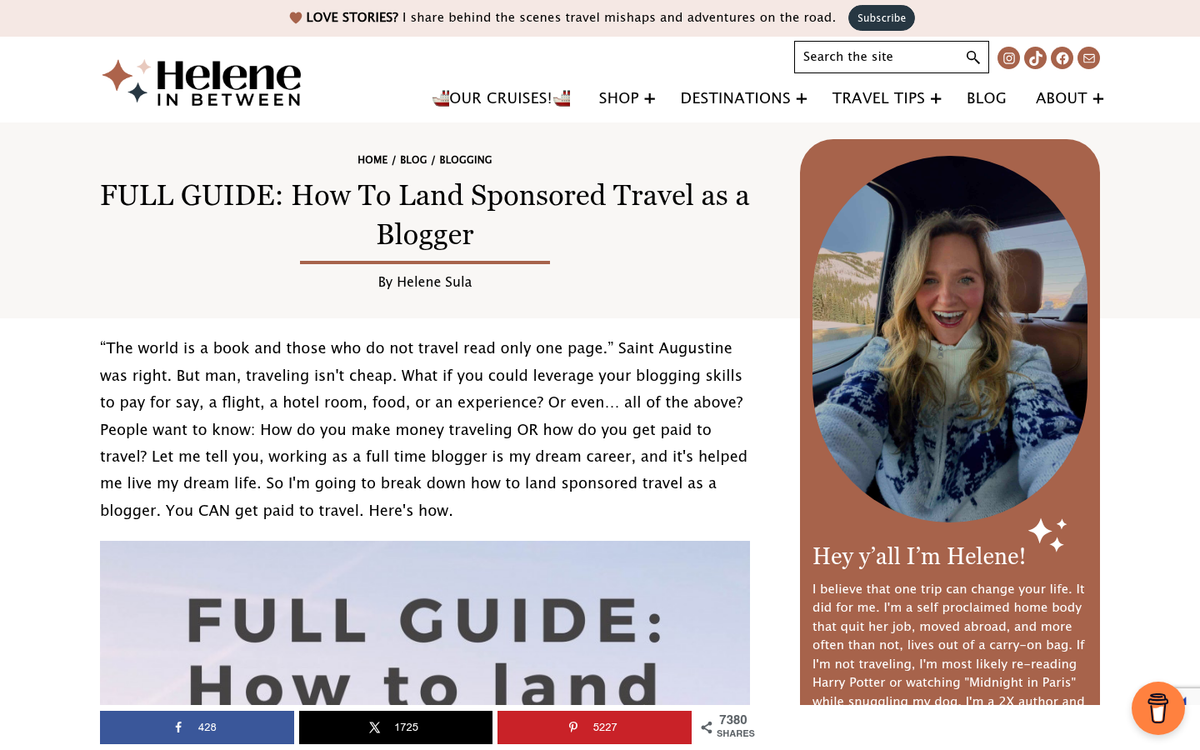
Speaking of sponsorships, at this point it's a good idea to make another of the large evergreen pages like your About page- this time, make it full of information on how a possible sponsor can reach out to you to ask about your rates, how they can offer you deals or sponsor your travel in exchange for mentions, or whatever other arrangements you want to make available. Keep this page as up to date with your latest traffic and audience metrics as possible so you can passively attract as many partnership opportunities as possible.
21. Consider Selling Information
Some travel blogs build e-books, courses and other informational products, either about travel destinations or about the business of running a travel blog and monetize by selling those. Some travel bloggers also offer consulting or one-on-one coaching.
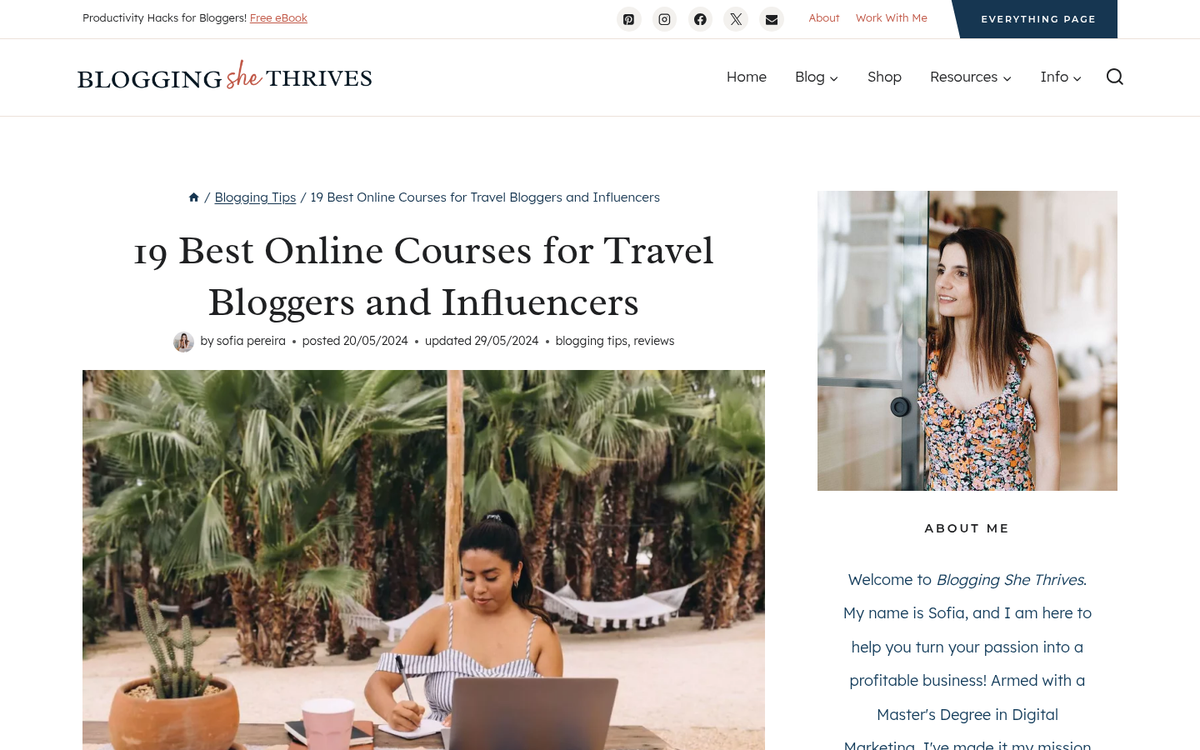
These are valid income streams if you're willing to position yourself as a teacher and thought leader. But they tend to work best when you have name recognition and a large, engaged audience behind you.
22. Consider a Members-Only Area

Some travel bloggers have had success creating a members-only area, like a private community or forum, where members pay a recurring fee. Platforms like Patreon or Substack make this pretty easy to set up. Engaged audience members may be willing to pay for access to more intimate content, trip planning advice, or direct Q&A with you- it's worth thinking about once your audience is large and engaged enough to support it.
23. Sell Your Services

The most experienced travel bloggers use their expertise to offer services as trip consultants or travel advisors. Others sell their wider content skills on a freelance basis, whether that's writing, photography, or social media content creation. These are all ways to supplement your blog income and that's also the case in the earlier years before passive revenue streams kick in.
24. Reach Out to Other Travelers

Reaching out to other travel bloggers and content creators in the space can be a great way to build up a network, grow an audience, and make new friends.