





Key Takeaways
- Direct sponsorships cut out middlemen like Google, making them more reliable as over a third of US users block ads.
- Create an "advertise with us" page, use placeholder ads, and share cross-channel statistics to attract potential sponsors.
- Start small and work up gradually; industry giants won't sponsor low-tier blogs, but smaller businesses might.
- Offering free trial advertising builds social proof, attracts further sponsors, and helps you practice managing deals.
- Exceed sponsor expectations with measurable results to secure renewals and justify price increases over time.
A blog sponsor is an entity - a person or company - willing to pay you for an advertising slot on your site. Depending on the scale of the sponsorship, they may have a permanent sponsorship logo embedded in your footer, or they'd be one of a few rotating ads. They might also just be a temporary partnership while you run a contest, prizes courtesy of your sponsor.
A sponsorship is a little different from traditional web advertising. Essentially, you cut out the middleman. Google, or whoever; you don't owe them a penny for your sponsorship, because it's a direct deal between you and the sponsor. This matters more than ever in 2026, with over a third of US internet users now running ad-blocking software. That means a chunk of your audience may never see a traditional display ad at all, which makes direct sponsorships one of the most reliable revenue streams available to bloggers.
There's only one downside to cutting out the middleman, and that's losing the laws and competition that comes with a marketplace run by a large platform. Your sponsorship deal could be great, or maybe less than you'd get through traditional ads even with the middleman cut - it's up to you to negotiate well. Research suggests that as many as 88% of sponsorships are inefficient, with businesses miscalculating their ROI by as much as 68% on average.
So how can you draw a sponsor or two?
Make Your Blog More Attractive

First and foremost, make your blog look more interesting to advertisers and sponsors. Even if sponsorship doesn't work out, the changes you'll make here will benefit you in the long run, and that's also the case with other forms of monetization.
- Create an "advertise with us" page for your site. This is similar to how you might create a "write for us" page when you're trying to attract guest bloggers. This page will have your contact information, restrictions and guidelines. You may want to reserve your rates for private communications, for individual negotiations.
- Make sure any ads you're already running are relevant to your page. You don't want your lifestyle cooking blog to be running ads for cosmetic surgery and online pharmacies.
- Use placeholder ads. If a sponsor visits your page, they want to see where their ads would go. Placeholder ads allow you to advertise your own products while still showing where ads would be for a sponsor.
- Be willing and able to show site statistics on request. Sponsors want to know your demographics, your click rates, your monthly visitors, your impressions, and so forth. In 2026, smart sponsors are also looking at cross-channel data - combining your website analytics with your social media reach and email list metrics. Brands that integrate data across multiple channels see up to 47% higher ROI than those evaluating each channel in isolation, so the more complete a picture you can paint, the better.
- Ditch low-quality display ad networks. Filling your site with bottom-of-the-barrel programmatic ads tells potential sponsors you'll settle for anything. It also dilutes the advertising attention that a sponsor would want exclusively for themselves. Consider upgrading to the best ad networks available to make a stronger impression.
Recognize Your Place
As a pretty low-tier blog looking for advertising, you're not going to find industry giants willing to pay you for ad space. You're not going to immediately earn the big dollars - though it won't hurt you to reach out to those bigger businesses to see how their communications process works. Start small and work your way up.

If you want to get a better sense of what businesses are actively spending on sponsorships in your niche, places like SponsorUnited now track over 360,000 businesses and 1.8 million deals across sports, entertainment, media and talent. While it's geared toward bigger publishers and rights holders, browsing it gives you a basic picture of which businesses are actively sponsoring content and at what scale.
Consider a Free Trial
While it seems like it defeats the purpose of a sponsorship to give out free advertising, see it as something of a pilot program. When you give a sponsor a free week or free month of advertising on your site, they can get some exposure with no danger. You show the sponsor what your blog can do for them, and they can choose if they think it's worth keeping up with the advertising after the trial period.
Another benefit of the free trial is that it gets advertising on your site. There's a mentality amongst humans that few are willing to take the lead. There's danger connected with being the first, sticking your neck out. When other possible sponsors see that company X is already advertising, it changes their perspective. They go from "well, I dunno if I want to gamble on this site..." to "crap, X is already doing this, I better get in on it before I lose out."
Of course, it's also practice. By running those ads for free, you learn about the process of putting together a deal, placing advertising, watching ad performance manually, and dealing with other businesses professionally.
Please Your Sponsors
One of the best ways to grow in the industry - any industry - is to be an over-achiever. If you estimate that your sponsored content will deliver a level of engagement or conversions and you sell that expectation to advertisers, imagine how they'll feel when you beat it. The more you deliver in terms of traffic, conversions and demonstrable ROI, the better off you are. You help hook them on sponsoring your site, and they're more willing to roll with price increases over time.

Back that up with data. One tracked conference sponsorship documented a 40% increase in qualified leads directly attributed to the event. If you can show sponsors similar concrete results - even on a smaller scale - you become far easier to say yes to on a renewal.
Event Sponsorships
All of this is talking about sponsorships that work like advertising without the middleman - the goal is running ads on your site and paying you directly for the opportunity. What about other kinds of sponsorships, like events and giveaways?
You have two options here; you can tie giveaways in with normal sponsorship packages, or you can keep them very separate. When you add them in, it's a package deal to run ads alongside the giveaway. If you keep them separate, you can make deals to bundle them for a more profitable price.
One scenario is partnering up with a semi-related business. You see this quite a bit in the tech sector. A site writing reviews about video games and computer hardware might partner up with a game developer to give away keys for a game. The sponsor gets the word out for their game, and the blog gets a boost in readership because they're giving away free things.
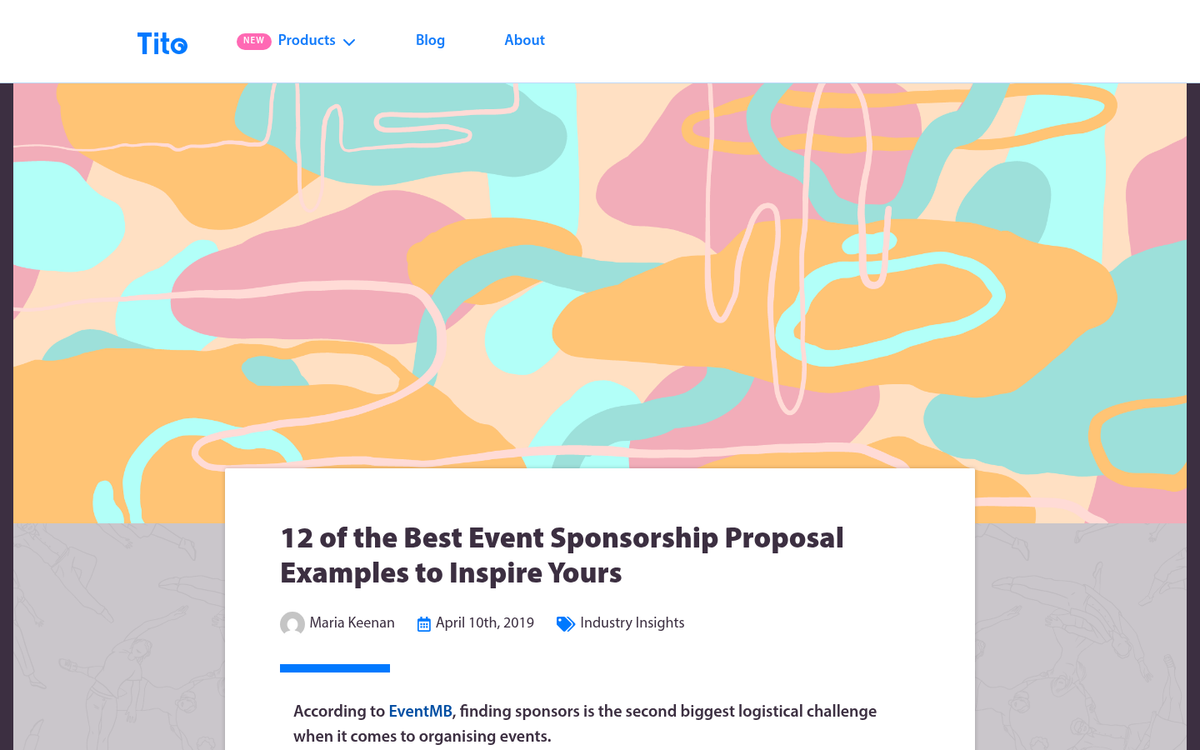
The trickiest part of event sponsorships is finding businesses in the right position to offer a giveaway sponsorship. But when you do find them, they can work out excellently.
It's easier if you have a physical event where a physical business can sponsor you. Platforms that are marketplaces for sponsors and event organizers are out there across niches, from sports venues to trade shows to live content events. Studying how a similar business in your niche handles their events can help you rope in sponsors for your own blog-based events.
4 responses
Thoughtful replies only - we moderate for spam, AI slop, and off-topic rants.
Thank you for the tutorial. Do you think adding a "Sponsors" page to our site will help us attract more sponsors as well?
Hi Kyamanywa! That certainly couldn't hurt, even if you don't have any sponsors yet. You could leave an email or a contact form on that page as well, such as sponsors (at) yourwebsite.com, so anybody that wants to advertise with you or sponsor you will have an easier time getting in touch with the right people. Good luck!
Thank you for the tutorial. Do you think adding a "Sponsors" page to our site will help us attract more sponsors as well?
Thanks, James. I learned some good stuff.