People love memes. They're some of the most viral pieces of content ever to grace the Internet, and they're universally incredibly simple. All it takes is an image and a bit of text. With under 10 words, you can have a piece of content that can out-perform the best blog post you've ever written... when used properly. Research from New York University found that memes are 10 times more effective than regular marketing visuals, achieving a 60% higher rate of organic interaction - and the average click-through rate for a meme marketing campaign sits around 19%, compared to just 6% for standard marketing campaigns.
That's the problem with web memes, though. They're fairly strict in their formula. When you violate the formula, you lose the potency of the meme. If it wasn't a meme, you'd just end up with an image with some text you hope someone finds funny. When you start with a meme, the violation just makes you look out of touch.
In order to successfully grow your traffic with memes, you need to use them properly. You also need to use modern memes, which means keeping up with meme culture on sites like Reddit, X (formerly Twitter), and TikTok. The landscape has shifted considerably - platforms like Tumblr and Imgur have declined significantly in relevance, while TikTok, Instagram Reels, and X have become the dominant venues where memes are born, spread, and die.
Before you begin, though, make sure memes are right for you. According to a YPulse survey, 75% of 13-to-36-year-olds share memes - so if that demographic overlaps with your audience, meme marketing deserves serious consideration. If your audience skews older or more traditional, the ROI may be harder to justify.
Key Takeaways
- Memes are 10x more effective than regular marketing visuals, with a 19% click-through rate versus 6% for standard campaigns.
- Modern memes live roughly 4 months on average, and just days on TikTok, so timing and trend-monitoring are critical.
- 75% of 13-to-36-year-olds share memes, making audience demographic overlap essential before committing to meme marketing.
- Match your format to your platform: static images suit Reddit and X, while video memes belong on TikTok and Instagram Reels.
- Niche industry memes perform better in targeted communities and email newsletters than in large general social media platforms.
Step 1: Know Your Memes
There are two ways to learn about meme culture. The first is to be an active participant in the places where memes are made and shared. In 2026, those places are primarily Reddit, X, TikTok, and Instagram. Platforms like SomethingAwful, Tumblr, and Imgur that once dominated meme culture have largely faded from the mainstream. TikTok in particular has become one of the fastest-moving meme ecosystems ever seen - audio-based memes, visual trends, and remix culture all move at a pace that makes older platforms look glacial by comparison.
The best advice remains the same: lurk before you post. These communities have long memories, and a clumsy first impression from a brand can go viral for all the wrong reasons. If you're thinking about growing your site with viral content, understanding meme culture is essential groundwork.
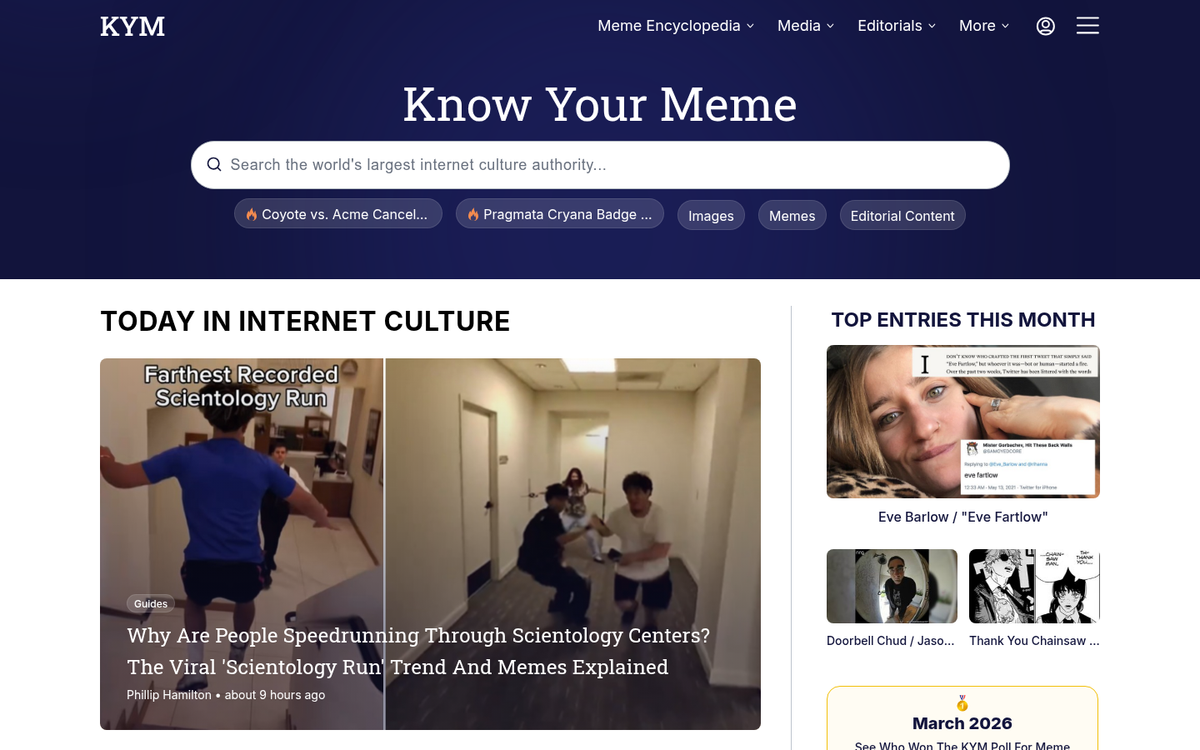
The other way to learn memes is to dig into Know Your Meme. This site remains a solid reference, functioning like a combination of Wikipedia and Urban Dictionary for Internet culture. That said, it's still studying a culture that moves faster than it can document. A meme can live and die on TikTok in days before Know Your Meme ever catalogs it. Use it as a reference point, not the final word.
The best authority is always the platform itself. Spend time where you plan to share your meme, understand the local culture, and recognize that what lands on Reddit may bomb completely on TikTok and vice versa.
Step 2: Find a Trending Meme
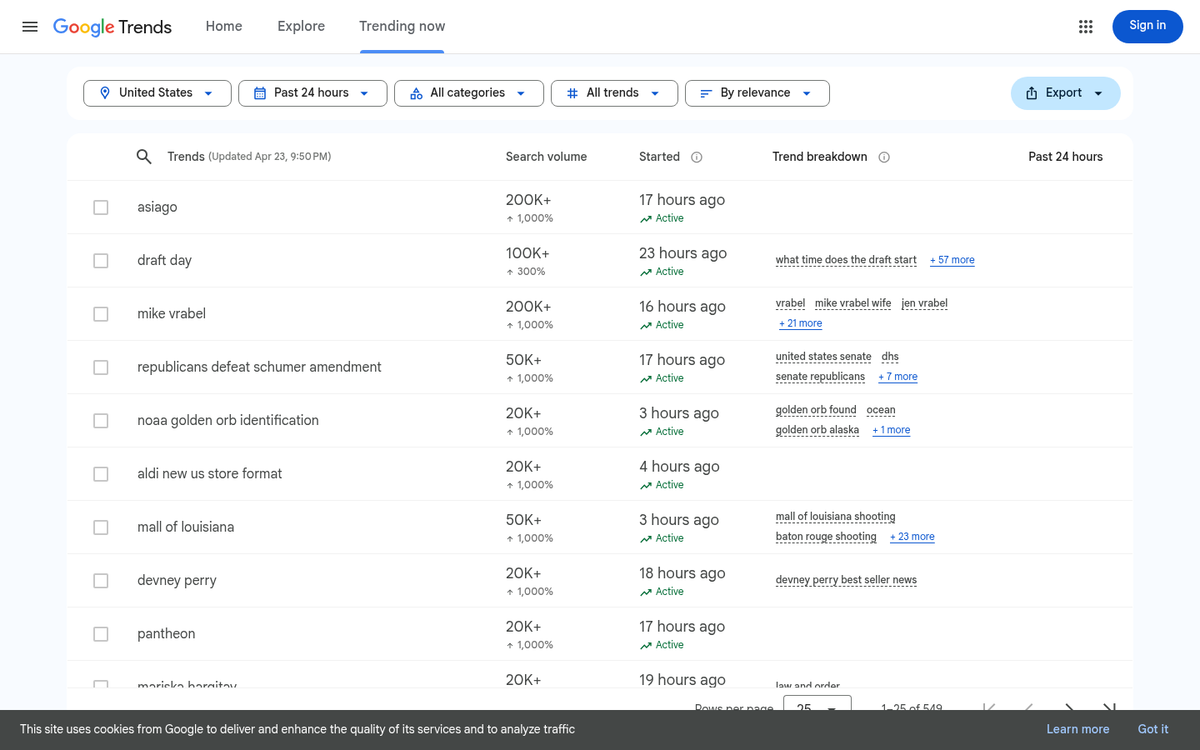
The lifespan of a meme has shortened dramatically. A Google Trends analysis found that the average lifespan of a modern meme is roughly 4 months - down from nearly 24 months back in 2008. On TikTok, that window can compress to days or even hours. This means timing is everything.
Your job, if you're trying to market using memes, is to spend time in your target communities and monitor meme trends in near real-time. Figure out what's on the rise and capitalize on those memes quickly. I don't recommend trying to create your own meme format from scratch, as it typically ends in failure. Even if it's hilarious, many users will instinctively resist anything that feels like a manufactured marketing attempt.
Tools like Google Trends, TikTok's Discover page, and Reddit's trending feeds can help you stay current without having to spend hours scrolling every day.
Step 3: Be Funny

A sense of humor is important, but more than that, you need to know what your target audience finds funny. You're probably going to try to create industry-specific memes, which means you're targeting an industry audience. That audience may have very different tastes from the average Reddit or TikTok user.
Social Media Today documented a 12% increase in sessions from social media and a 16% increase in users after one brand introduced memes into their content mix, compared to the prior three-month baseline. But those results depend entirely on the memes resonating with the right audience. Know your audience before you craft anything. You only have a few words and a picture - or a few seconds of video - to connect, and if they don't get the joke, the effort is wasted.
Step 4: Make Them Properly
You can open up Photoshop and slap some text over an image, but that's rarely the best approach for static memes, and it completely misses the boat for video-based meme formats.
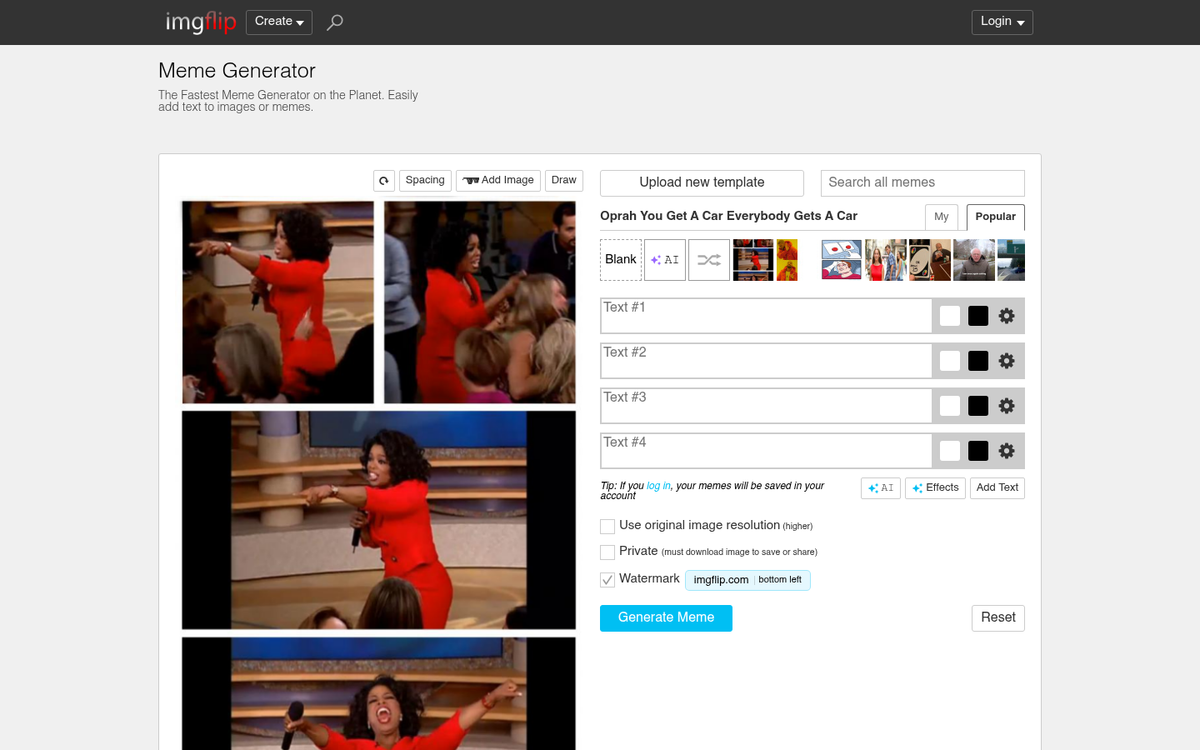
For static image memes, font and format still matter. Most classic meme formats use Impact, which is immediately recognizable. Deviating from the expected format can make your meme look off. Web-based tools like Imgflip and Memegenerator remain solid choices for creating properly formatted static memes - note that Quickmeme, once a go-to tool, has been largely inactive for years and should be avoided.
For video memes - now increasingly dominant thanks to TikTok, Instagram Reels, and YouTube Shorts - CapCut has become an industry standard for quick, meme-ready video editing. Many viral meme formats exist as audio trends or visual templates within TikTok itself, meaning you can participate in the format natively without any third-party tools at all.
Match your format to your platform. A static image meme works well on Reddit and X. A video meme is more at home on TikTok or Instagram Reels. Posting a static image meme to TikTok in 2026 is the equivalent of showing up to the wrong party.
Step 5: Share Your Meme
How specific is your meme to your industry? If it's highly niche, you'll have a hard time getting traction in large general communities. Reddit will downvote it, TikTok's algorithm won't push it, and Instagram won't surface it to non-followers. In that case, you're better off sharing it on your own site, your blog, your email newsletter, and within specific industry communities or LinkedIn groups where the context will be understood and appreciated. Forbes notes that meme campaigns achieve a 14% higher click-through rate compared to email marketing, so even embedding memes within your email content can move the needle.
On the other hand, if your meme is more general and you're relying on people noticing it was created by your brand, you can share it more widely. Reddit, X, and Instagram all have their roles. TikTok is the highest-upside platform for organic reach in 2026, but it's also the most unforgiving if the content feels forced or inauthentic.
Let your meme out into the wild and watch how it performs. Learn from your experiences - most early attempts will be failures - and keep refining. The brands that win at meme marketing are the ones that treat it as an ongoing practice, not a one-time campaign. Nothing is more transparent than a business that tries meme culture once, fails quietly, and retreats. Consistency and genuine cultural fluency are what separate the brands that earn engagement from the ones that embarrass themselves trying.