





Key Takeaways
- Embedding a publicly available YouTube video with embedding enabled is legal, as uploading grants all users a sublicense.
- If a video's creator disables embedding, you cannot legally embed it without prior written permission from YouTube.
- The image copyright argument doesn't apply to embeds, since the video remains hosted on YouTube with full attribution intact.
- Courts have ruled embedding legal in some cases, but no single binding federal precedent covers all jurisdictions as of 2025.
- Embedding stolen content likely isn't your legal problem, but monetizing such pages could expose you to copyright claims.
YouTube is a tricky site. The legalities surrounding it, as the largest video host in the world, are a labyrinth- it should come as no surprise that every feature of it comes under scrutiny sooner or later.
Right now, let's talk about the legality of embedding a video on your website, in blog posts primarily. There's more to talk about. But it's also a clearer line than you might assume.
Disclaimer: I'm not a lawyer and I've not contacted a lawyer to write this post. I could always be wrong, so don't construe anything I say as legal advice. If you're in a situation where there could be legal action taken against you, consult with a copyright lawyer before relying on a blog post some dude you don't know writes on the internet.
When You Own the Video
The first scenario will remove some conversation from the rest of this post, so I'm covering it now so I don't need a caveat in every other section.
If you own the content and you're the one who uploaded the video, it's 100% legal to embed the video on your website. You own it! There couldn't be a reason why it would be illegal for you to embed it. The only conceivable exception would be if you created the content and then sold it, copyright and all, to someone else. If that other user decides they don't want to let others access that content, you embedding it maybe a copyright violation.
The only case I can think of where this might happen is if you're a content creator with video skills and someone hires you to create their videos, like how ghostwriters are paid to write blog content, ebooks and the like and don't have their names attached. If I ghost-wrote a book and then put that book on my personal website as a portfolio piece, it would raise some eyebrows. Right? I got paid to write it. But my name isn't credited as an author. To then claim I wrote it would be a violation of the agreement or contract I signed to produce the content.
Video content works the same way. It's still content. If I sign a contract to hand over the rights to a video, I no longer have the rights to the video- it's pretty simple. Whether or not that makes it illegal to embed is another story- it just could be illegal - or at least a breach of contract - to claim I made it when I was hired to make it "under the table" so to speak.
The Image Argument
There's an argument I've seen in a few places. If you post an image on your website then you'll have to have reproduction rights to that image. There are blog posts written about the legality of blog post images- like on this site.
Adding an image to your website is reproducing that image. In order to use an image, you need permission. Either you'll have to be the copyright holder, or you need the permission of the copyright holder, or the image needs to be licensed under a creative commons license that permits free use of the image. There are extra restrictions and problems with image usage when it's mixed up in commercial purposes. Image licensing is a mess.
This is compounded by the fact that so few webmasters actually follow this. There's a pervasive and very incorrect perspective that "if it's online, it's fair game." Artists deal with this all the time. "If they didn't want me to take it, they wouldn't have put it online!" Well, no- they put it online as part of their portfolio to sell their services. That doesn't give you the rights to use it. The only reason they aren't suing you is because legal problems cost money and most artists are fairly poor.
The argument is that embedding a video is like using an image on your site. The owner of the video automatically retains copyright - which is true - and to use it then you'll have to get permission. Is this true?
Well, one of the biggest problems with image usage is that it's easy to save an image and upload it to your site, which is what people do. You're not embedding the image from another source, you're hosting it locally- which means you're likely stripping out attribution for it. A video embed from YouTube is still a video hosted on YouTube- it still has a link to the host of the video, with the relevant information that means. You also aren't trimming out logos or endcaps from the video; the original information, attribution and even calls to action are still there.
The image argument falls apart basically because videos are not images. Sure, they're a high-speed string of still frames. But that doesn't make them governed by the same laws.
YouTube's Terms of Service
The official YouTube terms of use are a large document full of legalese and fine print that everyone who uses the site glosses over, myself included. When was the last time you or anyone else read a full ToS or EULA? I've glanced through a few of them when it's relevant for a post I'm writing. But I've never read the whole way through one when signing up for a service.
In this case, there's a clause in the YouTube terms that's relevant to our conversation. Particularly, it's under section 6, subsection C. I'll quote it here:
- "...by submitting Content to YouTube, you hereby grant YouTube a worldwide, non-exclusive, royalty-free, sublicensable and transferable license to use, reproduce, distribute, prepare derivative works of, display, and perform the content in connection with the service and YouTube's (and it's successors' and affiliates') business, including without limitation for promoting and redistributing part or all of the Service (and derivative works thereof) in any media formats and through any media channels. You also hereby grant each user of the service a non-exclusive license to access your Content through the Service, and to use, reproduce, distribute, display and perform such Content as permitted through the functionality of the service and under these Terms of Service. The above licenses granted by you in video Content you submit to the Service terminate within a commercially reasonable time after you remove or delete your videos from the Service. You understand and agree, however, that YouTube may retain, but not display, distribute, or perform, server copies of your videos that have been removed or deleted. The above licenses granted by you in user comments you submit are perpetual and irrevocable."
Deep breaths. Whew; it's a lot. There's quite a bit going on in that long-winded legalese paragraph, so let's explain it.
By uploading content to YouTube, you give YouTube a non-exclusive license to use your video content. They can use clips of your video in their marketing, embed your videos in their pages as examples of good or bad content and generally do with it as they will, so long as the content remains on YouTube. If you delete the videos, YouTube has a "commercially reasonable time" to remove their use of your content. So you can't delete a video and then immediately sue YouTube for using it in an ad; you have to give them a basic amount of time to remove and replace it. Additionally, they can keep local server copies of your content, which they do for content ID purposes, legal archive purposes and to restore it if you un-delete it without having to upload it again.
The part that matters here is that you also grant every YouTube user a license to access your content and to "use, reproduce, distribute, display, and perform such content as permitted through the functionality of YouTube and the terms of service."
In other words, as long as YouTube's terms permit it, any YouTube user can embed your content without needing to ask your permission, because you already gave them permission essentially by uploading your content to YouTube.
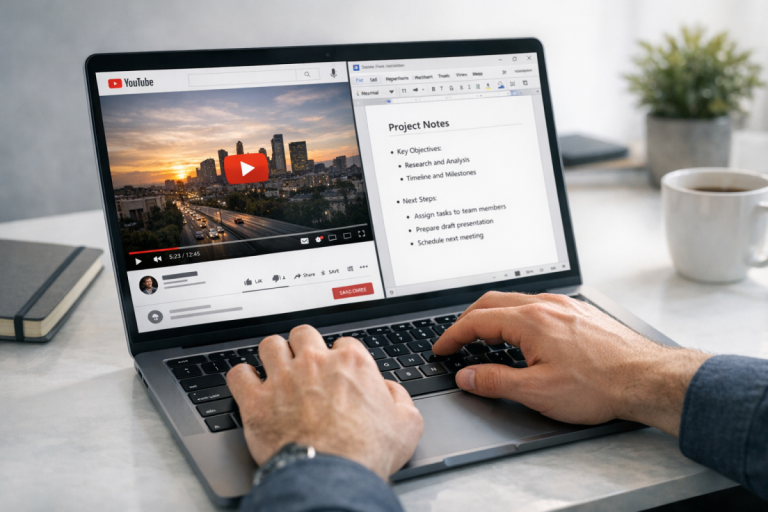
Or, to turn it around as the person doing the embedding: if the content is publicly available on YouTube and if the embed feature is enabled on the video, it's 100% acceptable to embed the video in your content, so long as your use of it complies with the full terms of service.
If the person who uploaded the video disabled embedding, they are saying "this video is not allowed to be embedded." Under YouTube's Terms of Service, sharing that video on any external medium would need prior written permission from YouTube itself. You can't embed it even if you try; you would have to work around the restriction with iFrames, or by downloading and re-uploading the video, both of which are against the terms of service. The same goes for other restrictions, like "this video is unavailable in your country."
What the Courts Have Said
This area of law has seen some actual courtroom activity, though the picture remains somewhat fragmented.
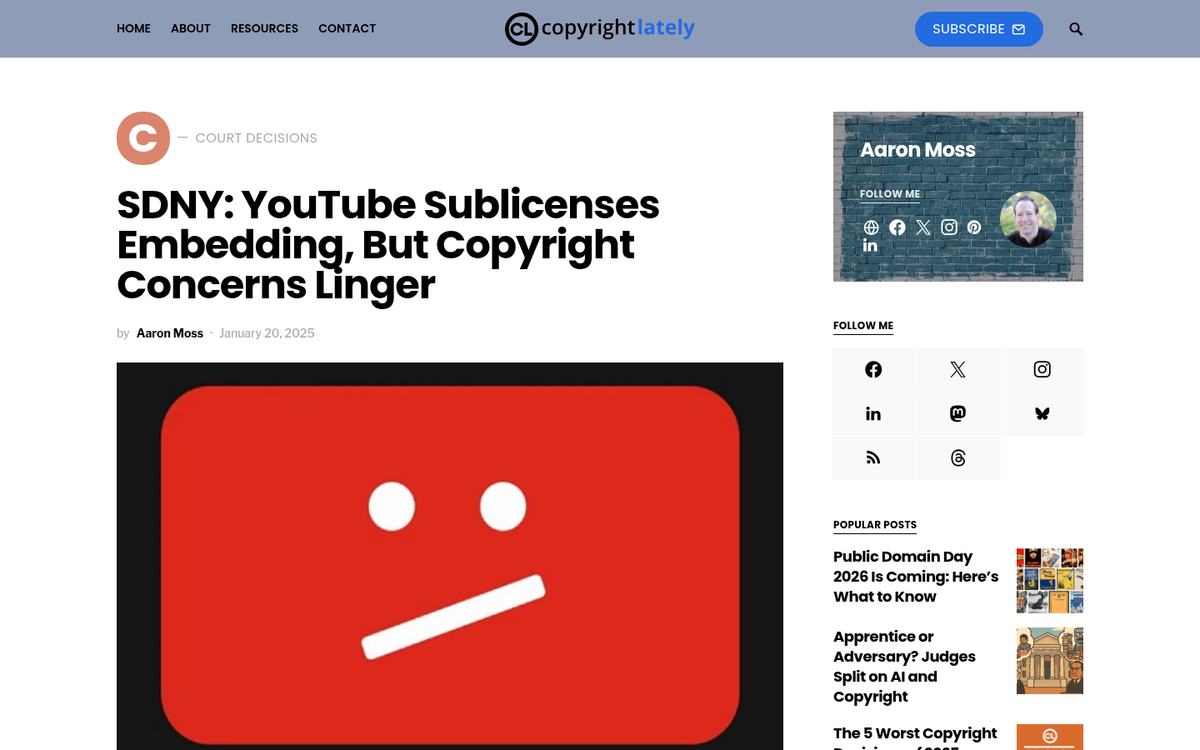
In Richardson v. Townsquare Media, Inc., Judge Alvin Hellerstein dismissed copyright infringement claims over a YouTube-hosted embedded video. The court found that YouTube's Terms of Service "explicitly and unambiguously" grant a sublicense that "clearly extends" to embedding by third-party websites. To explain it plainly: if a video is publicly available and embeddable on YouTube, the ToS already covers you.

However, that ruling doesn't close the book entirely. The contrasting results in Richardson v. Townsquare Media, Inc. and Lynk Media LLC v. Mediaite, LLC illustrate just how fragmented embedding law remains as of 2025. Different courts have interpreted the scope of these licenses differently and there's no single binding federal precedent that settles the question for all jurisdictions.
If you're running a high-traffic commercial site and embedding third-party content, it's worth being aware that the legal landscape is still evolving.
When the Uploader Doesn't Own the Video
There's one more scenario you might run into, which is when the video you're embedding was not uploaded by the person who created it. A movie, stolen and uploaded. A song or music video ripped from another service and uploaded. You know the drill; YouTube is full of this kind of thing. Is it still legal to embed the content?
The answer here is a little murky, so I'll say yes and no.
Yes, it's legal to embed the content. You're not hosting the content and you didn't steal the content. You have some responsibility for at least some due diligence to find the original owner of any content you want to reference or use. But you aren't expected to go out of your way for it. For content that violates copyrights, it's the responsibility of YouTube and the copyright holder to find and police copyright violations.
Can you be sued for embedding a video uploaded by a person who doesn't own the content? Maybe. Copyright law is still a mess in this area and while courts have weighed in on some embedding cases, no single ruling has covered every scenario. Frankly, no copyright holder is likely to go after a person who embeds content; they want to go after the content thief. The only exception could be if you're displaying that content on a monetized page and you're making money from it. The copyright holder may find it worthwhile to sue you for profiting from their content.
It is also likely against the Google Ads terms of service to run ads on a page that hosts stolen content. Embedded videos that are identified as stolen can count and might penalize your Google Ads account.

Relevant clauses in the YouTube terms of service are also in section 6.
- Subsection B: "You shall be solely responsible for your own Content and the consequences of submitting and publishing your Content on the Service. You affirm, represent, and warrant that you own or have the necessary licenses, rights, consents, and permissions to publish Content you submit; and you license to YouTube all patent, trademark, trade secret, copyright, or other proprietary rights in and to such Content for publication on the Service pursuant to these Terms of Service."
- Subsection D: "You further agree that Content you submit to the Service will not contain third party copyrighted material, or material that is subject to other third party proprietary rights, unless you have permission from the rightful owner of the material or you are otherwise legally entitled to post the material and to grant YouTube all of the license rights granted herein."
In short, anyone submitting content to YouTube is claiming to be a licensed copyright holder or representative with legal right to upload the content. If someone steals content and you end up embedding it, it's not your problem, it's the problem of the thief. You may have a responsibility to report the copyright violation. But it's not your copyright to police, so I wouldn't worry about it too much.
Just know that if you're embedding content from a content thief, that content is likely to disappear when a copyright strike is leveled against them and the content is deleted or the account is removed. Your embed won't be long-lived- it's better for you to find the original version to embed for your post.

2 responses
Thoughtful replies only - we moderate for spam, AI slop, and off-topic rants.
Actually, the courts have already ruled that you cannot be sued for copyright infringement for embedding a video that was illegally uploaded to YouTube. Only the person who originally uploaded it can be sued: https://mashable.com/2012/08/03/embedding-video-copyright-infringement/
Hey Scott, thanks for that interesting Mashable article. Good to know people are protected when they embed videos, even ones that may be pirated.