





Social bookmarking began life as a trendy new way to market using the sites of the hour, giants like Delicious and Digg.
Key Takeaways
- Classic social bookmarking platforms like Digg, StumbleUpon, and Delicious have effectively died or lost their original functionality.
- Direct link building through social bookmarking is largely dead, as most sites now nofollow links and Google penalizes link schemes.
- Indirect links remain valuable: bookmarking exposes content to readers who may later link to it from their own sites.
- Reddit's prominence has grown significantly since Google began surfacing its threads in search results following a 2024 licensing deal.
- Social bookmarking still drives high-quality, interest-driven traffic, but success requires genuine community participation, not overt self-promotion.
Who?
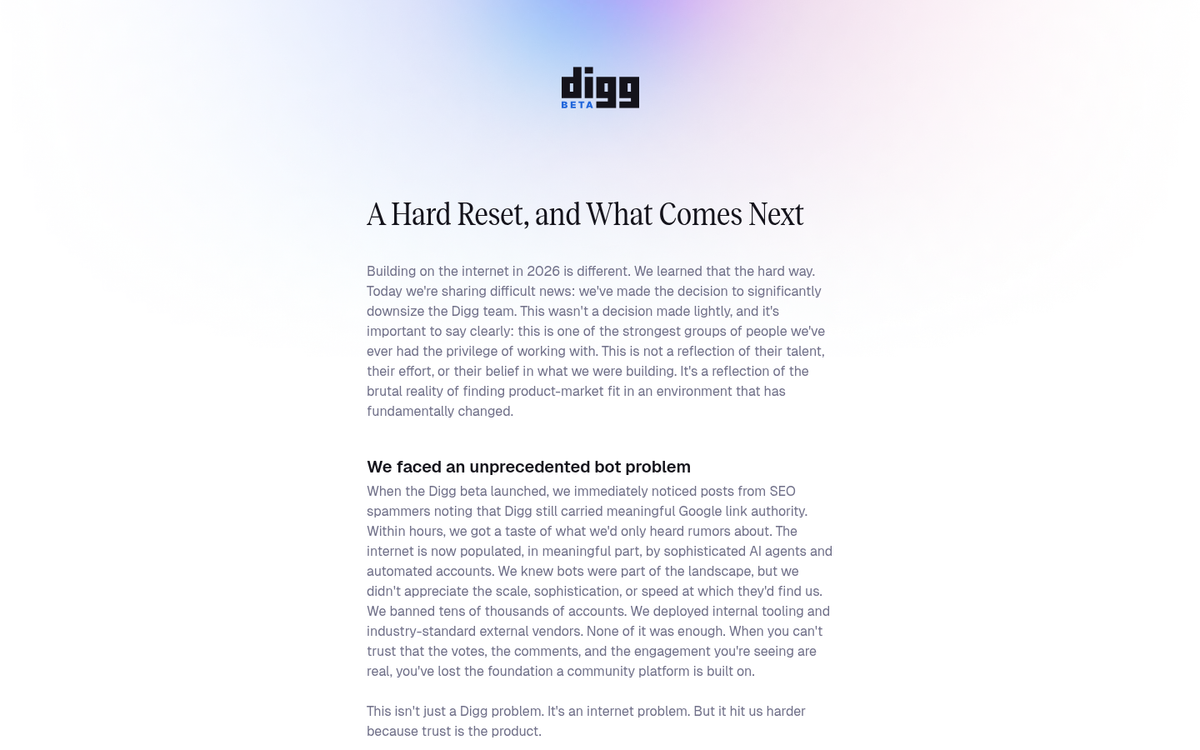
When was the last time anyone used Digg as a social bookmarking platform? The site has gone through so many reinventions over the years that it barely resembles what it once was. What started as a community-driven news aggregator has essentially become a curated content site, with the iconic user submission and voting mechanics that defined it long since stripped away.
Is Digg really social bookmarking anymore? There's no submission form, no community voting, none of the features that made it a marketer's playground in the mid-2000s. It's a shell of its former self, and it's not alone. StumbleUpon shut down back in 2018, rebranding as Mix, which itself has faded into irrelevance. Delicious, once the gold standard of social bookmarking, has effectively died multiple times and is no longer worth mentioning in the same breath as viable marketing channels.
What you really want to know is: is social bookmarking - the real stuff - worth anything for SEO these days?
Direct Links

In the old days, the primary reason anyone would use social bookmarking was the ease of a link. Links used to be far more valuable than they are today, and they also used to be less regulated. Concepts like "nofollow" didn't exist, or weren't widely used. Any site with user submissions thus became a great marketing target.
Sites like Digg, StumbleUpon, Reddit, and so forth were perfect for marketers. They had very little filter beyond community upvotes, and here's the thing: a link on one of those sites didn't disappear just because no one voted it up. It just settled to the bottom, noticed by search engines but not by users. The backlink was still valid.
These days, the vast majority of these sites nofollow their links automatically. Even if they don't, Google understands what social bookmarking is, and they don't want you artificially building a ton of backlinks so easily. Google's algorithms have also grown considerably more sophisticated since then, with multiple core updates over the years specifically targeting low-quality link schemes. I feel comfortable in saying that if your purpose is solely to gain direct backlinks, social bookmarking is firmly dead.
Indirect Links

Indirect links are a concept many marketers disregard, because it's not something you can easily control or measure.
The idea behind indirect links is that by posting on social bookmarking sites, other people become aware of your site. They see your link, they click on it, they read your content. Maybe they like it enough to save it for later, maybe not. The point is, they're aware of you.
Now, the next time they're writing about a topic related to your post, they remember what you wrote. They think "hey, maybe I should find that cool article I read before and link to it." They do, and you earn a link. This link may have come from a site you've never heard of and never thought to contact. Sometimes it might even come from a site much more popular than your own. The direct link from the bookmarking site may not have been valuable, but the link you received certainly was.
Social Recognition
There's a certain value associated with simple name recognition. By presenting yourself on social bookmarking sites, you're putting your content up on a pedestal to be judged. If you fail, on some sites, you just find your link downvoted until it disappears. On other sites, like Reddit, you might even find yourself banned from the community for blatant self-promotion.
On the other hand, what if you find success? At a low level, success means a few upvotes, which promotes your content and gets it seen by more people. It doesn't do a lot on its own, but it puts your post and your brand in front of people who wouldn't have otherwise seen it.
If you see great success, you end up with a meaningful viral surge in traffic. People vote your content up and you end up on the front page of whatever site you're using. You'll find your content shared across other platforms and linked from sites that wouldn't have even known you existed before.
Of course, this relies entirely on the quality of your content. There's no real way to game the votes. Such communities can be very hostile to people trying to compromise the integrity of their voting systems, and ban evasion rarely ends well.
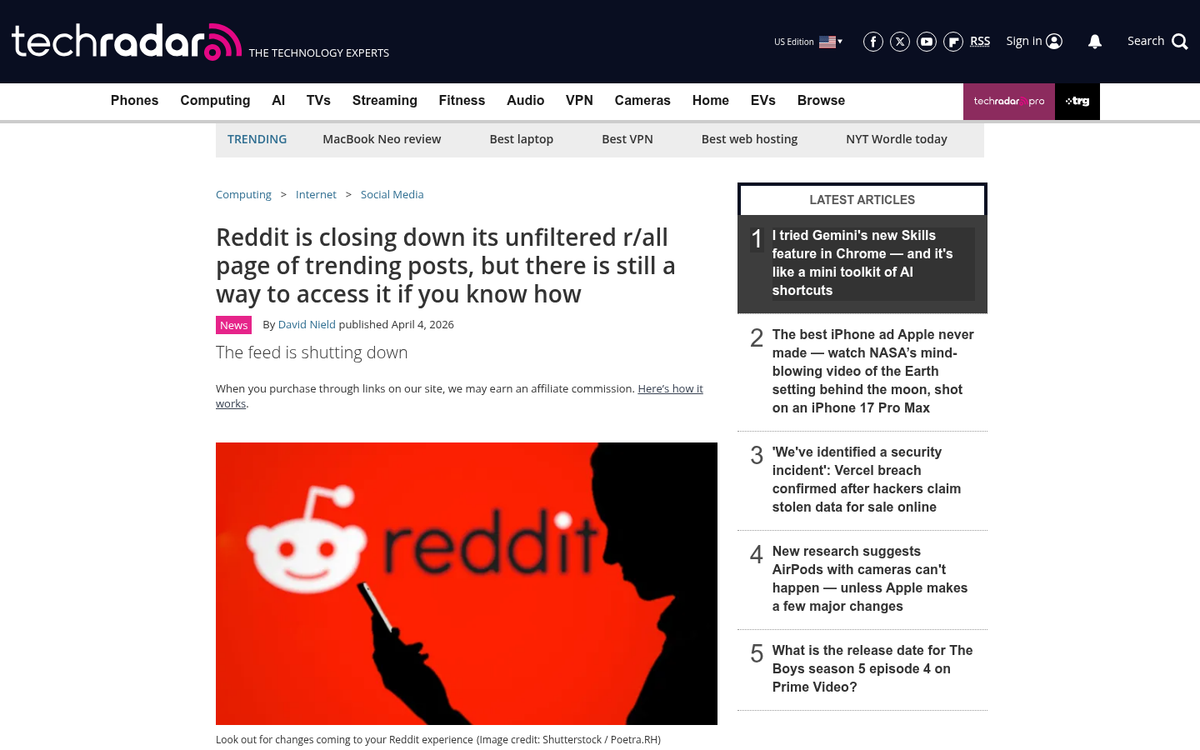
It's also worth noting that Reddit's influence has grown substantially. Google has been surfacing Reddit threads prominently in search results since 2024, following a data licensing deal between the two companies. This makes Reddit an even more strategically interesting platform than it was a few years ago.
Valuable Traffic

Social bookmarking has one enduring benefit, and that's high quality, interest-driven traffic. The people who use these platforms use them to find content they genuinely want to see. If they're clicking your links, they're legitimately interested in what you have to say, and they're just as likely to share it elsewhere as they are to vote it up.
Reddit remains one of the best for this, but it's a very particular place. You have to follow their rules and fit in with the culture of the specific community you're posting in, otherwise you'll find no traction or end up banned.
Part of this involves simply being a member of the community. Reddit's own guidelines make it clear: it's okay to be a Redditor who happens to have a website. It's not okay to be a marketer using Reddit as a distribution channel.
Your goal, then, is to fit in as much as possible. Be a regular user, contribute meaningfully to discussions, and learn how individual subreddits operate before you ever think about posting your own content.
The other part of success on a site like Reddit is finding the right community. Reddit has an enormous number of subreddits covering everything from broad topics like politics and technology to hyper-niche interests that only a few hundred people in the world actively follow.
You need to identify where your content genuinely belongs. Spend time in those communities, understand how those users communicate, and post only when you feel you have something that truly adds value. If you approach it honestly, you can generate a meaningful amount of targeted traffic with relatively little cost.

2 responses
Thoughtful replies only - we moderate for spam, AI slop, and off-topic rants.
Is there any other way to drive traffic other than social bookmarking? I found that social bookmarking nowadays is not really effective like old days. Somehow, it is still difficult to drive traffic to my new site
Your collection of Bookmarking Sites list are rally effective. I am searching this kind of Do-Follow Bookmarking sites List. So Fortunately I have got thats on your website. It's a great collection you have on your Website.I am doing social bookmarking around this list.