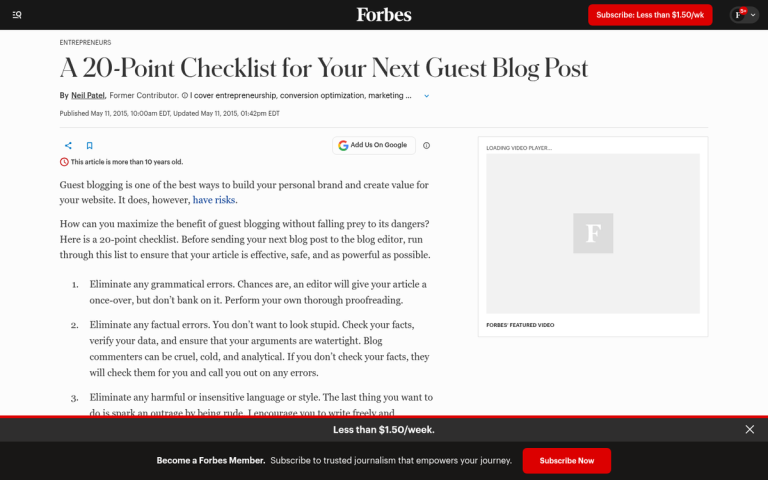
In every industry, there are people who become known for what they have to say. These prolific bloggers, speakers and thought leaders are the go-to sources for industry news, trends and insights. They have their own websites, generally, but they also contribute to others along the way.
In some respects, it's a major milestone to receive a guest post from one of these thought leaders. For some sites, it's within your grasp to attract these content creators as semi-regular or regular contributors. Before you can reach that point, however, you need to attract them. You need to have a site they're willing to work with. How can you turn your site into an attractive location for thought leader posts?
Key Takeaways
- Create a "Write For Us" page with clear editorial guidelines and a submission method to passively attract quality contributors.
- Screen submissions carefully for spam, AI-generated content, plagiarism, and manipulative link-building intentions before publishing anything.
- Growing your own authority as a thought leader makes your site more attractive to other influential writers seeking mutual benefit.
- Engage meaningfully with influential writers on social media before reaching out directly with a short, specific guest post pitch.
- Never publish guest content you wouldn't proudly put your name on; low-quality posts can actively harm your search rankings.
Post a Write For Us Page
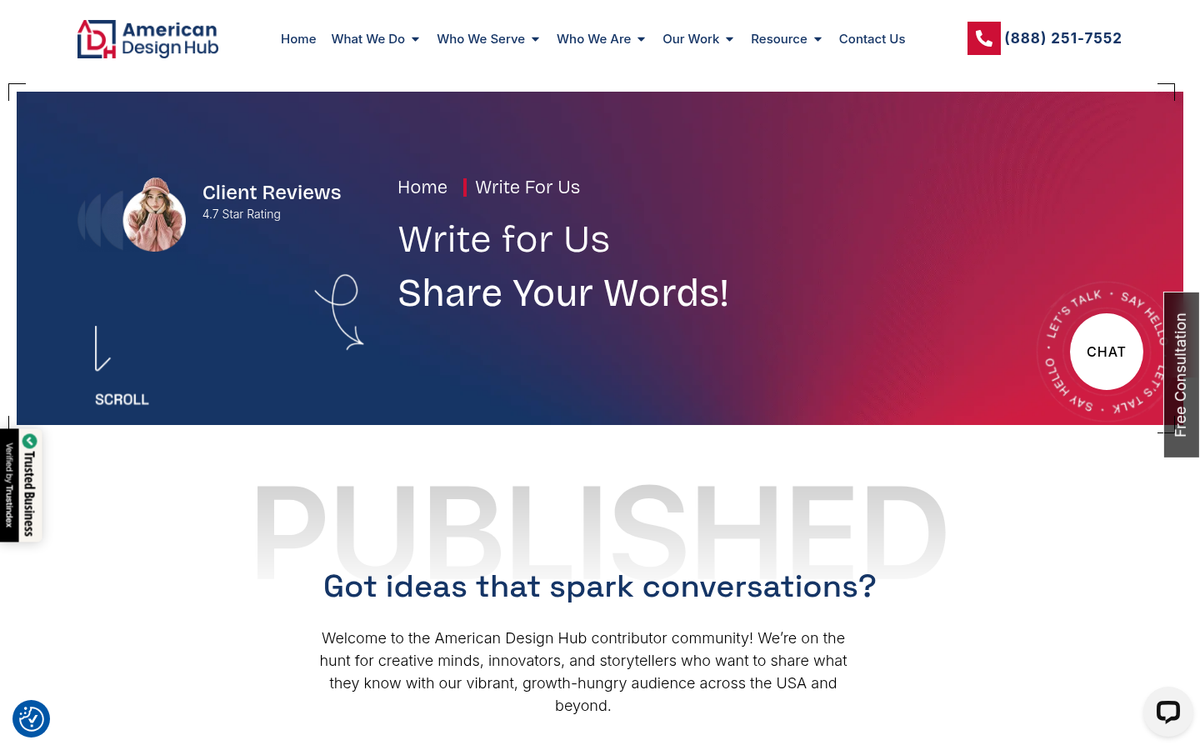
The "write for us" page is a great passive source of possible writers. A small site may not receive many potential guest posts, and many that they do receive will be spam, but the few valuable posts that slip through are worth it. Setting up a page to attract writers passively gives you an opportunity to be selective with the posts you receive and publish, even if you don't have as many as you claim you have when you turn down the lowest quality posts.
First, you want to set up a link to the page. This should be fairly prominent, somewhere on your navigation or on-site. You want to look like you encourage quality submissions while making it clear that you have editorial standards. This matters more than ever today - Google's quality guidelines have become increasingly strict, and publishing low-quality guest content can actively harm your rankings.
Yes, the point of this is to attract well-known authors in your industry, but in order to do that, you need to establish yourself as a publisher of outside content. If you're approaching thought leaders and asking for guest posts, and they see a blog with everything published by "admin" and obviously AI-generated or ghostwritten without any editorial voice, they're going to turn you down. It's not worth their time.
The actual content of the "write for us" page comes next. You want two sections: a guidelines section and a submission section. In the guidelines section, stress quality and your right to turn down any blog post that doesn't meet your standards. How exactly you do this depends on your outlook on blogging; just check a few live examples to see what you might do.
The submission section can be as simple as a dedicated submissions@domain.com email address, or as complex as an entire submission form with file uploads and optional newsletter opt-in. It depends on how you would prefer to sort through your submissions.
Avoid Bad Submissions
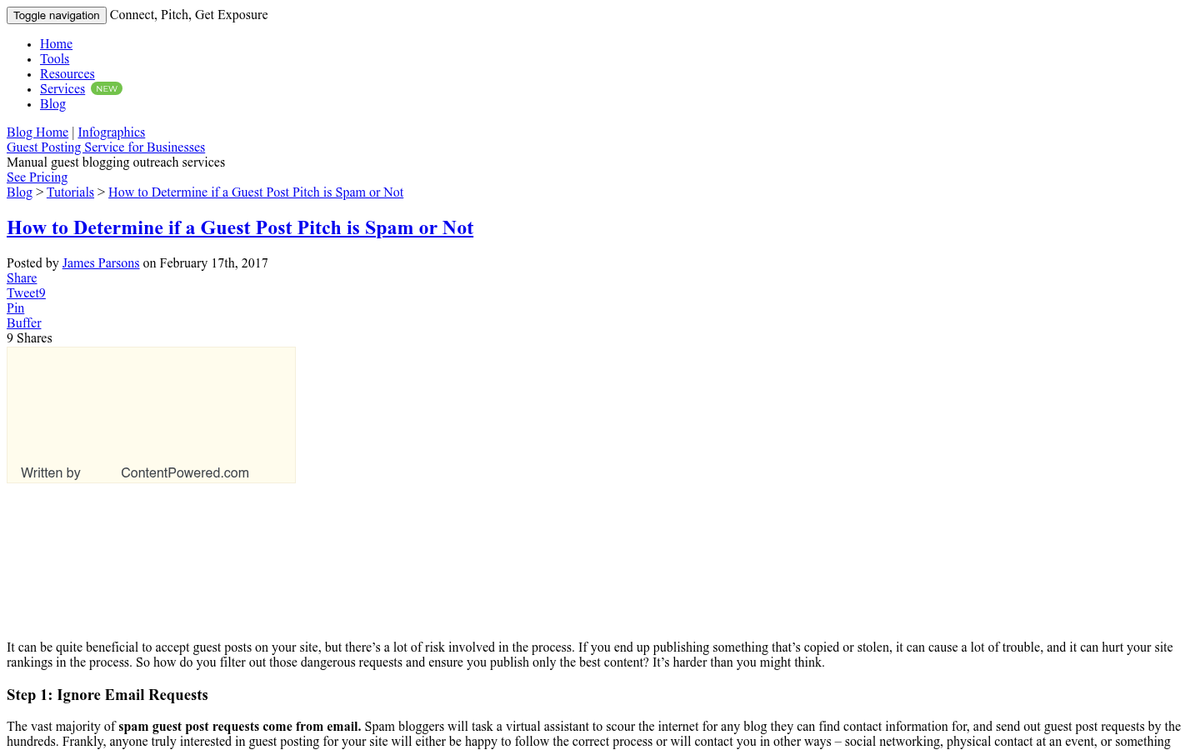
Be aware that having a "write for us" page will make you a target for spammers and low-quality blogs looking to push guest posts explicitly for backlinks. This is a risky practice for everyone involved - Google has made it clear over the years, and reinforced through multiple core updates, that manipulative link schemes through guest posting can result in manual penalties or algorithmic devaluation. When in doubt, ignore the submission entirely. To help identify if a submission is spam:
- Check the submission itself. Does the author lead with anchor-text link requests? Do they specify they need a followed link? Are they clearly pitching a post just to get a link placed?
- Check the site. Do they have an established following and active readership, or is their blog dormant with no real audience?
- Check the author. Do they have a genuine social media presence and a reputation in the industry? Or are they relative unknowns with no discernible authority?
Finally, just read the submitted post. Does it feel like something you would be proud to publish on your blog? Or is it thin and relatively valueless, even if it uses big words and industry jargon? With the rise of AI-generated content, it's also worth running submissions through a tool like Originality.ai or similar to get a sense of whether the content was written by a real human with genuine expertise. Never publish a guest post you wouldn't be proud to have your name on, and always reserve the right to remove any links if they don't meet your standards. Run a plagiarism check on submitted content as well - if it's been published elsewhere, blacklist the submitter.
Grow Your Site

The best way to attract thought leaders to your blog is to become a thought leader yourself. If you were in a position of authority, would you want to use your time to write posts for thin sites you've never heard of? Or would you look for blogs with a genuine reputation to network with, for mutual benefit? Thought leaders need to leverage their time intelligently, and that means making deliberate decisions about when and where they offer guest posts. Understanding the value of guest posts on your site is key to building those relationships wisely.
Some of what it takes to be a thought leader is timing, but a lot of it is simply consistency and dedication. Contrary to popular belief, you don't need to be the most knowledgeable person in the room. Most thought leaders got to where they are today by learning openly, collaborating with others and never being afraid to put themselves out there - including on emerging platforms and formats. In recent years, that's meant things like LinkedIn newsletters, podcasts, short-form video and industry Substack publications, not just traditional blogging. Make yourself a relative expert, stay visible across the channels where your audience lives, and you're well on your way to becoming a recognized voice in your space.
Contact Influential Writers Directly
All of the passive efforts in the world won't attract thought leaders who aren't actively looking for new places to contribute. Some seek out new opportunities, but many consider themselves well-established and will only consider a new blog when approached directly and compellingly. Some won't want to write for any sites they don't own, so you'll necessarily have to deal with some rejection - and that's fine.
The first step in this outreach is to identify the blogs and publications you consider peers or authorities in your industry. Which outlets do people actually turn to for news, analysis and answers?
Once you've identified those outlets, look for the authors who contribute to them regularly. You'll probably find a handful of writers who appear across many of them, and a longer list who contribute to just one or two. Visit their personal sites, follow their LinkedIn profiles, subscribe to their newsletters and genuinely read what they produce.
Once you know these writers and their work, you can begin to introduce yourself through professional channels. Follow them on social media - LinkedIn and X (formerly Twitter) remain strong for industry networking in most sectors. Contribute meaningfully to the discussions around their posts. Leave thoughtful comments. Share their work with genuine commentary of your own. Position yourself as a peer, not a fan.
When you've built some credibility and established a presence they might recognize, you can reach out directly and ask whether they'd consider contributing something to your blog. Keep the pitch short, specific and respectful of their time. Offer creative freedom, or come with a specific angle that would genuinely benefit their audience too - the latter often performs better because it shows you've done your homework.
The more authentic effort you put into networking, the easier these conversations become. And the stronger your own site's reputation, the more likely they are to say yes.