In the great content arms race, a high level of production and a high degree of quality are necessary to succeed. Thankfully, the world is abundant with potential writers with the knowledge, skills, and vision to help bring you to the top. All you need to do is find them.
Key Takeaways
- Blogs with multiple authors are perceived as more credible by 62.96% of readers, making contributor recruitment worthwhile beyond volume goals.
- Before hiring writers, assess whether content volume is truly needed or if SEO, link building, and distribution would yield better returns.
- Effective writer recruitment channels include "Write for Us" pages, proactive outreach, freelancer platforms, content agencies, influencers, and your own community.
- Use paid trial assignments to test writer fit; unpaid tests discourage top candidates and may not accurately reflect ongoing working relationships.
- Written contracts must clarify rates, payment timelines, content ownership, and independent contractor status before any work begins.
First: Determine if You Need More Writers
Some sites need a high, constant flow of content in order to succeed. Others can grow quite successful on a much lower level of content production. Some successful blogs update once a week. Some operate as full content networks pushing multiple posts per day across several verticals.
The first thing you need to do is determine if you really need more content, or if you can focus your efforts in other ways - like SEO, link building, or distribution - for a better return. This comes down to your niche and your method of doing business.
For example, a technology blog will need a lot of content to keep up with the pack. Tech news changes daily, so falling a week behind means falling out of relevance. On the other hand, a home and living blog might not need very many posts each week, because each post is a deeply evergreen piece of content that remains valuable for years.
It's also worth considering the credibility angle: research shows that 62.96% of readers perceive blogs with multiple authors to be more credible than single-author blogs. That alone can make a strong case for bringing in outside contributors, even if raw volume isn't your primary goal.
As for business model, how are you making money? The vast majority of writers you want contributing to your blog are going to expect compensation. A byline alone won't cut it for most serious writers. Whether you're monetizing through display ads, affiliate commissions, product sales, or leads, you need to honestly assess whether the ROI justifies regular writer payments. Rates in 2026 vary widely - from around $50 for basic short-form content to $500, $1,000, or more for long-form, expert-driven pieces. Quality almost always correlates with price, so budget accordingly.
You also need to keep voice in mind. If you're hiring ghostwriters, they need to be able to mimic your personal voice or the voice of your business. If you're bringing on contributors who post under their own names, you're less concerned with mimicry and more concerned with alignment of perspective and values. If you're running a business selling fishing gear, you probably don't want a contributor who opens every piece with their disdain for the outdoors.
Locating Writers to Hire

Once you've determined that you do, indeed, need to hire more writers, you need to find them. Here are the most effective channels in 2026.
A "Write for Us" page. This remains one of your best passive recruitment tools. You need a visible place in your navigation that makes it easy for writers to find, and you need to clearly communicate your terms - topics you cover, payment structure, content length expectations, editorial standards, and how to submit. Keep it clean and specific. Vague pages attract vague pitches.
Be prepared: 80% of rejected pitches fail simply because they're not relevant to the target site's audience, and 79% of editors report that guest content is too promotional. The clearer your page is about what you want, the fewer low-quality submissions you'll wade through.
Proactive outreach. Don't just wait for writers to come to you. Identify contributors you admire at other publications in your niche and reach out directly. Keep in mind that the average response rate for cold outreach in the guest blogging world sits around 8.5%, so volume and personalization both matter. Personalizing your outreach can increase your success rate by up to 40%, and following up on unanswered messages improves acceptance by around 25%. A short, genuine, personalized pitch will outperform a copy-paste template every time. There are also free tools that can help streamline blogger outreach and make the process more manageable.
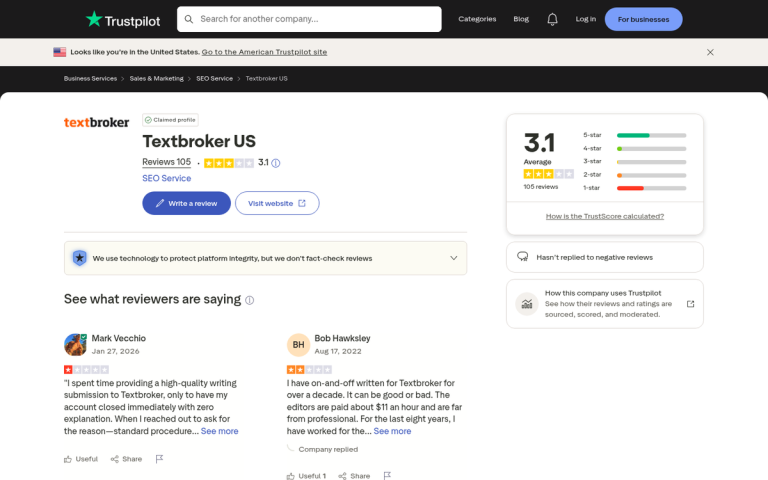
Freelancer platforms. Platforms like Contra, Toptal, and LinkedIn ProFinder have largely overtaken the old oDesk/Elance model (those two merged into Upwork years ago). Upwork itself still exists and remains a reasonable place to find writers across all price points. You'll find everything from budget generalists to highly specialized, premium-rate content strategists. You get what you pay for, so don't be surprised if the lowest bidder delivers the lowest quality. If you need reliable output at scale, consider using an affordable content writing service instead.
Content agencies and managed services. If you'd rather not manage individual freelancers, content agencies handle recruitment, vetting, and editing for you. The tradeoff is cost and sometimes a slight loss of voice consistency. For businesses that need consistent volume without the overhead of managing a small writing team, this can be a practical solution.
Thought leaders and influencer contributors. This is an underutilized strategy worth serious consideration. Featuring guest content from recognized voices in your niche can increase social media engagement by up to 60%, and bloggers who collaborate with influencers are nearly three times more likely to report strong results - 38% of frequent collaborators report successful outcomes compared to just 14% of those who don't collaborate at all. If you're unsure where to start, read up on how to get well known bloggers to write for you. It's not just about content volume; it's about borrowed authority and audience reach.
Your own community. Longtime readers, customers, and email subscribers are often untapped talent pools. A well-placed ask in your newsletter or a post inviting contributors can surface surprisingly strong candidates who already understand your brand and audience. You might also want to think carefully about whether allowing guest bloggers is right for your website before opening the floodgates.
Testing the Writer
When you have a few viable candidates, you need to test for fit. This typically means giving them a paid trial assignment - note that unpaid "test posts" are increasingly frowned upon in professional writing circles and may scare off your best candidates.
Give them a brief and see what comes back. The more direction you need to give them to get a usable piece, the more ongoing maintenance they'll require. Your goal is to find writers who can take a topic, angle, or headline and run with it at the level you need, with minimal hand-holding. Some writers will nail it on the first try. Others will need rounds of feedback that eat into whatever time savings you hoped to gain. If you're considering using AI to produce posts in bulk, keep in mind that human writers still offer advantages in voice consistency that automated tools often can't replicate.
There's no shortcut here. You need to read what they write, evaluate it honestly, and decide if the fit is there - for voice, quality, reliability, and communication style that supports focused writing. All four matter.
Legal Responsibilities

As the person contracting the writer, you need a clear written agreement in place before work begins. Some experienced writers will have their own contracts; review them carefully before signing. Whether you use their template or yours, make sure these key points are covered:
- Freelance writers are independent contractors, not employees. This distinction carries real legal and tax implications. Don't blur that line by scheduling them like staff, requiring exclusivity without proper compensation, or otherwise treating them as W-2 employees.
- Your contract should clearly specify the rate - per post, per word, or on a retainer - and the payment timeline. Net-30 is common; faster is better for attracting and retaining quality writers.
- Payment should be contingent on acceptance and publication. If you reject a piece and don't pay for it, you have no rights to that content whatsoever. Don't file it away for later use.
- Ownership and rights need to be explicitly addressed. Once you purchase the content, you own it - full stop. The writer retains no claim to it, cannot republish it, and cannot repurpose it elsewhere. Most professional writers are comfortable with this arrangement as long as payment terms are fair and clearly stated.
- If you're giving contributors a byline, spell out what that means. Does it include a bio link? Can they list the piece in their portfolio? These are reasonable asks from writers and worth addressing upfront.
Hiring writers is never entirely risk-free, but when you find someone who consistently delivers - on quality, on voice, on deadlines - hold onto them. The best writer relationships are long-term ones, and in a landscape where content quality is increasingly what separates the winners from the noise, a reliable, talented writer is genuinely one of your most valuable assets.