Infographics are great. They combine all the good points of data, case studies, blog posts and images, while discarding the low points. They're some of the most easily shared content on the web. Users don't need any special setup to view them or get value out of them.
As a marketer, infographics are great for one reason; they bring in a ton of links. You still have to put real effort into the concept and design to see great returns, but a truly well-crafted infographic can earn organic backlinks, social shares, and press mentions long after it's published. Even a solid mid-tier infographic will earn shares; a genuinely great one can still go viral in the right communities.
Before you can build links to an infographic, though, you need a good infographic. If you're just throwing a few pie charts or bar graphs on a grid and calling it a day, you're just reinventing the boring office presentation.
Key Takeaways
- Great infographics require strong concepts, fresh proprietary or primary research data, and professional design to earn meaningful backlinks.
- Recycled statistics no longer cut it; original data and unique angles are essential to stand out from AI-saturated content.
- Post infographics on your blog with supporting text, an embed code, and platform-optimized preview images to maximize SEO and sharing.
- Target industry blogs, journalists, and design communities with outreach, and post on social media multiple times across different time windows.
- Extend reach by repurposing infographics into carousels, short videos, and SlideShare uploads, and consider paid promotion for additional amplification.
Step 1: Concept
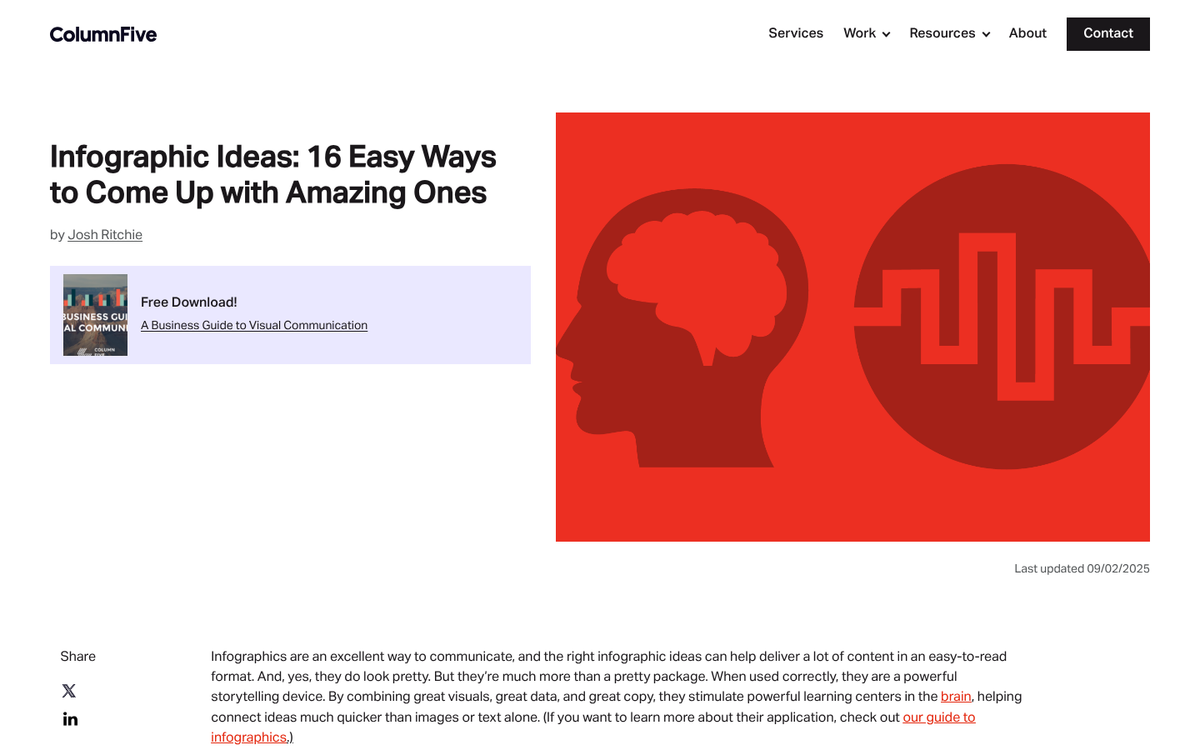
Before you begin, you need to come up with the topic for your infographic. Typically, you'll be starting from one of two positions. Either you know what you want to cover, or you just want something you can share. If you know what you want to cover, this step is done for you. If you're looking for something to boost traffic, you need to do some brainstorming.
Try to consider any possible topic from a number of perspectives. What will your target audience want to know? Is the subject something that your brand can be considered a reputable source when covering? Has the topic been covered before, and if so, can you do it in a better, more innovative way? Is the topic too big or too narrow for a good graphic?
In 2026, it's also worth asking whether AI tools have already saturated the topic with generic content. If so, your infographic needs a unique data angle or original research to stand out - recycled statistics won't cut it anymore.
Step 2: Gathering Data

Once you have an idea, you need to gather the data. For a graphic covering your own internal data, this is easy - and frankly, proprietary data is your strongest asset right now, since it's something AI tools simply can't replicate.
For a graphic covering a wider industry trend or global data, you need to gather your information from reputable sources. Research firms like Forrester, Gartner, and Nielsen are all solid. You can also pull from worldwide data sources like the World Bank Open Data portal, the UN Data site, UNESCO, or Statista. Primary research - even a simple survey of your own audience - is increasingly valuable and gives journalists and bloggers something genuinely new to link to.
Avoid leaning too heavily on recycled data that's already been visualized a dozen times elsewhere. Fresh numbers, even from a small original study, will outperform stale statistics dressed up in a nice layout.
Step 3: Making the Graphic
Putting the actual graphic together is still best left to skilled graphic designers if you have them. That said, tools like Canva, Adobe Express, and Visme have matured significantly and can produce professional results for teams without a dedicated designer. AI-assisted design tools are also now part of many workflows, though human creative direction remains essential for quality output.
Browse widely before you start designing. Look at what's performing well on Pinterest, Reddit's infographic communities, and design showcases like Behance to understand what resonates right now.
Good graphic design combines words, images, and the logical presentation of sequential information to tell a story. Your goal is not just to present the data. You can do that with tables in a blog post. Your goal with an infographic is to present the data in a way that makes it easy to digest. The best infographics feel less like a spreadsheet and more like a guided journey through an idea - readers almost don't realize they're learning something.
One important note for 2026: make sure your infographic is optimized for mobile viewing. A tall, narrow format tends to perform better than wide layouts across both social feeds and blog embeds.
Step 4: Promotion
This is what you're all here for. Now that you have a compelling infographic, how do you share it? How do you promote it? There are a number of methods you can use.
First and foremost, post it on your blog. You want your blog to be the primary source, to which all other sources link back. Create a compelling preview image cropped from the infographic, sized appropriately for platforms like LinkedIn, Instagram, and X (formerly Twitter). Each platform has different optimal dimensions, so don't just use one image everywhere.
Make sure you post a substantive blog article to accompany the infographic, giving it added SEO value. Google still needs text to understand and rank your content. Likewise, make sure your infographic itself includes a clear reference back to your site so that when it's shared or embedded elsewhere, the attribution travels with it.
Once the graphic is live on your site, submit it to infographic directories and visual content communities. Reddit's r/infographics remains active and can drive meaningful traffic if your content genuinely adds value. Visually is still around, though the landscape of dedicated infographic directories has thinned out over the years - focus your energy on communities where real humans are actively engaged rather than chasing every submission site you can find.
Next, run a focused social media campaign around your graphic. Pinterest and Instagram remain strong for visual content. LinkedIn is excellent for B2B or data-driven infographics and has become one of the better organic reach platforms in recent years. X (Twitter) can still generate shares in the right niche communities. Post it more than once across different time windows to capture users who missed it the first time, and consider repurposing individual panels or data points as standalone posts to extend the content's life.
Once you've shared it on social media, reach out to industry blogs and publications. There are a few categories worth targeting:
- Blogs and newsletters in your industry whose audiences would genuinely benefit from the data.
- Journalists and reporters who cover your topic - a well-timed pitch with original data can earn press coverage and high-authority backlinks.
- Design-focused communities and blogs that celebrate strong data visualization work.
Don't forget to make it as easy as possible to share your graphic. On your site, include social sharing buttons and provide a clean embed code block that pulls in the graphic along with a link back to your page and a brief description. The easier it is for someone to embed your infographic, the more passive backlinks you'll accumulate over time.
If you still need a boost after all of this, consider paid promotion to amplify reach. LinkedIn Sponsored Content works well for B2B infographics. Meta ads can be effective for consumer-facing topics with strong visual hooks. Even a modest budget behind a well-targeted post can dramatically increase the number of eyeballs - and eventual links - your graphic earns.
Finally, once the initial traffic wave subsides, extend the content's lifespan by repurposing it. Break it into a carousel post for LinkedIn or Instagram. Turn it into a short video or animated reel using tools like Adobe Express or Canva's video features. Upload key sections to SlideShare or embed them in related blog posts. Each repurposed format opens up a new audience and can send a second - or third - wave of traffic back to your original graphic.