




That distinction matters more now than it ever has. As AI-powered search tools and answer engines become the default way to find information, SERP features have become the new front door to your content.
For website owners and managers, understanding SERP features is a foundational part of Answer Engine Optimization (AEO). These features are where AI systems source their answers, where voice search pulls its responses, and where users make split-second decisions about whether to trust and click on a result. Earning a place in them isn't luck - it's the result of deliberate content and technical decisions.
This glossary entry breaks down what SERP features are, why they're central to an AEO strategy, and what you can do as a site owner to position your content to win them.
Quick Answer
A SERP feature is any result on a Google search engine results page (SERP) that goes beyond the traditional blue link listings. Common examples include Featured Snippets, Knowledge Panels, Local Packs, Image Carousels, People Also Ask boxes, and Video results. These features are designed to provide users with quick, relevant answers directly on the results page. Appearing in SERP features can significantly boost visibility and click-through rates for websites.
What Counts as a SERP Feature (and What Doesn't)
Regular organic listings don't count - they're just the baseline. SERP features are the extra elements Google layers on top to give users faster or better answers.
The most known type is the featured snippet, which pulls a direct answer from a webpage and shows it above the organic results. Knowledge panels appear on the right side of the page and surface information about entities like businesses or places. People Also Ask boxes show expandable questions related to the search, and clicking one triggers more questions to load below it.

Visual features play a big part too. Image packs display a row of images pulled from across the web. Video carousels surface relevant YouTube content - though if you're wondering about whether embedding YouTube videos on your blog is legal, that's a separate question worth exploring. Local packs show a map with three nearby business listings and are most common for searches with a location component. Popular Products display shoppable items with prices and reviews for commercial queries.
Sitelinks are worth a mention as well. They appear beneath a brand's main result and link directly to its main pages on that site, which Google generates automatically based on site structure.
| SERP Feature | Where It Appears | Content Type That Tends to Trigger It |
|---|---|---|
| Featured Snippet | Top of results (above organic) | Definitions, how-tos, structured content |
| Knowledge Panel | Right-side panel | Entity pages, Wikipedia, structured data |
| People Also Ask | Mid-page | FAQ-style and question-based content |
| Image Pack | Inline with organic results | Visual content with descriptive alt text |
| Video Carousel | Inline with organic results | YouTube videos with strong metadata |
| Local Pack | Top of results for local queries | Google Business Profile, local relevance |
| Popular Products | Top or mid-page | Product pages with pricing and reviews |
| Sitelinks | Below branded results | Well-structured websites with clear navigation |
Each feature has its own triggers and its own place on the page, which means the path to earn one looks different depending on what you're working with.
How AI Overviews Are Changing the SERP Landscape
Google's AI Overviews have taken up a large amount of space at the top of search results, and that has had consequences for other features. Featured snippets dropped by roughly 35% between late 2024 and early 2025 as AI-generated answers began to absorb queries that snippets used to handle; it's not a small difference.
The reason is fairly simple. AI Overviews are designed to answer questions directly on the page, so when one appears, there's less reason for Google to also show a standalone featured snippet. Both are trying to do a similar job, and the AI version now gets priority in most cases.
AI Overviews favor structured, well-organized content from sources Google already sees as authoritative. Those are the same traits that have always helped content earn featured snippets and other SERP features, so the underlying game hasn't changed as much as the playing field has.
A page that was structured to win a snippet might find that these are replaced by an AI Overview instead, which makes chasing featured snippets as a standalone goal less reliable than it used to be.
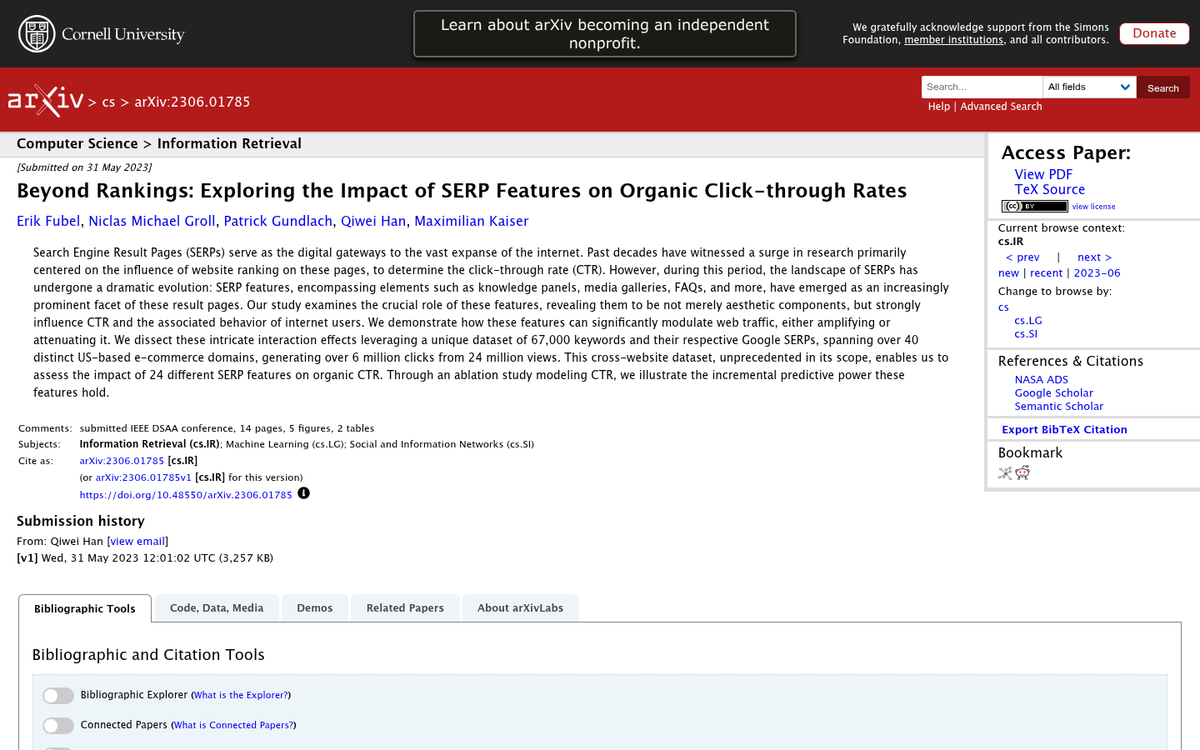
Content built to be helpful and easy to parse tends to perform well across traditional SERP features and AI-driven results. Being a source that AI Overviews reference is increasingly valuable - even if it looks different from a classic snippet win - it doesn't always mean a direct click. But it does mean visibility.
Google's results page is no longer a fixed set of feature types. AI is actively changing which features appear, how often, and for which queries. That changes how any content strategy needs to approach search visibility.
Why SERP Features Affect Your Click-Through Rates
Earning a SERP feature is a win. But the traffic results are more complicated than they look. Featured snippets and knowledge panels together can capture around 42% of all clicks on a results page. That sounds great until clicks come at the expense of the organic results below.
The part worth mentioning: when a featured snippet appears, the click-through rate for the page in position one drops by about 5.3%. So even if you own that snippet, you might actually receive fewer clicks than you would have without it.
This happens because snippets answer the question directly on the page. A user gets what they need without ever visiting your site, which is called a zero-click search. Zero-click results tend to show up more with easy factual queries, so the type of content you target does matter here.
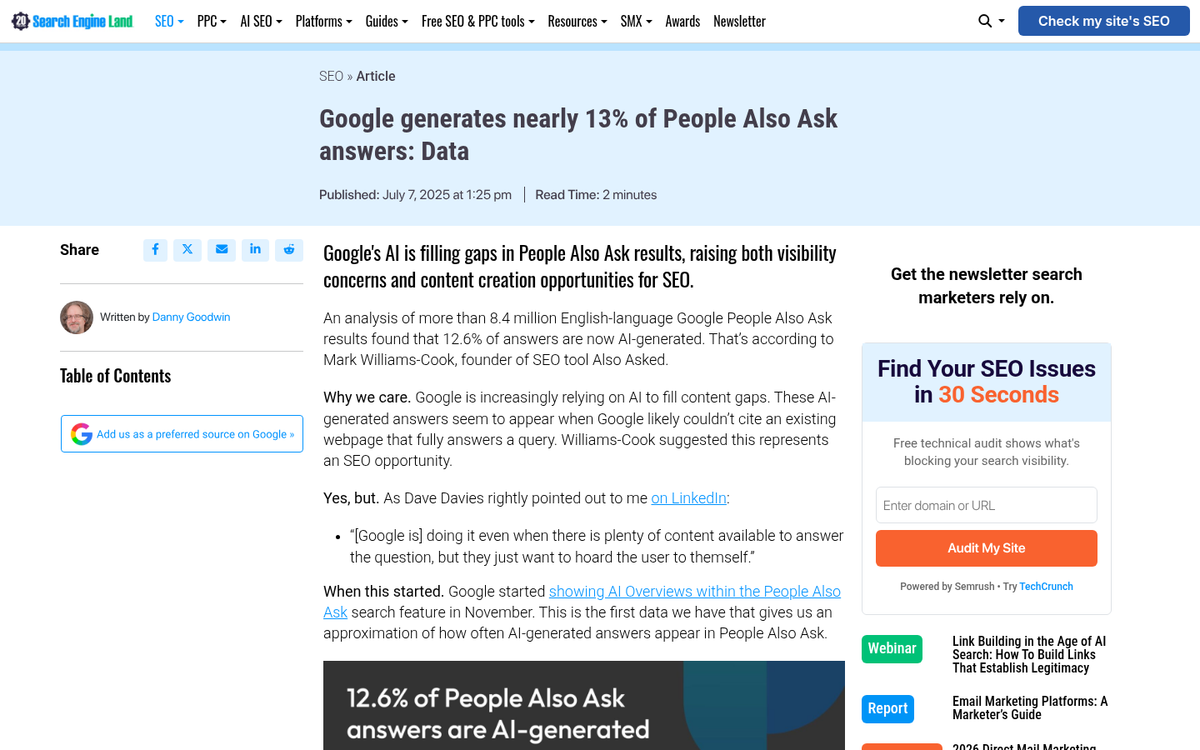
That said, visibility without clicks is not automatically a bad thing. If someone sees your brand name in a featured snippet ten times before they're ready to buy, that exposure has value even without a click attached to it. Brand recognition builds over time and drives conversions.
What you are trying to accomplish determines the best strategy. Traffic volume, topical authority, and direct conversions are three different goals and they don't always point to the same strategy. Chasing a featured snippet for a large informational query might improve impressions but do little for your bottom line.
It's helpful to look at your existing data before chasing any feature. Check which queries already bring in clicks and which ones get impressions with no follow-through. That gap tells you quite a bit about where optimizing for a SERP feature will move the needle for your goals, and where it might just add visibility without adding value. If you rely on ad revenue, understanding which layouts earn the most from your traffic is just as important as where that traffic comes from.
Structuring Your Content to Earn SERP Features
The way you format your content has a direct result on which features Google pulls from your pages. Question-and-answer formatting is one of the most helpful moves you can make, with People Also Ask showing up in around 64% of searches. That means writing content that directly answers a question - with the question as a header and an answer right below it - puts you in a strong position.
Structured data markup, also called schema, is another big lever - it tells Google what content is on your page, whether that's a recipe, a product, an FAQ, or a how-to guide. You don't need to be a developer to add it - tools like Google's Structured Data Markup Helper make it accessible.
Start by looking up your target keywords in Google Search Console to see which features already appear for those searches. If you see featured snippets, that tells you Google wants a direct answer format for that query. If you see knowledge panels or local packs, that points toward a different optimization.

The table below maps common content formats to the SERP features they target.
| Content Format | SERP Feature It Targets |
|---|---|
| Question + direct answer (40-60 words) | Featured Snippet |
| FAQ sections with schema markup | People Also Ask |
| Step-by-step numbered lists | Featured Snippet (list format) |
| Comparison tables with structured data | Rich Results |
| Local business info with schema | Local Pack |
Well-organized headers also matter more than most people know. Google scans your heading structure to know what each section covers, so H2s and H3s that mirror search questions give your content a better shot at being featured. If you're using WordPress and struggling with the editor's formatting options, learning how to revert to the old writing style in Gutenberg can make it easier to structure your content the way you need.
Tracking Which SERP Features Your Site Is Winning or Losing
Google Search Console is your first stop. The Performance report will show you which queries trigger impressions and clicks, and you can filter by search appearance to see things like rich results and image search - it won't show every feature type. But it gives you a baseline to work from.
Third-party tools like Semrush, Ahrefs, and Moz track SERP features at the keyword level and show you where you hold a feature or lose one - that's where you start to see patterns. Maybe your how-to pages earn featured snippets but your product pages don't. Maybe a recent algorithm update knocked you out of the People Also Ask box for your top keywords.
That pattern-finding is the whole point. Look at which pages earn features and ask what they have in common - structure, length, topic depth. Then look at pages that lost features recently and check if anything changed, like a content update, a structural edit, or a new competitor outranking you.

If you run an e-commerce site, pay extra attention to the Popular Products feature - it has grown 36% year-over-year, which means more competition and opportunity. Make sure your product structured data is complete and your product pages are well-maintained.
Manual checks matter too. Search your most important keywords once a week and see what the results page looks like. Tools are great. But actually looking at the page tells you things data sometimes misses - like a new feature type appearing or your competitor moving into a box you used to hold. Knowing who owns a competing blog can sometimes help you understand the sites outranking you.
Treat this as a standard audit instead of a one-time job. SERP features change as Google tests new layouts and updates its systems. The sites that stay ahead are the ones that watch and adjust when something changes in the results.
Optimize for the Answer, Not Just the Algorithm
None of this requires gaming the system. Structured content, implemented schema, and a genuine focus on answering questions serve your readers and the algorithms looking at your pages. When you make it easier for a person to find what they need, you make it easier for search engines to trust and feature your content.
The most helpful next step is an easy one: audit one page this week. Look at whether it targets a question, if the answer is easy to extract, and if schema markup is in place. That single review can show quick wins that move you closer to SERP visibility - and closer to building the content that earns its place at the top of search. But search continues to change.
FAQs
What are SERP features?
SERP features are extra elements Google displays beyond standard organic listings, such as featured snippets, knowledge panels, People Also Ask boxes, and local packs. They give users faster answers and appear in prominent positions on the results page.
How do AI Overviews affect featured snippets?
AI Overviews have largely replaced featured snippets for many queries, causing snippet appearances to drop roughly 35% between late 2024 and early 2025. Google prioritizes AI-generated answers over standalone snippets when both would serve the same purpose.
Do SERP features always increase website traffic?
Not always. Featured snippets can answer questions directly on the page, resulting in zero-click searches. Earning a snippet may actually reduce click-through rates for your organic position by around 5.3%.
What content formats help earn SERP features?
Question-and-answer formatting, FAQ sections with schema markup, numbered step-by-step lists, and structured comparison tables all target specific SERP features. Matching your format to the feature type Google already shows for your target query is key.
How can I track which SERP features my site wins?
Google Search Console provides a starting point, while third-party tools like Semrush and Ahrefs track features at the keyword level. Regular manual searches of your top keywords also reveal changes that data tools sometimes miss.